
Mercedes Actros Comparison: Unbelievable Power
Looking for a Mercedes Actros comparison? This guide breaks down the unbelievable power of the Actros, highlighting its strengths and how it stacks up in key areas, making your decision smarter and easier.
Welcome to MercedesBlue! Today, we’re diving deep into the mighty Mercedes-Benz Actros. If you’re a trucker, a fleet manager, or just someone fascinated by heavy-duty engineering, you’ve likely encountered the Actros. It’s a name synonymous with power, efficiency, and innovation in the world of commercial vehicles. However, the sheer variety of Actros models and their impressive capabilities can sometimes feel overwhelming. That’s where we come in. We’ll demystify the Actros, focusing on its power, its key advantages, and how it often compares to its formidable rivals. Get ready to understand what makes the Actros a powerhouse on the road, and discover insights to help you appreciate its engineering marvel.
Frequently Asked Questions
What is the Mercedes-Benz Actros?

The Mercedes-Benz Actros is a heavy-duty truck designed for long-haul transportation and demanding logistics operations. It’s known for its advanced technology, driver comfort, and powerful performance, offering various configurations for different hauling needs.
What makes the Actros powerful?

The power of the Actros stems from its range of advanced diesel engines. These engines are engineered for high torque output, enabling them to efficiently haul heavy loads over long distances, even on challenging terrains. Innovations in engine technology also focus on delivering this power while optimizing fuel consumption.
How does the Actros compare to competitors like Scania?

When comparing the Mercedes Actros with Scania trucks, both are top-tier. The Actros often excels in areas like driver comfort, safety features, and innovative technology, such as its MirrorCam system. Scania is frequently praised for its powertrain flexibility and strong residual values. Power-wise, both offer competitive engine options tailored for heavy-duty work.
What are the different Actros models?

Mercedes-Benz offers the Actros in various configurations, including different axle layouts (e.g., 4×2, 6×2, 6×4), cab types (e.g., ClassicSpace, StreamSpace, BigSpace, GigaSpace), and engine displacements. These variations allow for customization based on specific transport requirements, from standard road haulage to specialized heavy-duty applications.
What is the fuel efficiency of the Actros?

Modern Actros models are designed with fuel efficiency as a priority. Technologies like Predictive Powertrain Control (PPC), optimized aerodynamics, and efficient engine management systems contribute to significant fuel savings, making them highly competitive in terms of operating costs for large fleets.
What safety features does the Actros have?

The Actros is equipped with a comprehensive suite of advanced safety systems. These include Active Brake Assist (ABA), which can automatically brake if a collision risk is detected, Lane Keeping Assist, Stability Control Assist, and Attention Assist, all contributing to driver safety and accident prevention.
Mercedes Actros Comparison: Unbelievable Power Unleashed
The Mercedes-Benz Actros is a legend in the trucking industry, renowned for its robust performance and cutting-edge technology. For anyone involved in logistics, transportation, or simply admiring automotive engineering, understanding the power and capabilities of the Actros is crucial. This guide is designed to offer a clear, beginner-friendly look at what makes the Actros a powerhouse, how it compares in the market, and why its “unbelievable power” is a tangible advantage on the road. We’ll break down the core components that deliver this strength and explore its competitive edge.
The Heart of the Actros: Engine Options and Performance

At the core of the Mercedes-Benz Actros’s “unbelievable power” lies its sophisticated engine technology. Mercedes-Benz doesn’t just build engines; they craft complex power units designed for maximum efficiency, durability, and output. These engines are the driving force behind the Actros’s ability to tackle the toughest jobs.
Direct Injection and Turbocharging

Most modern Actros trucks employ advanced common rail direct injection and turbocharging systems. This combination is vital for achieving high power and torque figures while keeping fuel consumption in check. The direct injection precisely controls fuel delivery into the combustion chamber, leading to more complete burning. Turbochargers force more air into the engine, allowing for more fuel to be burned efficiently, thus boosting horsepower and torque significantly.
Engine Hierarchy and Torque Delivery

The Actros range typically features several engine families, each offering a different balance of power and efficiency to suit various applications. For instance, you might find engines in the 11-liter, 13-liter, or even larger displacements, with power outputs ranging from around 300 horsepower to well over 600 horsepower. Crucially, it’s not just about peak horsepower; it’s the immense torque—the rotational force—that truly defines an Actros’s hauling power. High torque figures, often available at low RPMs, provide the muscle needed to get heavy loads moving from a standstill and maintain speed on inclines.
Typical Actros Engine Power Ranges:

- Entry-Level: Commomly around 300-400 HP, suitable for lighter regional haulage.
- Mid-Range: Often in the 430-510 HP bracket, ideal for general long-haul operations.
- High-Performance: Can exceed 550 HP, designed for the heaviest loads and most demanding routes.
Performance Enhancements and Emission Standards

Mercedes-Benz is at the forefront of emission control technology, ensuring that this raw power meets stringent environmental regulations like Euro VI. This involves sophisticated exhaust gas treatment systems, including diesel particulate filters (DPFs) and selective catalytic reduction (SCR) systems that use AdBlue. These systems work seamlessly with the engine to ensure clean and efficient power delivery.
Understanding Power Beyond Horsepower: Torque and Drivetrain

While horsepower gives you an idea of an engine’s potential, it’s the torque that a truck operator feels most directly. When we talk about the “unbelievable power” of the Mercedes Actros, we are largely referring to its exceptional torque characteristics and how they are managed through its advanced drivetrain.
The Role of Torque

Torque is the twisting force that turns the wheels. For a heavy-duty truck like the Actros, high torque is essential for:
- Starting from a standstill: Overcoming the inertia of a fully loaded trailer requires significant initial force.
- Climbing gradients: Maintaining speed on inclines without laboring the engine.
- Towing heavy loads: Providing consistent, reliable pulling power under strain.
- Flexibility in gear selection: Allowing the driver (or the automatic transmission) to utilize fewer gears, saving fuel and reducing wear.
Actros engines often deliver peak torque figures well in excess of 2,500 Nm (Newton-meters), and importantly, this massive torque is often available across a broad RPM range. This means the truck feels strong and responsive whether you’re accelerating slowly or cruising at higher speeds.
The PowerShift Transmission

The seamless integration of engine power with the wheels is managed by Mercedes-Benz’s automated manual transmission, the Mercedes-Benz PowerShift. This intelligent gearbox shifts gears quickly and precisely, optimizing engine speed for both performance and fuel economy. For heavy-duty applications, the PowerShift is available with specialized programs and features that:
- Improve low-speed maneuverability: With creep functions for precise inching.
- Enhance hill starts: With hill-hold assist.
- Optimize for load: Automatically selecting the best gear based on vehicle weight and road conditions when integrated with Predictive Powertrain Control (PPC).
This sophisticated drivetrain ensures that the Actros’s impressive engine power is always delivered effectively and efficiently to the road.
Comparing Power: Actros vs. Scania and Other Rivals

When customers ask for a Mercedes Actros comparison, they often want to know how it stacks up against its most direct competitors, particularly brands like Scania. Both Mercedes-Benz and Scania are premium manufacturers, and their heavy-duty trucks are engineered to compete at the highest level. Power is a key battleground.
Engine and Transmission Parity
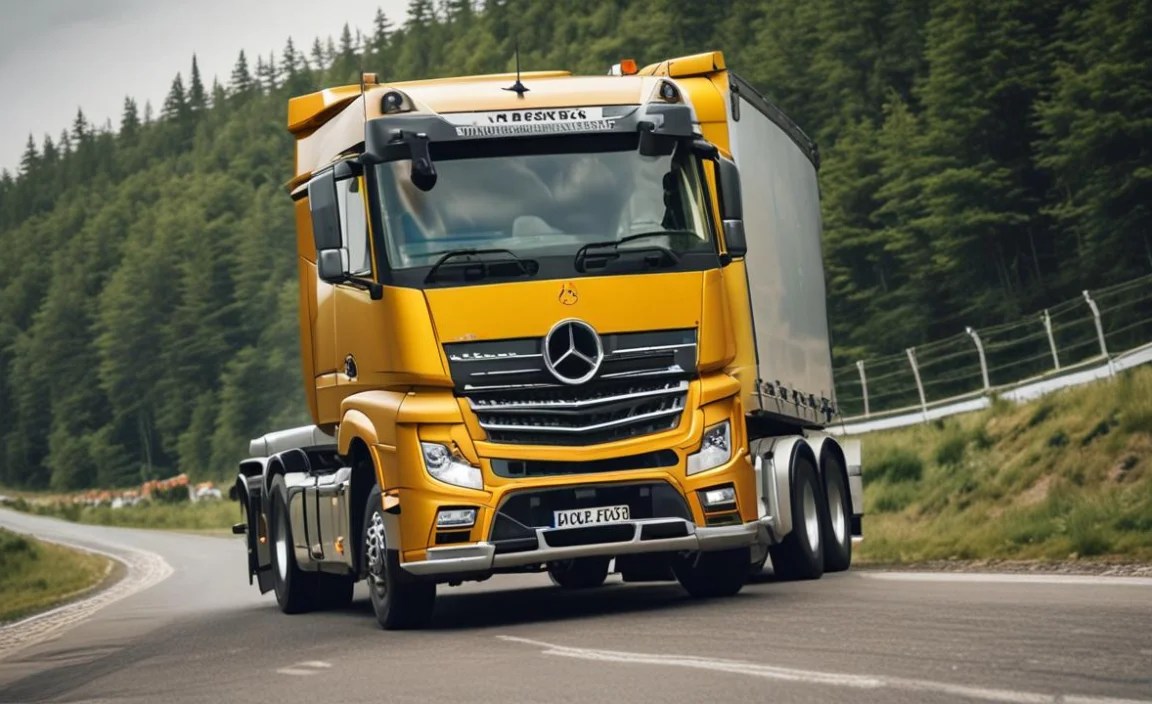
In terms of raw power, both the Actros and Scania trucks offer a wide range of engine options, with top-tier models often featuring similar horsepower and torque capabilities. For example, a flagship Scania V8 engine might produce comparable power figures to a top-spec Actros OM 471 or OM 473 engine. The difference often lies in the specific torque curves, transmission characteristics, and how the power is delivered.
General Comparison of Power Delivery:

| Feature | Mercedes-Benz Actros | Scania Trucks |
|---|---|---|
| Engine Focus | Emphasis on efficiency, advanced injection, and integrated systems like PPC. Often smooth and refined power delivery. | Known for robust, powerful engines, particularly their V8s, often favored for their distinctive sound and strong low-end grunt. Flexible powertrain options. |
| Transmission | PowerShift (automated manual) is standard and highly integrated with vehicle systems for optimal efficiency and performance. | Opticruise (automated manual) offers similar benefits, with a range of configurations and often praised for its intuitive operation. |
| Torque | High torque figures across a broad range, optimized for fuel efficiency and smooth acceleration. | Very strong torque, especially in V8 variants, providing immense hauling capability. |
| Overall Feel | Often described as refined, technologically advanced, and efficient in power application. | Can feel more raw and direct, with a strong emphasis on driver engagement and sheer hauling ability. |
Beyond Raw Numbers: Efficiency and Technology

While direct horsepower comparisons are interesting, a true “comparison” needs to look at how that power is used. The Mercedes-Benz Actros often distinguished itself through its integrated technology designed to maximize the effective use of its power. Systems like:
- Predictive Powertrain Control (PPC): This advanced cruise control uses GPS data and 3D map information to anticipate inclines and declines, optimizing gear shifts and speed for maximum fuel efficiency without sacrificing momentum. This means the truck can maintain its speed more effectively on varied terrain with less driver intervention and less wasted fuel than might be expected from a purely manual approach.
- FleetBoard Telematics: Provides detailed analysis of driving style, fuel consumption, and performance, enabling fleet managers to optimize operations and ensure drivers are utilizing the truck’s power most effectively.
Scania also offers sophisticated telematics and driver training programs that achieve similar goals. The choice between them often comes down to specific operational needs and driver preferences for the feel of the power delivery and the transmission.
Making the Actros Work Harder: Optimizing Power Use

Possessing “unbelievable power” is one thing; using it intelligently is another. Mercedes-Benz equips the Actros with features and technologies designed not just to deliver power, but to ensure it’s applied in the most efficient and effective way possible. Understanding these can help any operator maximize their return.
Aerodynamics and Weight Management

Even the most powerful engine needs assistance. The Actros is designed with advanced aerodynamics, including optimized cab shapes, underbody fairings, and roof spoilers, to slice through the air with minimal drag. Less drag means the engine doesn’t have to work as hard, conserving fuel and allowing more power to be directed to the wheels for propulsion. Furthermore, careful weight management in the truck’s construction means more of the engine’s potential can be dedicated to hauling the actual payload, rather than moving the truck itself.
Driver Assistance Systems for Efficient Power

As mentioned, systems like PPC are revolutionary. But the Actros also boasts a suite of other driver aids that indirectly contribute to efficient power use:
- Active Brake Assist (ABA): While primarily a safety feature, by preventing minor collisions and unnecessary braking, it allows for smoother, more consistent progress, meaning less power is wasted on emergency stops and subsequent accelerations.
- Adaptive Cruise Control (ACC): Works in conjunction with PPC to maintain a set speed or following distance, contributing to a more constant engine load and less stop-start driving.
These advanced systems work in harmony to ensure the truck’s immense power is used wisely, reducing fuel consumption and wear and tear while maximizing productivity.
Tire Selection and Maintenance

The tires are the only point of contact between the truck and the road, making them critical for translating engine power into motion. Choosing the right tires for the application and ensuring they are properly inflated is paramount. Low rolling resistance tires can significantly reduce the energy lost as the tire deforms against the road surface. For example, fitting energy-efficient tires can make a measurable difference in fuel economy, allowing the truck’s power to be felt even more effectively on the road.</
According to the National Highway Traffic Safety Administration (NHTSA), proper tire inflation can improve fuel economy by up to 3%. For commercial vehicles, this translates into substantial savings and better utilization of available power.
The Future of Actros Power: Innovation and Sustainability

Mercedes-Benz is not resting on its laurels. The future of power in the Actros line-up is focused on two key areas: continued advancement of their highly efficient diesel engines and the exploration of alternative powertrains.
Electric and Hydrogen Power

Mercedes-Benz is actively developing and rolling out electric versions of its trucks, such as the eActros. These trucks offer instant torque, providing a different kind of “unbelievable power”—silent, emission-free, and with rapid acceleration. For longer distances and heavier payloads, hydrogen fuel cell technology is also being explored as a zero-emission solution that can offer refueling times comparable to diesel.
Advanced Digitalization and Connectivity

The “power” of the Actros is increasingly defined not just by its mechanical components but by its digital brain. Future Actros models will feature even more advanced connectivity, allowing for over-the-air software updates that can optimize engine performance and efficiency over the truck’s lifetime. Predictive maintenance systems will also help ensure that the truck’s power delivery remains consistently optimal by identifying potential issues before they impact performance.
Integrated Ecosystems

Mercedes-Benz is working to integrate its trucks into a broader digital ecosystem for logistics. This means the truck’s power and capabilities will be managed within a larger network, communicating with route planning software, fleet management platforms, and even intelligent traffic systems. This interconnectedness ensures that the Actros can perform at its peak, leveraging its power in conjunction with real-time data to achieve unmatched efficiency and reliability.
Conclusion: The Enduring Legacy of Actros Power
The Mercedes-Benz Actros stands as a testament to German engineering. Its “unbelievable power” isn’t just a marketing slogan; it’s a carefully engineered reality manifested in robust engines, sophisticated drivetrains, and intelligent integration of cutting-edge technology. Whether you’re comparing it against rivals like Scania, looking at specific engine outputs, or considering how its power translates to real-world efficiency, the Actros consistently delivers.
For fleet managers, owner-


