
Actros Truck Fuel Tank Size: Ultimate Power
The Mercedes-Benz Actros truck fuel tank size is a critical factor for maximizing range and operational efficiency, with options typically ranging from 150 to over 1,200 liters, depending on the specific model, axle configuration, and intended use.
Driving a Mercedes-Benz Actros is an experience in robust engineering and unparalleled performance. For anyone at the helm of these magnificent machines, understanding the nuances of their capacity, particularly fuel tank size, is paramount. It’s not just about how far you can go; it’s about how efficiently and powerfully you can get there. Many truck operators ponder, “What’s the deal with Actros fuel tanks?” It’s a common question, and the answer directly impacts your operational planning, your routes, and ultimately, your bottom line. This guide is designed to demystify the world of Actros fuel tank sizes, offering clear, actionable insights so you can drive with confidence and maximum power. We’ll break down what influences these sizes and what it means for your trucking journey.
Understanding Actros Truck Fuel Tank Size: More Than Just Capacity

When we talk about the “Actros truck fuel tank size,” we’re referring to the volumetric capacity of the vehicle’s fuel storage system. This isn’t a one-size-fits-all scenario; Mercedes-Benz offers a diverse range of Actros configurations, each tailored for specific applications. The fuel tank size is a deliberate engineering choice that directly correlates with the truck’s intended operational profile.
Think of it this way: a long-haul heavy-duty transporter will have vastly different fuel needs than a regional distribution truck. The larger the tank, the longer the truck can operate between refueling stops, a significant advantage for routes covering long distances or areas with sparse fueling infrastructure. Conversely, a truck designed for shorter, more frequent urban routes might prioritize maneuverability and payload over an excessive fuel capacity.
Several factors influence the specific fuel tank size fitted to an Actros model:
- Model Variant: Different Actros series (e.g., Actros 1, Actros 2, Actros 3, or specific series within those generations like the FFP, F, Streamspace, Gigaspace cabs) are designed with varying operational demands in mind.
- Axle Configuration: Trucks with more axles or a greater Gross Vehicle Weight (GVW) rating often require larger engines which, in turn, necessitate larger fuel tanks to support extended operation.
- Intended Use: Long-haul trucking, construction site operations, or specialized transport all have different fuel consumption patterns and range requirements.
- Chassis Design: The physical space available on the chassis frame rails is a primary constraint for fuel tank dimensions.
- Regulatory Requirements: In some regions, specific payload or tare weight regulations might indirectly influence fuel tank size choices.
Choosing the right Actros with the appropriate fuel tank size can significantly reduce downtime spent at fuel stations, increase route flexibility, and optimize overall operational efficiency. It’s a foundational element of maximizing the “ultimate power” and utility of your Actros.
Factors Influencing Actros Fuel Tank Capacity

The Mercedes-Benz Actros is a versatile platform, and its fuel tank configuration is a key element in its adaptability. When you look at an Actros, the fuel tanks you see are not just containers; they are painstakingly integrated components that balance numerous engineering and operational considerations.
1. Operational Range and Route Planning

The most direct impact of Actros truck fuel tank size is the operational range. A larger tank means fewer stops for refueling, which is critical for long-haul drivers. This translates to more time on the road, completing deliveries faster, and potentially taking on more routes within a given period. For routes that traverse remote areas or regions with limited fueling stations, a larger fuel tank is not merely a convenience but a necessity to avoid costly delays and potential breakdowns.
Consider a scenario where a truck needs to travel 1,000 kilometers without a planned refueling stop. The vehicle’s fuel consumption rate (liters per 100 kilometers) becomes crucial. With a 600-liter tank, and assuming a consumption of 30 L/100km, the truck can theoretically travel 2,000 kilometers (600 L / 30 L/100km * 100km). A smaller 300-liter tank would limit the range to approximately 1,000 kilometers. This simple calculation highlights how fuel tank size directly dictates route feasibility.
2. Payload and Weight Considerations

Fuel itself has weight. Larger fuel tanks, filled to capacity, add to the vehicle’s overall weight. Truck manufacturers and operators must carefully balance the desire for a longer range with the need to maximize payload. Regulations on Gross Vehicle Weight (GVW) limit the total weight a truck can carry, including fuel. Therefore, selecting a larger fuel tank might mean carrying slightly less cargo on some routes, or ensuring the truck’s base weight is optimized to accommodate the fuel load within legal limits. This is where understanding the tare weight of your Actros configuration becomes vital.
Mercedes-Benz engineers work to optimize weight distribution and chassis strength to accommodate larger tanks without compromising structural integrity or payload capacity significantly. For instance, the placement of larger tanks on the chassis is designed to maintain optimal balance and handling characteristics.
3. Chassis Space and Design Limitations

The physical dimensions of the Actros chassis frame rails are a primary determinant of how large a fuel tank can be fitted. The frame design, suspension components, exhaust systems, and other essential hardware occupy space. Mercedes-Benz designs its chassis to offer flexibility where possible, allowing for different tank sizes and even the addition of auxiliary tanks. However, there are always limits imposed by the fundamental structural design of the vehicle.
Typically, fuel tanks are mounted externally to the frame, often on one or both sides of the vehicle. The length and depth of the available space on the frame directly dictate the maximum volume that can be installed. Some Actros configurations might also feature tanks integrated into the cab structure or designed to fit specific aerodynamic profiles.
4. Specific Actros Model and Configuration

The Actros range is extensive, encompassing numerous models with distinct purposes: from lighter distribution trucks to colossal heavy-haul tractors. Each is engineered with a specific set of requirements in mind. For instance:
- Actros F (F stands for “Flexibility”): Often geared towards distribution and regional haulage, these might have more moderate tank sizes.
- Actros L (L for “Luxury” or “Long-distance”): Designed for long-haul trucking, the Actros L variants typically feature the largest fuel tank options for maximum range.
- Actros Streamspace / ClassicSpace / GigaSpace Cabs: The cab designation often hints at the truck’s purpose and, consequently, its potential fuel tank size. GigaSpace cabs, for example, are built for long distances and thus accommodate larger tanks.
- Special Applications: Trucks destined for severe off-road use or specialized tasks might have different tank configurations for ground clearance or durability, which could influence size.
Understanding which Actros variant you have is the first step to identifying its typical fuel tank options.
5. Twin Tanks and Auxiliary Fuel Solutions

To achieve truly exceptional ranges, many Actros trucks are equipped with twin fuel tanks or can be fitted with auxiliary tanks. A common setup involves a primary tank on one side of the chassis and a secondary tank on the other. This allows for a substantial increase in total fuel capacity without fundamentally altering the chassis width or requiring overly complex plumbing.
These twin-tank systems are intelligently managed by the vehicle’s fuel system, often automatically switching between tanks to ensure a consistent fuel supply and optimal weight distribution. In some specialized cases, a third, smaller auxiliary tank might be added for extreme range requirements, though this is less common and may involve custom fitting.
Typical Actros Truck Fuel Tank Sizes by Model and Configuration

Mercedes-Benz offers a wide spectrum of fuel tank options for its Actros line, catering to diverse operational needs. While exact specifications can vary based on manufacturing year, specific market configurations, and optional upgrades, we can outline typical ranges observed across popular Actros models.
It’s important to note that these are general guidelines. For precise figures on a specific Actros truck, always consult the vehicle’s owner’s manual or refer to the chassis identification plate (also known as the VIN plate or data card), which details the exact factory specifications.
Actros for Long-Haul Transport (Actros L, GigaSpace Cab)

For trucks designed for extensive distances, maximizing range between refueling stops is paramount. These configurations typically come with the largest fuel tank options.
| Configuration | Typical Primary Tank Size (Liters) | Typical Secondary Tank Size (Liters) | Total Combined Capacity (Liters) | Notes |
|---|---|---|---|---|
| Actros 1853 / 1858 / 1863 (4×2 Tractor) | 450 – 750 | 300 – 650 | 750 – 1,400+ | Often equipped with twin tanks. Larger tanks prioritize range. |
| Actros 2545 / 2551 / 2553 (6×2/4 Tractor) | 450 – 750 | 300 – 650 | 750 – 1,400+ | Similar options to 4×2, often with slight variations due to additional axle. |
| Actros 3345 / 3351 (6×4 Tractor/Rigid) | 300 – 500 | 200 – 400 | 500 – 900 | May have slightly smaller tank options due to chassis space for off-road or heavy-duty components. |
Actros for Regional Distribution and Fleet Operations (Actros F, Streamspace Cab)

These trucks balance range with the need for lighter tare weight and flexibility in urban and regional environments.
| Configuration | Typical Primary Tank Size (Liters) | Typical Secondary Tank Size (Liters) | Total Combined Capacity (Liters) | Notes |
|---|---|---|---|---|
| Actros 1824 / 1827 (4×2 Rigid) | 200 – 400 | 150 – 300 | 350 – 700 | Focus on maneuverability, common for city and regional delivery. |
| Actros 2530 / 2535 (6×2 Rigid) | 300 – 500 | 200 – 400 | 500 – 900 | Versatile for mixed use, can be optioned with larger tanks. |
| Actros 1840 / 1843 (4×2 Tractor) | 300 – 500 | 200 – 400 | 500 – 900 | Suitable for medium-haul, offering a good balance. |
Specialized and Heavy-Duty Actros

For trucks built for the most demanding tasks, such as construction or heavy transport, fuel tank considerations might involve durability and protection over sheer volume. Smaller, more robust tanks might be preferred to avoid damage in rough terrain.
- Heavy Haulage (e.g., Actros 26xx, 33xx, 41xx series): These trucks are built to carry immense loads. While they still need range, their primary focus is power and torque. Fuel tank sizes can vary significantly, often from 300 to 600 liters, sometimes with options for specialized designs.
- Off-Road Variants: Trucks intended for use on construction sites or unpaved roads might feature smaller, more protected fuel tanks to maintain ground clearance and reduce the risk of damage.
It’s also worth noting that manufacturers like Mercedes-Benz Trucks continuously update their models. Newer generations might offer even wider ranges of fuel tank sizes, improved fuel efficiency, and alternative fuel solutions, such as electric powertrains in the eActros range.
Maximizing Your Actros’s Range: Tips for Fuel Efficiency
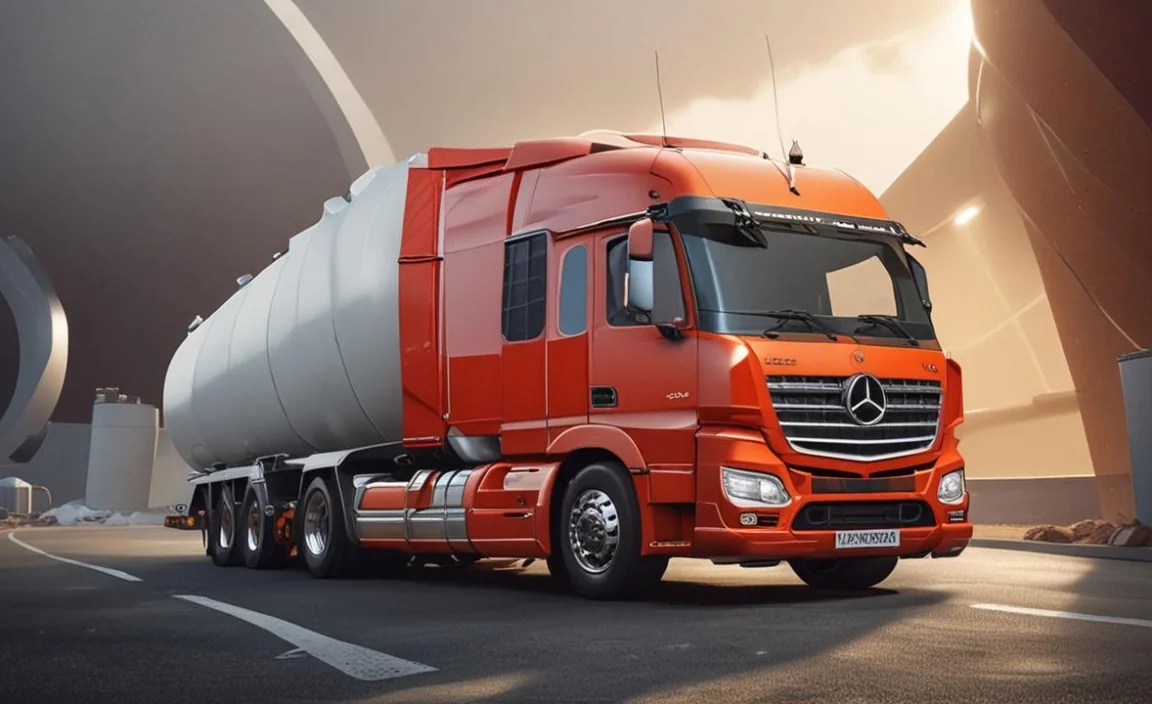
A larger Actros truck fuel tank size is fantastic for extending your reach, but true operational efficiency comes from using that fuel wisely. Even with a substantial tank, smart driving habits and regular maintenance can dramatically improve your miles per gallon (or liters per 100 kilometers) and reduce your overall fuel expenditure.
Here are some practical tips to help you get the most out of every drop of fuel from your Actros:
1. Optimize Your Driving Style
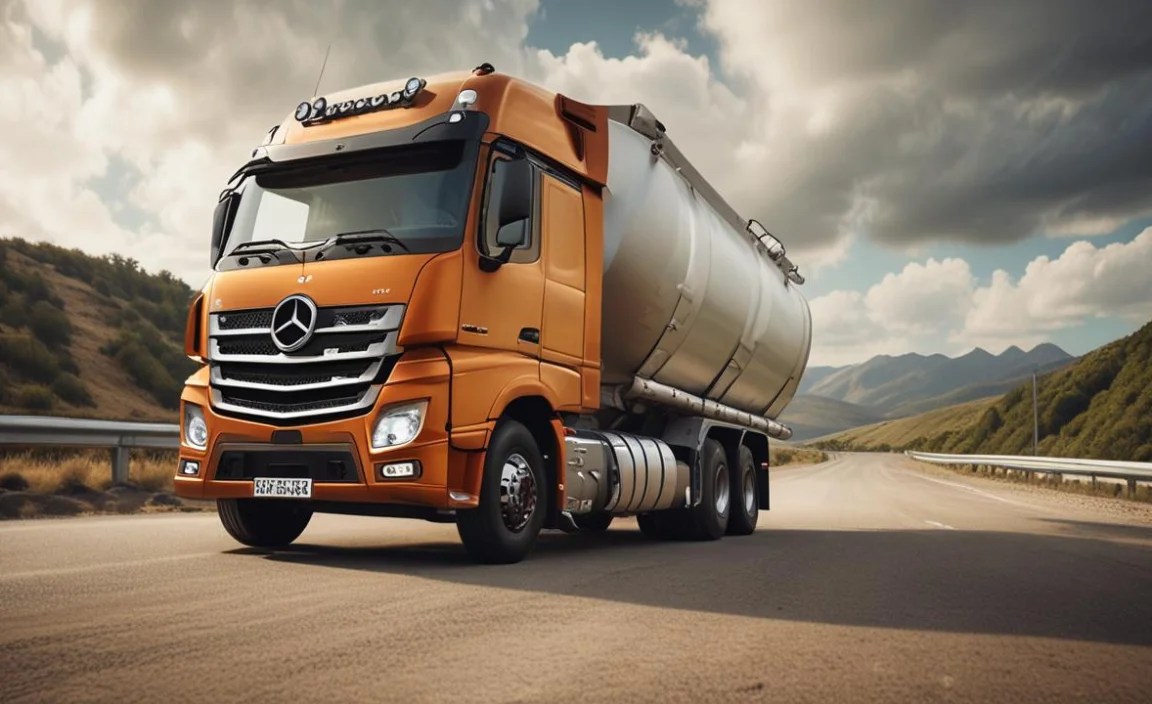
Your driving behavior has a profound impact on fuel consumption. Smooth, consistent driving is key.
- Anticipate Traffic: Avoid sudden braking and acceleration. Look ahead to see traffic lights, stop signs, and other vehicles. Gently ease off the accelerator and coast when possible, rather than braking hard at the last moment.
- Maintain a Steady Speed: Fluctuating speeds burn more fuel. Using cruise control on highways can help maintain a consistent speed, but be mindful of terrain; sometimes, manually controlling speed on inclines can be more fuel-efficient.
- Reduce Idling Time: Excessive idling wastes fuel. If you’re stopped for more than a minute or two, consider turning off the engine, especially if your Actros is equipped with an efficient start-stop system.
- Proper Gear Selection: For manual transmissions, shift gears at optimal RPMs. For automatic transmissions, allow the system to select gears efficiently. Avoid “lugging” the engine or over-revving.
2. Aerodynamics Matter

Air resistance is a significant factor, especially at highway speeds. Improving your Actros’s aerodynamics can lead to substantial fuel savings.
- Tractor-Trailer Gap: Minimize the gap between your tractor unit and the trailer. Aerodynamic fairings and side skirts on both the tractor and trailer can significantly reduce drag.
- Remove Unnecessary Attachments: Any external additions that are not essential can create drag. Keep your Actros as streamlined as possible.
- Check Tires and Wheels: Ensure your tires are properly inflated and consider aerodynamic wheel covers where appropriate.
3. Regular Maintenance is Crucial

A well-maintained Actros runs more efficiently. Regular servicing ensures all components are working optimally.
- Tire Pressure: Underinflated tires increase rolling resistance, forcing the engine to work harder and consume more fuel. Check tire pressures regularly and inflate them to the manufacturer’s recommended levels. For reliable tire pressure monitoring systems, explore resources like FuelEconomy.gov’s maintenance section, which offers general principles applicable to all vehicles.
- Engine Tuning: Ensure your engine is running at optimal performance. Regular oil changes, air filter replacements, and general engine checks prevent wear and tear that can lead to decreased fuel efficiency.
- Wheel Alignment: Misaligned wheels also increase rolling resistance.
- Check for Leaks: Even small fuel leaks can lead to significant losses over time and are hazardous.
4. Route Optimization and Load Management
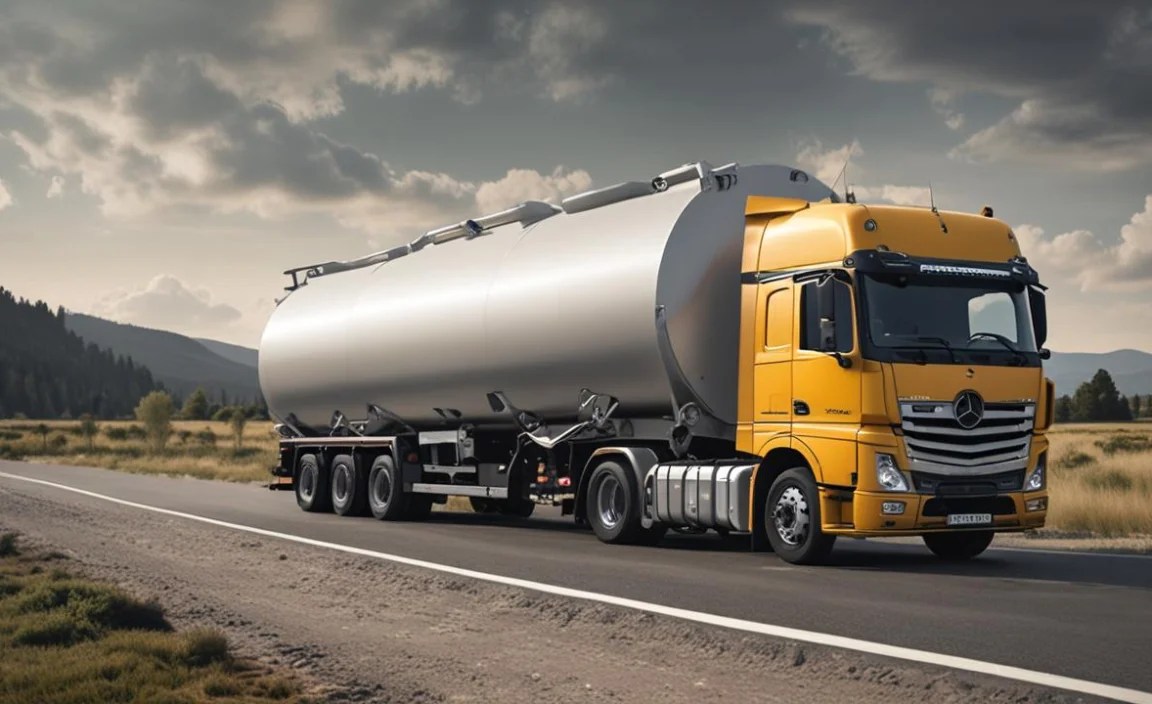
Smart planning can save both time and fuel.
- Pre-Plan Your Routes: Use GPS and routing software to identify the most fuel-efficient paths, avoiding congested areas, steep inclines, or poor road surfaces where possible.
- Minimize Empty Miles: Deadheading (driving without a load) is a major fuel drain. Maximize backhaul opportunities.
- Lighten the Load if Possible: While your Actros is built for heavy loads, consider if absolutely every item in the truck is necessary for the current trip to reduce overall weight, thus improving fuel economy.
5. Advanced Technologies
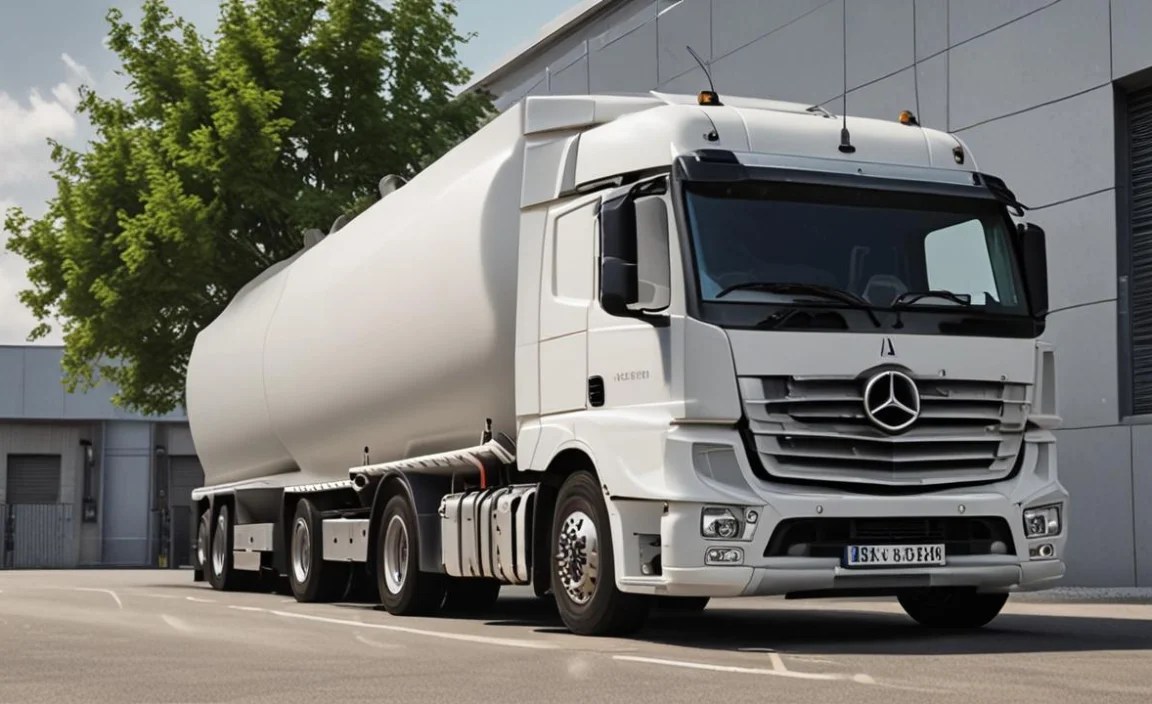
Modern Actros trucks often come equipped with advanced fuel-saving technologies.
- Eco Support/Fleetboard: Many Actros models feature telematics systems (like Mercedes-Benz Fleetboard) that provide real-time feedback on driving style and fuel consumption, helping drivers adjust their behavior.
- Predictive Powertrain Control (PPC): This system uses GPS data and topographical maps to anticipate road conditions ahead and optimize gear selection and speed for maximum fuel efficiency.
By implementing these strategies, you can effectively extend the operational range of your Actros, regardless of its fuel tank size, and drive more economically and sustainably.
Understanding Fuel Types and Their Impact on Actros

The Actros truck, particularly its diesel variants, relies on specific fuel types to perform optimally. While the vast majority of Actros trucks run on conventional diesel, understanding its quality and any regional variations is crucial for engine longevity and performance.
Diesel Fuel Standards

Mercedes-Benz recommends using high-quality diesel fuel that meets international standards. In Europe, this typically means fuel compliant


