
Actros Fleet Efficiency Tools: Ultimate Power
Unlock remarkable fuel savings and operational excellence with advanced Mercedes-Benz Actros fleet efficiency tools. Discover how smart technology empowers your fleet to perform at its peak, reducing costs and boosting productivity through data-driven insights and intelligent driving assistance.
Keeping your fleet running efficiently is a top priority for any transport business. When it comes to the Mercedes-Benz Actros, this pursuit of efficiency is taken to a whole new level. We know that understanding and implementing the right tools can feel daunting, especially with so many technological advancements. But what if we told you that optimizing your Actros fleet for maximum efficiency is more accessible than ever? This guide will break down the powerful fleet efficiency tools available for your Actros trucks, making complex systems simple and actionable. Get ready to harness the ultimate power of efficiency!
Understanding Fleet Efficiency with the Mercedes-Benz Actros

Fleet efficiency isn’t just about saving money on fuel, although that’s a huge part of it. It’s a holistic approach to making your entire operation run smoother, faster, and with less waste. For a truck as sophisticated as the Mercedes-Benz Actros, this means leveraging every piece of technology designed to enhance performance, reduce wear and tear, and improve driver behavior. Think of it as giving your trucks superpowers that translate directly into a stronger bottom line and a more sustainable business.
The Actros is engineered with drivers and fleet managers in mind, offering a suite of digital solutions that provide real-time data and actionable insights. These aren’t just gadgets; they are integrated systems designed to work together, transforming how you manage your fleet. From predictive maintenance to optimizing driving styles, these tools are the key to unlocking “ultimate power” – the power of efficiency.
The Core of Actros Fleet Efficiency: What You Need to Know

At the heart of Actros fleet efficiency lies a commitment to intelligent technology. Mercedes-Benz has developed specialized tools and systems that focus on several key areas: optimizing fuel consumption, enhancing driver performance, ensuring vehicle uptime, and providing comprehensive fleet management insights. These tools work in synergy, giving you a 360-degree view of your fleet’s operational health and efficiency.
The goal is to move beyond reactive problem-solving to proactive optimization. Instead of waiting for a truck to break down or for fuel bills to spike, you’ll have the data at your fingertips to anticipate issues and make informed decisions that save time and money. This proactive approach is what truly defines “ultimate power” in fleet management, allowing you to stay ahead of the curve in a competitive industry.
Let’s dive into the specific tools that make this possible.
Key Actros Fleet Efficiency Tools Explained
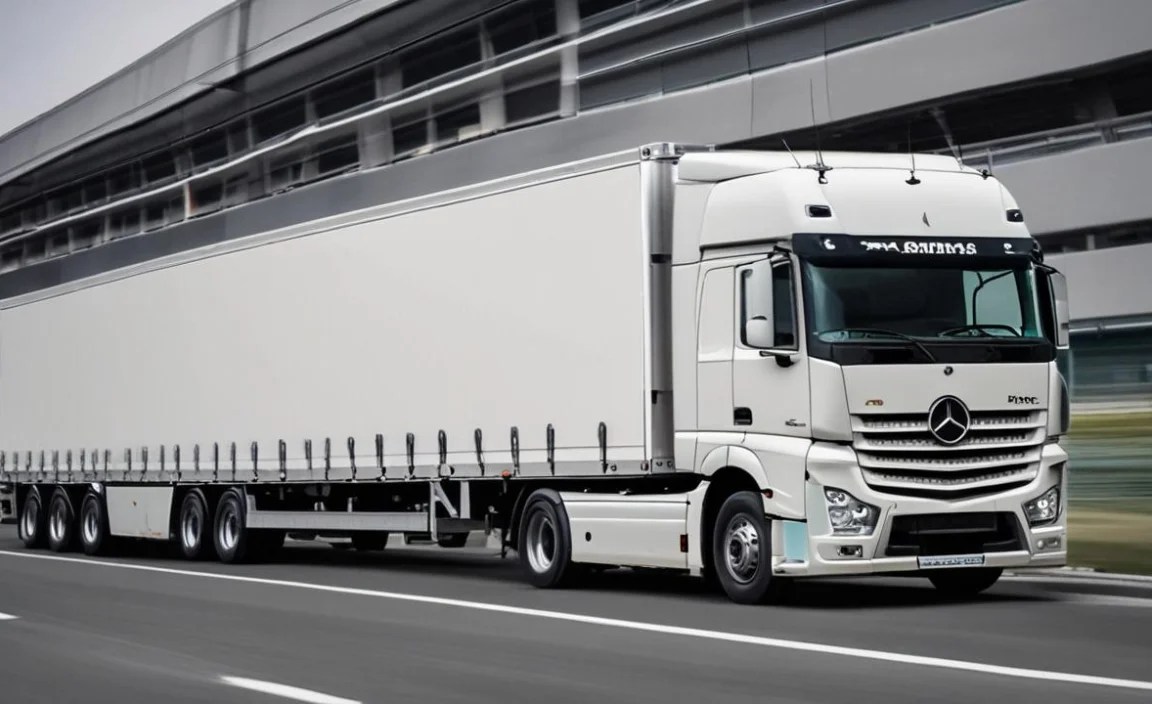
Mercedes-Benz equips the Actros with a range of innovative tools designed to boost efficiency. These can be broadly categorized into driver assistance and performance systems, vehicle diagnostics and maintenance tools, and fleet management platforms. Each plays a crucial role in the overall efficiency puzzle.
1. Predictive Powertrain Control (PPC)
This is one of the most impactful systems for fuel saving directly related to driving. Predictive Powertrain Control uses high-resolution topographic map data, GPS, and driving information to anticipate upcoming road conditions like inclines, declines, and curves. PPC can then automatically adjust the gear shifting and speed in a way that is most fuel-efficient.
How it Works:
- Topographic Data: PPC accesses 3D map data, understanding the road ahead – hills to climb, descents to use, and corners to navigate.
- Intelligent Gear Shifting: Based on this data, the system pre-selects the optimal gear for speed and efficiency, often coasting downhill to save fuel and using momentum effectively uphill.
- Speed Holding: PPC maintains a precise speed, avoiding unnecessary acceleration and deceleration cycles that waste fuel.
The result is a significant reduction in fuel consumption, often by up to 3% on long-haul routes, and it also contributes to a smoother, less stressful driving experience for the operator. It’s like having an expert co-driver constantly optimizing the truck’s power application.
2. Fleetboard Telematics System
Fleetboard is Mercedes-Benz’s comprehensive telematics solution. It’s the central hub for collecting, analyzing, and reporting on a vast array of vehicle and driver data. This system provides fleet managers with the insights needed to make informed decisions about operations, driver training, and vehicle utilization.
Key Fleetboard Features for Efficiency:
- Driver Performance Analysis: Tracks driving style (e.g., acceleration, braking, gear changes) and provides feedback for improvement.
- Logistics Services: Real-time vehicle tracking, route optimization, and efficient dispatching.
- Vehicle Status: Monitors critical vehicle data, enabling proactive maintenance and reducing downtime.
- Fuel Consumption Monitoring: Detailed reports on fuel usage per trip, per driver, and per vehicle.
Fleetboard transforms raw data into understandable metrics, allowing you to pinpoint areas for improvement and reward efficient driving. You can see how your drivers are performing in real-time and identify trends that might be impacting your operational costs.
3. Actros MirrorCam
The innovative MirrorCam system replaces traditional exterior mirrors with camera-based systems. While primarily designed for improved visibility and aerodynamics, it also contributes to efficiency. The two cameras, mounted on the sides at the top of the cab, transmit images to high-resolution screens inside. This enhances safety and can also subtly improve fuel efficiency through better aerodynamics.
Benefits include:
- Reduced Air Resistance: The absence of bulky mirrors streamlines the vehicle’s profile, leading to minor but cumulative fuel savings.
- Enhanced Visibility: Improved sightlines, especially in poor weather or at night, can lead to safer driving and fewer incidents that might cause downtime.
- Better Maneuverability: The zoom function on the screens aids in precise maneuvering, reducing the risk of minor damage.
While not solely an efficiency tool, the aerodynamic advantage and safety improvements offered by MirrorCam contribute positively to the overall operational cost and uptime of the Actros.
4. Active Brake Assist (ABA)
Active Brake Assist is a crucial safety feature that also plays a role in efficiency by preventing accidents. It can warn the driver of a potential collision with a vehicle ahead or with pedestrians and can independently initiate emergency braking if the driver doesn’t react in time.
How it enhances efficiency:
- Accident Prevention: The most significant way ABA saves money is by avoiding costly accidents, which lead to vehicle damage, repairs, downtime, and potential insurance premium increases.
- Reduced Wear and Tear: By managing braking more intelligently and sometimes mitigating harsh stops, ABA can contribute to reduced wear on brakes and tires.
- Smoother Driving: While its primary function is safety, the system’s reactions can sometimes lead to smoother driving, avoiding abrupt stops that impact fuel economy.
Safety is paramount, and in the Actros, safety features are intrinsically linked to operational efficiency.
5. Mercedes-Benz Truckätz – Efficient Fuel Management
Mercedes-Benz Truckätz is a specialized service and support program that offers expert advice and solutions for optimizing fuel consumption. This isn’t a single piece of hardware, but rather a comprehensive approach that integrates vehicle technology, driver training, and operational analysis.
Truckätz typically involves:
- Fuel Consulting: Dedicated specialists who analyze your fleet’s fuel usage and identify areas for improvement.
- Driver Training Programs: Targeted training modules to educate drivers on eco-driving techniques, leveraging Actros technology.
- Fleet Analysis: Utilizing data from systems like Fleetboard to provide customized recommendations for your fleet’s specific needs.
- Maintenance Optimization: Ensuring vehicles are maintained to peak performance standards, which directly impacts fuel efficiency.
By partnering with Mercedes-Benz Truckätz, fleets can leverage manufacturer expertise to achieve deeper, more sustainable fuel savings. This program is about continuous improvement and making efficiency a core part of your company culture.
Maximizing Efficiency: A Step-by-Step Approach for Drivers

For drivers, understanding and utilizing the Actros’s built-in efficiency tools is key. The greatest technology is only effective if it’s used correctly. Here’s a practical guide for drivers to get the most out of their Actros:
Step 1: Embrace Predictive Powertrain Control (PPC)
Allow PPC to manage your speed and gear changes whenever possible, especially on highways and intercity routes. Resist the urge to override it unless absolutely necessary. Trust that the system is designed to find the most economical way to navigate the road ahead.
Step 2: Monitor Fleetboard Performance Feedback
After each drive, or during breaks, review the performance feedback on your Fleetboard display or companion app. Pay attention to:
- Acceleration: Aim for gradual acceleration rather than rapid bursts.
- Braking: Anticipate stops and brake smoothly and as late as safely possible.
- Gear Selection: Ensure you are in the optimal gear for current conditions – PPC helps immensely here, but manual input should be considered when needed.
- Engine Load: Avoid unnecessarily high engine loads.
Use this feedback as a learning tool to refine your driving technique. Many fleets use this data to reward efficient drivers.
Step 3: Utilize the Eco Support Features
The Actros dashboard often displays “Eco Support” messages. These are real-time prompts to guide you towards more efficient driving. For example, it might suggest shifting up a gear, decelerating, or maintaining a steady speed.
Step 4: Optimize Route Planning (with Fleetboard)
If your version of Fleetboard includes routing services, use them to plan your journeys. Efficient routes often mean fewer kilometers, less time spent idling, and more consistent speeds, all contributing to better fuel economy. Consider factors like traffic, road gradients, and speed limits.
Step 5: Regular Vehicle Checks
A well-maintained truck is an efficient truck. Ensure you are performing daily walk-around checks to identify any obvious issues like underinflated tires, which significantly impact fuel consumption. Report any warning lights or unusual noises promptly.
Leveraging Actros Efficiency for Fleet Managers

Fleet managers are the orchestrators of efficiency. The Actros’s advanced tools provide a wealth of data, and understanding how to interpret and act on it is crucial for maximizing your fleet’s potential.
1. Data Analysis with Fleetboard
Dedicate time to regularly delve into the Fleetboard analytics. Look for trends:
- Fuel Consumption Reports: Identify vehicles or drivers with consistently higher fuel consumption and investigate the reasons.
- Driver Performance Scores: Use these scores to benchmark drivers and provide targeted coaching.
- Vehicle Uptime Reports: Analyze maintenance records and predict future service needs to minimize unscheduled downtime.
- Route Analysis: See if certain routes are proving more fuel-intensive and consider alternatives or driver adjustments.
For comprehensive information on vehicle diagnostics and maintenance, consult the Mercedes-Benz Trucks Service portal. This official resource can provide detailed guides and recommendations specific to your Actros model, ensuring you harness the full potential of your fleet’s advanced systems.
2. Implementing Driver Training Programs
Based on your Fleetboard data, implement targeted driver training. This could involve:
- Eco-driving workshops: Focusing on smooth acceleration, anticipating traffic, optimal gear changes, and effective use of cruise control.
- Performance feedback sessions: One-on-one meetings to discuss individual driver performance and set improvement goals.
- Gamification: Introducing friendly competitions or incentives for drivers who achieve the best efficiency scores.
Well-trained drivers are your most valuable asset in achieving efficiency.
3. Proactive Maintenance Scheduling
Use the telematics data and Mercedes-Benz’s recommended service intervals to schedule maintenance proactively. This isn’t just about preventing breakdowns; it’s about ensuring your trucks are always running at their optimal performance settings. A perfectly tuned engine and drivetrain will always be more fuel-efficient.
4. Route and Load Optimization
Work with your dispatch and logistics teams to ensure routes are optimized for efficiency and that loads are distributed correctly. Incorrect loading can affect aerodynamics and tire wear, indirectly impacting fuel economy. Fleetboard’s logistics services and real-time tracking can be invaluable here.
The Economic and Environmental Impact
The combined effect of these Actros fleet efficiency tools goes far beyond just saving a few liters of diesel. It translates into significant economic benefits and a reduced environmental footprint.
| Benefit Category | Economic Impact | Environmental Impact |
|---|---|---|
| Fuel Savings | Reduced operational costs, increased profit margins, competitive pricing. | Lower CO2 emissions, reduced greenhouse gas impact. |
| Reduced Downtime | Maximised vehicle utilization, fewer repair costs, predictable scheduling. | Less resource consumption from manufacturing replacement parts. |
| Driver Performance | Increased productivity, fewer accidents (reduced repair/insurance costs), improved driver retention. | Smoother driving leading to potentially less tire wear and brake dust. |
| Vehicle Longevity | Reduced wear and tear on components, extended vehicle lifespan, lower total cost of ownership. | Less frequent need for new vehicle production, saving energy and resources. |
Investing in the Actros and its efficiency tools is an investment in the future of your business and the planet. It aligns with increasing demands for sustainable logistics and can provide a competitive edge by showcasing a commitment to responsible operations.
FAQ: Your Actros Efficiency Questions Answered
Q1: How much fuel can I realistically save with Actros efficiency tools?
A1: Savings vary depending on driving style, routes, and specific tool implementation. However, Mercedes-Benz estimates that systems like Predictive Powertrain Control can reduce fuel consumption by up to 3% on average for long-haul operations. Combined with efficient driver training and comprehensive telematics, overall savings can reach significantly higher percentages.
Q2: Is the Fleetboard system difficult to use for drivers?
A2: Fleetboard is designed with user-friendliness in mind. The interface is intuitive, and drivers receive training on its functions. The primary performance feedback is often presented in a clear, graphical format, making it easy to understand at a glance.
Q3: Do I need to purchase Fleetboard separately, or is it standard?
A3: Fleetboard is typically offered as an optional extra or as part of specific equipment packages. It’s best to discuss the inclusion of Fleetboard telematics and its associated services with your Mercedes-Benz commercial vehicle dealer when configuring your Actros.
Q4: How does MirrorCam contribute to efficiency if it’s a visibility tool?
A4: MirrorCam replaces large, drag-inducing traditional mirrors with smaller camera housings. This reduction in ‘frontal area’ and aerodynamic resistance leads to a measurable improvement in fuel efficiency, particularly at higher speeds, in addition to its primary safety benefits.
Q5: Can I retrofit Actros efficiency tools onto older models?
A5: Some advanced digital services and telematics solutions, including aspects of Fleetboard, may be available for retrofitting depending on the specific older Actros model and its existing technical infrastructure. However, integrated systems like Predictive Powertrain Control and MirrorCam are typically factory-fitted and not available for retrofitting.
Q6: What is the role of driver training in Actros fleet efficiency?
A6: Driver training is paramount. Even the most advanced technology won’t reach its full potential without a driver who understands how to use it effectively. Training ensures drivers adopt eco-driving habits and leverage features like PPC and performance feedback to drive more efficiently, directly impacting fuel consumption and vehicle wear.
Q7: How does using these tools improve fleet management?
A7: These tools provide unparalleled visibility into fleet operations. Fleet managers can monitor driver performance, track fuel usage in real-time, predict maintenance needs, optimize routes, and identify inefficiencies. This data-driven approach allows for proactive decision-making, cost reduction, and overall operational improvement.
The Future of Actros Efficiency
Mercedes-Benz continuously innovates, and the Actros is always at the forefront. Future developments will likely see even deeper integration of AI and machine learning into fleet management systems, more sophisticated predictive analytics for maintenance, and further enhancements to driver assistance systems that go beyond basic safety and comfort to actively optimize every aspect of a journey.
The trend is towards increasingly autonomous and intelligent vehicles working in concert with smart fleet management platforms. This means greater potential for fuel savings, improved safety, and enhanced operational efficiency not just for individual trucks, but for entire logistics networks.
Conclusion
The Mercedes-Benz Actros is more than just a truck; it’s a powerful platform for efficient logistics. By understanding and implementing its suite of sophisticated efficiency tools – from the intelligent Predictive Powertrain Control and the data-rich Fleetboard system to the


