
Mercedes Actros Truck Specifications: Ultimate Power
Mercedes Actros truck specifications offer ultimate power, efficiency, and advanced technology, featuring robust engines, customizable configurations for various transport needs, and a focus on driver comfort and safety.
The Mercedes-Benz Actros is more than just a truck; it’s a statement of engineering excellence and powerful performance. If you’ve peeked at these giants on the road and wondered what makes them tick, you’re in the right place. Understanding its specifications can unlock a new appreciation for its capabilities, whether you’re a seasoned trucker, a fleet manager, or simply a curious automotive enthusiast. This guide will demystify the core of the Actros’s power, breaking down what makes it a leader in its class. We’ll explore the engines, the transmission, and the sheer force that defines the Mercedes Actros. Let’s dive into the heart of this remarkable machine.
Understanding the Mercedes Actros Truck Specifications: A Deep Dive

The Mercedes-Benz Actros has long been recognized as a benchmark in the heavy-duty truck segment, renowned for its impressive power, groundbreaking efficiency, and innovative features. These trucks are engineered to meet the diverse and demanding needs of modern logistics, from long-haul freight to specialized heavy transport. At its core, the Actros’s “ultimate power” comes from a sophisticated interplay of its robust engine options, advanced drivetrain, and intelligent design.
Engine Powerhouses: The Heart of the Actros
The choice of engine is paramount to a truck’s performance and suitability for specific tasks. The Mercedes Actros offers a range of powerful and efficient diesel engines, meticulously designed to deliver exceptional torque and horsepower while adhering to strict emissions standards.
Mercedes-Benz OM 471 Engine
The OM 471 is a cornerstone of the Actros lineup, representing a perfect balance of raw power and cutting-edge efficiency. This in-line six-cylinder engine is available in various displacement and power outputs, catering to a wide spectrum of operational requirements.
Torque and Horsepower: Power output typically ranges from approximately 400 hp to over 600 hp, with torque figures climbing as high as 3,000 Nm (approximately 2,213 lb-ft). This substantial torque is crucial for hauling heavy loads, especially on inclines.
Fuel Efficiency: Features like a common-rail injection system operating at up to 2,500 bar (36,250 psi) and the advanced turbocharger technology contribute to superior fuel atomization and combustion, leading to significant fuel savings.
Emissions Control: Compliant with the latest Euro VI emissions standards, the OM 471 utilizes Selective Catalytic Reduction (SCR) technology and an exhaust gas recirculation (EGR) system to minimize pollutants.
Mercedes-Benz OM 470 Engine
The OM 470 engine offers a slightly more compact yet still potent option, often found in configurations where a slightly lower power output is sufficient, but robust performance is still a must.
Power Range: Generally available in power ratings from around 320 hp to 430 hp.
Efficiency: It also benefits from advanced injection and combustion strategies, ensuring efficient fuel consumption for its class.
Application: Ideal for regional distribution and lighter long-haul applications where a balance between power and economy is key.
Mercedes-Benz OM 936 Engine
For lighter-duty Actros models, such as those used in distribution or specialized vocational applications, the OM 936 engine provides a powerful yet economical solution.
Power Output: Typically ranges from 200 hp to over 350 hp.
Compact Design: Its smaller displacement and inline four- or six-cylinder configurations make it suitable for trucks with payload and maneuverability as primary concerns.
Versatility: Offers excellent performance for urban delivery routes and mixed-use scenarios.
Transmission Systems: Seamless Power Transfer
The transmission is the critical link between the engine’s power and the drive wheels. The Mercedes Actros predominantly uses automated manual transmissions to optimize performance and ease of driving.
Mercedes PowerShift 3
The Mercedes PowerShift 3 is the standard automated manual transmission across most Actros models. It’s celebrated for its smooth shifting, efficiency, and intelligent control.
Smooth Shifting: The gearbox precisely selects the optimal gear based on load, speed, and driving conditions, ensuring a comfortable ride and minimizing fuel consumption.
Driving Modes: Features various driving modes (e.g., Economy, Power) and creep functions for easy maneuvering in tight spaces and during parking.
Maintenance: Designed for longevity and reduced maintenance compared to traditional manual transmissions.
Manual Transmission Options
While less common in newer models, some specific configurations or older generation Actros trucks might still come with manual transmissions, offering direct driver control. However, the trend is strongly towards automated systems for their efficiency and driver comfort benefits.
Chassis and Axle Configurations: Built for the Task
The Actros is available in a vast array of chassis and axle configurations, allowing it to be tailored for virtually any transport job. This flexibility is key to its “ultimate power” delivery, ensuring that the truck is always optimized for its intended purpose.
Rigid Trucks: Available in 2-axle, 3-axle, and 4-axle variants, suitable for construction, distribution, and specialized bodywork.
Tractor Units: Typically 4×2, 6×2, or 6×4 configurations, designed to haul semi-trailers for long-haul freight operations.
Axle Loads: Engineering for high axle loads ensures that the Actros can handle substantial weight capacities safely and efficiently.
Cab Options: Comfort Meets Functionality
While not directly related to engine power, the cab design significantly impacts a driver’s ability to operate efficiently and safely, indirectly contributing to the truck’s overall performance. Actros cabs are engineered with driver comfort, ergonomics, and aerodynamics in mind.
Aerodynamics: Streamlined designs reduce drag, improving fuel efficiency and reducing noise.
Ergonomics: Driver-focused dashboards, comfortable seating, and intuitive controls minimize fatigue on long journeys.
Safety: Advanced safety features, including emergency braking assist and lane keeping assist, are integrated into the cab design.
Technical Specifications at a Glance
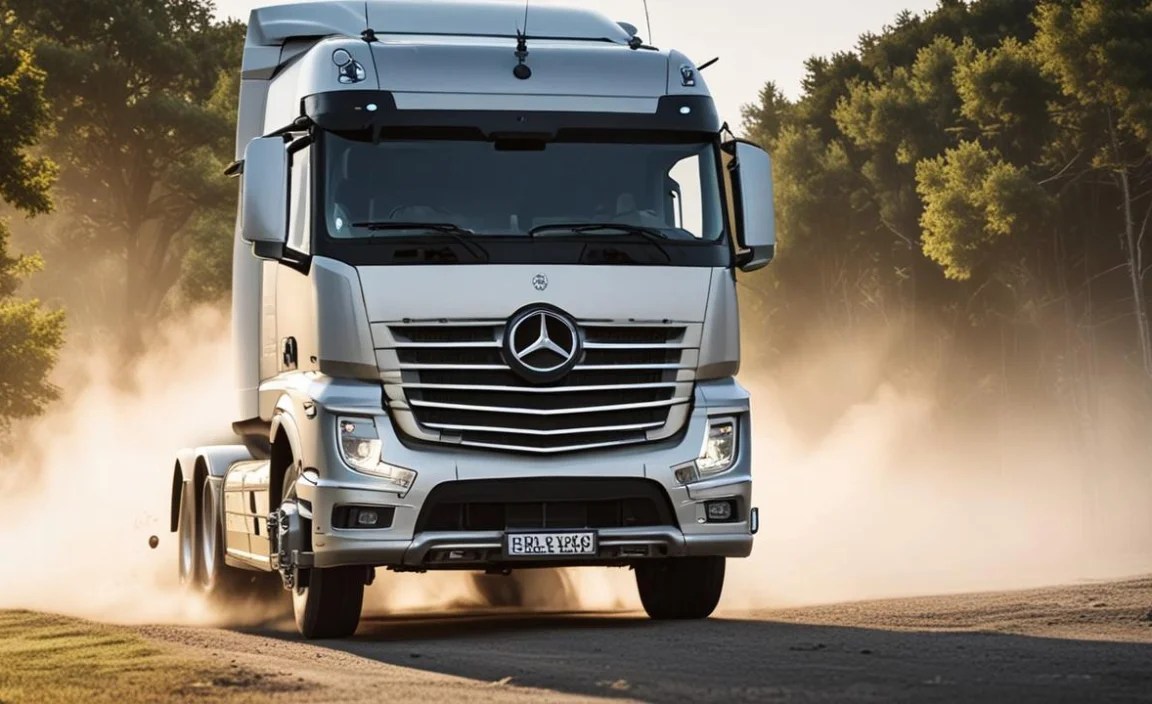
To provide a clearer picture of the Mercedes Actros’s capabilities, here’s a look at some typical technical specifications for a popular configuration. Note that specific figures can vary significantly based on the model, engine variant, and chosen options.
| Specification | Typical Range/Details |
|---|---|
| Engine Type | In-line six-cylinder diesel with turbocharging and intercooling (e.g., OM 471) |
| Displacement | (e.g., 12.8 liters for OM 471) |
| Power Output | 408 hp – 625 hp (approx. 300 kW – 460 kW) |
| Torque | 2,100 Nm – 3,000 Nm (approx. 1,550 lb-ft – 2,213 lb-ft) |
| Transmission | Mercedes PowerShift 3 (automated manual) |
| Gear Ratios | Typically 12 forward, 4 reverse gears |
| Fuel System | Common-rail direct injection system |
| Emissions Standard | Euro VI |
| Front Axle Load Capacity | Up to 9,000 kg (19,841 lbs) |
| Rear Axle Load Capacity | Up to 13,000 kg (28,660 lbs) per axle (depending on configuration) |
| Gross Vehicle Weight (GVW) | Up to 26,000 kg (57,320 lbs) for rigid trucks; up to 44,000 kg (97,000 lbs) or more for tractor units (depending on regulations and configuration) |
| Fuel Tank Capacity | Variable, up to 900 liters (237 US gallons) or more with dual tanks |
Understanding Key Performance Metrics
Horsepower (hp) / Kilowatts (kW): This measures the engine’s power output and its ability to perform work – essentially, how fast it can do that work. Higher horsepower generally means higher top speeds and better acceleration (for a truck).
Torque (Nm / lb-ft): This is the rotational force the engine produces. Torque is critical for trucks, as it directly relates to their ability to pull heavy loads from a standstill, climb steep gradients, and maintain momentum under load. High torque at low engine speeds is a hallmark of powerful, efficient trucking.
Gross Vehicle Weight (GVW) / Gross Combination Weight (GCW): GVW is the maximum permissible weight of the truck itself. GCW is the maximum permissible weight of the truck and its load, including any trailer. These ratings determine the truck’s legal load-carrying capacity.
Fuel Efficiency (L/100km or MPG): While not a direct power statistic, it’s intrinsically linked to how effectively the engine’s power is utilized. Modern Actros engines are engineered for optimal fuel economy through advanced combustion and reduced friction.
Advanced Technologies Enhancing Actros Performance
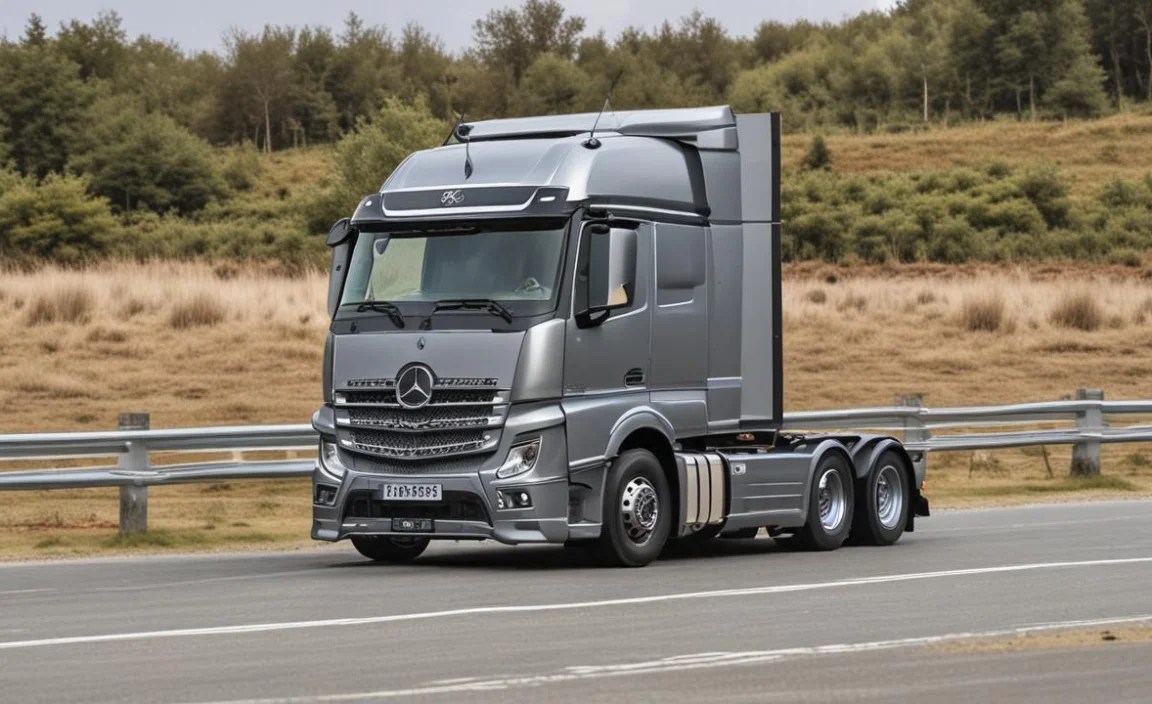
The “ultimate power” of the Mercedes Actros is amplified by a suite of advanced technologies designed to optimize performance, efficiency, and safety.
Predictive Powertrain Control (PPC)
The PPC system uses 3D map data, GPS, and driving-style analysis to anticipate upcoming road topography.
How it Works: It precisely controls the engine, transmission, and braking system to optimize speed and gear selection for maximum fuel efficiency and smooth driving.
Benefits: Reduces fuel consumption by up to 3% on long-distance routes and minimizes unnecessary braking and acceleration. It essentially drives the truck “smarter.”
“The integration of systems like Predictive Powertrain Control is a testament to Mercedes-Benz’s commitment to not just raw power, but also intelligent efficiency. It’s about making the most of every drop of fuel and every horsepower generated.”
Fleetboard Telematics
Fleetboard provides comprehensive telematics solutions that offer insights into vehicle performance, driver behavior, and operational efficiency.
Data Analysis: Tracks fuel consumption, driving times, routes, and vehicle diagnostics.
Performance Improvement: Helps fleet managers identify areas for improvement, optimize routes, and provide targeted driver training.
Remote Diagnostics: Allows for proactive maintenance, reducing downtime and unexpected repairs.
Safety Systems
While focusing on power, Mercedes-Benz never compromises on safety.
Active Brake Assist (ABA): Can automatically apply maximum braking force if it detects an impending collision with a vehicle ahead.
Lane Keeping Assist (LKA): Warns the driver if the vehicle unintentionally drifts out of its lane.
Attention Assist: Monitors driver behavior to detect signs of fatigue and alerts the driver.
These systems work in harmony to ensure that the immense power of the Actros is always managed safely and efficiently.
Choosing the Right Actros for Your Needs

The vast array of specifications means that selecting the correct Actros model is crucial for maximizing its “ultimate power” for your specific application.
Key considerations include:
Intended Use: Long-haul, regional distribution, construction, or specialized transport will dictate the required axle configuration, engine power, and chassis type.
Payload and Gross Weight: Understanding your typical loads will determine the necessary GVW and GCW ratings.
Fuel Efficiency vs. Power: While powerful, balancing this with fuel economy needs is essential for operational costs. Newer engines like the OM 471 offer high power with impressive efficiency.
Towing Requirements: For tractor units, the fifth-wheel coupling rating and transmission choice are vital.
For those involved in heavy haulage, configurations with higher axle loads and the most powerful engine variants, such as the OM 471 producing upwards of 600 hp and 3,000 Nm of torque, would be the choice to unlock “ultimate power.” For city distribution, lighter, more maneuverable versions with the OM 936 or lower-powered OM 470 might be more appropriate.
Frequently Asked Questions (FAQ)
What is the most powerful Mercedes-Benz Actros engine?
The most powerful engine typically found in the Mercedes-Benz Actros is the OM 471 in its top-tier configuration, which can produce up to 460 kW (approximately 625 hp) and 3,000 Nm (approximately 2,213 lb-ft) of torque. This engine is designed for the most demanding heavy-duty applications.
Are all Mercedes Actros trucks automatic?
Most modern Mercedes-Benz Actros trucks are equipped with the Mercedes PowerShift 3 automated manual transmission. While manual transmissions were available on older models or specific configurations, the industry trend, driven by efficiency and driver comfort, is heavily towards automated systems.
What does “Euro VI” mean for Actros specifications?
“Euro VI” refers to the European Union’s regulation on emissions for heavy-duty vehicles. It sets strict limits on pollutants like nitrogen oxides (NOx) and particulate matter. Mercedes-Benz Actros trucks meeting Euro VI standards utilize advanced exhaust aftertreatment systems, like SCR with AdBlue, to achieve these lower emissions while maintaining high performance.
How does the Mercedes PowerShift 3 transmission improve performance?
Mercedes PowerShift 3 optimizes gear shifts based on driving conditions, load, and speed, ensuring the engine operates in its most efficient range. This leads to smoother acceleration, reduced fuel consumption, and less wear and tear on the drivetrain compared to traditional manual transmissions. It also features intelligent driving modes for various scenarios.
Can I customize the specifications of a Mercedes Actros truck?
Yes, Mercedes-Benz offers a high degree of customization for the Actros. Buyers can choose from various engine power outputs, chassis configurations (rigid or tractor, axle ratios), cab types, suspension systems, and optional equipment to tailor the truck precisely to their operational requirements. This makes the Actros incredibly versatile.
What is the typical fuel tank capacity for a Mercedes Actros?
Fuel tank capacity can vary significantly depending on the model and configuration. Standard options often range up to a total capacity of around 500-900 liters when dual tanks are specified. For long-haul operations, larger tanks can be fitted to extend operational range and reduce the frequency of refueling stops.
How does the Actros achieve its “ultimate power” while being fuel-efficient?
“Ultimate power” in the Actros is achieved through a combination of powerful, high-torque engines (like the OM 471), efficient transmissions (Mercedes PowerShift 3), aerodynamic design, and intelligent systems like Predictive Powertrain Control. These technologies ensure that the engine’s power is used effectively, minimizing waste and maximizing fuel economy even under heavy loads.
Conclusion
The Mercedes-Benz Actros truck specifications truly embody the concept of ultimate power, a feat achieved through meticulous engineering, advanced technology, and a deep understanding of the transportation industry’s demands. From the potent OM 471 engine, delivering colossal torque and horsepower, to the intelligent Mercedes PowerShift 3 transmission that smoothly channels that force to the wheels, every component is designed for peak performance and efficiency.
Beyond raw power, the Actros showcases Mercedes-Benz’s commitment to innovation with features like Predictive Powertrain Control, which optimizes every journey for fuel savings and driver comfort. The extensive range of configurations, from rigid trucks to heavy-duty tractor units, ensures that there’s an Actros built for virtually any task. When you combine these sophisticated specifications with the legendary Mercedes-Benz reliability and focus on driver well-being, it’s clear why the Actros continues to set benchmarks in the world of heavy-duty trucking. Its ultimate power isn’t just about brute force; it’s about intelligent, efficient, and reliable performance that drives businesses forward.


