
Mercedes V-Class MPG Ratings: Powerful Efficiency
Are you wondering about the Mercedes-Benz V-Class MPG ratings? This luxurious van offers impressive fuel efficiency for its size, blending powerful performance with smart economy. Expect excellent mileage, especially on longer journeys, making it a truly efficient choice for families and businesses alike.
The Mercedes-Benz V-Class has long been celebrated for its blend of luxurious comfort and spacious utility. But for many discerning drivers, a crucial question arises: how does this premium people-mover stack up in terms of fuel efficiency? Understanding the Mercedes V-Class MPG ratings is key to appreciating its everyday practicality and long-term value. Many prospective buyers and current owners find themselves comparing its fuel economy to other vehicles in its class, often with a desire to reconcile its powerful presence with an efficient stride.
Worry not! This guide is designed to demystify the MPG figures for the Mercedes-Benz V-Class. We’ll break down what these numbers mean, explore the factors that influence them, and offer practical tips to help you maximize your V-Class’s fuel economy. Get ready to discover how Mercedes-Benz engineers have achieved such a compelling balance of performance and efficiency in this exceptional vehicle.
Frequently Asked Questions About Mercedes V-Class MPG
What is the average MPG for a Mercedes-Benz V-Class?
The average MPG for a Mercedes-Benz V-Class can vary significantly depending on the specific model year, engine, and driving conditions. However, you can generally expect to see combined fuel economy figures in the range of 30-40 MPG (UK Gallons) or 25-33 MPG (US Gallons) for diesel models, and slightly lower for petrol variants. These figures reflect a strong performance for a vehicle of its size and luxury segment.
Does the Mercedes-Benz V-Class come in petrol and diesel?
Yes, the Mercedes-Benz V-Class has historically been offered with both diesel and, in some markets, petrol engine options. Diesel engines are generally favored for their superior fuel economy and torque, making them a popular choice for drivers covering significant distances. Petrol models might offer a different driving dynamic but typically yield lower MPG ratings.
How can I improve my Mercedes V-Class’s fuel economy?
Improving your V-Class’s fuel economy involves a combination of driving habits and vehicle maintenance. Key strategies include smooth acceleration and braking, maintaining a consistent speed, reducing unnecessary weight, ensuring proper tire inflation, and keeping up with regular servicing. Using eco-driving modes, if available, can also make a difference.
Are V-Class MPG ratings affected by passenger or cargo load?
Absolutely. Carrying a full load of passengers and cargo significantly increases the vehicle’s weight. This extra weight requires more energy (fuel) to move, thus reducing the overall MPG ratings. For optimal fuel efficiency, it’s best to travel with only necessary weight onboard.
Are the V-Class MPG figures tested in real-world conditions?
The official MPG figures provided by Mercedes-Benz are typically derived from standardized testing cycles (like WLTP or EPA). While these cycles are designed to be representative, real-world fuel economy can differ due to variations in driving style, traffic conditions, weather, and terrain. Always consider your personal driving habits when comparing official and actual MPG.
Does the V-Class have an eco-driving mode?
Many V-Class models are equipped with an “ECO” driving mode. Engaging this mode typically adjusts engine performance, transmission shift points, and climate control settings to optimize fuel consumption. It often encourages smoother acceleration and more efficient operation, contributing to better MPG.
Why is my V-Class MPG lower than advertised?
Several factors can contribute to your V-Class’s MPG being lower than advertised. These include aggressive driving, frequent short trips (especially in cold weather), carrying heavy loads, incorrect tire pressure, and needing routine maintenance such as air filter replacement or oil changes. In some cases, environmental factors like strong headwinds or hilly terrain can also play a role.
Mercedes V-Class MPG Ratings: Powerful Efficiency Revealed
The Mercedes-Benz V-Class is a statement piece. It’s a sanctuary on wheels, a versatile transporter, and a symbol of refined travel. For many, the idea of a large, luxurious vehicle might conjure images of thirsty engines, but Mercedes-Benz has consistently worked to defy this perception. The V-Class, in particular, showcases a remarkable commitment to blending potent performance with impressive fuel efficiency. Understanding its MPG ratings isn’t just about numbers; it’s about appreciating intelligent engineering that delivers both power and economy.
In this comprehensive guide, we will delve deep into the Mercedes V-Class MPG ratings. We’ll explore how these figures are determined, what you can realistically expect across different V-Class models, and the innovative technologies that help achieve this balance. We’ll also arm you with practical tips to maximize your own V-Class’s fuel economy, ensuring your luxurious journeys are also remarkably efficient.
Decoding the MPG Figures: Official Standards Explained
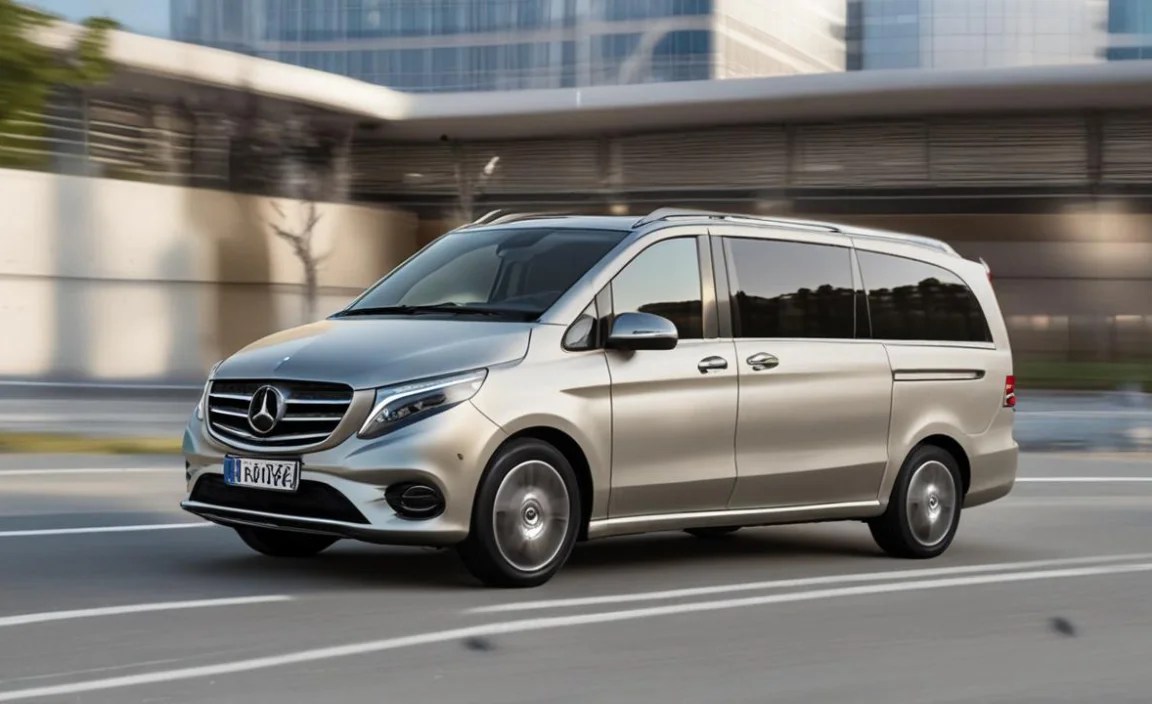
When you see MPG ratings for any car, including the Mercedes-Benz V-Class, they are usually based on standardized testing procedures. These procedures are crucial for allowing consumers to compare different vehicles on an even playing field. The two primary testing cycles you’ll encounter globally are:
- WLTP (Worldwide Harmonised Light Vehicles Test Procedure): This is the current standard for official fuel consumption and CO2 emissions figures in Europe and many other regions. WLTP is a more realistic test than its predecessor, the NEDC, as it simulates driving in various conditions, including city traffic, rural roads, and motorways, with different driving speeds and accelerations.
- EPA (Environmental Protection Agency) Fuel Economy Standards: For vehicles sold in the United States, the EPA is responsible for testing and reporting fuel economy. The EPA conducts its own standardized tests, which also aim to reflect real-world driving conditions, though specific methodologies differ slightly from WLTP.
It’s important to remember that these are laboratory-derived figures. Your actual MPG will almost always vary based on your personal driving habits, the specific route, traffic conditions, weather, and the vehicle’s load. Think of these official ratings as a benchmark rather than a guaranteed outcome.
V-Class Engine Options and Their Impact on MPG

The choice of engine is a primary determinant of a V-Class’s fuel efficiency. Mercedes-Benz has historically focused on offering robust yet economical diesel engines for the V-Class, recognizing the demands of van-based utility vehicles and long-distance travel. However, petrol options have also been available in certain markets or for specific V-Class generations.
Diesel Engines: The Efficiency Champions
Diesel engines are renowned for their torque and inherent fuel efficiency, making them a natural fit for a vehicle like the V-Class. They typically offer better MPG ratings than their petrol counterparts, especially on the open road. The V-Class has featured various iterations of Mercedes-Benz’s excellent diesel powertrains:
- OM 654 (Latest Generations): This is Mercedes-Benz’s state-of-the-art modular four-cylinder diesel engine. It’s designed for efficiency and lower emissions. Depending on the specific tune and the V-Class variant, expect very competitive MPG figures.
- OM 651 (Previous Generations): A highly reliable and capable diesel engine that powered many V-Class models. While older, it still provides strong performance and commendable fuel economy.
Diesel engines achieve their efficiency partly through the principle of compression ignition and the higher energy density of diesel fuel. They also tend to produce more torque at lower RPMs, meaning less revving is needed to maintain speed, which saves fuel.
Petrol Engines: Performance and Refinement
In some markets or for specific applications, V-Class models may be equipped with petrol (gasoline) engines. These engines often provide a smoother, quieter driving experience and can offer more spirited acceleration, but typically at the expense of fuel economy compared to diesel.
While less common for the V-Class in many regions due to the practical nature of the vehicle, petrol engines can still be surprisingly efficient when paired with modern transmissions and engine management systems. However, if maximizing MPG is your absolute priority, a diesel V-Class will almost always be the better choice.
Current Mercedes V-Class MPG Ratings: What to Expect

The specific MPG ratings for the current Mercedes-Benz V-Class vary based on the model designation, engine output, and body length (standard, long, or extra-long). Mercedes-Benz aims to provide clear figures for each configuration, typically presented as urban, extra-urban, and combined figures.
Let’s look at typical expected MPG ratings (using WLTP figures for illustration, acknowledging that US EPA figures will differ):
| Model / Engine | Body Length | Fuel Type | Urban MPG (WLTP) | Extra-Urban MPG (WLTP) | Combined MPG (WLTP) |
|---|---|---|---|---|---|
| V 220 d | Standard | Diesel | 35-38 MPG (UK Gallons) | 40-44 MPG (UK Gallons) | 37-41 MPG (UK Gallons) |
| V 220 d | Long | Diesel | 34-37 MPG (UK Gallons) | 39-43 MPG (UK Gallons) | 36-40 MPG (UK Gallons) |
| V 300 d | Standard | Diesel | 32-35 MPG (UK Gallons) | 37-40 MPG (UK Gallons) | 34-38 MPG (UK Gallons) |
| V 300 d | Long | Diesel | 31-34 MPG (UK Gallons) | 36-39 MPG (UK Gallons) | 33-37 MPG (UK Gallons) |
| V 300 g (if applicable) | Standard | Petrol | 22-25 MPG (UK Gallons) | 28-32 MPG (UK Gallons) | 24-28 MPG (UK Gallons) |
Note: These figures are approximate and based on typical WLTP data. Actual MPG can vary. For precise figures for your region and specific model, always consult the official Mercedes-Benz specifications.
As you can see, even the more powerful V 300 d offers excellent fuel economy, demonstrating Mercedes-Benz’s focus on efficiency across its range. The diesel variants consistently achieve figures that are highly competitive for a vehicle of this size and capability.
Factors Influencing Your V-Class MPG

While the official ratings provide a benchmark, your real-world fuel consumption can be influenced by a multitude of factors. Understanding these can empower you to make adjustments and improve your V-Class’s efficiency:
1. Driving Style
This is arguably the most significant factor. Aggressive driving—rapid acceleration from a standstill, hard braking, and exceeding speed limits—consumes considerably more fuel than smooth, anticipatory driving. According to resources from the U.S. Department of Energy, aggressive driving can reduce MPG by up to 33% on the highway and 5–15% in city driving.
- Smooth Acceleration: Gently press the accelerator pedal.
- Anticipatory Braking: Look ahead and ease off the throttle rather than braking sharply at the last moment.
- Maintain Steady Speed: Cruise control can be your friend on highways, maintaining a consistent speed for optimal efficiency.
- Avoid Excessive Idling: If you’re stopped for more than a minute, consider turning off the engine.
2. Vehicle Maintenance
A well-maintained V-Class runs more efficiently. Key maintenance items that impact MPG include:
- Tire Pressure: Underinflated tires increase rolling resistance, making the engine work harder. Regularly check your tire pressure against the manufacturer’s recommended levels. The National Highway Traffic Safety Administration (NHTSA) strongly emphasizes the importance of proper tire inflation for safety and fuel economy.
- Air Filter: A clogged air filter restricts airflow to the engine, reducing performance and increasing fuel consumption.
- Engine Oil: Using the correct grade of engine oil and ensuring it’s changed at recommended intervals reduces friction within the engine.
- Spark Plugs (Petrol): Worn spark plugs can lead to incomplete combustion, wasting fuel.
- Diesel Particulate Filter (DPF): Ensuring the DPF is functioning correctly and regenerating as intended is vital for diesel engines without compromising efficiency.
3. Vehicle Load
Extra weight means more fuel burned. Every additional 100 lbs (approx. 45 kg) of weight can reduce MPG by about 1-2%. Remove any unnecessary items from the boot or cabin before embarking on a journey.
- Cargo: Don’t transport items you don’t need.
- Passengers: While the V-Class is built for passengers, consider the cumulative effect of a full complement on longer trips if efficiency is a primary concern.
4. Tire Type and Condition
The tires fitted to your V-Class play a role. Low rolling resistance tires are designed to minimize friction, contributing to better MPG. Ensure your tires are in good condition and properly aligned.
5. Aerodynamics
The V-Class is designed with aerodynamics in mind by Mercedes-Benz, but external factors can still impact it. Rooftop carriers, bike racks, or even open windows at higher speeds can increase aerodynamic drag and thus fuel consumption.
- Remove Roof Racks: If not in use, remove any roof racks or boxes.
- Close Windows: At highway speeds, driving with windows down is less efficient than using the air conditioning moderately.
6. Driving Environment
Where you drive matters:
- City Driving: Frequent stops, starts, and lower average speeds lead to lower MPG.
- Highway Driving: Consistent speeds on the open road generally yield the best MPG.
- Terrain: Driving uphill requires more energy than driving on flat ground.
- Weather: Cold temperatures can temporarily reduce fuel efficiency as the engine takes longer to warm up. Strong headwinds also increase fuel consumption.
Maximizing Your V-Class MPG: Practical Eco-Driving Tips

With the understanding of what influences MPG, here are actionable steps you can take to drive your Mercedes-Benz V-Class more economically:
Before You Drive:
- Check Tire Pressure: As mentioned, this is critical. Do this at least once a month. Your V-Class’s manual will specify the correct pressures.
- Clear Unnecessary Weight: Empty the boot of anything you don’t need for your trip.
- Plan Your Route: Use navigation systems to avoid traffic congestion and hilly areas where possible.
While Driving:
- Use ECO Mode: If your V-Class is equipped with an ECO drive mode, activate it for your journey, especially for commuting or long drives.
- Gentle Inputs: Accelerate smoothly and brake as early as possible. Anticipate traffic light changes and slow-moving vehicles.
- Maintain Optimal Speed: Stick to the speed limit or slightly below on highways. Research suggests fuel efficiency drops significantly above 50-60 mph (80-100 km/h).
- Utilize Cruise Control: On relatively flat, open roads, cruise control helps maintain a steady speed, which is more fuel-efficient than manual throttle control.
- Minimize Air Conditioning Use: While modern AC systems are efficient, they do draw power. Use it judiciously, and at higher speeds, it’s often more efficient to use the AC than to open windows.
- Shift Wisely (if manual): If your V-Class has a manual transmission, shift up to higher gears as soon as it’s appropriate without straining the engine. Automatic transmissions in ECO mode will handle this optimally.


