
Sprinter Van Insulation Materials: Ultimate Comfort
Quick Summary:
Choosing the right sprinter van insulation materials is crucial for year-round comfort. Options range from budget-friendly options like Thinsulate and Reflectix to professional-grade choices like spray foam insulation. Understanding their R-values, R-value per inch, and installation methods will help you achieve the perfect climate control in your van.
Welcome to the exciting world of transforming your Mercedes-Benz Sprinter van into a personalized haven! Whether you’re dreaming of cross-country adventures, a cozy mobile office, or a weekend escape pod, one element stands paramount: comfort. And at the heart of comfort, especially when the temperature outside decides to be temperamental, lies effective insulation. Insulating a Sprinter van can seem daunting, but with the right knowledge, it’s an achievable project that pays dividends in comfort and energy efficiency. We’ll break down the most popular sprinter van insulation materials, their pros and cons, and how to select the best fit for your build. Get ready to create a climate-controlled sanctuary on wheels!
Sprinter Van Insulation Materials: Your Guide to Ultimate Comfort

As a Mercedes-Benz enthusiast, I understand the desire to optimize every aspect of your vehicle. For Sprinter van owners looking to convert their vans for living, working, or adventuring, insulation is a non-negotiable first step. It’s the barrier that keeps the heat in during cold winters and the heat out during scorching summers. Beyond comfort, proper insulation also helps prevent condensation, which can lead to mold and rust – unwelcome guests in any vehicle, especially a luxury one like a Sprinter. This guide will demystify the world of insulation materials, empowering you to make informed decisions for your unique needs.
Why is Insulation So Important for Your Sprinter Van?
Think of your Sprinter van’s metal walls as a giant conductor. Without insulation, heat from the sun will beam into your van, turning it into an oven. Conversely, in colder weather, the heat generated by your heater (or even your body heat) will quickly escape, leaving you chilly and your heater working overtime. Effective insulation acts as a thermal blanket, slowing down heat transfer. This means:
- Consistent Temperatures: Enjoy comfortable living and sleeping regardless of the season.
- Reduced Energy Consumption: Less reliance on heaters and air conditioners means lower fuel costs or more efficient use of solar power.
- Condensation Control: By keeping the interior walls warmer, insulation significantly reduces the formation of condensation, preventing moisture damage.
- Noise Reduction: Many insulating materials also offer sound-dampening qualities, creating a quieter and more peaceful cabin environment.
Choosing the right materials is the first, and arguably most critical, step in achieving these benefits. Let’s explore your options.
Decoding Insulation Basics: R-Value and Beyond

Before we dive into specific materials, it’s essential to understand a few key terms. The most common measure of an insulation material’s effectiveness is its R-value. The higher the R-value, the better the material is at resisting heat flow.
R-Value: This number indicates how well a material insulates. A higher R-value means better thermal resistance.
R-value per Inch: Since space in a Sprinter van is at a premium, the R-value per inch is a critical consideration. A material with a higher R-value per inch can provide more insulation in less space.
Thermal Bridging: This occurs when heat bypasses insulation through highly conductive materials, such as the metal ribs (studs) of your van. Proper insulation installation aims to minimize thermal bridging.
Permeability: This refers to how easily water vapor can pass through a material. Some insulations are vapor barriers, others are vapor-permeable. The right choice depends on your climate and overall build strategy.
Top Sprinter Van Insulation Materials: A Deep Dive

The market offers a wide array of insulation materials, each with its own strengths and weaknesses. We’ll cover the most popular choices for van builds, from DIY-friendly options to professional-grade solutions.
1. Closed-Cell Spray Foam Insulation
Often considered the gold standard for van insulation, closed-cell spray foam offers a high R-value per inch and creates an excellent air and vapor barrier. When applied professionally, it expands to fill every nook and cranny, effectively sealing the van’s interior and minimizing thermal bridging. It’s rigid, adds structural integrity, and is resistant to moisture.
Pros:
- Highest R-value per inch among common options.
- Excellent air and vapor barrier.
- Fills irregular spaces for a complete seal.
- Adds structural rigidity.
- Resistant to mold and mildew.
Cons:
- Most expensive option.
- Typically requires professional installation.
- Difficult to remove or change once applied.
- Can off-gas temporarily during and after application (ensure proper ventilation).
R-value: Approximately R-6 to R-7 per inch.
Best for: Builders seeking maximum thermal performance and a complete, seamless seal, especially in colder climates or for full-time living.
2. Rigid Foam Boards (XPS and Polyiso)
Rigid foam boards are a popular choice for their ease of installation and good R-value. Expanded Polystyrene (EPS) and Extruded Polystyrene (XPS) are common, with Polyisocyanurate (Polyiso) offering an even higher R-value. These boards are cut to fit between the van’s metal ribs. You’ll want to seal the edges with tape or spray foam to create an effective thermal break.
Pros:
- Good R-value per inch.
- Relatively easy to cut and install DIY.
- Acts as a vapor barrier.
- Lighter than some other options.
Cons:
- Doesn’t fill irregular spaces as well as spray foam, potentially leaving gaps.
- Requires careful sealing of seams and edges to prevent air leaks.
- Less resistant to damage than spray foam.
R-value:
- XPS: R-5 per inch
- Polyiso: R-6 to R-7 per inch (can degrade slightly over time)
Best for: DIYers who want a good balance of performance, cost, and ease of installation for flat surfaces or when combining with other insulation types.
3. Thinsulate Acoustic & Thermal Insulation
A popular mid-range option, Thinsulate (often made by 3M) is a non-woven synthetic material that offers both thermal and acoustic insulation. It’s flexible, easy to cut, and can be layered to achieve desired R-values. It’s also moisture-resistant and doesn’t settle over time like fiberglass.
Pros:
- Excellent acoustic dampening properties.
- Good thermal insulation.
- Moisture-resistant and doesn’t promote mold growth.
- Easy to cut and install, especially in curved areas.
- Doesn’t require protective gear during installation (unlike fiberglass).
Cons:
- Lower R-value per inch compared to spray foam or rigid boards.
- Can be more expensive than basic foam boards.
- Needs to be compressed to fit, which can slightly reduce its R-value.
R-value: Approximately R-4 to R-5 per inch (varies by product thickness).
Best for: Builders looking for a material that excels at both sound deadening and thermal comfort, and who prefer a flexible, DIY-friendly option.
4. Sheep Wool Insulation
A more eco-friendly and natural option, sheep wool insulation is gaining popularity. It’s a breathable material that can absorb and release moisture without losing its insulating properties, making it excellent for managing humidity. It also offers good thermal and acoustic benefits.
Pros:
- Excellent moisture management (hygroscopic).
- Good thermal and acoustic insulation.
- Sustainable and natural material.
- Does not settle over time.
- Naturally resistant to fire and pests.
Cons:
- More expensive than many synthetic options.
- Can be harder to source in some regions.
- Requires a vapor control layer in certain climates.
- Lower R-value per inch compared to the best rigid foams or spray foam.
R-value: Approximately R-3.5 to R-3.8 per inch.
Best for: Eco-conscious builders who prioritize natural materials and superior moisture regulation.
5. Havelock Wool Insulation
Havelock Wool is a premium brand of sheep wool insulation specifically processed for vehicle insulation. It’s treated to be naturally flame-retardant and offers fantastic thermal and acoustic properties. It’s also highly breathable and resistant to mold and mildew.
Pros:
- Excellent thermal and acoustic insulation for its R-value.
- Naturally breathes, managing moisture effectively.
- Flame retardant and pest resistant.
- Sustainable and easy to work with.
Cons:
- Higher cost compared to some alternatives.
- Requires careful consideration of vapor barriers depending on climate.
R-value: Approximately R-3.5 to R-3.8 per inch.
Best for: Those seeking a high-performance, natural, and durable insulation solution that excels in moisture management.
6. Fiberglass Insulation
A traditional and widely available insulation material. Fiberglass is composed of fine glass fibers and is known for its cost-effectiveness and decent thermal R-value. However, it has significant drawbacks for van conversions. It can absorb moisture, leading to reduced R-value and mold growth, and it requires significant personal protective equipment (PPE) during installation to avoid skin and respiratory irritation.
Pros:
- Very affordable and widely available.
- Decent R-value.
Cons:
- Absorbs moisture readily, losing R-value and promoting mold.
- Requires extensive PPE (gloves, masks, eye protection) during installation.
- Can settle over time, reducing effectiveness.
- Doesn’t offer significant acoustic benefits.
- Can be difficult to fit into van cavities without compressing.
R-value: Approximately R-3.5 to R-4 per inch.
Best for: Budget-conscious builders who understand and can mitigate its moisture absorption issues, though generally not recommended for van builds.
7. Reflectix / Radiant Barrier
Reflectix is a radiant barrier insulation. It consists of a layer of plastic bubble wrap (or foam) sandwiched between two highly reflective aluminum foil surfaces. Its effectiveness relies on creating an air gap. While it can reduce radiant heat transfer (heat from the sun hitting the metal), it has a very low inherent R-value without that air gap. It’s often used in conjunction with other insulation types, particularly in warmer climates, and is great for covering windows and reducing solar gain.
Pros:
- Excellent at reflecting radiant heat.
- Very inexpensive.
- Easy to cut and install.
- Thin and takes up minimal space.
- Acts as a vapor barrier.
Cons:
- Very low R-value on its own; requires an air gap to be effective.
- Not effective against conductive or convective heat transfer.
- Can create condensation issues if not installed correctly with adequate ventilation.
R-value: Up to R-10 with a proper air gap, but on its own, closer to R-1.
Best for: Supplementing other insulation in hot climates or for window coverings to block solar heat. Not recommended as a primary insulation.
R-Value Comparison Table
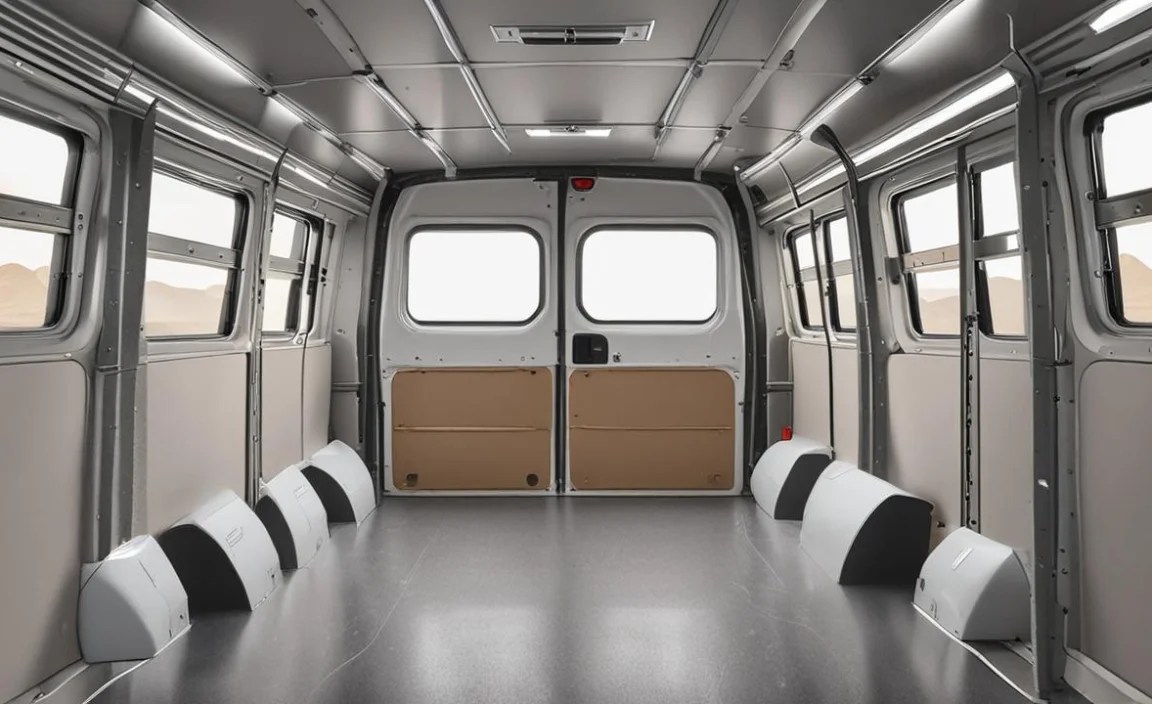
To help you visualize the differences, here’s a comparison of common sprinter van insulation materials by their R-value per inch. Remember, a higher number means better insulation.
| Insulation Material | Typical R-value per Inch | Key Characteristics |
|---|---|---|
| Closed-Cell Spray Foam | R-6 to R-7 | Excellent R-value, air/vapor barrier, seals gaps, rigid. |
| Polyisocyanurate (Polyiso) Board | R-6 to R-7 | High R-value board, DIY friendly, good thermal resistance. |
| Extruded Polystyrene (XPS) Board | R-5 | Good R-value board, DIY friendly, moisture resistant. |
| Thinsulate (e.g., 3M) | R-4 to R-5 | Good thermal & acoustic, flexible, DIY friendly, moisture resistant. |
| Sheep Wool / Havelock Wool | R-3.5 to R-3.8 | Excellent moisture management, natural, good thermal/acoustic. |
| Fiberglass | R-3.5 to R-4 | Affordable, but susceptible to moisture, requires PPE. |
| Reflectix (with air gap) | Up to R-10 (with air gap) | Reflects radiant heat, low inherent R-value, easy to install. |
Installation Strategies: Best Practices for Your Sprinter

The best insulation material is only as good as its installation. Here are some overarching strategies, regardless of the material you choose, to achieve maximum comfort and effectiveness:
1. Address Thermal Bridging
The metal ribs and posts of your Sprinter are significant thermal bridges. You must break this connection. This is where spray foam or the careful application of rigid foam boards and high-quality tape truly shines. If using rigid boards, consider cutting them to fit snugly and then filling any remaining gaps with spray foam or a flexible sealant.
Learn more about thermal bridging from resources like Rocky Mountain Institute.
2. Create an Airtight Seal
Air leaks are a major source of heat loss and gain, and they can carry moisture. Seal as many gaps and potential entry points as possible. Use expanding foam sealant, high-quality construction tape (like butyl tape or premium sheathing tape), or silicone caulk around windows, doors, and any penetrations in the van’s shell.
3. Consider a Vapor Barrier
The climate you’ll be in most often dictates your need for a vapor barrier. In humid or cold climates, a vapor barrier on the warm side of your insulation (typically the interior side of the wall) can prevent moisture from reaching the cold metal surfaces and condensing. Closed-cell spray foam and foil-faced rigid boards inherently act as vapor barriers. For other materials like sheep wool or Thinsulate, you might need to add a dedicated vapor barrier film.
The U.S. Department of Energy provides excellent general guidance on vapor barriers that can be adapted to van builds: Energy.gov on Vapor Barriers and Air Sealing.
4. Layering for Optimal Performance
Many successful van builds employ a layered approach. For example:
- Base Layer: Rigid foam boards to cover large, flat areas and provide a good R-value.
- Cavity Fill: Spray foam or Thinsulate to fill the gaps around ribs and in more complex areas.
- Radiant Barrier (Optional): Reflectix on the interior metal walls before other insulation layers to block direct solar heat gain.
- Acoustic Layer: Some builders add Mass Loaded Vinyl (MLV) or extra Thinsulate for superior sound dampening after insulation.
This layered strategy ensures you’re addressing thermal bridging, air sealing, and gaining a high R-value without excess bulk.
A common and effective combination for DIY van builders is rigid foam board on the larger flat areas and walls, sealed meticulously, followed by Thinsulate or wool in the more complex cavities and areas where sound dead


