
Mercedes Sedan Warranty Extension: Your Ultimate Guide
Want to keep your Mercedes sedan running smoothly for years to come? A Mercedes-Benz warranty extension can give you peace of mind after your original warranty expires. Options include extended limited warranties and third-party vehicle service contracts. Research coverage levels, compare pricing, and understand what’s covered to make the best decision for your needs and budget.
Your Mercedes-Benz sedan is more than just a car; it’s an investment in luxury and performance. After the original factory warranty expires, you might worry about unexpected repair costs. A Mercedes sedan warranty extension can help protect you from these expenses. But with different options available, it’s important to understand what each offers and how to choose the right one for you.
In this guide, we’ll walk you through everything you need to know about Mercedes-Benz warranty extensions. We’ll explore your options, from manufacturer-backed extended warranties to third-party vehicle service contracts. You’ll learn how to evaluate coverage, compare costs, and make an informed decision to keep your Mercedes running like new.
Understanding Your Mercedes-Benz Original Warranty

Before diving into warranty extensions, let’s quickly review the original Mercedes-Benz factory warranty. Knowing what it covers will help you understand the gaps a warranty extension can fill.
New Vehicle Limited Warranty
Mercedes-Benz provides a New Vehicle Limited Warranty for all new vehicles. This warranty typically lasts for 4 years or 50,000 miles, whichever comes first. It covers defects in materials or workmanship.
What’s Covered:
- Engine
- Transmission
- Drivetrain
- Electrical Components
- Certain Safety Systems
What’s Not Covered:
- Normal wear and tear (e.g., brake pads, tires)
- Damage from accidents or misuse
- Maintenance services (e.g., oil changes)
Understanding the Gaps
Once the original warranty expires, you’re responsible for all repair costs. This is where a warranty extension becomes valuable, providing a safety net against potentially expensive repairs.
Exploring Mercedes-Benz Warranty Extension Options

When it comes to extending your Mercedes sedan’s warranty, you have a few primary options to consider. Each has its own advantages and disadvantages, so let’s break them down.
1. Mercedes-Benz Extended Limited Warranty
The Mercedes-Benz Extended Limited Warranty, also known as the Mercedes-Benz Extended Warranty, is offered directly through Mercedes-Benz. It provides coverage similar to the original factory warranty.
Key Features:
- Directly from Mercedes-Benz: Ensures genuine parts and service.
- Comprehensive Coverage: Covers many of the same components as the original warranty.
- Flexible Terms: Available in various durations and mileage limits.
- Repairs at Dealerships: Service is performed by certified Mercedes-Benz technicians.
Benefits:
- Peace of mind knowing your car is serviced by experts.
- Genuine Mercedes-Benz parts are used for repairs.
- Coverage is straightforward and reliable.
Things to Consider:
- Can be more expensive than third-party options.
- May have limited flexibility in terms of coverage levels.
2. Third-Party Vehicle Service Contracts
Third-party vehicle service contracts are offered by independent companies. These contracts provide similar coverage to extended warranties but may have different terms and conditions.
Key Features:
- Variety of Options: Many providers offer different coverage levels and terms.
- Potentially Lower Cost: Can sometimes be more affordable than manufacturer-backed warranties.
- Flexible Repair Options: May allow repairs at independent shops or dealerships.
Benefits:
- More choices in terms of coverage and pricing.
- Potential for cost savings.
- Flexibility in choosing repair facilities.
Things to Consider:
- Coverage can vary significantly between providers.
- Claims process may be more complex.
- Provider’s reputation and financial stability are crucial.
Comparing Mercedes-Benz Extended Warranty vs. Third-Party Contracts
Here’s a table to help you compare the two options:
| Feature | Mercedes-Benz Extended Warranty | Third-Party Vehicle Service Contract |
|---|---|---|
| Provider | Mercedes-Benz | Independent Companies |
| Coverage | Similar to original warranty | Varies by provider |
| Cost | Generally higher | Potentially lower |
| Repair Facilities | Mercedes-Benz Dealerships | May include independent shops |
| Parts | Genuine Mercedes-Benz | Varies by contract |
| Claims Process | Typically straightforward | May be more complex |
Evaluating Coverage Levels
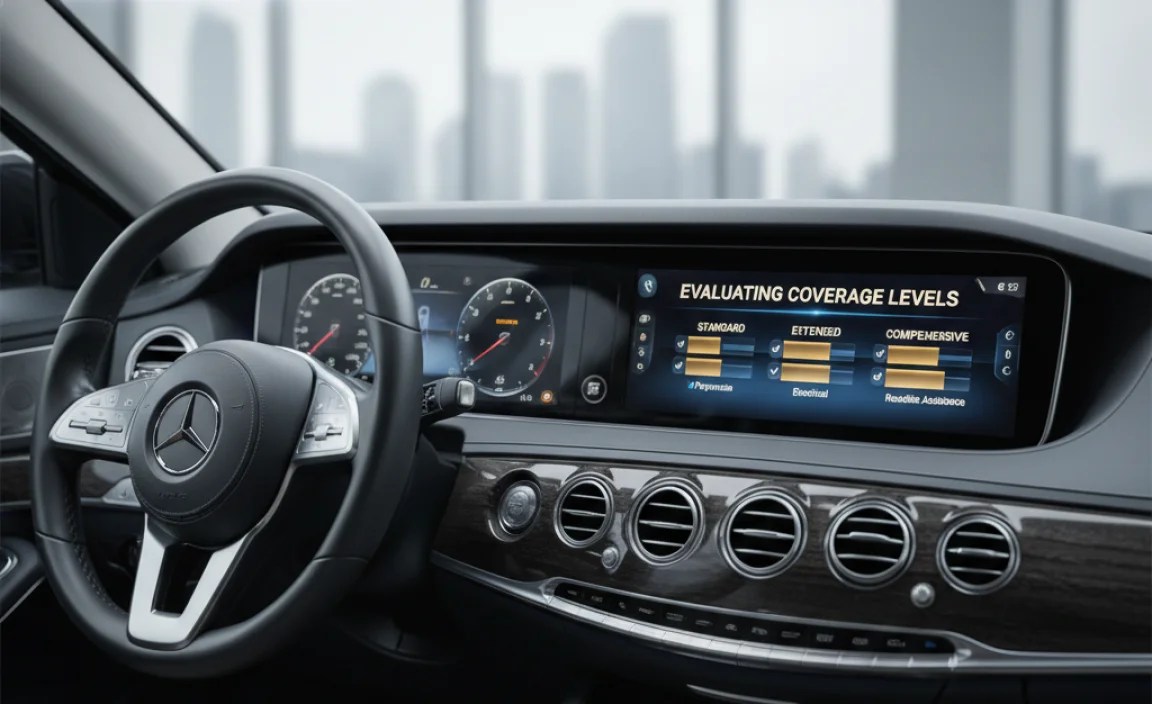
Whether you choose a Mercedes-Benz extended warranty or a third-party contract, it’s important to understand the different coverage levels available. These levels determine which components are covered and how much you’ll pay out-of-pocket for repairs.
1. Powertrain Coverage
Powertrain coverage is the most basic level of protection. It typically covers the most critical components of your Mercedes sedan.
What’s Typically Covered:
- Engine
- Transmission
- Drivetrain (including axles and differentials)
Who It’s For:
This level is suitable for those primarily concerned about major mechanical failures and want a more affordable option.
2. Stated Component Coverage
Stated component coverage lists specific parts that are covered. It’s more comprehensive than powertrain coverage but less so than exclusionary coverage.
What’s Typically Covered:
- All powertrain components
- Steering system
- Braking system
- Air conditioning
- Certain electrical components
Who It’s For:
This option is good for those who want broader coverage and are comfortable reviewing the list of covered components.
3. Exclusionary Coverage
Exclusionary coverage is the most comprehensive option. It covers almost all mechanical and electrical components, except for those specifically listed as exclusions in the contract.
What’s Typically Covered:
- Everything except items listed as exclusions (e.g., wear and tear items, maintenance services)
Who It’s For:
This is ideal for those who want maximum protection and peace of mind, as it covers the most potential repairs.
Coverage Level Comparison
Here’s a quick comparison to help you visualize the differences:
| Coverage Level | Components Covered | Cost | Best For |
|---|---|---|---|
| Powertrain | Engine, Transmission, Drivetrain | Lowest | Budget-conscious owners |
| Stated Component | Specific parts listed in the contract | Moderate | Owners wanting broader coverage |
| Exclusionary | Almost everything except exclusions | Highest | Owners wanting maximum protection |
Factors Affecting Warranty Extension Cost

The cost of a Mercedes sedan warranty extension can vary widely depending on several factors. Understanding these factors will help you get an accurate quote and make an informed decision.
1. Vehicle Age and Mileage
Older vehicles with higher mileage typically have higher warranty extension costs. This is because they are more likely to require repairs.
2. Coverage Level
As discussed earlier, the level of coverage you choose will significantly impact the cost. Exclusionary coverage is generally the most expensive, while powertrain coverage is the least.
3. Deductible
The deductible is the amount you pay out-of-pocket for each repair visit. A lower deductible will result in a higher warranty cost, and vice versa.
4. Contract Term
The length of the warranty extension also affects the cost. Longer terms typically cost more, but they provide protection for a longer period.
5. Provider
Different providers offer different pricing structures. Mercedes-Benz extended warranties may have different costs compared to third-party contracts.
Tips for Getting the Best Price
- Shop Around: Get quotes from multiple providers to compare pricing.
- Negotiate: Don’t be afraid to negotiate the price with the dealer or provider.
- Consider a Higher Deductible: If you’re comfortable paying more out-of-pocket, a higher deductible can lower the overall cost.
- Buy Early: Purchasing a warranty extension before your original warranty expires often results in better pricing.
How to Purchase a Mercedes-Benz Warranty Extension

Purchasing a Mercedes-Benz warranty extension is a straightforward process. Here’s a step-by-step guide to help you through it.
1. Research Your Options
Start by researching different warranty extension options. Compare Mercedes-Benz extended warranties with third-party vehicle service contracts. Look at coverage levels, terms, and pricing.
2. Get Quotes
Obtain quotes from multiple sources. Contact your local Mercedes-Benz dealership for a quote on an extended warranty. Also, get quotes from reputable third-party providers. Be sure to provide accurate information about your vehicle’s age, mileage, and condition.
3. Review the Contract
Carefully review the contract before making a decision. Pay attention to the following:
- Coverage Details: What components are covered and excluded?
- Deductible: How much will you pay out-of-pocket for each repair?
- Term Length: How long does the coverage last?
- Claims Process: How do you file a claim?
- Cancellation Policy: Can you cancel the contract, and what are the terms?
4. Choose a Provider
Select the provider that offers the best combination of coverage, price, and customer service. Consider factors such as the provider’s reputation, financial stability, and claims process.
5. Complete the Purchase
Once you’ve chosen a provider, complete the purchase. This typically involves signing a contract and making a payment. Be sure to keep a copy of the contract for your records.
6. Keep Up with Maintenance
To keep your warranty extension valid, it’s important to follow the manufacturer’s recommended maintenance schedule. This includes regular oil changes, inspections, and other services. Keep records of all maintenance performed on your vehicle.
Tips for Maintaining Your Mercedes-Benz Sedan
Proper maintenance is key to keeping your Mercedes sedan running smoothly and avoiding costly repairs. Here are some essential maintenance tips.
1. Follow the Maintenance Schedule
Adhere to the maintenance schedule outlined in your owner’s manual. This includes regular oil changes, filter replacements, and inspections.
2. Use Genuine Parts
When replacing parts, use genuine Mercedes-Benz parts or high-quality aftermarket parts. These parts are designed to meet the manufacturer’s specifications and ensure optimal performance.
3. Check Fluids Regularly
Regularly check and top off fluids such as engine oil, coolant, brake fluid, and power steering fluid. Low fluid levels can lead to component damage.
4. Inspect Tires
Check your tires regularly for wear and tear. Maintain proper tire pressure and rotate your tires to ensure even wear.
5. Address Issues Promptly
If you notice any unusual noises, vibrations, or warning lights, address the issue promptly. Ignoring small problems can lead to more significant and expensive repairs down the road.
6. Keep It Clean
Regularly wash and wax your Mercedes sedan to protect the paint from the elements. Also, keep the interior clean to prevent wear and tear.
Common Mercedes-Benz Sedan Problems and Repairs
While Mercedes-Benz sedans are known for their reliability, they can experience certain common problems. Being aware of these issues can help you identify and address them early.
1. Air Suspension Issues
Some Mercedes-Benz models have air suspension systems that can develop leaks or compressor failures. Symptoms include a sagging vehicle or a rough ride.
2. Oil Leaks
Oil leaks are relatively common in older Mercedes-Benz engines. Check for leaks around the valve cover gaskets, oil pan gasket, and rear main seal.
3. Electrical Problems
Mercedes-Benz vehicles have complex electrical systems that can be prone to issues. Problems can range from faulty sensors to malfunctioning control modules.
4. Transmission Problems
Transmission problems can occur in some models, including slipping gears or rough shifting. Regular transmission fluid changes can help prevent these issues.
5. Catalytic Converter Failure
Catalytic converters can fail over time, leading to reduced performance and increased emissions. This is more common in older vehicles.
Making the Right Decision for Your Needs
Choosing the right Mercedes sedan warranty extension requires careful consideration of your individual needs and circumstances. Here are some factors to keep in mind.
1. Your Budget
Determine how much you’re willing to spend on a warranty extension. Balance the cost of the warranty with the potential cost of future repairs.
2. Your Risk Tolerance
Consider your comfort level with risk. If you’re risk-averse and want maximum protection, a more comprehensive warranty may be the best choice. If you’re comfortable taking on more risk, a basic powertrain warranty may suffice.
3. Your Driving Habits
Think about how you use your Mercedes sedan. If you drive frequently or put a lot of miles on your car, a longer-term warranty may be beneficial. If you only drive occasionally, a shorter-term warranty may be sufficient.
4. Your Car’s History
Consider your car’s repair history. If your car has been reliable and hasn’t required many repairs, you may not need as much coverage. If your car has had recurring issues, a more comprehensive warranty may be a good investment.
Conclusion
A Mercedes sedan warranty extension can provide valuable peace of mind and protection against unexpected repair costs. By understanding your options, evaluating coverage levels, and comparing prices, you can make an informed decision that’s right for you. Whether you choose a Mercedes-Benz extended warranty or a third-party vehicle service contract, be sure to read the fine print and keep up with regular maintenance to keep your Mercedes running smoothly for years to come. With the right approach, you can continue to enjoy the luxury and performance of your Mercedes-Benz sedan with confidence.
FAQ: Mercedes Sedan Warranty Extension
- What is a Mercedes-Benz warranty extension?
- A Mercedes-Benz warranty extension is an optional plan that provides coverage for mechanical repairs after the original factory warranty expires. It helps protect you from unexpected repair costs.
- When should I consider buying a warranty extension?
- It’s best to consider buying a warranty extension before your original warranty expires. This often gives you more coverage options and potentially better pricing.
- What does a Mercedes-Benz extended warranty typically cover?
- A Mercedes-Benz extended warranty typically covers major mechanical components, including the engine, transmission, drivetrain, and certain electronics. Always review the specific contract for details.
- What are the benefits of a Mercedes-Benz warranty extension?
- The benefits include protection from unexpected repair costs, peace of mind, and the potential for increased resale value. It can also cover things like towing and rental car reimbursement.
- Are there any alternatives to a Mercedes-Benz extended warranty?
- Yes, alternatives include third-party vehicle service contracts. These can sometimes offer more flexible coverage options or lower prices, but it’s vital to research the provider’s reputation.
- How do I get a quote for a Mercedes-Benz warranty extension?
- You can get a quote from your local Mercedes-Benz dealership or from reputable third-party providers. Be sure to compare coverage and pricing carefully.


