
Understanding Mercedes Transmission Models: A Complete Guide
Quick Summary: Mercedes-Benz uses several automatic transmissions, including 7G-TRONIC, 7G-TRONIC PLUS, 9G-TRONIC, and AMG SPEEDSHIFT variants. These transmissions offer smooth shifting, fuel efficiency, and performance enhancements. Identifying your specific transmission helps with maintenance and repairs, ensuring your Mercedes performs optimally. This guide covers the common models, how to identify them, and their unique features.
Mercedes-Benz vehicles are renowned for their luxury and performance, and a significant part of that experience comes from their advanced transmissions. However, understanding which transmission your Mercedes has can be confusing. Many owners face challenges when trying to identify the specific transmission model in their car, especially when it comes to maintenance or repairs. Don’t worry; this guide will walk you through the most common Mercedes transmission models, how to identify them, and what makes each one unique. We’ll cover everything from the 7G-TRONIC to the advanced 9G-TRONIC and AMG SPEEDSHIFT variants.
Common Mercedes-Benz Transmission Models

Mercedes-Benz has developed several automatic transmissions over the years, each with its unique characteristics and improvements. Here’s an overview of the most common models:
7G-TRONIC (722.9)
The 7G-TRONIC, also known as the 722.9 transmission, was one of Mercedes-Benz’s first seven-speed automatic transmissions. Introduced in 2003, it offered improved fuel efficiency and smoother shifting compared to its five-speed predecessor.
Key Features of 7G-TRONIC:
- Seven Forward Gears: Provided a wider gear ratio for better acceleration and fuel economy.
- Torque Converter Lockup Clutch: Reduced slippage for improved efficiency.
- Electronic Control: Allowed for adaptive shifting based on driving conditions.
7G-TRONIC PLUS
The 7G-TRONIC PLUS was an updated version of the original 7G-TRONIC, featuring enhancements to improve efficiency and shift quality. It included modifications to the torque converter and transmission control unit.
Key Improvements of 7G-TRONIC PLUS:
- Optimized Torque Converter: Reduced internal friction for better fuel economy.
- ECO Start/Stop Function: Enabled engine shutdown at idle to save fuel.
- Improved Dampers: Enhanced shift smoothness and reduced vibrations.
9G-TRONIC (725.0/725.1)
The 9G-TRONIC, or 725.0/725.1, is Mercedes-Benz’s nine-speed automatic transmission. It was designed to further improve fuel efficiency and provide even smoother shifts. Introduced in 2013, it has become a staple in many Mercedes models.
Key Benefits of 9G-TRONIC:
- Nine Forward Gears: Allowed for a broader gear ratio spread, optimizing engine performance and fuel consumption.
- Reduced Engine Speed: Lowered engine RPM at cruising speeds, enhancing fuel efficiency and reducing noise.
- Direct Select Lever: Offered a more intuitive and ergonomic gear selection.
AMG SPEEDSHIFT Transmissions
AMG SPEEDSHIFT transmissions are specially engineered versions of Mercedes-Benz automatic transmissions, optimized for high-performance applications. These transmissions are designed to deliver faster and more responsive gear changes, enhancing the driving experience in AMG models.
Types of AMG SPEEDSHIFT Transmissions:
- AMG SPEEDSHIFT MCT 7-Speed: Multi-Clutch Technology (MCT) replaces the torque converter with a wet clutch for quicker shifts and direct feedback.
- AMG SPEEDSHIFT DCT 7-Speed: Dual-Clutch Transmission (DCT) offers lightning-fast gear changes with no interruption in power delivery.
- AMG SPEEDSHIFT TCT 9-Speed: Torque-Clutch Transmission (TCT) combines the benefits of a torque converter and a wet clutch for smooth yet rapid shifts.
How to Identify Your Mercedes Transmission Model

Identifying your Mercedes transmission model is crucial for maintenance, repairs, and ensuring you use the correct fluids and parts. Here are several methods to help you determine your transmission model:
1. Check the Vehicle Identification Number (VIN)
The VIN contains valuable information about your vehicle, including the transmission model. Here’s how to use it:
- Locate the VIN: Find the VIN on the driver’s side doorjamb, on the dashboard near the windshield, or in your vehicle’s registration documents.
- Decode the VIN: Use a VIN decoder tool online or contact a Mercedes-Benz dealer. The dealer can provide detailed information about your vehicle, including the transmission model.
2. Consult the Vehicle’s Data Card
The vehicle’s data card, often included with the owner’s manual, lists all the factory-installed options and specifications. It will contain the transmission model code.
- Find the Data Card: Check your owner’s manual or contact a Mercedes-Benz dealer to obtain a copy of your vehicle’s data card.
- Locate the Transmission Code: Look for a code that starts with “722” followed by numbers (e.g., 722.9 for 7G-TRONIC).
3. Check the Transmission Housing
The transmission model number is often stamped directly on the transmission housing. This method requires a visual inspection of the transmission itself, which may require lifting the vehicle.
- Locate the Transmission: The transmission is located beneath the vehicle, connected to the engine.
- Inspect the Housing: Look for a stamped number, usually on a metal plate or directly on the housing. Clean the area if necessary to read the number clearly.
4. Contact a Mercedes-Benz Dealer
The easiest and most reliable way to identify your transmission model is to contact a Mercedes-Benz dealer. They can use your VIN to provide accurate information about your vehicle’s specifications.
- Gather Your VIN: Have your VIN ready.
- Contact the Dealer: Call or visit your local Mercedes-Benz dealer and provide them with your VIN. They can quickly identify your transmission model.
Understanding Transmission Codes
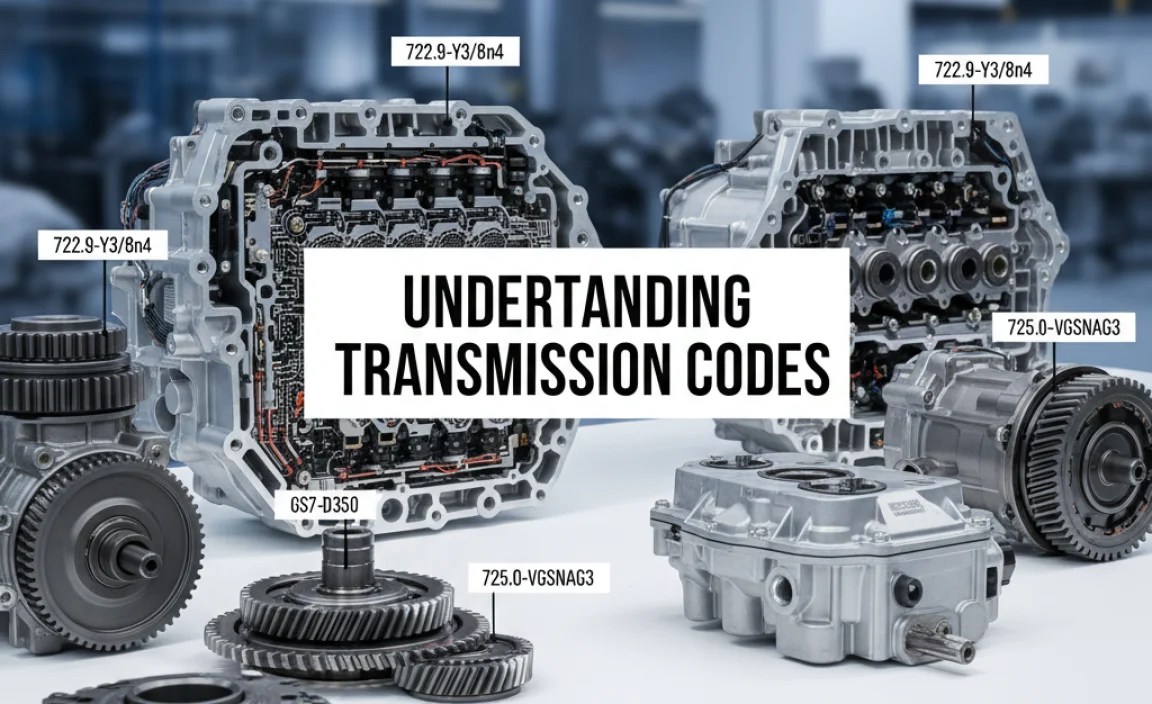
Mercedes-Benz uses specific codes to identify their transmission models. These codes provide detailed information about the transmission’s design and specifications. Here’s a breakdown of common transmission codes:
Common Transmission Codes
Here’s a table summarizing the common Mercedes-Benz transmission models and their corresponding codes:
| Transmission Model | Transmission Code | Description |
|---|---|---|
| 7G-TRONIC | 722.9 | 7-speed automatic transmission |
| 7G-TRONIC PLUS | 722.9 | Updated 7-speed automatic transmission with enhanced efficiency |
| 9G-TRONIC | 725.0/725.1 | 9-speed automatic transmission |
| AMG SPEEDSHIFT MCT 7-Speed | N/A | 7-speed multi-clutch transmission (no torque converter) |
| AMG SPEEDSHIFT DCT 7-Speed | N/A | 7-speed dual-clutch transmission |
| AMG SPEEDSHIFT TCT 9-Speed | N/A | 9-speed torque-clutch transmission |
Deciphering the Code
While the specific digits in the transmission code may not reveal every detail, understanding the basic structure can be helpful:
- 722: Indicates a Mercedes-Benz automatic transmission.
- .9 or .0/.1: Denotes the specific variant or generation of the transmission.
Maintenance and Care for Your Mercedes Transmission

Proper maintenance is essential to keep your Mercedes transmission running smoothly and to prevent costly repairs. Here are some key maintenance tips:
1. Regular Fluid Changes
Changing the transmission fluid at the recommended intervals is crucial. Over time, transmission fluid degrades and loses its lubricating properties, which can lead to increased wear and tear.
- Follow the Service Schedule: Consult your owner’s manual or a Mercedes-Benz dealer for the recommended fluid change intervals.
- Use the Correct Fluid: Always use the transmission fluid specified for your transmission model. Using the wrong fluid can cause damage.
2. Check for Leaks
Regularly inspect your transmission for leaks. Leaks can lead to low fluid levels, causing overheating and damage to the transmission components.
- Inspect the Transmission Housing: Look for signs of fluid leaks around the transmission housing.
- Check for Fluid Under the Vehicle: If you notice red or brown fluid under your car, it could be a transmission leak.
3. Monitor Shifting Behavior
Pay attention to how your transmission shifts. Any unusual noises, rough shifting, or slipping could indicate a problem.
- Listen for Unusual Noises: Clunking, whining, or grinding noises can indicate a transmission issue.
- Feel for Rough Shifting: Jerky or hesitant shifts can be a sign of a problem.
- Watch for Slipping: If the engine revs up without a corresponding increase in speed, the transmission may be slipping.
4. Professional Inspections
Have your transmission inspected by a qualified Mercedes-Benz technician regularly. They can identify potential problems early and perform necessary maintenance.
- Schedule Regular Check-ups: Include a transmission inspection as part of your routine maintenance.
- Address Issues Promptly: If you notice any problems, take your vehicle to a mechanic as soon as possible.
Troubleshooting Common Transmission Problems

Even with proper maintenance, transmission problems can occur. Here are some common issues and potential solutions:
1. Slipping Gears
Slipping gears occur when the transmission fails to maintain the correct gear, causing the engine to rev up without a corresponding increase in speed. This can be caused by low fluid levels, worn clutches, or a faulty torque converter.
Possible Solutions:
- Check Fluid Level: Ensure the transmission fluid is at the correct level.
- Replace Fluid and Filter: Change the transmission fluid and filter to remove contaminants.
- Repair or Replace Torque Converter: If the torque converter is faulty, it may need to be repaired or replaced.
2. Rough Shifting
Rough or jerky shifting can be caused by several factors, including low fluid levels, contaminated fluid, or a malfunctioning transmission control unit (TCU).
Possible Solutions:
- Check Fluid Level and Condition: Ensure the fluid is at the correct level and is clean.
- Replace Fluid and Filter: Change the transmission fluid and filter to improve shifting.
- TCU Diagnosis: Have the TCU diagnosed by a professional to identify any faults.
3. Overheating
Transmission overheating can occur due to low fluid levels, excessive load, or a malfunctioning cooling system. Overheating can cause significant damage to the transmission components.
Possible Solutions:
- Check Fluid Level: Ensure the transmission fluid is at the correct level.
- Inspect Cooling System: Check the transmission cooler and lines for any blockages or leaks.
- Reduce Load: Avoid towing heavy loads or driving aggressively, especially in hot weather.
4. Unusual Noises
Unusual noises, such as whining, clunking, or grinding, can indicate a variety of transmission problems, including worn bearings, damaged gears, or a faulty torque converter.
Possible Solutions:
- Identify the Source: Try to pinpoint the source of the noise to help diagnose the problem.
- Professional Inspection: Take your vehicle to a mechanic for a thorough inspection.
- Repair or Replace Components: Depending on the diagnosis, you may need to repair or replace damaged components.
Choosing the Right Transmission for Your Needs
When purchasing a Mercedes-Benz, the transmission model can significantly impact your driving experience. Here are some considerations to help you choose the right transmission for your needs:
Driving Style
Consider your driving style and preferences. If you prioritize fuel efficiency and smooth, comfortable driving, the 9G-TRONIC may be the best choice. If you prefer a more engaging and responsive driving experience, an AMG SPEEDSHIFT transmission might be more suitable.
Vehicle Use
Think about how you primarily use your vehicle. If you frequently tow heavy loads or drive in demanding conditions, a transmission designed for high-performance applications may be necessary. For everyday commuting and general use, a standard automatic transmission like the 7G-TRONIC or 9G-TRONIC should suffice.
Fuel Efficiency
If fuel efficiency is a top priority, opt for a model with the 9G-TRONIC transmission. Its nine gears and optimized design help reduce engine RPM and improve fuel economy.
Performance
For maximum performance and responsiveness, choose an AMG model with an AMG SPEEDSHIFT transmission. These transmissions are engineered to deliver lightning-fast gear changes and enhance the overall driving experience. Refer to trusted sites like Edmunds and Car and Driver for expert reviews and performance data.
Conclusion
Understanding the different Mercedes transmission models is essential for maintaining your vehicle and ensuring it performs at its best. Whether you have a 7G-TRONIC, 9G-TRONIC, or an AMG SPEEDSHIFT transmission, knowing its unique features and maintenance requirements will help you keep your Mercedes running smoothly for years to come.
By following the tips and guidelines in this guide, you can confidently identify your transmission model, perform necessary maintenance, and troubleshoot common problems. If you’re ever unsure, don’t hesitate to consult a Mercedes-Benz dealer or a qualified mechanic for expert assistance.
Frequently Asked Questions (FAQs)
- What is the most common Mercedes-Benz transmission?
- The 7G-TRONIC and 9G-TRONIC are among the most common Mercedes-Benz transmissions, depending on the model year and vehicle type.
- How can I identify my Mercedes transmission model?
- You can find the transmission model code on your vehicle’s VIN plate or by contacting a Mercedes-Benz dealer with your VIN.
- What is the difference between 7G-TRONIC and 9G-TRONIC?
- The 9G-TRONIC has nine gears compared to the 7G-TRONIC’s seven, offering improved fuel efficiency and smoother shifting.
- Are AMG SPEEDSHIFT transmissions different?
- Yes, AMG SPEEDSHIFT transmissions are performance-oriented versions designed for faster and more responsive gear changes.
- Why is it important to know my transmission model?
- Knowing your transmission model helps ensure you use the correct fluids and follow the proper maintenance procedures.
- Where can I find the VIN plate on my Mercedes?
- The VIN plate is typically located on the driver’s side doorjamb or on the dashboard near the windshield.
- Can I upgrade my Mercedes transmission?
- Upgrading your transmission is complex and generally not recommended unless you are a professional tuner, as it requires significant modifications and proper calibration.


