
Mercedes Sedan Used Car Inspection: The Ultimate, Affordable Guide
Looking to buy a used Mercedes sedan? Don’t get stuck with a lemon! A thorough inspection is essential to avoid costly repairs down the road. This guide provides a step-by-step checklist, covering everything from the engine and transmission to the interior and electronics. Learn how to spot potential problems and ensure you’re making a sound investment.
Buying a used car, especially a luxury vehicle like a Mercedes-Benz sedan, can feel risky. You’re investing a significant amount of money, and the last thing you want is to discover hidden issues after you drive it off the lot. Many potential problems are difficult to see, but with a careful and methodical approach, you can minimize the risk and drive away with confidence. This guide is designed to empower you with the knowledge to inspect a used Mercedes sedan like a pro.
In the following sections, we’ll walk through a detailed inspection process, covering the exterior, interior, engine, transmission, brakes, suspension, and electronics. We’ll also discuss the importance of a pre-purchase inspection by a qualified mechanic. Let’s get started!
Frequently Asked Questions
- What is a pre-purchase inspection?
- A pre-purchase inspection (PPI) is a thorough evaluation of a used vehicle by a qualified mechanic before you buy it. It helps identify potential problems that may not be immediately apparent.
- How much does a pre-purchase inspection cost?
- The cost of a PPI typically ranges from $100 to $300, depending on the mechanic and the extent of the inspection.
- Why is a pre-purchase inspection important for a Mercedes-Benz?
- Mercedes-Benz vehicles have complex systems, and repairs can be expensive. A PPI can help you avoid costly surprises.
- What should I bring to a used car inspection?
- Bring a flashlight, a notepad, a pen, and a friend (another set of eyes is always helpful!). This guide can also be used as a checklist.
- What if I find problems during the inspection?
- If you find problems, you can use them as negotiating points with the seller. Alternatively, you can walk away from the deal if the issues are too significant.
- Can I perform a used car inspection myself?
- Yes, you can perform a preliminary inspection yourself using this guide. However, a professional PPI is always recommended for a comprehensive assessment.
- Where can I find a qualified mechanic for a pre-purchase inspection?
- Ask friends, family, or online Mercedes-Benz forums for recommendations. Look for mechanics specializing in European vehicles.
Exterior Inspection

The exterior of a used Mercedes sedan can reveal a lot about its history and how well it has been maintained. Look closely for signs of damage, repairs, and inconsistencies.
Paint and Body
- Check for rust: Pay close attention to areas prone to rust, such as wheel wells, rocker panels, and around the edges of the doors and trunk.
- Inspect the paint: Look for mismatched paint, which could indicate previous repairs. Check for scratches, dents, and swirl marks.
- Panel alignment: Ensure that all body panels line up correctly. Gaps that are too large or uneven can indicate accident damage.
- Glass: Inspect the windshield, windows, and mirrors for cracks, chips, or excessive scratches.
Wheels and Tires
- Tire condition: Check the tire tread depth and look for uneven wear, which could indicate alignment issues.
- Wheel damage: Inspect the wheels for dents, cracks, or curb rash.
- Matching tires: Ensure that all tires are the same brand and size. Mismatched tires can affect handling and safety.
Lights and Signals
- Headlights and taillights: Check that all lights are working properly, including headlights (high and low beams), taillights, brake lights, and turn signals.
- Fog lights: If equipped, test the fog lights to ensure they function correctly.
- Lens condition: Look for cracks, discoloration, or moisture inside the light lenses.
Interior Inspection
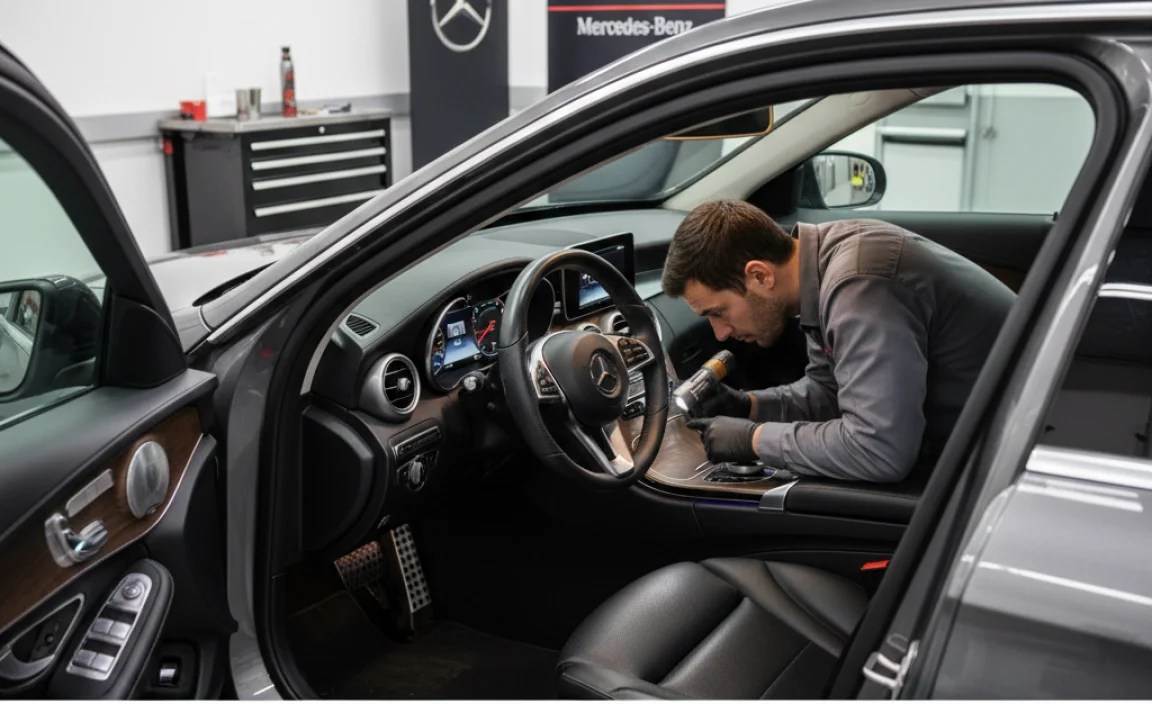
The interior of a Mercedes sedan should be luxurious and well-maintained. Pay attention to the condition of the seats, carpets, and electronics.
Seats and Upholstery
- Wear and tear: Check the seats for rips, tears, stains, or excessive wear.
- Leather condition: If equipped with leather seats, look for cracks, dryness, or discoloration.
- Seat adjustments: Test all seat adjustments (power and manual) to ensure they function correctly.
Dashboard and Trim
- Cracks and damage: Inspect the dashboard for cracks, scratches, or fading.
- Trim pieces: Check that all trim pieces are securely attached and in good condition.
- Warning lights: Turn the ignition on (but don’t start the engine) and check for any warning lights on the dashboard.
Electronics
- Infotainment system: Test the radio, navigation system, Bluetooth connectivity, and any other infotainment features.
- Climate control: Check that the air conditioning and heating systems are working properly.
- Power windows and locks: Test all power windows and locks to ensure they function smoothly.
- Sunroof/Moonroof: If equipped, open and close the sunroof/moonroof to check for smooth operation and any leaks.
Engine Inspection
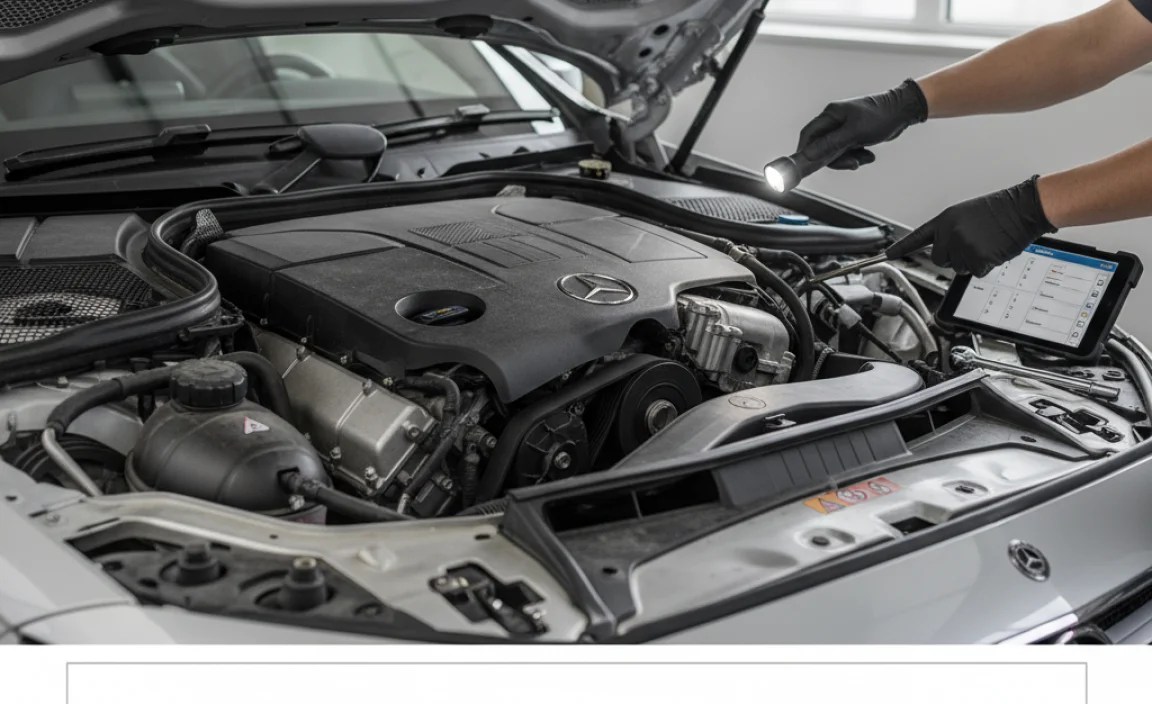
The engine is the heart of any car, and a Mercedes-Benz engine requires careful attention. Look for signs of leaks, damage, or neglect.
Visual Inspection
- Leaks: Check for oil leaks, coolant leaks, or other fluid leaks around the engine.
- Hoses and belts: Inspect the hoses and belts for cracks, fraying, or wear.
- Fluid levels: Check the oil level, coolant level, brake fluid level, and power steering fluid level.
Starting and Running
- Starting: Start the engine and listen for any unusual noises, such as knocking, rattling, or hissing.
- Idling: Let the engine idle and observe the RPMs. It should idle smoothly and consistently.
- Smoke: Check for excessive smoke from the exhaust. Blue smoke can indicate burning oil, while white smoke can indicate a coolant leak.
Under the Hood
The engine bay can reveal a lot about the car’s maintenance history. A clean, well-organized engine bay is usually a good sign.
- Cleanliness: Check for excessive dirt, grime, or oil buildup in the engine bay.
- Wiring: Inspect the wiring for damage, corrosion, or loose connections.
- Battery: Check the battery terminals for corrosion and ensure the battery is securely mounted.
Transmission Inspection

The transmission is a critical component of a Mercedes sedan. A smooth-shifting transmission is essential for a comfortable driving experience.
Automatic Transmission
- Shifting: Test the transmission by shifting through all gears (P, R, N, D). It should shift smoothly and without hesitation.
- Slipping: Check for any signs of slipping, where the engine revs up without the car accelerating.
- Fluid leaks: Inspect the transmission for fluid leaks.
Manual Transmission
- Clutch: Test the clutch for smooth engagement and disengagement.
- Shifting: Shift through all gears to ensure smooth operation.
- Noise: Listen for any unusual noises, such as grinding or whining.
Brakes and Suspension Inspection

The brakes and suspension are crucial for safety and handling. Inspect them carefully for signs of wear or damage.
Brakes
- Brake pedal feel: Check the brake pedal for firmness and responsiveness.
- Brake noise: Listen for any unusual noises, such as squealing or grinding, when applying the brakes.
- Brake pads and rotors: Visually inspect the brake pads and rotors for wear.
Suspension
- Shocks and struts: Check the shocks and struts for leaks or damage.
- Springs: Inspect the springs for cracks or sagging.
- Handling: During the test drive, pay attention to how the car handles bumps and turns. It should feel stable and controlled.
Electronics and Diagnostic Scan
Modern Mercedes-Benz sedans are equipped with sophisticated electronic systems. A diagnostic scan can reveal hidden problems.
Diagnostic Scan
- OBD-II scanner: Use an OBD-II scanner to check for any stored diagnostic trouble codes (DTCs).
- Warning lights: Pay attention to any warning lights on the dashboard, such as the check engine light, ABS light, or airbag light.
Features and Accessories
- Navigation: Test the navigation system to ensure it functions correctly.
- Bluetooth: Check the Bluetooth connectivity for pairing with your phone.
- Parking sensors: Test the parking sensors to ensure they are working properly.
Test Drive
A test drive is an essential part of the used car inspection process. It allows you to assess the car’s performance, handling, and overall condition.
During the Test Drive
- Acceleration: Test the car’s acceleration from a standstill and at highway speeds.
- Braking: Test the brakes by performing a hard stop in a safe area.
- Steering: Pay attention to the steering feel and responsiveness. The car should track straight and not pull to one side.
- Handling: Take the car through a series of turns to assess its handling and stability.
- Comfort: Evaluate the ride comfort and noise levels inside the cabin.
Documentation and History
Reviewing the car’s documentation and history can provide valuable insights into its past.
Vehicle History Report
- Carfax or AutoCheck: Obtain a vehicle history report from Carfax or AutoCheck to check for accidents, title issues, and odometer discrepancies.
Maintenance Records
- Service history: Review the maintenance records to see how well the car has been maintained. Look for regular oil changes, tune-ups, and other preventative maintenance.
Negotiation and Final Decision
After completing the inspection and test drive, you’ll have a better understanding of the car’s condition and value. Use this information to negotiate the price and make a final decision.
Negotiation
- Identify issues: Use any issues you found during the inspection as negotiating points.
- Market value: Research the market value of similar Mercedes sedans in your area.
- Be prepared to walk away: If the seller is unwilling to negotiate or address your concerns, be prepared to walk away from the deal.
Final Decision
- Consider the risks: Weigh the potential risks and costs of ownership against the car’s price and condition.
- Trust your gut: If something doesn’t feel right, it’s okay to walk away.
Table: Common Mercedes Sedan Problems and Inspection Points
| Problem | Inspection Point | Symptoms |
|---|---|---|
| Oil Leaks | Engine, undercarriage | Visible oil drips, low oil level, burning oil smell |
| Transmission Issues | Test drive, shifting | Rough shifting, slipping gears, delayed engagement |
| Suspension Problems | Test drive, visual inspection | Bumpy ride, excessive body roll, uneven tire wear |
| Electrical Problems | Dashboard, electronics | Warning lights, malfunctioning features, dead battery |
| Rust | Wheel wells, rocker panels | Visible rust spots, bubbling paint |
Table: Recommended Tools for Used Car Inspection
| Tool | Description | Purpose |
|---|---|---|
| Flashlight | Bright LED flashlight | Inspecting dark areas, checking fluid levels |
| Tire Tread Depth Gauge | Measures tire tread depth | Assessing tire condition and safety |
| OBD-II Scanner | Reads diagnostic trouble codes | Identifying potential engine and electrical problems |
| Notebook and Pen | For taking notes and recording observations | Documenting inspection findings |
| Magnet | Small magnet | Detecting body filler (indicates repair work) |
External Resources
- Carfax Vehicle History Reports: Obtain a vehicle history report to check for accidents and title issues.
- Edmunds Used Car Appraisals: Research the market value of used cars.
- National Highway Traffic Safety Administration (NHTSA): Check for safety recalls.
Conclusion
Inspecting a used Mercedes sedan can seem daunting, but with this comprehensive guide, you’re now equipped with the knowledge to make an informed decision. Remember to take your time, be thorough, and don’t hesitate to ask questions. And, most importantly, consider a pre-purchase inspection by a qualified mechanic. By following these steps, you can increase your chances of finding a reliable and enjoyable Mercedes-Benz sedan that will provide years of driving pleasure. Happy car hunting!
“`


