
V-Class Vs EQV Electric: Ultimate Luxury Comparison
The Mercedes-Benz V-Class offers unparalleled combustion-engine luxury and versatility, while the EQV electric transforms that experience with silent, emission-free elegance. The choice hinges on your priorities: traditional grandeur and range, or sustainable innovation and refined quietness. Both deliver premium spaciousness.
Navigating the world of premium family transport can feel like a maze. When you’re looking for that perfect blend of luxury, space, and cutting-edge technology, Mercedes-Benz often comes to mind. But between the esteemed V-Class and its electric counterpart, the EQV, how do you choose? It’s a common question for those seeking to upgrade their family journeys or executive transport. Many find themselves pondering the differences, wondering which will best suit their lifestyle and values. Fear not, for we’re here to illuminate the nuances, helping you make an informed decision with confidence. We’ll break down what makes each model special, from their driving dynamics to their environmental impact.
Understanding the Core of Mercedes-Benz Luxury People Movers

At Mercedes-Benz, the concept of “luxury” extends beyond mere aesthetics; it encompasses comfort, safety, performance, and an effortless driving experience. This philosophy is deeply embedded in both the V-Class and the EQV, vehicles designed to move people in supreme comfort and style. The V-Class, a long-standing champion in its segment, represents the pinnacle of traditional luxury MPVs, offering potent yet smooth internal combustion engines, a refined ride, and an interior adaptable to a myriad of passenger needs. The EQV, on the other hand, takes this established excellence and electrifies it, presenting a vision of the future where sustainable mobility does not compromise on the signature Mercedes-Benz opulence.
These vehicles are not just cars; they are mobile lounges, business suites on wheels, and sophisticated family carriers. They cater to discerning individuals who value space, comfort, and the prestige associated with the three-pointed star, whether powered by a reliable diesel engine or a state-of-the-art electric powertrain. Our goal is to equip you with all the facts to understand which of these exceptional vehicles aligns best with your personal definition of luxury and utility.
—
Frequently Asked Questions (FAQ)
<h3>What is the main difference between the Mercedes-Benz V-Class and EQV?</h3>
<p>The primary distinction lies in their powertrains. The V-Class utilizes traditional internal combustion engines (diesel), while the EQV is a fully electric vehicle (EV) powered by a battery and electric motor.</p>
<h3>Is the Mercedes-Benz EQV as luxurious as the V-Class?</h3>
<p>Yes, the EQV offers a comparable, if not enhanced, luxury experience. It benefits from the silent operation of its electric powertrain, which contributes to an exceptionally serene cabin environment, often perceived as a heightened form of luxury.</p>
<h3>What are the range and charging capabilities of the EQV?</h3>
<p>The Mercedes-Benz EQV 300 Long, for instance, typically offers a WLTP-certified range of around 200-220 miles on a full charge. It supports DC fast charging, allowing for significant top-ups in under an hour at compatible charging stations, and AC charging for overnight convenience.</p>
<h3>How does passenger space compare between the V-Class and EQV?</h3>
<p>Both models are renowned for their spacious interiors, designed to comfortably accommodate up to eight passengers. While there might be minor differences in the floor due to battery placement in the EQV, the overall feeling of spaciousness and seat flexibility remains a hallmark of both.</p>
<h3>Which model is better for long-distance travel?</h3>
<p>Historically, the V-Class with its diesel engine has been favored for effortless long-distance travel due to longer refueling times compared to charging. However, with the increasing availability of fast chargers and improvements in EV range, the EQV is rapidly becoming a viable and increasingly comfortable option for longer journeys, especially if you plan your stops.</p>
<h3>What is the typical cost difference between a V-Class and an EQV?</h3>
<p>Generally, the EQV will have a higher upfront purchase price compared to a similarly equipped V-Class, reflecting the advanced battery technology and electric drivetrain. However, running costs for the EQV are significantly lower due to cheaper electricity compared to diesel, reduced maintenance (fewer moving parts), and potential government incentives for EVs.</p>
—
V-Class vs Mercedes EQV Electric: The Heart of the Matter

When we talk about the Mercedes-Benz V-Class and its electric sibling, the EQV, we’re discussing two distinct approaches to achieving the same goal: luxurious, spacious, and versatile transport. The V-Class, a veteran in the premium MPV segment, is synonymous with refined comfort powered by efficient diesel engines. It’s the go-to for those who appreciate traditional automotive excellence, offering a familiar yet sophisticated driving and ownership experience.
The EQV, however, represents the future. It takes the acclaimed V-Class architecture and electrifies it, bringing silent, emission-free travel to the forefront. This isn’t just an electric version; it’s a reimagining of luxury mobility, where serene cabin quietness and environmental consciousness are paramount without sacrificing passenger comfort or practicality. Understanding their core differences is the first step in deciding which aligns with your lifestyle and priorities.
Powertrain and Performance: A Tale of Two Technologies

The most significant divergence between the V-Class and EQV lies beneath the bonnet – or rather, where the bonnet would be for the V-Class, and the absence of a traditional engine for the EQV.
<h3>Mercedes-Benz V-Class: The Refined Combustion Engine</h3>
<p>The V-Class is typically powered by a range of smooth and efficient diesel engines, most notably the OM 654 series found in models like the V 300 d. These engines are engineered for a balance of performance and fuel economy, providing ample torque for confident overtaking and hauling when fully loaded. They offer a familiar, robust driving character that many long-time Mercedes-Benz drivers appreciate. Expect strong, linear acceleration and a comfortable cruising experience, with the characteristic subtle hum of a well-engineered diesel engine.</p>
<h3>Mercedes-Benz EQV: Silent Electric Propulsion</h3>
<p>The EQV 300 is powered by a single electric motor, delivering instant torque and remarkably smooth acceleration. The absence of engine noise and vibration creates an immediate sense of calm and luxury. While the top speed might be electronically limited compared to some V-Class variants, the responsiveness from a standstill is often superior, making city driving feel exceptionally effortless. The driving experience is characterized by its quietness, making conversations easier and the overall journey more relaxing. You can learn more about electric vehicle technology and its benefits on the U.S. Department of Energy’s official website: <a href=”https://afdc.energy.gov/vehicles/electric.html” target=”_blank” rel=”noopener noreferrer”>US Department of Energy – Electric Vehicles</a>.</p>
Range and Refueling/Recharging: Convenience Reimagined

This is where the practical differences become most apparent, impacting how you plan your journeys.
<h3>V-Class: Established Convenience</h3>
<p>The V-Class excels in long-distance convenience thanks to its diesel engine. Refueling is quick and widely available at countless service stations. With a substantial fuel tank, the V-Class offers a considerable driving range on a single fill-up, typically exceeding 500 miles depending on the specific model and driving conditions. This makes spontaneous long trips or covering vast distances without frequent stops incredibly easy.</p>
<h3>EQV: The Electric Journey Planner</h3>
<p>The EQV 300’s all-electric powertrain offers a WLTP-certified range typically around 200-220 miles for the long-wheelbase version. While this is sufficient for most daily use and many longer trips, it does require a different approach to planning. Recharging can be done at home overnight using an AC wallbox (taking several hours for a full charge), or more rapidly at public DC fast-charging stations. A DC fast charge can often add a significant amount of range (e.g., from 10% to 80%) in about 45 minutes to an hour. This necessitates integrating charging stops into longer journeys, but with the growing charging infrastructure, it’s an increasingly manageable aspect of EV ownership.</p>
Interior Luxury and Versatility: Where Both Shine

Both the V-Class and EQV are masters of interior space and flexibility, designed to cater to a wide array of needs, from executive transport to large family outings. Mercedes-Benz’s commitment to premium materials, ergonomic design, and thoughtful features is evident in both.
<h3>Seating Configurations and Space</h3>
<p>Both models typically offer seating for up to eight occupants in a flexible, modular arrangement. Individual seats can be easily removed, swiveled, or reconfigured to create different cabin layouts – ideal for business meetings where face-to-face interaction is desired, or for maximizing luggage space for holidays. You can opt for luxurious individual captain’s chairs or more practical bench seats.</p>
<h3>Material Quality and Ambiance</h3>
<p>Regardless of powertrain, the cabin is appointed with high-quality materials, soft-touch surfaces, and impeccable build quality. Leather upholstery, ambient lighting packages, and sophisticated trim options elevate the sense of occasion. The EQV’s silent operation further enhances this luxurious ambiance, creating a tranquil haven for all occupants.</p>
<h3>Technology and Infotainment</h3>
<p>Both models are equipped with Mercedes-Benz’s intuitive MBUX infotainment system, featuring a central touchscreen, touchpad, and voice control functionalities. Apple CarPlay and Android Auto are standard, keeping you connected. The EQV may also feature specific EV-related displays showing energy consumption, range, and charging status, seamlessly integrated into the familiar MBUX interface.</p>
Design: Subtle Distinctions Under a Familiar Form

Externally, the V-Class and EQV share the same fundamental, sleek, and modern MPV silhouette. This deliberate design choice ensures that the EQV, despite its advanced electric powertrain, doesn’t look drastically out of place in a Mercedes-Benz lineup and maintains a sophisticated, understated presence.
<h3>V-Class Exterior</h3>
<p>The V-Class sports a confident and elegant design. Its flowing lines, distinctive LED lighting (available on higher trims), and confident grille present a premium façade. The overall impression is one of sophistication and substantial road presence.</p>
<h3>EQV Exterior: Electric Elegance</h3>
<p>The EQV is subtly differentiated from its V-Class counterpart. Key visual cues often include a specific grille design (sometimes solid or with unique patterns), distinct badging, aerodynamically optimized wheels, and unique color accents. The charging port is typically located on the front bumper or near the front grille. These subtle changes communicate its electric identity without compromising the inherent elegance of the V-Class platform.</p>
Cost of Ownership: Running Costs and Initial Investment

The financial implications of owning either vehicle involve looking beyond the initial purchase price to consider long-term running costs.
<h3>Initial Purchase Price</h3>
<p>Generally, the EQV commands a higher initial purchase price than a comparable V-Class. This reflects the significant investment in battery technology and electric drivetrain components. Buyers may also need to factor in the cost of installing a home charging solution.</p>
<h3>Running Costs: Fuel/Electricity and Maintenance</h3>
<p>This is where the EQV begins to shine. Electricity is typically cheaper per mile than diesel fuel, leading to substantial savings on “fuel” costs. Furthermore, EVs have fewer moving parts than combustion engine vehicles (no oil changes, fewer filters, simpler braking systems due to regenerative braking), which translates to lower maintenance requirements and costs over the vehicle’s lifespan. For detailed information on EV incentives and running costs, government resources like <a href=”https://www.fueleconomy.gov/feg/taxev.shtml” target=”_blank” rel=”noopener noreferrer”>FuelEconomy.gov</a> can be invaluable.</p>
<h3>Resale Value</h3>
<p>The resale value of both vehicles is generally strong, as expected from Mercedes-Benz products. However, as the automotive market shifts towards electrification, EVs like the EQV are often predicted to hold their value well, potentially even better than their combustion-engine counterparts in the long run, depending on market trends and battery degradation.</p>
Environmental Impact: A Key Consideration for Many

Choosing between the V-Class and EQV often comes down to an individual’s environmental priorities.
<h3>V-Class: Efficient Combustion</h3>
<p>Modern diesel engines, like those in the V-Class, are remarkably efficient and meet stringent emissions standards through advanced technologies like selective catalytic reduction (SCR) systems. However, they still produce tailpipe emissions, including nitrogen oxides and particulate matter, which can have local environmental impacts.</p>
<h3>EQV: Zero Tailpipe Emissions</h3>
<p>The EQV produces zero tailpipe emissions, making it an environmentally friendlier choice for urban areas and for individuals prioritizing reduced local air pollution. The overall environmental footprint of an EV also depends on the source of electricity used for charging and the manufacturing process of the battery. However, at the point of use, it offers a significant advantage in clean operation. Organizations like the Environmental Protection Agency offer extensive data on vehicle emissions: <a href=”https://www.epa.gov/greenvehicles” target=”_blank” rel=”noopener noreferrer”>EPA Green Vehicles</a>.</p>
Key Comparison Table: V-Class vs. EQV
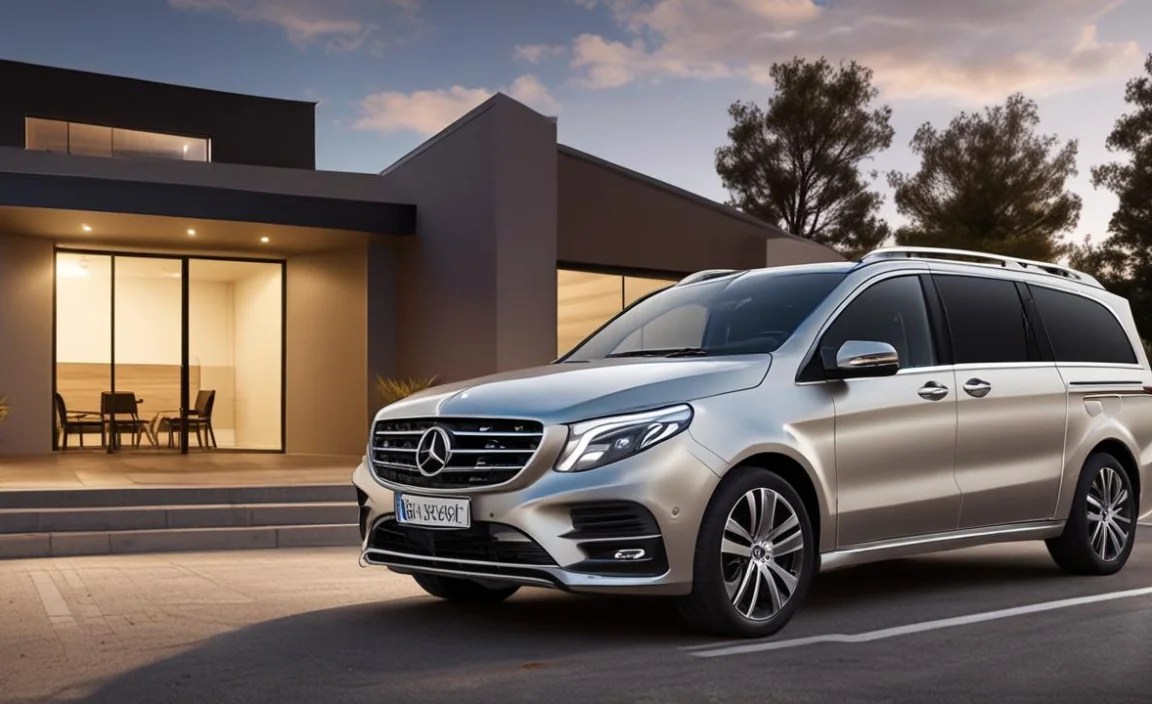
To help visualize the differences, here’s a direct comparison of key features.
<table>
<thead>
<tr>
<th>Feature</th>
<th>Mercedes-Benz V-Class</th>
<th>Mercedes-Benz EQV</th>
</tr>
</thead>
<tbody>
<tr>
<td><strong>Powertrain</strong></td>
<td>Internal Combustion Engine (Diesel)</td>
<td>All-Electric (Battery Electric Vehicle – BEV)</td>
</tr>
<tr>
<td><strong>Performance Feel</strong></td>
<td>Strong torque, linear acceleration, familiar engine sound.</td>
<td>Instant torque, silent and smooth acceleration, responsive.</td>
</tr>
<tr>
<td><strong>Typical Range (WLTP)</strong></td>
<td>500+ miles (on a full tank)</td>
<td>200-220 miles (on a full charge – EQV 300 Long)</td>
</tr>
<tr>
<td><strong>Refueling/Recharging</strong></td>
<td>Fast refueling at gas stations.</td>
<td>Home charging (overnight), DC fast charging (approx. 45-60 mins for 10-80%).</td>
</tr>
<tr>
<td><strong>Emissions</td>
<td>Tailpipe emissions (meets Euro 6d standards).</td>
<td>Zero tailpipe emissions.</td>
</tr>
<tr>
<td><strong>


