
Mercedes Self-Driving Sedan: The Ultimate Guide
The Mercedes self-driving sedan in 2027 aims to deliver Level 4 autonomy, allowing hands-off driving in specific, pre-mapped areas. Expect advanced sensor suites, enhanced AI, and over-the-air updates for continuous improvement, promising a blend of luxury and cutting-edge technology for a seamless driving experience.
Self-driving cars are no longer a thing of the future; they’re rapidly becoming a reality. Mercedes-Benz, a pioneer in automotive innovation, is making significant strides in autonomous driving technology. By 2027, we can expect to see Mercedes self-driving sedans that offer a revolutionary driving experience. This guide will walk you through everything you need to know about these upcoming vehicles, from their technology and features to their potential impact on the automotive industry. Get ready to explore the future of driving with Mercedes-Benz!
What to Expect from the 2027 Mercedes Self-Driving Sedan

Mercedes-Benz has been investing heavily in autonomous driving technology for years. The 2027 self-driving sedan is expected to showcase the culmination of these efforts, offering a Level 4 autonomous driving system. Let’s dive into what makes this technology so groundbreaking.
Level 4 Automation: A Game Changer
Level 4 automation means the car can handle all driving tasks in specific conditions, without any human intervention. This is a significant leap from current Level 2 and Level 3 systems, which still require driver supervision. Imagine commuting to work, relaxing, or even working while your Mercedes handles the driving for you. This is the promise of Level 4 automation.
With Level 4, the vehicle is designed to manage most driving situations independently. However, it is limited to specific Operational Design Domains (ODD). These are typically pre-mapped areas with favorable conditions like well-marked roads and predictable traffic. If the vehicle encounters conditions it cannot handle (e.g., severe weather or unmapped roads), it will safely bring itself to a stop.
Key Technologies Powering the Self-Driving System
Several advanced technologies work together to enable the self-driving capabilities of the 2027 Mercedes sedan:
- Advanced Sensor Suite: A combination of LiDAR, radar, ultrasonic sensors, and high-resolution cameras provides a comprehensive view of the vehicle’s surroundings.
- High-Performance Computing Platform: A powerful computer processes the vast amounts of data from the sensors in real-time, making critical decisions.
- Sophisticated AI Algorithms: Artificial intelligence algorithms interpret the sensor data, predict the behavior of other road users, and plan the vehicle’s path.
- Redundant Systems: Backup systems for steering, braking, and power ensure safety and reliability in case of a component failure.
- HD Mapping: High-definition maps provide detailed information about the road network, including lane markings, traffic signs, and potential hazards.
Enhanced Safety Features
Safety is paramount in autonomous driving. The 2027 Mercedes self-driving sedan will incorporate numerous safety features to protect occupants and other road users:
- Automatic Emergency Braking (AEB): Detects potential collisions and automatically applies the brakes to avoid or mitigate the impact.
- Lane Keeping Assist: Prevents the vehicle from drifting out of its lane.
- Adaptive Cruise Control: Maintains a safe distance from the vehicle ahead.
- Blind Spot Monitoring: Alerts the driver to vehicles in their blind spots.
- Pedestrian and Cyclist Detection: Identifies pedestrians and cyclists and takes appropriate action to avoid collisions.
The Design and Comfort of the Future Mercedes Sedan

Beyond the self-driving technology, the 2027 Mercedes sedan will offer a luxurious and comfortable experience. The interior will be designed to maximize relaxation and productivity during autonomous driving.
Interior Design and Features
Expect a spacious and well-appointed cabin with premium materials and advanced features:
- Reclining Rear Seats: Allow passengers to relax and enjoy the ride.
- Integrated Entertainment System: Includes large displays for movies, games, and video conferencing.
- Ambient Lighting: Creates a soothing and customizable atmosphere.
- Noise Cancellation: Reduces road and wind noise for a quiet and serene environment.
- Advanced Climate Control: Maintains a comfortable temperature and air quality.
Exterior Design
The exterior design of the 2027 Mercedes sedan will likely blend the brand’s traditional elegance with futuristic elements. Expect a sleek and aerodynamic profile, with subtle cues to indicate its autonomous capabilities.
- Streamlined Body: Improves aerodynamics and fuel efficiency.
- Unique Lighting Signature: Differentiates the self-driving sedan from other models.
- Integrated Sensor Housing: Blends the sensors seamlessly into the vehicle’s design.
Performance and Efficiency
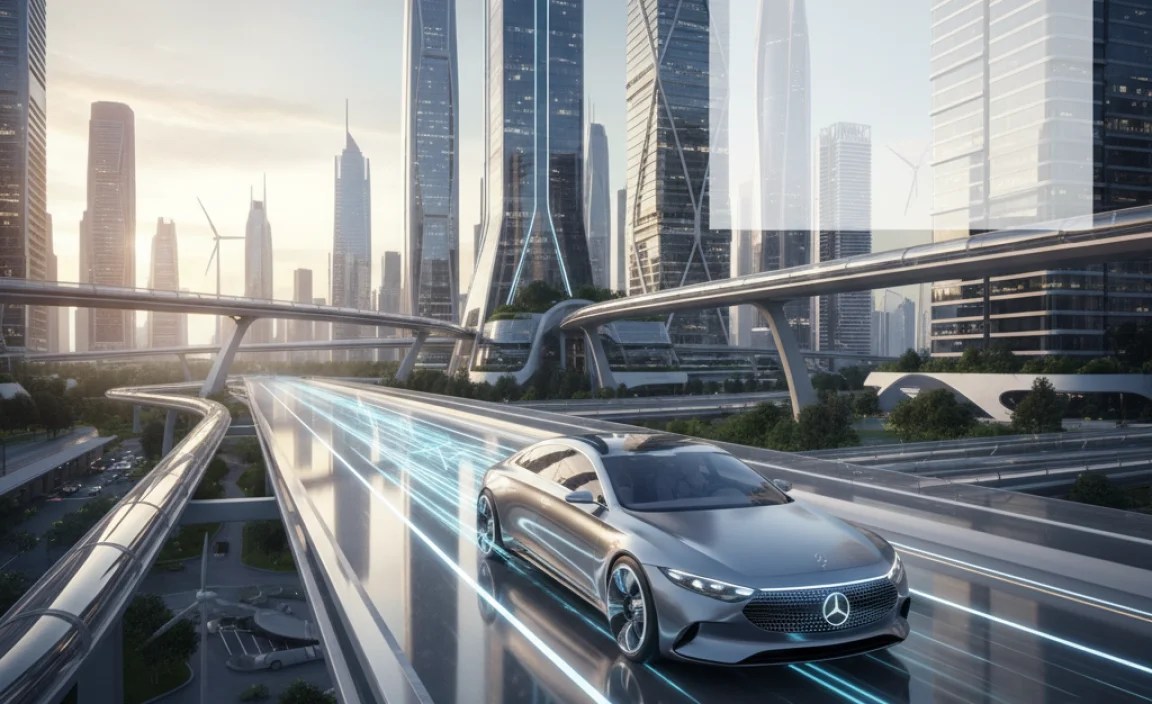
While the focus is on autonomous driving, the 2027 Mercedes sedan will still deliver impressive performance and efficiency.
Powertrain Options
Mercedes-Benz is committed to electrification, so expect the self-driving sedan to be available with a range of electric and hybrid powertrains:
- All-Electric: Offers zero-emission driving and instant torque.
- Plug-In Hybrid: Combines an electric motor with a gasoline engine for extended range and efficiency.
Driving Dynamics
Even in autonomous mode, the 2027 Mercedes sedan will maintain the brand’s renowned driving dynamics. Expect precise steering, responsive handling, and a smooth ride.
The Impact of Self-Driving Cars on Society

The widespread adoption of self-driving cars like the 2027 Mercedes sedan has the potential to transform society in numerous ways.
Benefits of Autonomous Driving
- Increased Safety: Reduces accidents caused by human error.
- Improved Mobility: Provides transportation options for people who cannot drive, such as the elderly or disabled.
- Reduced Congestion: Optimizes traffic flow and reduces congestion.
- Increased Productivity: Allows people to work or relax during their commute.
- Environmental Benefits: Reduces emissions through optimized driving and increased use of electric vehicles.
Challenges and Considerations
Despite the many benefits, there are also challenges and considerations associated with self-driving cars:
- Job Displacement: May lead to job losses for professional drivers.
- Cybersecurity Risks: Vulnerable to hacking and cyberattacks.
- Ethical Dilemmas: Raises complex ethical questions about how the car should respond in unavoidable accident scenarios.
- Regulatory Framework: Requires clear and consistent regulations to ensure safety and accountability.
How to Prepare for the Arrival of Self-Driving Cars

As self-driving cars become more prevalent, it’s essential to prepare for the changes they will bring.
Educate Yourself
Stay informed about the latest developments in autonomous driving technology and its potential impact on society.
Understand the Limitations
Recognize that self-driving cars are not perfect and have limitations. Be prepared to take control of the vehicle if necessary.
Support Infrastructure Development
Advocate for investments in infrastructure, such as high-definition maps and 5G connectivity, that are essential for the safe and efficient operation of self-driving cars.
Comparing the 2027 Mercedes Self-Driving Sedan to Competitors
The self-driving car market is becoming increasingly competitive. Here’s how the 2027 Mercedes sedan might stack up against its rivals:
| Feature | 2027 Mercedes Self-Driving Sedan | Tesla (Future Model) | BMW (Future Model) |
|---|---|---|---|
| Autonomy Level | Level 4 | Level 4 | Level 4 |
| Sensor Suite | LiDAR, Radar, Cameras, Ultrasonic | Cameras, Radar, Ultrasonic | LiDAR, Radar, Cameras, Ultrasonic |
| Interior Luxury | High | Medium | High |
| Powertrain Options | Electric, Plug-In Hybrid | Electric | Electric, Plug-In Hybrid |
| Expected Price | $$$$$ | $$$$ | $$$$$ |
The Future of Mercedes-Benz and Autonomous Driving
Mercedes-Benz is committed to being a leader in autonomous driving technology. The 2027 self-driving sedan is just the beginning. The company plans to introduce self-driving features across its entire lineup, gradually increasing the level of automation over time.
Mercedes-Benz’s Vision for the Future
Mercedes-Benz envisions a future where driving is safer, more efficient, and more enjoyable. Autonomous driving technology will play a crucial role in achieving this vision, allowing people to focus on other activities while on the road.
Continuous Improvement
Mercedes-Benz will continuously improve its autonomous driving systems through over-the-air software updates and real-world testing. This will ensure that the systems remain up-to-date and adapt to changing conditions.
Investing in the 2027 Mercedes Self-Driving Sedan
If you’re considering investing in a self-driving car like the 2027 Mercedes sedan, there are several factors to keep in mind.
Consider the Costs
Self-driving cars are likely to be more expensive than traditional vehicles. Consider the initial purchase price, as well as the ongoing costs of maintenance, insurance, and software updates.
Evaluate Your Needs
Determine whether a self-driving car aligns with your lifestyle and transportation needs. Consider how often you drive, the types of roads you typically travel on, and your comfort level with autonomous technology.
Stay Informed
Keep up-to-date with the latest developments in self-driving technology and regulations. This will help you make an informed decision about whether to invest in a self-driving car.
Potential Challenges and Solutions
The path to widespread adoption of self-driving cars is not without its challenges. Here are some potential hurdles and how Mercedes-Benz might address them:
- Public Acceptance: Many people are still hesitant to trust self-driving cars. Mercedes-Benz can build trust by prioritizing safety, transparency, and education.
- Infrastructure Limitations: Self-driving cars rely on high-quality maps and reliable connectivity. Mercedes-Benz can collaborate with governments and other companies to improve infrastructure.
- Cybersecurity Threats: Self-driving cars are vulnerable to hacking and cyberattacks. Mercedes-Benz can invest in robust security measures to protect its vehicles.
- Weather Conditions: Inclement weather can impair the performance of self-driving systems. Mercedes-Benz can develop sensors and algorithms that are more resilient to weather conditions.
The Role of Government and Regulation
Government and regulatory bodies play a crucial role in ensuring the safe and responsible deployment of self-driving cars.
Establishing Safety Standards
Governments should establish clear safety standards for self-driving cars, including requirements for testing, certification, and ongoing monitoring.
Defining Liability
Regulations should define liability in the event of an accident involving a self-driving car. This will help ensure that victims are compensated fairly.
Supporting Research and Development
Governments should support research and development in autonomous driving technology through funding and incentives.
Real-World Testing and Validation
Extensive real-world testing is essential to ensure the safety and reliability of self-driving cars.
Simulations
Mercedes-Benz uses simulations to test its self-driving systems in a wide range of scenarios, including extreme weather conditions and unexpected events.
Test Tracks
Mercedes-Benz operates test tracks where it can evaluate the performance of its self-driving systems in a controlled environment.
Public Roads
Mercedes-Benz conducts real-world testing of its self-driving systems on public roads, under the supervision of trained safety drivers. These tests are conducted in compliance with all applicable laws and regulations.
The Future of Car Ownership
Self-driving cars may also change the way people think about car ownership.
Subscription Services
Instead of owning a car, people may subscribe to a self-driving car service that provides access to a vehicle when needed.
Ride-Sharing
Self-driving cars could be used in ride-sharing services, making transportation more affordable and convenient.
Reduced Parking Demand
Self-driving cars could reduce the need for parking spaces in urban areas, freeing up land for other uses.
The Ethical Considerations of Self-Driving Cars
Self-driving cars raise complex ethical questions that need to be addressed.
The Trolley Problem
In an unavoidable accident scenario, how should the car prioritize the safety of its occupants versus other road users?
Data Privacy
How should the data collected by self-driving cars be used and protected?
Algorithmic Bias
How can we ensure that the algorithms used in self-driving cars are fair and unbiased?
Mercedes-Benz’s Approach to Ethical Dilemmas
Mercedes-Benz is committed to addressing the ethical challenges of self-driving cars in a responsible and transparent manner.
Prioritizing Safety
Mercedes-Benz prioritizes the safety of all road users, including its own occupants.
Data Protection
Mercedes-Benz is committed to protecting the privacy of its customers’ data.
Fair Algorithms
Mercedes-Benz is working to ensure that its algorithms are fair and unbiased.
FAQ: Mercedes Self-Driving Sedan 2027
Here are some frequently asked questions about the Mercedes self-driving sedan in 2027.
- What is Level 4 automation?
- Level 4 automation means the car can handle all driving tasks in specific conditions without human intervention, but it is limited to certain areas and conditions.
- What technologies enable self-driving in the 2027 Mercedes?
- Key technologies include LiDAR, radar, ultrasonic sensors, high-resolution cameras, a high-performance computing platform, and sophisticated AI algorithms.
- Will the 2027 self-driving sedan be safe?
- Yes, it will incorporate advanced safety features like automatic emergency braking, lane keeping assist, and pedestrian detection to minimize accidents.
- What kind of interior can I expect?
- Expect a luxurious interior with reclining rear seats, integrated entertainment systems, ambient lighting, and advanced climate control.
- What are the potential benefits of self-driving cars?
- Benefits include increased safety, improved mobility, reduced congestion, increased productivity, and environmental benefits.
- What are some challenges of self-driving cars?
- Challenges include job displacement, cybersecurity risks, ethical dilemmas, and the need for a clear regulatory framework.
- How is Mercedes-Benz addressing ethical concerns?
- Mercedes-Benz is prioritizing safety, protecting data privacy, and working to ensure that its algorithms are fair and unbiased.
Conclusion
The 2027 Mercedes self-driving sedan represents a significant step towards the future of transportation. With its Level 4 automation, advanced safety features, and luxurious design, it promises to revolutionize the driving experience. While there are challenges and considerations to address, the potential benefits of self-driving cars are immense. As Mercedes-Benz continues to innovate and refine its autonomous driving technology, we can expect to see even more impressive advancements in the years to come. The future of driving is here, and it’s looking brighter and more efficient than ever before. Get ready for a driving experience that blends luxury, technology, and unparalleled convenience.


