
Mercedes Sedan Parts Availability: The Effortless Guide
Finding parts for your Mercedes sedan shouldn’t be a headache. This guide simplifies the process, showing you where to look, what to consider, and how to ensure you get the right part, whether you’re doing DIY repairs or trusting your mechanic. We’ll cover everything from dealerships to online retailers, ensuring your Mercedes stays in top condition.
Mercedes-Benz sedans are known for their luxury, performance, and reliability. However, like all vehicles, they occasionally need replacement parts. Locating these parts can sometimes feel like a challenge, especially if you’re unfamiliar with the best resources or the specific part you require. Don’t worry, this comprehensive guide will walk you through everything you need to know about sourcing parts for your Mercedes sedan, making the process as smooth as possible.
We’ll explore various options, from authorized dealerships to independent suppliers, both online and offline. We’ll also discuss how to identify the correct part number, understand warranty information, and avoid common pitfalls. By the end of this article, you’ll have the knowledge and confidence to find the parts you need quickly and efficiently. Let’s dive in!
Understanding Your Mercedes-Benz Sedan

Before you start searching for parts, it’s essential to understand your specific Mercedes-Benz sedan model. Knowing the year, model, and engine type will significantly narrow down your search and ensure you get the correct components. This section covers the key identifiers you’ll need.
Identifying Your Model and Year
The model year of your Mercedes-Benz is crucial for finding compatible parts. Parts often vary between model years, even within the same generation. Here’s how to find this information:
- Vehicle Identification Number (VIN): The VIN is a 17-character code unique to your car. It’s usually located on the driver’s side dashboard (visible through the windshield), the driver’s side doorjamb, or on your vehicle’s registration and insurance documents.
- Vehicle Registration: Your vehicle registration document will clearly state the year your car was manufactured.
- Owner’s Manual: The owner’s manual typically includes the vehicle’s year and model information on the cover page or in the introductory sections.
Determining Your Engine Type
Knowing your engine type is just as important as knowing the model year. Different engines require different parts, even within the same model. Here’s how to identify your engine type:
- VIN Decoding: The VIN contains information about the engine. Online VIN decoders (many are free) can provide detailed specifications, including engine type.
- Engine Compartment: A sticker or plate on the engine itself often indicates the engine type or code.
- Owner’s Manual: Your owner’s manual will specify the engine type.
Why This Information Matters
Having accurate information about your Mercedes-Benz sedan will save you time and money. Ordering the wrong part can lead to delays, additional shipping costs, and potential damage to your vehicle. Always double-check your vehicle’s information before making any purchases.
Where to Find Mercedes-Benz Sedan Parts

Now that you know how to identify your vehicle, let’s explore the various places you can find Mercedes-Benz sedan parts. Each option has its pros and cons, which we’ll discuss in detail.
Authorized Mercedes-Benz Dealerships
Pros:
- Genuine Parts: Dealerships sell genuine Mercedes-Benz parts, ensuring the highest quality and compatibility.
- Expert Assistance: Dealership staff can help you identify the correct part and offer technical advice.
- Warranty: Genuine parts purchased from a dealership typically come with a warranty.
Cons:
- Higher Prices: Dealerships generally have the highest prices compared to other sources.
- Limited Availability: Some older or less common parts may not be readily available.
When to Choose a Dealership:
Consider using a dealership when:
- You need a critical part and want to ensure the highest quality.
- You’re unsure of the exact part you need and require expert assistance.
- You want the peace of mind that comes with a warranty.
Independent Auto Parts Stores
Pros:
- Lower Prices: Independent stores often offer lower prices than dealerships.
- Wide Selection: Many stores carry both OEM (Original Equipment Manufacturer) and aftermarket parts.
- Convenience: Local stores provide immediate access to parts.
Cons:
- Variable Quality: Aftermarket parts can vary significantly in quality.
- Less Expertise: Staff may not have specialized knowledge of Mercedes-Benz vehicles.
- Limited Warranty: Warranties on aftermarket parts may be limited.
When to Choose an Independent Store:
Consider using an independent store when:
- You’re looking for a more affordable option.
- You’re comfortable choosing between OEM and aftermarket parts.
- You need a common part quickly and don’t require specialized assistance.
Online Retailers
Pros:
- Extensive Selection: Online retailers offer a vast selection of parts, including those that may be hard to find locally.
- Competitive Prices: Online retailers often have competitive prices due to lower overhead costs.
- Convenience: You can shop from the comfort of your home.
Cons:
- Shipping Delays: You’ll need to wait for the part to be shipped.
- Return Hassles: Returning parts can be more complicated than with local stores.
- Risk of Counterfeit Parts: There’s a risk of purchasing counterfeit or low-quality parts from unreliable sellers.
Popular Online Retailers:
- Amazon: Offers a wide variety of parts from different sellers.
- eBay: A good place to find used or discounted parts.
- RockAuto: Specializes in auto parts and offers competitive pricing.
- FCP Euro: Focuses on European car parts, including Mercedes-Benz.
- ECS Tuning: Another reputable source for European auto parts.
When to Choose an Online Retailer:
Consider using an online retailer when:
- You need a specific part that’s hard to find locally.
- You’re looking for the best possible price.
- You’re willing to wait for shipping.
Salvage Yards
Pros:
- Very Low Prices: Salvage yards offer the lowest prices on used parts.
- Environmentally Friendly: Recycling parts helps reduce waste.
- Hard-to-Find Parts: You may find parts that are no longer available elsewhere.
Cons:
- Variable Condition: Parts are used and may have wear and tear.
- No Warranty: Salvage yards typically don’t offer warranties.
- Time-Consuming: Finding the right part can take time and effort.
When to Choose a Salvage Yard:
Consider using a salvage yard when:
- You’re on a tight budget.
- You need a part that’s no longer available new.
- You’re willing to accept a used part with no warranty.
OEM vs. Aftermarket Parts

When searching for Mercedes-Benz sedan parts, you’ll encounter two main categories: OEM (Original Equipment Manufacturer) and aftermarket parts. Understanding the difference is crucial for making informed decisions.
OEM Parts
Definition: OEM parts are made by the same manufacturer that produced the original parts for your Mercedes-Benz. They are identical in quality and specifications to the parts that came with your car when it was new.
Pros:
- Guaranteed Compatibility: OEM parts are designed to fit perfectly and function correctly.
- High Quality: They meet the manufacturer’s strict quality standards.
- Warranty: OEM parts typically come with a warranty.
Cons:
- Higher Cost: OEM parts are generally more expensive than aftermarket parts.
- Limited Availability: Some older or less common OEM parts may be hard to find.
Aftermarket Parts
Definition: Aftermarket parts are made by companies other than the original manufacturer. They are designed to be compatible with your Mercedes-Benz but may differ in quality and specifications.
Pros:
- Lower Cost: Aftermarket parts are usually more affordable than OEM parts.
- Wider Availability: There’s a vast selection of aftermarket parts available from various manufacturers.
- Performance Upgrades: Some aftermarket parts are designed to improve performance or aesthetics.
Cons:
- Variable Quality: The quality of aftermarket parts can vary significantly.
- Potential Compatibility Issues: Some aftermarket parts may not fit or function correctly.
- Limited Warranty: Warranties on aftermarket parts may be limited or non-existent.
Making the Right Choice
The choice between OEM and aftermarket parts depends on your budget, needs, and priorities. Here’s a general guideline:
- Choose OEM parts for critical components like engine parts, brake components, and safety-related items where quality and reliability are paramount.
- Consider aftermarket parts for less critical components like interior trim, accessories, and some cosmetic parts where cost savings are more important.
Always research the reputation of the aftermarket manufacturer and read reviews before making a purchase. When in doubt, consult with a trusted mechanic or Mercedes-Benz specialist.
Finding the Correct Part Number

One of the most critical steps in sourcing Mercedes-Benz sedan parts is identifying the correct part number. This unique identifier ensures that you get the exact component you need. Here’s how to find it.
Why Part Numbers Matter
Part numbers are specific to each component and ensure compatibility with your vehicle. Using the wrong part number can lead to:
- Incorrect Fit: The part may not fit your vehicle properly.
- Malfunction: The part may not function correctly, potentially causing damage to your vehicle.
- Wasted Time and Money: You’ll have to return the incorrect part and order the correct one, wasting time and money on shipping and handling.
Where to Find the Part Number
There are several places where you can find the part number for your Mercedes-Benz sedan:
- Original Part: The part number is often stamped or printed directly on the original part. Look for a series of numbers and letters.
- Mercedes-Benz Parts Catalog: Dealerships and some online retailers offer parts catalogs that list part numbers for various models and components.
- Online Parts Databases: Several websites specialize in providing part numbers for Mercedes-Benz vehicles. You can search by model, year, and component.
- Mercedes-Benz Dealer: Your local Mercedes-Benz dealer can look up the part number for you based on your vehicle’s VIN.
Using Online Parts Catalogs
Online parts catalogs are a valuable resource for finding part numbers. Here’s how to use them effectively:
- Visit a Reputable Website: Choose a website that specializes in Mercedes-Benz parts or has a comprehensive parts catalog.
- Enter Your Vehicle Information: Enter your vehicle’s year, model, and engine type.
- Browse the Catalog: Navigate to the section that corresponds to the part you need (e.g., engine, brakes, suspension).
- Locate the Part: Find the part in the catalog and note the part number.
- Verify Compatibility: Double-check that the part number is compatible with your specific vehicle.
Cross-Referencing Part Numbers
Sometimes, a part number may have been superseded by a newer version. In this case, you’ll need to cross-reference the old part number to the new one. You can do this by:
- Contacting a Mercedes-Benz Dealer: The dealer can provide you with the updated part number.
- Using an Online Cross-Reference Tool: Several websites offer tools that allow you to cross-reference part numbers.
Checking Compatibility
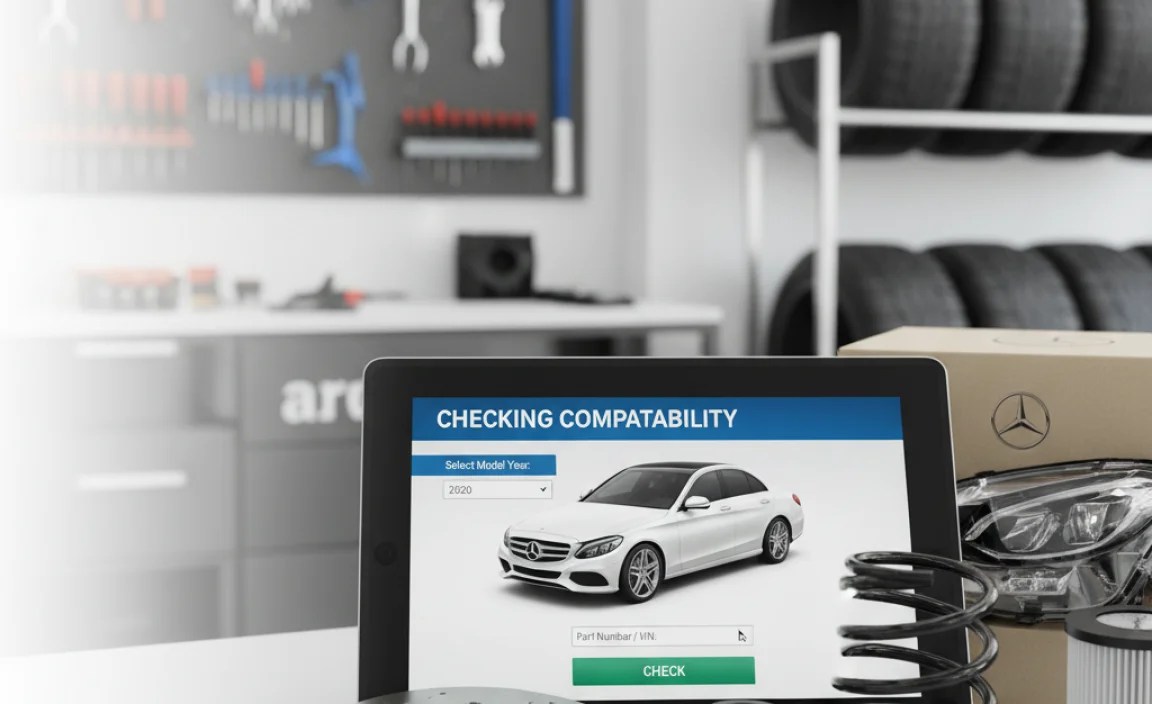
Even with the correct part number, it’s essential to verify that the part is compatible with your specific vehicle. This is especially important when purchasing aftermarket parts or dealing with older vehicles.
Using Online Compatibility Checkers
Many online retailers offer compatibility checkers that allow you to enter your vehicle’s information and the part number to verify compatibility. These tools can save you time and hassle by preventing you from ordering the wrong part.
Consulting with a Mechanic
If you’re unsure about compatibility, consult with a trusted mechanic or Mercedes-Benz specialist. They can use their expertise to ensure that the part is suitable for your vehicle.
Reading Product Reviews
Read product reviews from other Mercedes-Benz owners who have purchased the same part. Their experiences can provide valuable insights into the part’s compatibility and performance.
Understanding Warranties
Warranties protect you against defects in materials or workmanship. Understanding the warranty coverage for your Mercedes-Benz sedan parts is crucial for protecting your investment.
OEM Parts Warranties
OEM parts typically come with a warranty from Mercedes-Benz. The warranty period and coverage can vary depending on the part and the dealership. Here are some general guidelines:
- New Parts: New OEM parts usually have a warranty of 12 months or 12,000 miles, whichever comes first.
- Remanufactured Parts: Remanufactured OEM parts may have a shorter warranty period.
The warranty typically covers defects in materials or workmanship but does not cover damage caused by improper installation, misuse, or normal wear and tear.
Aftermarket Parts Warranties
Aftermarket parts warranties can vary significantly depending on the manufacturer and the retailer. Some parts may have a limited warranty, while others may have no warranty at all. Here are some things to consider:
- Warranty Period: Check the length of the warranty period.
- Coverage: Understand what the warranty covers and what it excludes.
- Claim Process: Know how to file a warranty claim if you experience a problem with the part.
Always read the warranty information carefully before purchasing aftermarket parts.
Extended Warranties
In addition to the standard warranties, you may also have the option to purchase an extended warranty for your Mercedes-Benz sedan. Extended warranties can provide additional coverage for a longer period, giving you peace of mind.
However, extended warranties can be expensive, so it’s essential to weigh the costs and benefits before making a decision. Consider the age and condition of your vehicle, as well as your budget and risk tolerance.
Avoiding Counterfeit Parts
Counterfeit auto parts are a growing problem, and they can pose a serious risk to your safety and your vehicle’s performance. Here’s how to avoid them.
Identifying Counterfeit Parts
Counterfeit parts are often difficult to distinguish from genuine parts, but there are some telltale signs to look for:
- Low Price: If the price seems too good to be true, it probably is. Counterfeit parts are often sold at significantly lower prices than genuine parts.
- Poor Packaging: Counterfeit parts may be packaged in cheap or poorly made boxes with incorrect labeling.
- Missing Markings: Genuine parts typically have manufacturer markings and part numbers. Counterfeit parts may lack these markings.
- Substandard Quality: Counterfeit parts may be made from inferior materials and may not meet the manufacturer’s quality standards.
Purchasing from Reputable Sources
The best way to avoid counterfeit parts is to purchase from reputable sources, such as authorized Mercedes-Benz dealerships, well-known auto parts stores, and reputable online retailers. Avoid buying from unknown or unverified sellers.
Reporting Counterfeit Parts
If you suspect that you’ve purchased a counterfeit part, report it to the appropriate authorities, such as the Federal Trade Commission (FTC) or the International Anti-Counterfeiting Coalition (IACC). Reporting counterfeit parts helps protect other consumers and prevents the spread of these dangerous products.
Tools and Resources
Finding the right Mercedes-Benz sedan parts is easier with the right tools and resources. Here are some helpful tools and resources.
Online Parts Catalogs
Several online parts catalogs can help you find the correct part number for your Mercedes-Benz sedan. Some popular options include:
- Mercedes-Benz EPC (Electronic Parts Catalog): A comprehensive catalog provided by Mercedes-Benz.
- RockAuto: Offers a wide selection of parts and a user-friendly interface.
- FCP Euro: Specializes in European car parts and provides detailed product information.
- ECS Tuning: Another reputable source for European auto parts.
VIN Decoders
VIN decoders can provide detailed information about your vehicle, including the model year, engine type, and original equipment. Some popular VIN decoders include:
- VIN Decoderz: A free online VIN decoder.
- Carfax: Offers a comprehensive vehicle history report, including VIN decoding.
- AutoCheck: Another reputable vehicle history report provider.
Online Forums and Communities
Online forums and communities dedicated to Mercedes-Benz vehicles can be a valuable resource for finding parts and getting advice from other owners. Some popular forums include:
- Mercedes-Benz Club of America: A national organization for Mercedes-Benz enthusiasts.
- MBWorld.org: A popular online forum for Mercedes-Benz owners.
- BenzForum.com: Another active online forum for Mercedes-Benz enthusiasts.
These forums can provide valuable insights into common problems, recommended parts, and DIY repair tips.
Step-by-Step Guide to Ordering Parts
Let’s walk through the process of ordering parts for your Mercedes-Benz sedan, step by step.
- Identify the Part: Determine the exact part you need.
- Find the Part Number: Use the methods described earlier to find the correct part number.
- Choose a Source: Select a reputable source, such as a dealership, auto parts store, or online retailer.
- Check Compatibility: Verify that the part is compatible with your vehicle.
- Place Your Order: Add the part to your cart and proceed to checkout.
- Review Your Order: Double-check your order to ensure that you’ve selected the correct part and quantity.
- Choose a Shipping Method: Select a shipping method that meets your needs.
- Pay for Your Order: Enter your payment information and complete the purchase.
- Track Your Order: Use the tracking number provided by the retailer to track your order.
- Inspect the Part: When you receive the part, inspect it carefully to ensure that it’s the correct part and that it’s not damaged.
Installation Tips
If you’re planning to install the part yourself, here are some helpful tips.
- Gather the Necessary Tools: Make sure you have all the tools you need before you start.
- Consult a Repair Manual: A repair manual can provide detailed instructions and diagrams.
- Follow Safety Precautions: Wear safety glasses and gloves, and disconnect the battery before working on electrical components.
- Take Your Time: Don’t rush the installation process. Take your time and follow the instructions carefully.
- If in Doubt, Seek Professional Help: If you’re unsure about any step of the installation process, seek professional help from a qualified mechanic.
Cost Considerations
The cost of Mercedes-Benz sedan parts can vary widely depending on the part, the source, and whether you choose OEM or aftermarket parts. Here’s a general overview of the cost considerations.
Part Type
Some parts are inherently more expensive than others. For example, engine parts and transmission parts are typically more expensive than interior trim or accessories.
Source
As mentioned earlier, dealerships generally have the highest prices, while salvage yards have the lowest prices. Online retailers and independent auto parts stores fall somewhere in between.
OEM vs. Aftermarket
OEM parts are typically more expensive than aftermarket parts.
Labor Costs
If you’re having a mechanic install the part, you’ll also need to factor in labor costs. Labor rates can vary depending on the mechanic and the complexity of the job.
Getting Estimates
Before purchasing parts or hiring a mechanic, get estimates from several different sources. This will help you get a sense of the average cost and avoid overpaying.
Common Issues and Solutions
Here are some common issues that Mercedes-Benz sedan owners face when sourcing parts, along with potential solutions.
| Issue | Solution |
|---|---|
| Difficulty finding a specific part | Try searching online, contacting a dealership, or visiting a salvage yard. |
| Unsure of the correct part number | Use an online parts catalog or consult with a mechanic. |
| Concerned about counterfeit parts | Purchase from reputable sources and inspect the part carefully. |
| Worried about compatibility | Use an online compatibility checker or consult with a mechanic. |
| Limited budget | Consider aftermarket parts or used parts from a salvage yard. |
FAQ
Here are some frequently asked questions about Mercedes-Benz sedan parts availability:
- Where can I find the cheapest Mercedes-Benz parts?
- Salvage yards usually offer the lowest prices, but online retailers can also be competitive.
- Are OEM parts always better than aftermarket parts?
- OEM parts guarantee fit and quality, but reputable aftermarket brands can offer good value for certain components.
- How do I know if a part will fit my specific Mercedes model?
- Always verify the part number against your VIN using an online compatibility checker or consult a mechanic.
- What’s the best way to find a hard-to-locate Mercedes part?
- Check online forums, contact specialized European auto parts retailers, or explore salvage yards.
- Do Mercedes parts come with a warranty?
- OEM parts usually have a warranty, while aftermarket warranties vary. Check the warranty details before buying.
- Can I return a Mercedes part if it doesn’t fit?
- Return policies vary by retailer. Always review the policy before purchasing.
- Should I buy used Mercedes parts?
- Used parts are budget-friendly, but inspect them carefully and be aware that they usually don’t have a warranty.
Conclusion
Finding the right parts for your Mercedes-Benz sedan doesn’t have to be a daunting task. By understanding your vehicle, knowing where to look, and following the tips outlined in this guide, you can source the parts you need quickly, efficiently, and confidently. Whether you choose OEM or aftermarket parts, always prioritize quality and compatibility to ensure the longevity and performance of your Mercedes-Benz. Now you’re equipped with the knowledge to keep your Mercedes running smoothly for years to come!
“`


