
Mercedes Sedan Performance Upgrades: Unleash Ultimate Power
Want to boost your Mercedes sedan’s performance? This guide shows you simple upgrades for more power and better handling. Learn how to make your Mercedes even more amazing!
Your Mercedes-Benz sedan is already a symbol of luxury and performance. But what if you could take it even further? Many owners feel a desire to enhance their car’s capabilities, whether for a more thrilling driving experience or simply to personalize their vehicle. The good news is that there are several proven methods to unlock hidden potential and elevate your Mercedes to new heights.
This comprehensive guide will walk you through the most effective performance upgrades for your Mercedes sedan. We’ll cover everything from simple bolt-on modifications to more advanced tuning options, providing you with the knowledge to make informed decisions and achieve your desired results. Get ready to transform your driving experience!
Understanding Performance Upgrades
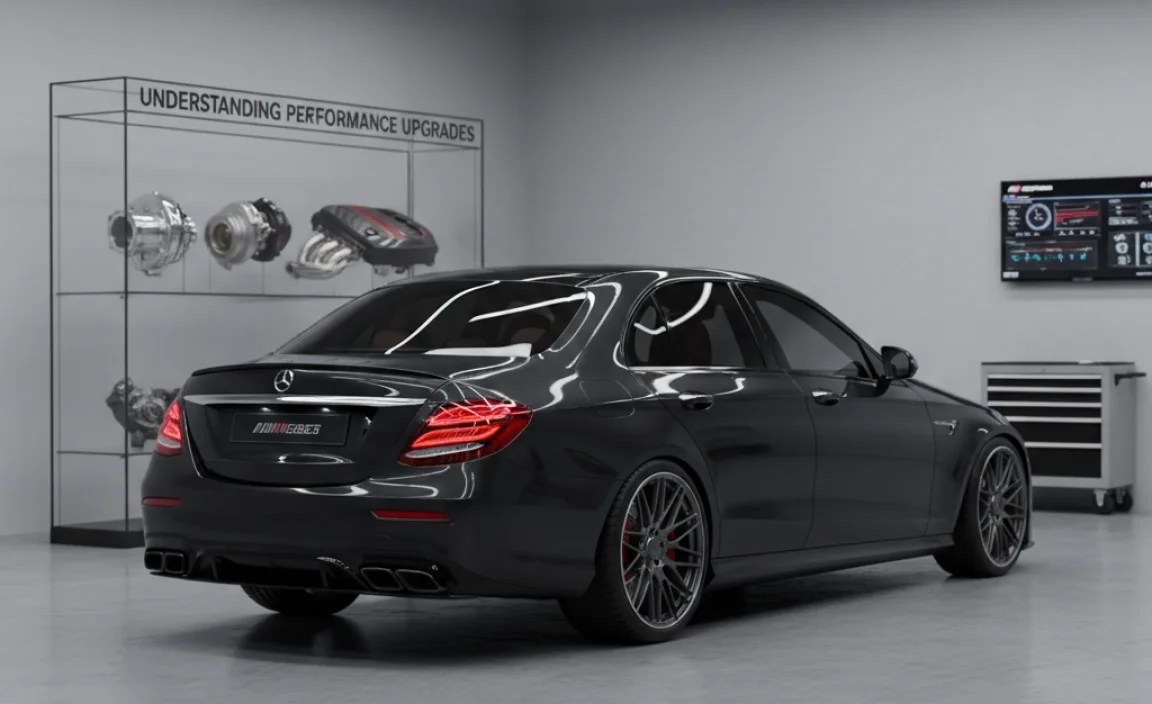
Before diving into specific upgrades, it’s important to understand the key areas that contribute to your Mercedes’ overall performance.
- Engine Power: Increasing horsepower and torque for quicker acceleration and improved responsiveness.
- Handling: Enhancing stability, cornering grip, and steering precision for a more engaging driving experience.
- Braking: Upgrading braking components for shorter stopping distances and improved safety.
- Aesthetics: Adding visual enhancements to complement the performance upgrades and personalize your vehicle’s appearance.
Essential Mercedes Sedan Performance Upgrades

1. ECU Tuning
ECU (Engine Control Unit) tuning is one of the most effective ways to boost your Mercedes’ performance. The ECU controls various engine parameters, such as fuel injection, ignition timing, and boost pressure (for turbocharged models). By remapping the ECU, you can optimize these settings for increased power and efficiency.
Benefits of ECU Tuning:
- Increased horsepower and torque
- Improved throttle response
- Enhanced fuel efficiency (when driven conservatively)
- Customizable settings for different driving styles
Types of ECU Tuning:
- Piggyback ECUs: These devices intercept and modify the signals between the factory ECU and the engine. They are generally easier to install but offer less precise control compared to full ECU flashes.
- ECU Flashes: This involves overwriting the factory ECU software with a modified program. ECU flashes offer greater control and customization but require specialized tools and knowledge. Companies like Weistec Engineering and Renntech are known for their Mercedes-Benz ECU tuning expertise.
2. Air Intake Systems
Upgrading your Mercedes’ air intake system can improve airflow to the engine, resulting in increased horsepower and torque. Aftermarket air intakes typically feature larger filters and smoother intake tubes, reducing restrictions and allowing the engine to breathe more freely.
Benefits of Air Intake Systems:
- Increased horsepower and torque
- Improved throttle response
- Enhanced engine sound
- Improved fuel efficiency (in some cases)
Types of Air Intake Systems:
- Short Ram Intakes: These intakes place the air filter directly on the throttle body, providing a shorter and more direct path for airflow.
- Cold Air Intakes: These intakes position the air filter in a cooler location, away from the engine’s heat, to draw in colder and denser air.
When choosing an air intake system, consider the filter material, intake tube design, and overall build quality. Brands like K&N offer high-quality air filters and intake systems designed for Mercedes-Benz vehicles.
3. Exhaust Systems
Upgrading your Mercedes’ exhaust system can improve exhaust flow, reduce backpressure, and unlock additional horsepower. Aftermarket exhaust systems typically feature larger diameter pipes, high-flow mufflers, and performance catalytic converters.
Benefits of Exhaust Systems:
- Increased horsepower and torque
- Improved throttle response
- Enhanced exhaust note
- Reduced weight
Types of Exhaust Systems:
- Cat-Back Exhausts: These systems replace the exhaust components from the catalytic converters back to the tailpipes.
- Axle-Back Exhausts: These systems replace the exhaust components from the rear axle back to the tailpipes.
- Headers: These replace the factory exhaust manifolds with performance headers, improving exhaust flow directly from the engine.
When selecting an exhaust system, consider the material (stainless steel is more durable than aluminized steel), pipe diameter, muffler design, and overall sound level. Companies like MagnaFlow and Akrapovič offer high-performance exhaust systems for Mercedes-Benz vehicles.
4. Suspension Upgrades
Upgrading your Mercedes’ suspension can significantly improve handling, stability, and cornering grip. Aftermarket suspension components, such as lowering springs, coilovers, and sway bars, can fine-tune your car’s ride height, damping characteristics, and roll stiffness.
Benefits of Suspension Upgrades:
- Improved handling and stability
- Reduced body roll
- Lowered ride height (for a more aggressive stance)
- Adjustable damping and ride height (with coilovers)
Types of Suspension Upgrades:
- Lowering Springs: These springs lower the car’s ride height, improving handling and appearance.
- Coilovers: These adjustable suspension units allow you to fine-tune the ride height, damping, and rebound characteristics.
- Sway Bars: These bars connect the left and right wheels, reducing body roll during cornering.
When choosing suspension upgrades, consider your driving style, desired ride quality, and budget. Brands like Bilstein and KW Suspensions offer high-performance suspension components for Mercedes-Benz vehicles.
5. Brake Upgrades
Upgrading your Mercedes’ brakes can improve stopping power, reduce brake fade, and enhance safety. Aftermarket brake components, such as performance rotors, pads, and calipers, can provide shorter stopping distances and more consistent braking performance.
Benefits of Brake Upgrades:
- Improved stopping power
- Reduced brake fade
- Enhanced pedal feel
- Improved safety
Types of Brake Upgrades:
- Performance Rotors: These rotors are designed to dissipate heat more effectively, reducing brake fade.
- Performance Pads: These pads offer higher friction coefficients, providing increased stopping power.
- Big Brake Kits: These kits include larger rotors, calipers, and pads for maximum braking performance.
When selecting brake upgrades, consider the rotor material (e.g., slotted, drilled, or plain), pad compound, and caliper design. Companies like Brembo and StopTech offer high-performance brake components for Mercedes-Benz vehicles.
6. Wheel and Tire Upgrades
Upgrading your Mercedes’ wheels and tires can improve handling, traction, and appearance. Aftermarket wheels can reduce weight and increase strength, while performance tires can provide enhanced grip and cornering ability.
Benefits of Wheel and Tire Upgrades:
- Improved handling and traction
- Reduced weight (with lightweight wheels)
- Enhanced appearance
- Improved braking performance (with wider tires)
Types of Wheel and Tire Upgrades:
- Lightweight Wheels: These wheels are designed to reduce weight, improving acceleration, braking, and handling.
- Performance Tires: These tires offer higher grip levels, providing improved traction and cornering ability.
When choosing wheels and tires, consider the wheel size, offset, and material, as well as the tire size, compound, and tread pattern. Brands like Tire Rack and BBS offer a wide selection of wheels and tires for Mercedes-Benz vehicles.
7. Supercharger/Turbocharger Upgrades (for forced induction engines)
For Mercedes sedans equipped with superchargers or turbochargers, upgrading these components can yield significant performance gains. Larger superchargers or turbochargers can deliver more boost, resulting in increased horsepower and torque.
Benefits of Supercharger/Turbocharger Upgrades:
- Substantial increase in horsepower and torque
- Improved acceleration and responsiveness
- Enhanced overall performance
Considerations for Supercharger/Turbocharger Upgrades:
- Professional Installation: These upgrades typically require professional installation and tuning to ensure proper operation and reliability.
- Supporting Modifications: Upgrading the supercharger or turbocharger may require other supporting modifications, such as upgraded fuel injectors, fuel pump, and intercooler.
Detailed Table of Potential Performance Gains
The table below shows the potential gains from each upgrade.
| Upgrade | Horsepower Gain (Approximate) | Torque Gain (Approximate) | Handling Improvement | Braking Improvement |
|---|---|---|---|---|
| ECU Tuning | 20-100+ HP | 20-100+ lb-ft | Slightly Improved Throttle Response | No Change |
| Air Intake System | 5-15 HP | 5-15 lb-ft | Slightly Improved Throttle Response | No Change |
| Exhaust System | 10-30 HP | 10-30 lb-ft | Slightly Improved Throttle Response | No Change |
| Suspension Upgrades | No Change | No Change | Significantly Improved | No Change |
| Brake Upgrades | No Change | No Change | No Change | Significantly Improved |
| Wheel and Tire Upgrades | No Change | No Change | Improved (Depending on Tire Choice) | Improved (Depending on Tire Choice) |
| Supercharger/Turbocharger Upgrade | 50-200+ HP | 50-200+ lb-ft | Improved Throttle Response | May require brake upgrades |
Cost Table: Mercedes Sedan Performance Upgrades

The table below provides an overview of the typical costs associated with each performance upgrade.
| Upgrade | Approximate Cost |
|---|---|
| ECU Tuning | $500 – $1500 |
| Air Intake System | $200 – $500 |
| Exhaust System | $500 – $2000+ |
| Suspension Upgrades | $500 – $3000+ |
| Brake Upgrades | $500 – $5000+ |
| Wheel and Tire Upgrades | $1000 – $10000+ |
| Supercharger/Turbocharger Upgrade | $3000 – $10000+ |
Important Considerations
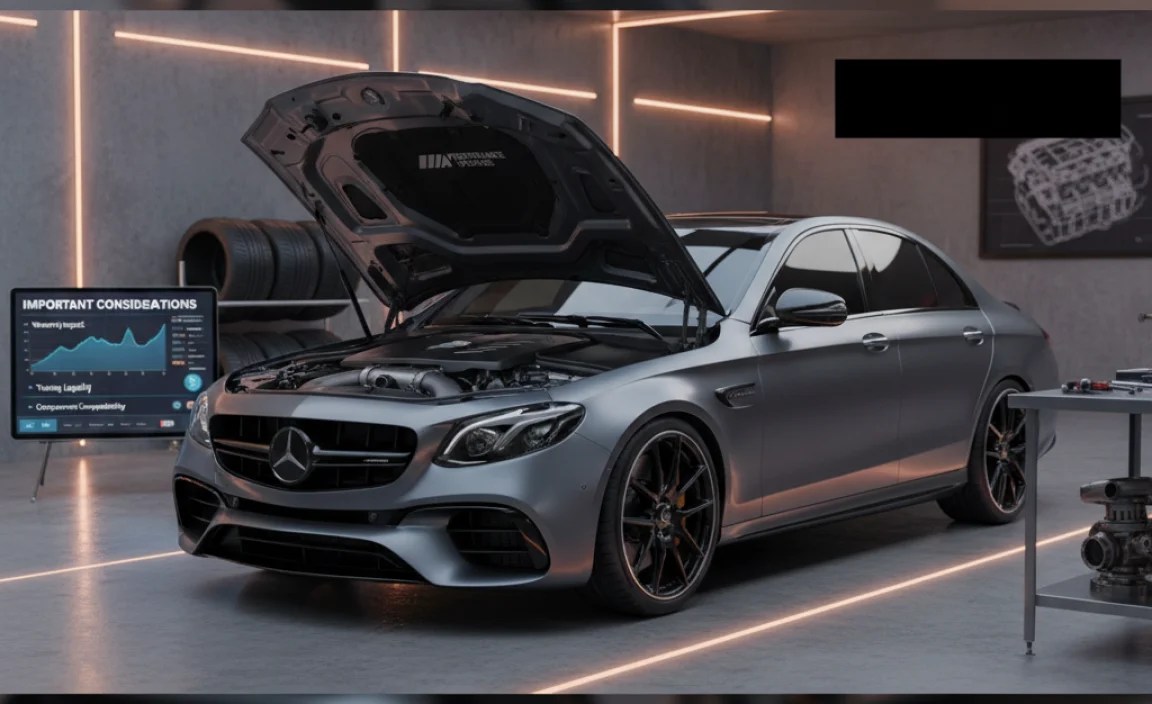
- Professional Installation: Some upgrades, such as ECU tuning, exhaust systems, and suspension modifications, may require professional installation to ensure proper fitment and performance.
- Warranty: Be aware that aftermarket performance upgrades may void your vehicle’s warranty. Check with your Mercedes-Benz dealer or warranty provider before making any modifications.
- Legality: Ensure that any performance upgrades you install comply with local laws and regulations. Some modifications, such as aftermarket exhaust systems without catalytic converters, may not be street legal.
Mercedes Sedan Performance Upgrades – FAQs
Here are some of the most frequently asked questions about Mercedes sedan performance upgrades:
Q: Will performance upgrades void my Mercedes-Benz warranty?
A: Yes, some performance upgrades can potentially void your vehicle’s warranty. It’s essential to check with your Mercedes-Benz dealer or warranty provider before making any modifications.
Q: Can I install performance upgrades myself?
A: Some upgrades, like air filters, are easy to install yourself. However, more complex upgrades like ECU tuning, suspension work, or exhaust systems are best left to professionals.
Q: How much horsepower can I gain with performance upgrades?
A: Horsepower gains vary depending on the upgrade. ECU tuning and forced induction upgrades offer the most significant gains, while intake and exhaust systems provide smaller improvements.
Q: What is the best first performance upgrade for my Mercedes?
A: ECU tuning is often considered the best first upgrade, as it provides a noticeable increase in power and throttle response without requiring extensive modifications.
Q: Are performance tires worth the investment?
A: Yes, performance tires can significantly improve handling, traction, and braking performance, making them a worthwhile investment for enthusiasts seeking a more engaging driving experience.
Q: How do I choose the right performance parts for my Mercedes?
A: Research reputable brands, read reviews, and consult with experienced mechanics or tuners to determine the best performance parts for your specific needs and goals.
Q: Will performance upgrades affect my fuel economy?
A: Some upgrades, such as ECU tuning and air intake systems, can potentially improve fuel economy when driven conservatively. However, aggressive driving with performance upgrades will typically result in lower fuel economy.
Conclusion
Upgrading your Mercedes sedan’s performance can be a rewarding experience, transforming your driving experience and unlocking hidden potential. By carefully considering your goals, budget, and the information presented in this guide, you can make informed decisions and create a Mercedes that truly reflects your personal style and driving preferences. Whether you’re looking for increased power, improved handling, or enhanced aesthetics, there’s a performance upgrade that’s right for you. So, take the plunge and start transforming your Mercedes into the ultimate driving machine!
“`


