
Actros Fuel Tank Capacity: Your Perfect Powerhouse
Actros fuel tank capacity represents a cornerstone of its long-haul efficiency, offering substantial range to keep your Mercedes-Benz truck moving further between refuels, optimizing operational uptime and reducing logistical interruptions.
Welcome, fellow Mercedes-Benz enthusiasts and hard-working professionals! Today, we’re diving deep into a topic that’s fundamental to the operational success of your Mercedes-Benz Actros truck: its fuel tank capacity. For any driver or fleet manager, understanding the specifics of your fuel system isn’t just about knowing numbers; it’s about maximizing efficiency, minimizing downtime, and ensuring your business keeps rolling smoothly across vast distances. The Actros is renowned for its advanced engineering and reliability, and its fuel tanks are a critical component of that impressive performance.
Many owners and operators find themselves wondering about the exact volume their Actros can hold, how different configurations affect it, and what implications this has for their daily routes and long-term planning. This can sometimes feel like a complex puzzle, especially with the variety of Actros models and configurations available. Rest assured, we’re here to demystify it all. By the end of this guide, you’ll have a clear, confident understanding of Actros fuel tank capacities, how they benefit your operations, and what factors to consider when choosing or managing your vehicle.
Let’s explore what makes the Actros fuel system such a powerhouse for your business.
Frequently Asked Questions
What is the typical range of Actros fuel tank capacities?
Mercedes-Benz Actros trucks offer a wide range of fuel tank capacities, typically spanning from around 400 liters to as much as 1,200 liters or even more for specialized configurations. The exact capacity depends heavily on the specific model, axle configuration, and intended use of the truck.
How does the Actros fuel tank capacity affect my truck’s range?
A larger fuel tank capacity directly translates to a longer driving range. This means fewer stops for refueling, which can significantly improve your operational efficiency, reduce overall travel time, and lower the risk of delays due to not finding a fuel station on your route.
Are there different shapes and sizes of Actros fuel tanks?
Yes, Actros fuel tanks come in various shapes and sizes. Common configurations include rectangular tanks, which are standard, and also specialized solutions like round tanks or additional auxiliary tanks. These options are designed to fit different chassis layouts and meet diverse operational needs, including those requiring extended range.
Can I install an auxiliary fuel tank on my Actros?
In many cases, yes. Mercedes-Benz offers factory-approved auxiliary fuel tank options, and third-party solutions are also available. Installing an auxiliary tank can effectively double your fuel capacity and, consequently, your driving range. It’s crucial to ensure any auxiliary tank installation complies with local regulations and is performed by qualified professionals.
How do I find the specific fuel tank capacity for my Actros model?
You can find the precise fuel tank capacity for your Actros by checking your vehicle’s owner’s manual. Additionally, this information is usually listed on a data plate affixed to the vehicle’s chassis or may be available through your Mercedes-Benz commercial vehicle dealership by providing your VIN (Vehicle Identification Number).
Does the fuel tank material affect its capacity or durability?
The vast majority of Actros fuel tanks are constructed from durable aluminum alloys or, in some cases, steel. The material choice primarily impacts durability, weight, and cost, rather than the listed maximum capacity. Modern tanks are designed to be robust and resistant to corrosion, ensuring reliable performance over the vehicle’s lifespan.
What is the importance of regularly checking my Actros’s fuel system?
Regular checks of your fuel system, including the tanks, lines, and filters, are vital for maintaining optimal engine performance and preventing costly breakdowns. Ensuring the system is free from leaks, blockages, and contamination guarantees efficient fuel delivery and helps prolong the life of your engine and its components.
Understanding Actros Fuel Tanks: More Than Just a Reservoir

At the heart of any long-haul journey lies the fuel tank. For the Mercedes-Benz Actros, this isn’t just a simple container; it’s a meticulously engineered component contributing to the truck’s overall performance, efficiency, and operational flexibility. When we talk about “Actros fuel tank capacity,” we’re referring to the maximum volume of diesel fuel the tank can safely hold, which directly dictates how far your Actros can travel on a single fill-up.
For professional drivers and fleet managers, this metric is paramount. It influences route planning, refueling strategies, and ultimately, the profitability of a route. A larger fuel tank means fewer stops, saving precious time and reducing the chances of unforeseen delays. It also means greater flexibility in choosing fueling stations, potentially allowing for purchases at more competitive prices. Given the demanding nature of long-distance transportation, the Actros’s fuel system is designed to be robust, reliable, and adaptable to various operational needs.
The Key Role of Fuel Capacity in Long-Haul Operations
The primary function of a large fuel tank is straightforward: to extend range. In the world of commercial trucking, where hours on the road and miles covered are directly linked to productivity, a truck that can travel further between refueling stops holds a significant advantage.
Consider these benefits:
- Reduced Downtime: Fewer refueling stops mean more time spent driving and delivering goods. This is crucial for meeting tight schedules and ensuring timely deliveries.
- Operational Efficiency: Planning a route with fewer fuel stops simplifies logistics and reduces the potential for disruptions caused by unexpected fuel station closures or long queues.
- Cost Savings: The ability to travel further can enable drivers to plan their refueling around more economical pricing, especially when crossing regions with varying fuel costs.
- Flexibility in Remote Areas: For routes that traverse areas with sparse fueling infrastructure, a larger tank provides a vital safety net, ensuring drivers aren’t stranded.
Actros Models and Their Fuel Tank Variations
Mercedes-Benz offers the Actros in a variety of configurations, each tailored for specific applications. This diversity extends to their fuel tank systems. The capacity and placement of fuel tanks can vary significantly based on the truck’s intended use, axle configuration, and specific model variant.
For instance, a long-haul tractor unit designed for maximum payload and range will typically feature larger, often dual, fuel tanks compared to a distribution truck operating on shorter urban routes. The Actros range includes models like the Actros L, Actros F, and Actros Pure, each with variations in standard fuel tank sizes and optional upgrades.
Typical Capacities and Configurations

The Mercedes-Benz Actros is known for its adaptable platform, allowing for a wide array of fuel tank capacities and arrangements to suit diverse operational requirements. Understanding these options is key to making informed decisions about your vehicle.
Standard Fuel Tank Sizes
The most common fuel tank sizes encountered on Actros models for long-haul applications usually fall within a significant range. These are typically single tanks or a tandem setup on the chassis frame rails.
Below is a general overview of common capacities:
| Tank Configuration | Approximate Capacity Range (Liters) | Typical Use Case |
|---|---|---|
| Single Standard Tank | 400 – 650 L | Standard for many regional and long-distance applications. |
| Dual Standard Tanks | 800 – 1,200 L (total) | Primary choice for long-haul and maximum range operations. |
| Larger Option Tanks | Up to 1,500 L (total) | Often selected for specific long-haul routes or specialized assignments requiring extensive range. |
Factors Affecting Capacity
Several factors influence the maximum fuel tank capacity a specific Actros model can accommodate:
- Chassis Length and Wheelbase: Longer wheelbases often provide more space for larger or additional fuel tanks.
- Axle Configuration: The layout of axles (e.g., 4×2, 6×2) can impact the available space for fuel tanks, with some configurations allowing for more extensive fuel storage.
- Bodywork and Fifth Wheel Height: The type of bodywork fitted or the height of the fifth wheel on tractor units can influence the dimensions and placement of tanks.
- Factory Options: Mercedes-Benz offers various factory-fitted fuel tank options, allowing customers to specify larger capacities or additional tanks at the time of purchase.
Materials and Design
Actros fuel tanks are predominantly manufactured from high-grade aluminum alloys. This material choice offers an excellent balance of strength, corrosion resistance, and weight savings, which is critical in commercial vehicles. Steel tanks may be used in certain applications, offering enhanced durability at a slightly higher weight penalty.
The design of these tanks is highly optimized for safety and efficiency. They are typically integrated into the vehicle’s chassis structure, often mounted on the side frame rails. Modern designs incorporate features like internal baffles to minimize fuel slosh, integrated level sensors for accurate readings, and robust connection points for fuel lines and vents.
Maximizing Your Actros Range
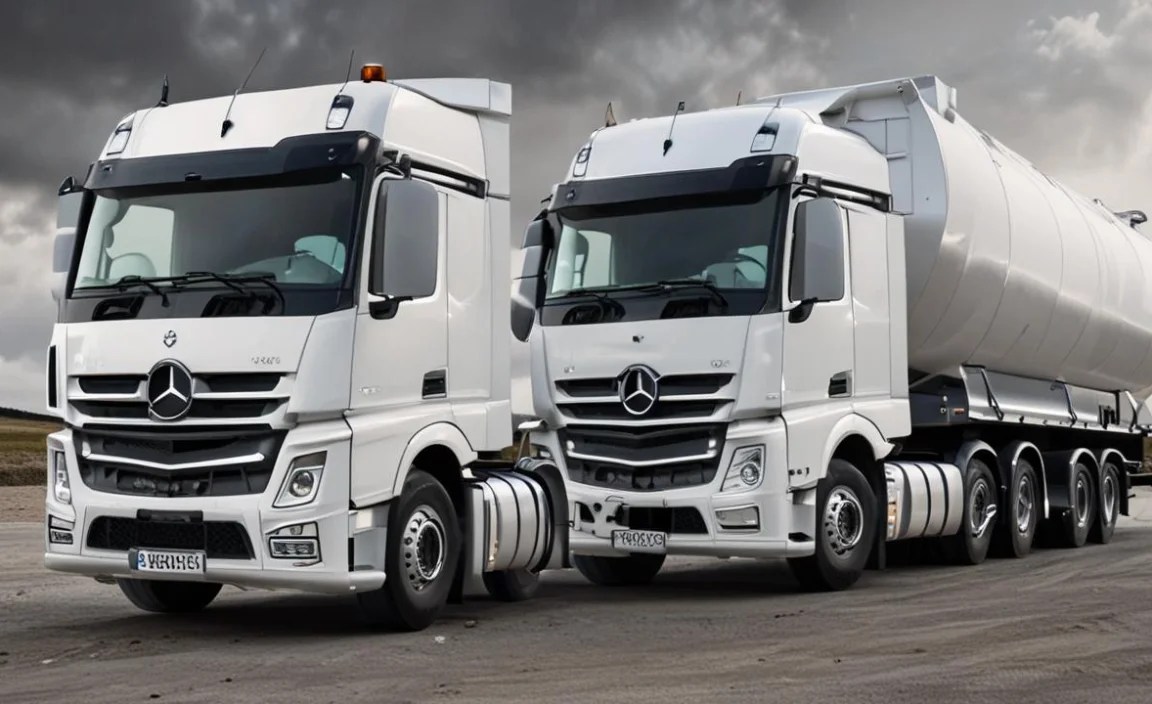
Owning an Actros with impressive fuel tank capacity is one thing; ensuring you get the most distance out of every drop of fuel is another. Several strategies and vehicle features can help you maximize your truck’s range, leading to more efficient and cost-effective operations.
Optimizing Driving Habits
Your driving style has a significant impact on fuel consumption. Adopting fuel-efficient driving techniques can make a substantial difference in how far you travel between refueling.
- Smooth Acceleration and Braking: Frequent hard acceleration and braking wastes fuel. A smoother, more anticipatory driving style minimizes unnecessary fuel burn.
- Maintain Consistent Speed: Using cruise control on highways, where conditions permit, helps maintain a steady speed, which is generally more fuel-efficient than fluctuating speeds.
- Reduce Idling: Extended idling means fuel is being consumed without covering any distance. Switch off the engine when stopped for more than a minute or two, where safe and practical.
- Aerodynamics: Ensure your truck is aerodynamically sound. Close windows at higher speeds, maintain deflector settings, and consider aerodynamic aids if not already fitted.
For more detailed insights into fuel-efficient driving, resources like the European Automobile Manufacturers’ Association (ACEA) on sustainable transport offer valuable guidance.
Vehicle Maintenance for Efficiency
A well-maintained Actros operates at its peak fuel efficiency. Regular servicing and attention to key components are crucial.
- Tire Pressure: Underinflated tires create more rolling resistance, forcing the engine to work harder and consume more fuel. Ensure tires are always inflated to the manufacturer’s recommended pressure.
- Engine Maintenance: Regularly replace air filters, fuel filters, and oil. Ensure the engine is running smoothly and that there are no diagnostic trouble codes indicating potential efficiency issues.
- Wheel Alignment: Misaligned wheels can increase tire wear and rolling resistance, negatively impacting fuel economy.
- Aerodynamic Attachments: Regularly check and maintainSIDE skirts, fairings, and other aerodynamic devices to ensure they are functioning correctly and not damaged.
Understanding Actros Technology for Efficiency
Modern Actros trucks are equipped with advanced technologies designed to enhance fuel efficiency.
- Predictive Powertrain Control (PPC): Many Actros models feature PPC, which uses GPS data and topographical maps to scan the road ahead and optimize gear selection and speed for maximum fuel economy. It can anticipate inclines and descents, adjusting throttle and braking to save fuel.
- Eco Support System: This system monitors driving style and provides feedback on how to drive more economically.
- Fleetboard Telematics: For fleet operators, Fleetboard provides data analytics on individual truck and driver performance, highlighting areas for improvement in fuel efficiency.
Auxiliary Fuel Tanks and Range Extension
For drivers who regularly undertake exceptionally long routes or operate in areas with limited fueling availability, the installation of an auxiliary fuel tank is a common and effective solution.
- Factory-Fitted Options: Mercedes-Benz offers factory-approved auxiliary fuel tanks that integrate seamlessly with the vehicle’s existing fuel system. These are designed to meet all safety and regulatory standards.
- Aftermarket Solutions: Reputable third-party manufacturers also provide auxiliary fuel tanks. It is crucial to select tanks that are specifically designed for the Actros model and are installed by certified professionals to ensure safety and compliance with local road transport regulations.
Adding an auxiliary tank effectively doubles or significantly increases the total fuel capacity, providing the extended range needed for demanding operations. This is a strategic investment for businesses prioritizing maximum uptime and operational flexibility.
Important Considerations When Choosing or Managing Fuel Tanks

Selecting the right fuel tank configuration and managing your existing system effectively are crucial for optimal performance and safety. It’s not just about capacity; a holistic approach ensures reliability and longevity.
Regulatory Compliance
Fuel tank capacity, placement, and material are often subject to regulations that vary by region and country. It’s vital to ensure that any fuel tank setup, especially when considering auxiliary tanks, complies with local and international standards.
Organizations such as the United Nations Economic Commission for Europe (UNECE) develop global technical regulations that influence vehicle manufacturing standards, including those pertaining to fuel systems. Adhering to these regulations prevents legal issues and ensures the safety of your vehicle and its cargo. For instance, regulations often specify maximum allowable fuel volume, venting systems, and required safety features to prevent leaks or fires.
Weight Distribution and Payload
Fuel is a significant weight component. A larger fuel tank, when full, adds considerable mass to the vehicle. This directly impacts the truck’s gross vehicle weight (GVW) and axle loads.
- Payload Capacity: Understanding the weight of your fuel system is essential for calculating your actual payload capacity. Exceeding GVW limits can lead to fines, safety risks, and potential vehicle damage.
- Weight Distribution: The placement of fuel tanks affects the vehicle’s weight distribution. Optimal weight distribution is crucial for handling, stability, and tire wear. Manufacturers design tank placements to contribute to balanced weight distribution.
Safety Features
Modern Actros fuel tanks are equipped with numerous safety features:
- Venting Systems: These prevent pressure build-up due to temperature changes and allow the tank to equalize pressure during fueling.
- Roll-Over Protection: Tanks are designed to minimize fuel spillage in the event of a rollover accident.
- Material Durability: High-quality aluminum or steel ensures strength and resistance to impact and corrosion.
- Secure Mountings: Tanks are securely mounted to the chassis to prevent detachment during operation or in an accident.
Fuel Level Monitoring and Accuracy
Accurate fuel level readings are critical for effective range management. The Actros employs sophisticated fuel sensing systems integrated into the tanks.
- Integrated Sensors: These sensors transmit data to the vehicle’s onboard computer, displaying the remaining fuel level and estimated range on the dashboard.
- Importance of Accuracy: Inaccurate fuel gauges can lead to unexpected run-outs or unnecessary early refueling stops. Regular checks and calibration of the fuel sender unit may be required over the vehicle’s life.
Drainage and Cleaning
Periodically, fuel tanks may require draining or cleaning. This is especially important if there’s a risk of contamination, such as water ingress or sediment build-up.
- Professional Servicing: Fuel tank drainage and cleaning are typically best left to qualified service professionals. They have the appropriate equipment and know-how to safely drain fuel, clean the tank interior, and dispose of contaminated fuel responsibly.
- Preventing Contamination: Proper fuel cap usage and ensuring the integrity of fuel lines and breathers can help prevent contamination.
Conclusion
The Mercedes-Benz Actros fuel tank capacity is a vital factor in optimizing


