
Mercedes-Benz AI-Powered Features: Ultimate Performance
Mercedes-Benz AI-Powered Features Elevate Your Driving to Ultimate Performance. Discover how intelligent systems in your Mercedes optimize power, handling, and efficiency for a seamless, exhilarating experience.
Imagine your Mercedes-Benz anticipating your needs, fine-tuning its engine for peak power, and making every turn feel perfectly balanced. This isn’t science fiction; it’s the reality with Mercedes-Benz AI-powered features. These advanced systems work behind the scenes to enhance your driving experience, making it smoother, safer, and more responsive than ever before. For many drivers, understanding how these complex technologies contribute to “ultimate performance” can feel a bit overwhelming. We’re here to demystify it, breaking down how AI is transforming your Mercedes into an intelligent companion on the road.
This guide will explore the core AI innovations that define Mercedes-Benz performance today. We’ll look at how they learn, adapt, and ultimately deliver that signature Mercedes-Benz driving feel. Get ready to understand the intelligence that propels your drive.
Understanding AI in Your Mercedes-Benz

Artificial intelligence (AI) in a Mercedes-Benz isn’t about a futuristic robot driving the car (though autonomous driving is a part of it!). Instead, it’s about sophisticated software algorithms that analyze vast amounts of data from sensors throughout the vehicle. This data can include everything from road conditions and driver inputs to engine performance and environmental factors. The AI then uses this information to make real-time adjustments, optimizing various aspects of the car’s operation.
Think of it like having an incredibly intelligent co-pilot who constantly monitors your car and its surroundings, making subtle, precise adjustments to ensure you get the best possible performance, efficiency, and safety. This “smart” approach is what truly sets modern Mercedes-Benz vehicles apart, pushing the boundaries of what we expect from a luxury automobile.
How AI Enhances “Ultimate Performance”

When we talk about “ultimate performance” in the context of AI, we’re not just referring to raw acceleration or top speed. True performance is a holistic experience that includes:
- Optimized Power Delivery: AI can predict and adjust engine output for maximum efficiency and responsiveness based on driving conditions and your style.
- Superior Handling and Stability: Intelligent systems work with the suspension and braking to keep the car planted and predictable, no matter the road.
- Enhanced Fuel Efficiency: By understanding driving patterns and route information, AI can optimize gear shifts and engine management for better mileage.
- Personalized Driving Experience: AI learns your preferences and adapts settings like seat position, climate control, and even driving modes to your liking.
- Proactive Safety: From predicting potential hazards to assisting in emergency maneuvers, AI plays a crucial role in keeping you safe.
These elements combine to create a driving experience that feels intuitive, powerful, and remarkably refined. It’s about making the car work harder, smarter, and more harmoniously with you.
Key Mercedes-Benz AI-Powered Features Explained

Mercedes-Benz has integrated AI across several key systems. Let’s delve into some of the most impactful features that contribute to ultimate performance.
MBUX (Mercedes-Benz User Experience) – The Intelligent Heart

At the core of many AI features is the MBUX infotainment system. More than just a touchscreen, MBUX is designed to be intuitive and learn from you. Its “Hey Mercedes” voice assistant uses natural language processing, allowing you to control various functions simply by speaking.
- Natural Language Understanding: You can say things like, “I’m cold,” and the system will adjust the climate control, or “I need to find a quiet Italian restaurant,” and it will search for dining options.
- Personalization: MBUX remembers frequently used features and proactively suggests them. It can learn your preferred radio stations, navigation destinations, and even driving settings.
- Predictive Functions: Based on your typical routines, MBUX can predict where you might want to go next or suggest specific functions. For example, if you always call a specific contact on your commute, it might suggest making that call.
- Augmented Reality Navigation: For supported models, MBUX can overlay navigation instructions onto a live camera feed, making it incredibly easy to follow directions, especially in complex urban environments.
This adaptive nature of MBUX is a foundational element of how AI enhances the overall performance and enjoyment of your Mercedes-Benz.
DRIVE PILOT and Advanced Driver-Assistance Systems (ADAS)

While full Level 3 autonomous driving capability is still evolving and subject to regulatory approval in many regions, Mercedes-Benz has long been a pioneer in driver assistance. AI plays a critical role in these systems, making them more sophisticated and reactive.
- Adaptive Cruise Control (DISTRONIC PLUS): This system doesn’t just maintain a set speed; it can also adjust your speed based on the traffic ahead, following vehicles smoothly and safely. AI helps it predict the behavior of surrounding vehicles.
- Active Steering Assist: Using cameras and sensors, this feature helps keep your car centered in its lane, even on less defined roads. AI improves its ability to detect lane markings and road edges.
- Lane Change Assist: When activated, this system can assist in changing lanes, provided the sensors detect the surrounding traffic is clear.
- Evasive Steering Assist: In a critical situation, if the driver steers to avoid an obstacle, this system can provide supplementary support to the steering.
- Traffic Sign Assist: AI helps the car recognize and display speed limits and other traffic signs, often even working with navigation data for more comprehensive information.
These ADAS features, powered by AI, contribute significantly to safety and comfort, reducing driver fatigue and preventing accidents. They allow you to focus more on the pleasure of driving, knowing the car is an extra set of vigilant eyes and hands.
Intelligent Powertrain Management
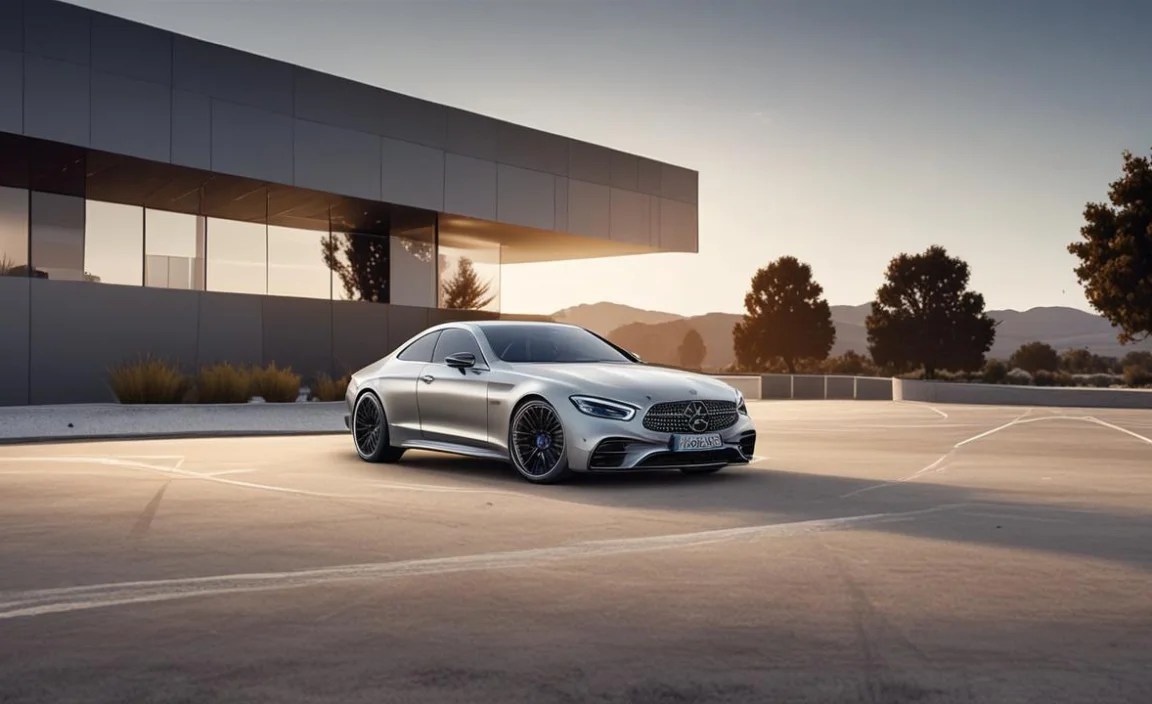
AI is also deeply integrated into how the engine and transmission work together to deliver optimal performance and efficiency. This is particularly noticeable in AMG models, where precision is paramount.
Modern Mercedes-Benz vehicles, especially those with hybrid or electric powertrains, use AI to manage energy flow. For example:
- Hybrid System Optimization: AI algorithms decide the most efficient way to use electric and gasoline power, based on driving conditions, battery charge, and your driving style. It can prioritize electric power for city driving to save fuel and blend power for spirited acceleration.
- Predictive Powertrain Control: In some systems, AI analyzes topographical data from the navigation system to proactively adjust the powertrain for upcoming inclines or descents, ensuring smoother acceleration and more efficient braking.
- Dynamic Engine Mapping: Based on inputs from numerous sensors (throttle position, G-forces, wheel speed), AI can dynamically adjust engine parameters to deliver the requested power. This ensures that when you put your foot down, the response is precisely as you’d expect, or even better.
This intelligent management means your Mercedes-Benz feels more responsive when you want it to be and more efficient when you need it to be, without you having to lift a finger.
Dynamic Chassis Control and Handling

The way a car handles is a crucial part of its performance. Mercedes-Benz uses AI to enhance chassis systems like active suspension and all-wheel drive.
- ACTIVE BODY CONTROL / E-ACTIVE BODY CONTROL: In flagship models, these advanced suspension systems use AI to independently control the spring and damping forces at each wheel. They process data from cameras and sensors to anticipate road imperfections and actively counteract them, providing an incredibly smooth ride while maintaining flat cornering. The system can even lean into corners like a motorcycle to reduce lateral forces.
- 4MATIC All-Wheel Drive: While the basic concept of AWD is mechanical, AI can optimize torque distribution between the front and rear axles in real-time. It analyzes wheel slip, steering angle, and throttle input to ensure optimal traction and stability in all conditions.
- Predictive Drivetrain Management: AI can intelligently manage power delivery to specific wheels to enhance traction and stability, especially during cornering or on slippery surfaces.
These systems transform the driving experience, making a large, luxurious car feel agile and light on its feet, delivering confidence and control in every situation.
The Role of Sensors and Data

All these AI-powered features rely on a sophisticated network of sensors. These sensors are the “eyes and ears” of your Mercedes-Benz, continuously gathering information about the car and its environment.
Common sensors include:
- Cameras: Mounted on the windshield, mirrors, and body, they detect lane markings, traffic signs, pedestrians, and other vehicles.
- Radar and Lidar: These systems use radio waves and light pulses to measure distances and speeds of objects around the car, crucial for adaptive cruise control and collision avoidance. You can learn more about the principles of Lidar from institutions like NIST (National Institute of Standards and Technology).
- Ultrasonic Sensors: Often found in bumpers, these are used for parking assistance and detecting very close obstacles.
- Inertial Measurement Units (IMUs): These sensors measure acceleration and rotation, helping the AI understand the car’s dynamic movements.
- Engine and Powertrain Sensors: A multitude of sensors monitor everything from engine temperature and oil pressure to exhaust emissions and battery status.
The AI algorithms process the data from these sensors in milliseconds, making instantaneous decisions that optimize performance, safety, and comfort. The sheer volume of data analyzed is staggering, far beyond what a human driver could possibly process.
Learning and Adapting: The Future of Mercedes-Benz Performance

What makes AI truly powerful is its ability to learn and adapt. As you drive your Mercedes-Benz, the AI systems are constantly collecting data about your driving habits, common routes, and preferences.
This learning process leads to:
- Refined Driving Modes: Over time, the car can adjust its default driving modes to better match your common driving style.
- Personalized Comfort Settings: Beyond initial setup, the AI can learn your preferred cabin temperature, seat position based on time of day or temperature, and even ambient lighting.
- Predictive Maintenance: While not strictly performance-related, AI can analyze sensor data from various vehicle components to predict potential failures before they happen. This leads to more reliable performance over the long term. For insights into automotive maintenance, resources like FuelEconomy.gov from the U.S. Department of Energy offer general advice that complements specific manufacturer features.
This continuous learning means your Mercedes-Benz becomes more attuned to you with every mile, enhancing the feeling of a truly bespoke driving experience and contributing to consistently optimal performance.
Performance Table: AI-Enhanced vs. Traditional Systems

To illustrate the impact of AI, let’s compare how traditional systems and AI-powered systems approach key performance areas.
| Performance Aspect | Traditional System Approach | AI-Powered System Approach |
|---|---|---|
| Throttle Response | Fixed throttle mapping or basic adjustments based on selected mode. | Real-time analysis of driver input, road conditions, and predictive algorithms for instantaneous, tailored power delivery. |
| Gear Shifting | Pre-programmed shift points based on speed and throttle. | AI-driven algorithms analyze acceleration, braking, incline, and driver intent to select optimal, often imperceptible, gear changes for smoothness and power. |
| Suspension Comfort & Handling | Fixed damper settings or basic adjustments in Sport/Comfort modes. | Active dampers and complex suspension systems use AI to predict road surface changes and driver inputs, adjusting each wheel independently for supreme comfort and flat cornering. |
| Fuel Efficiency | Limited to driver behavior and basic engine management. | AI optimizes engine load, gear selection, and even predictive route analysis to maximize MPG/range. Can manage hybrid power distribution dynamically. |
| Driver Fatigue | Minimal impact beyond basic features like cruise control. | ADAS features proactively assist with steering, braking, and speed management, significantly reducing driver workload and fatigue on long journeys. |
Getting the Most Out of Your AI-Powered Mercedes-Benz

To truly benefit from these advanced features, actively engaging with them is key.
- Explore MBUX: Don’t be afraid to use the “Hey Mercedes” voice assistant for everything from navigation and climate control to media and vehicle settings. Experiment with different commands to see what it can do.
- Customize Your Settings: Take advantage of the personalization options within MBUX. Set up driver profiles that store your preferences for seats, mirrors, climate, and even driving modes.
- Understand ADAS Capabilities: Familiarize yourself with the functions of DISTRONIC PLUS, Active Steering Assist, and other driver assistance systems. Read your owner’s manual and practice using them in safe conditions. Remember, these are assistance systems, and you, the driver, are always responsible for the vehicle’s operation.
- Pay Attention to On-Screen Prompts: MBUX and ADAS systems will often display information about what they are sensing or doing. Paying attention to these prompts will deepen your understanding of the car’s intelligence.
- Keep Software Updated: Like any advanced technology, Mercedes-Benz systems can be updated. Ensure your vehicle’s software is kept current, as updates often bring improvements to AI algorithms and new features. Your dealer can help with this.
The more you interact with and understand these systems, the more they will enhance your driving experience, making your Mercedes-Benz feel like a natural extension of yourself.
Future of AI in Mercedes-Benz

The integration of AI into vehicles is an ongoing evolution. Mercedes-Benz is at the forefront, with ongoing research and development focusing on:
- Enhanced Autonomy: Deeper dives into Level 3 and potentially Level 4 autonomous driving, where the vehicle can handle more complex driving scenarios without driver intervention.
- Predictive Performance Tuning: AI that could dynamically adjust suspension and powertrain settings not just for current conditions, but for anticipated future driving segments of your journey.
- More Intuitive Interactions: Voice and gesture controls that become even more nuanced and responsive, understanding context and emotion.
- AI-Powered Vehicle Health: Even more sophisticated predictive maintenance and diagnostic capabilities, potentially diagnosing issues before they manifest as performance degradation.
The journey of AI in automotive is far from over, promising even more seamless, intelligent, and high-performing vehicles in the years to come.
FAQ: Mercedes-Benz AI-Powered Features
Q1: What is the main benefit of Mercedes-Benz AI-powered features for performance?
A1: The main benefit is optimized performance across the board – from lightning-fast throttle response and smooth gear shifts to superior handling and enhanced efficiency, all managed intelligently in real-time.
Q2: How does the MBUX system use AI?
A2: MBUX uses AI for its “Hey Mercedes” voice assistant, natural language understanding, personalization of settings and suggestions, and predictive functions based on your driving habits.
Q3: Are AI-powered driver assistance systems (ADAS) fully autonomous?
A3: No, current AI-powered ADAS systems are designed to assist the driver, not replace them. You remain responsible for controlling the vehicle. They enhance safety and reduce fatigue but do not offer full self-driving capabilities in most scenarios.
Q4: Can AI improve the fuel efficiency of my Mercedes-Benz?
A4: Yes. AI optimizes powertrain management, gear shifting, and in hybrid/electric models, energy distribution, leading to more efficient operation and often improved fuel economy or range.
Q5: How does AI contribute to the handling and ride comfort of a Mercedes-Benz?
A5: Advanced AI systems work with dynamic chassis control and suspension to analyze road conditions and driver inputs, making rapid adjustments to each wheel for a balanced, comfortable, and stable ride, even during spirited driving or on uneven surfaces.
Q6: Do I need to do anything to “activate” these AI features?
A6: Most AI features are active by default. However, maximizing their benefit comes from interacting with them, personalizing settings via MBUX, and ensuring your vehicle’s software is up to date.
Q7: Where can I find more detailed information on the AI features in my specific Mercedes-Benz model?
A7: Your owner’s manual is the best resource for specific details. Additionally, your local Mercedes-Benz dealer can provide demonstrations and answer model-specific questions.
Conclusion
Mercedes-Benz AI-powered features represent a significant leap forward in automotive engineering, transforming driving from a mechanical task into an intelligent, intuitive partnership between driver and machine. These advanced systems, from the adaptive MBUX interface to the sophisticated powertrain and


