
Mercedes GLK Infotainment System: Effortless Luxury
The Mercedes GLK infotainment system brings sophisticated, intuitive control to your drive, making every journey a luxurious experience through its user-friendly interface and advanced features.
The Mercedes-Benz GLK offers a driving experience that’s both commanding and comfortable. At the heart of this experience is its advanced infotainment system, designed to blend seamlessly with the luxury and capability of the vehicle. For many owners, understanding and utilizing all its features can feel a bit daunting at first. But don’t worry, it’s designed for effortless interaction. This guide will walk you through everything you need to know about your GLK’s infotainment system, from basic functions to hidden gems, ensuring you get the most out of your Mercedes-Benz.
Frequently Asked Questions About the Mercedes GLK Infotainment System
What is the main function of the Mercedes GLK infotainment system?
The primary function of the Mercedes GLK infotainment system is to provide a central hub for entertainment, navigation, communication, and vehicle settings, all accessible through an intuitive interface.
How do I control the GLK infotainment system?
You can control the system using the COMAND controller knob and buttons on the center console, steering wheel buttons, and voice commands. Some models may also have a touchscreen interface.
Can I connect my smartphone to the GLK infotainment system?
Yes, most GLK models support smartphone connectivity via Bluetooth for calls and audio streaming. Some later models or optional packages might offer Apple CarPlay or Android Auto integration.
How do I update the infotainment system software in my GLK?
Software updates are typically performed by a Mercedes-Benz dealership during scheduled maintenance or can sometimes be downloaded via USB from an authorized dealer or Mercedes-Benz website.
What navigation features are available on the GLK infotainment system?
The navigation system usually includes features like 3D map views, traffic information (often requiring a subscription), route guidance, points of interest (POIs), and destination memory.
Can I customize the display settings on my GLK infotainment screen?
Yes, you can often adjust brightness, contrast, and choose different display themes or layouts to suit your preference.
What if my GLK infotainment system is not working correctly?
If you encounter issues, try restarting the system by turning the car off and on. For persistent problems, consult your owner’s manual or contact a Mercedes-Benz service center for diagnosis and repair.
Understanding the COMAND System: Your Gateway to Control

The Mercedes GLK infotainment system is typically powered by the COMAND (Cockpit Management and Navigation) system. COMAND is Mercedes-Benz’s integrated multimedia and control interface. It’s designed to be a central point for all your technological needs within the vehicle, offering a blend of connectivity, entertainment, and navigation. Think of it as your digital co-pilot, making driving simpler and far more enjoyable.
The Physical Controls
While many modern systems rely solely on touchscreens, the GLK’s approach often involves a combination of physical controls and screen interaction, which can be more intuitive and safer while driving. Here’s a breakdown of the key components you’ll find:
- COMAND Controller: This rotary knob, usually located on the center console, is your primary tool for navigating menus and selecting options. It spins to scroll and pushes down to confirm selections.
- Direct Access Buttons: Labeled buttons surrounding the controller (e.g., MUSIC, NAV, PHONE, BACK) allow for quick access to major functions without having to navigate through menus.
- Steering Wheel Controls: A set of buttons on your steering wheel provides convenient access to functions like volume control, track skipping, and call management, keeping your hands on the wheel.
- Display Screen: The central screen mounted on the dashboard is where all information is presented, from navigation maps to music playlists.
The design philosophy here is to minimize driver distraction. By using tactile controls, you can feel your way through the menus without constantly looking away from the road.
Navigating the Interface
Operating the COMAND system is straightforward once you get the hang of it. The main menu is typically organized into categories like:
- Radio: Access AM, FM, and SiriusXM (if equipped) functions. Tune stations, save presets, and view station information.
- Media: Connect external devices like USB drives or your smartphone via Bluetooth for music playback. Browse albums, artists, and playlists directly from the screen.
- Phone: Pair your Bluetooth-enabled phone to make and receive calls. Access your contact list, call history, and dial numbers.
- Navigation: Input destinations, view traffic conditions, and receive turn-by-turn directions. The system often offers various map views, including 2D and 3D perspectives.
- Settings: Customize vehicle and system preferences, such as display brightness, audio equalization, climate control settings, and lighting options.
The interface uses a clear graphical layout with icons and text labels. Scrolling with the COMAND controller moves the cursor, and pressing it confirms your selection. The ‘MENU’ button often brings up context-specific options for the currently active function.
Key Infotainment Features Explained
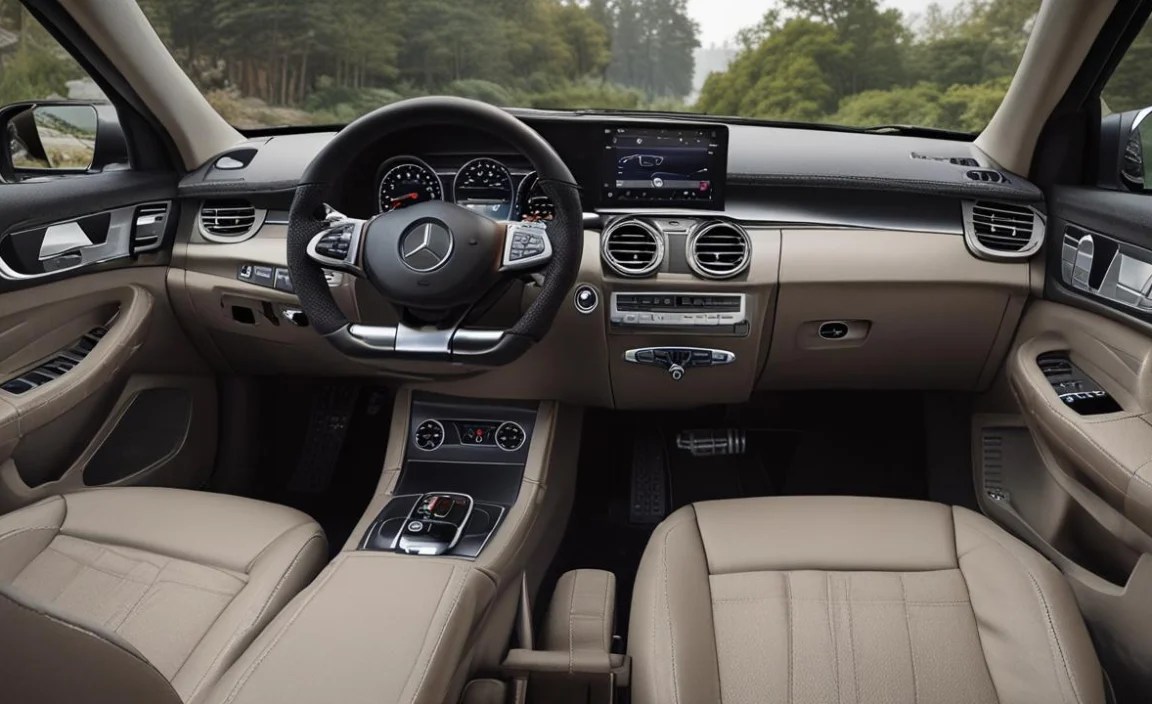
Your GLK’s infotainment system is packed with features designed to enhance your driving pleasure and convenience. Let’s delve into some of the most important ones.
Navigation and Traffic Updates
The integrated navigation system is a cornerstone of the COMAND experience. It provides real-time driving directions to guide you to your destination. Most systems offer:
- Destination Input: Easily enter addresses, choose from recent destinations, or select points of interest (POIs) like restaurants, gas stations, and landmarks.
- 3D Map View: Experience a more immersive navigation with a perspective view of the road ahead, often including 3D representations of buildings in major cities.
- Traffic Information: Many GLK models can receive live traffic updates, allowing the system to reroute you around congestion and suggest faster alternatives. This feature may require a subscription and an active connection. You can find more details on how traffic services work from sources like the U.S. Department of Transportation, which oversees traffic infrastructure.
For optimal navigation, ensure your maps are up-to-date. Updates are typically handled by dealerships, but in some instances, they might be available via USB. Keeping your navigation system current ensures you have the latest road data and POIs.
Audio and Multimedia Options
Entertainment is a key part of the luxury car experience, and the GLK delivers with a versatile audio system.
- Radio Receivers: Tune into AM, FM, and, if equipped, SiriusXM satellite radio for a vast array of stations and content.
- External Media Playback: Connect your digital music library via USB or SD card slots. The system can read common audio formats like MP3 and WMA, allowing you to browse and play your music collection.
- Bluetooth Audio Streaming: Wirelessly stream music from your smartphone or any Bluetooth-enabled device directly through the car’s speakers.
The sound quality in a Mercedes-Benz is usually exceptional, thanks to premium audio components. You can further tailor your listening experience through the ‘Audio’ settings, where you can adjust equalizer (EQ) levels and balance/fader controls.
Phone Connectivity and Communication
Staying connected on the go is crucial. The GLK’s infotainment system makes smartphone integration simple and safe.
- Bluetooth Pairing: Follow the on-screen prompts to pair your mobile phone. This process is usually initiated from both the car’s system and your phone. Once paired, your phone can be automatically recognized for future use.
- Hands-Free Calling: Make and receive calls using voice commands or the steering wheel controls. Your contacts and call history are often accessible directly through the infotainment display.
- Message Access: Some systems allow you to read incoming text messages on the display and even respond using pre-set message templates, further enhancing safety.
For optimal Bluetooth performance and a wider range of features on newer vehicles, always ensure your phone’s software is up-to-date.
Vehicle Settings and Customization
Beyond entertainment and communication, the infotainment system serves as a control panel for various vehicle functions.
- Display and Lighting: Adjust screen brightness, color themes, and ambient lighting settings to create your preferred cabin atmosphere.
- Climate Control Integration: While physical buttons often control primary climate functions, the infotainment screen can display detailed status and sometimes offer advanced zone controls.
- Service Reminders: The system keeps track of your vehicle’s maintenance schedule and may display service notifications when maintenance is due.
- Driving Assistance Features: Depending on optional equipment, you might be able to adjust settings for features like parking assist or lane keeping assist through the infotainment menus.
This central hub allows for a personalized experience, adapting the car’s features to your individual preferences.
Connecting Your Devices

Making the most of your GLK’s infotainment system often involves connecting your personal devices. The most common methods are Bluetooth and USB.
Bluetooth Pairing Guide
Pairing your smartphone or other Bluetooth devices is a simple, multi-step process:
- Initiate Pairing on the GLK: Navigate to the ‘Phone’ menu on the COMAND system. Select ‘Bluetooth’ and then ‘Pair Device’ or ‘Add Phone’.
- Enable Bluetooth on Your Device: On your smartphone, go to Settings and ensure Bluetooth is turned on.
- Search for the GLK: Your phone should display a list of available Bluetooth devices. Select the one that corresponds to your Mercedes-Benz GLK (e.g., “Mercedes-Benz” or a specific model designation).
- Confirm Pairing: You will likely see a pairing code on both the GLK’s screen and your phone. Confirm that the codes match.
- Grant Permissions: Your phone may ask for permission to share contacts, call history, and messages with the car’s system. Granting these permissions activates full functionality.
Once paired, your phone should automatically connect whenever you start the car and have Bluetooth enabled. If you have trouble, consult the specific instructions for your phone model.
Using USB and SD Card Ports
For music libraries or even software updates, USB and SD card slots offer a direct connection.
- Location: These ports are typically found in the center console, glove box, or sometimes near the COMAND controller.
- File Formats: The system is designed to read common audio formats like MP3, AAC, and WMA. For video playback (if supported), specific formats like MPEG or AVI might be required.
- Navigation Updates: In some cases, map data updates for the navigation system can be loaded via an SD card or USB drive, often provided by a dealership.
Using a high-quality USB drive or SD card can ensure reliable performance and faster access to your media.
Advanced Tips and Troubleshooting

Even sophisticated systems can occasionally present challenges. Here are some tips and common solutions to keep your GLK’s infotainment running smoothly.
Common Issues and Solutions
Issue: Bluetooth connection is unstable or not connecting.
- Solution: Try deleting the paired device from both the car and your phone and re-pairing. Ensure your phone’s software is updated. Restart both your phone and the car’s infotainment system.
Issue: Navigation system is slow or shows incorrect location.
- Solution: Ensure the GPS antenna has a clear view of the sky. Software updates can resolve performance issues. If problems persist, a dealership visit might be necessary for diagnostic checks.
Issue: USB drive not recognized.
- Solution: Ensure the USB drive is formatted correctly (usually FAT32 for most car systems). Try a different USB drive or port. Verify the file formats you are attempting to play are supported.
Issue: Screen is unresponsive or frozen.
- Solution: A soft reset can often fix this. Try turning the car off completely, opening the driver’s door to ensure all systems power down (this might take a minute), and then restarting the car. For persistent issues, consult your owner’s manual or a dealer.
Maximizing Your Infotainment Experience
Voice Commands: Use voice commands for tasks like “Call John Doe” or “Navigate to nearest gas station.” This is the safest way to operate the system while driving. Practice the commands listed in your owner’s manual.
Customizable Shortcuts: If your system allows, set up shortcuts for your most-used functions. This can significantly speed up access to radio presets, favorite contacts, or navigation destinations.
Software Updates: Keep your COMAND system updated. Mercedes-Benz periodically releases software updates that can improve performance, add new features, and fix bugs. Your dealer is the best source for these.
Owner’s Manual: Don’t underestimate the power of your owner’s manual. It’s an invaluable resource filled with detailed explanations and specific instructions for your GLK trim and model year.
Mercedes GLK Infotainment System Specifications Comparison

The specific features and capabilities of the Mercedes GLK infotainment system can vary slightly depending on the model year, trim level, and optional packages selected. Here’s a general comparison table to illustrate potential differences:
| Feature | Early GLK Models (e.g., 2010-2012) | Later GLK Models (e.g., 2013-2015) | Notes on Advancements |
|---|---|---|---|
| COMAND Controller | Standard | Standard | Consistent across models |
| Display Screen Size | Typically 5.8 inches | Typically 7 inches | Larger screen offers better readability and visual experience. |
| Standard Audio System | AM/FM, CD player, aux input | AM/FM, CD/DVD player, aux input | DVD playback introduced in later models. |
| Bluetooth Connectivity | Phone calls and audio streaming | Phone calls and audio streaming | Enhanced stability and functionality in later versions. |
| Navigation System (Optional) | Basic 2D maps, POIs | 3D maps, enhanced POIs, optional real-time traffic | Navigation became more sophisticated with better graphics and real-time data. |
| USB/SD Card Integration | Often limited, may require adapter | Dedicated USB and SD card slots | Improved media compatibility and convenience. |
| Smartphone Integration (e.g., Apple CarPlay/Android Auto) | Not typically available | Rarely available, usually requires specific packages or accessories | These features became common in newer Mercedes models starting post-GLK generation. |
| Voice Control | Basic functions | More advanced voice command recognition | Improved natural language processing in later systems. |
It’s always best to check your specific vehicle’s window sticker or VIN decoder to confirm the exact features included.
Looking Forward: Infotainment in Future Mercedes-Benz Models
While the GLK represents a robust and luxurious user experience from its era, Mercedes-Benz continues to push the boundaries of automotive technology. Newer models feature the MBUX (Mercedes-Benz User Experience) system, which utilizes advanced AI, larger and more dynamic displays (including the massive Hyperscreen), and even augmented reality navigation. Systems like MBUX learn your habits, proactively present relevant information, and offer more natural voice interaction.


