
Mercedes G-Class vs Defender: The Ultimate Showdown
Mercedes G-Class vs Defender: This ultimate showdown dives deep into two legendary off-road vehicles. The G-Class offers unmatched luxury and on-road prowess with rugged capability, while the Defender excels in raw, go-anywhere utility and heritage. Your choice depends on whether you prioritize refined comfort or pure, unadulterated adventure.
When the conversation turns to legendary off-road vehicles with a rich heritage and undeniable presence, two names consistently rise to the top: the Mercedes-Benz G-Class and the Land Rover Defender. For decades, these icons have dominated trails, conquered challenging terrains, and captured the hearts of adventurers and luxury seekers alike. But when it comes to deciding between them, the waters can get a little murky.
Many dream of owning one of these capable machines, picturing themselves navigating rugged landscapes or cruising in sophisticated style. Yet, understanding the core differences, the nuances of their engineering, and what each brings to the table can feel overwhelming. Are you looking for a plush, commanding presence for city streets that can still tackle the wilderness? Or perhaps a more utilitarian, go-anywhere tool steeped in history? This guide is here to simplify that decision, breaking down the G-Class and the Defender so you can confidently choose your next adventure companion.
We’ll compare their strengths, explore their weaknesses, and get to the heart of what makes each so special. Get ready to understand which legendary SUV is the right fit for your lifestyle and your aspirations.
Mercedes G-Class vs. Defender: A Legacy on Wheels

Both the Mercedes-Benz G-Class and the Land Rover Defender represent pinnacles of automotive engineering, each with a lineage stretching back decades. They share a common ancestor in their robust, body-on-frame construction and their unwavering commitment to off-road capability. However, their evolutionary paths have diverged significantly, shaping them into distinct, albeit similarly perceived, icons.
The G-Class, affectionately known as the “G-Wagen,” began its life in 1979 as a military vehicle commissioned by the Shah of Iran. Its early design prioritized function over form, with a focus on extreme durability and cross-country ability. Over the years, however, it has undergone a remarkable transformation. While its core off-road DNA remains, the G-Wagen has become synonymous with luxury, performance, and status. It’s a vehicle that can effortlessly transition from a high-octane track day to a remote mountain pass.
The Land Rover Defender, on the other hand, has more directly carried its utilitarian torch. Introduced in 1948 as the Land Rover Series I, it was conceived as a versatile workhorse for farmers and explorers. The Defender name itself was adopted in 1990, but the spirit of the original has always been present: a no-nonsense, highly capable vehicle designed to get the job done, no matter the conditions. While the classic Defender ceased production in 2016, a revolutionary new generation emerged in 2020, blending modern technology with its legendary off-road prowess.
This historical divergence sets the stage for our comparison: one has evolved into a luxury titan, the other has reinvented itself as a modern adventure machine while honoring its roots.
Design and Aesthetics: Boxy Charm vs. Rugged Evolution

When you see them side-by-side, the initial design language is strikingly similar: boxy, utilitarian silhouettes that scream capability. However, the execution and intent behind that boxy form tell very different stories.
The Mercedes-Benz G-Class retains its iconic, almost brutalist exterior. Its sharp lines, upright grille, and prominent turn signals mounted on the hood have remained largely unchanged for over four decades. This timeless design is a badge of honor, signifying its unwavering heritage. Modern updates have smoothed some edges and integrated LED lighting, but the fundamental shape is instantly recognizable. Inside, the G-Wagen has transformed into a sanctuary of luxury. Expect premium leather, exquisite wood or carbon fiber trim, and the latest Mercedes-Benz infotainment and driver-assistance systems. It feels less like a rugged off-roader and more like a robust, ultra-luxurious lounge on wheels.
The new Land Rover Defender, while still undeniably a Defender with its distinctive profile and upright stance, represents a significant departure from its predecessor’s more primitive design. The new generation embraces a more contemporary aesthetic, with smoother lines, a sleeker grille, and a more integrated look. It’s still unmistakably rugged, designed to withstand the bumps and scrapes of adventure, but it now possesses a modern sophistication. The interior also blends utility with comfort, offering durable materials alongside advanced technology and a less overtly luxurious feel than the G-Class, but a highly functional and comfortable one for long journeys or tough environments.
G-Class Design Highlights:
- Iconic, timeless, boxy silhouette
- Dominant road presence
- Luxury-focused interior materials and finish
- High-end technology integration
Defender Design Highlights:
- Modern interpretation of a classic rugged shape
- Durable, functional interior materials
- Emphasis on practicality and visibility
- Clever storage solutions
Off-Road Prowess: Comparing Their Capabilities

This is where both vehicles truly shine, and where the subtle differences in their engineering philosophies become most apparent. Both are built to conquer the untamed, but they achieve it through slightly different means.
The Mercedes-Benz G-Class is renowned for its exceptional off-road capability, largely thanks to its robust ladder-frame chassis, solid axles (though the G 550 and AMG G 63 now feature independent front suspension for better on-road manners), and, crucially, its three lockable differentials. This 100% locking capability for the center, rear, and front differentials is the magic ingredient that allows the G-Wagen to maintain traction in the most extreme scenarios. Engage all three, and the vehicle can essentially crawl over obstacles with immense control. Its approach, departure, and breakover angles are impressive, and its ground clearance is more than adequate for most challenges.
The Land Rover Defender, especially the new generation, is engineered from the ground up with off-road dominance in mind. It utilizes a sophisticated independent air suspension system (configurable for ride height) and a permanent four-wheel-drive system with a two-speed transfer box and electronic locking center differential. While it doesn’t offer the manual, full-lockout capability of the G-Class’s three differentials, its Terrain Response system is incredibly advanced. This system allows the driver to select from pre-programmed terrain settings (like Sand, Mud, Rock), which automatically adjust engine, transmission, suspension, and differential settings for optimal performance. The Defender boasts excellent suspension articulation, impressive ground clearance with the air suspension raised, and strong approach, departure, and breakover angles.
Key Off-Road Differentiators:
- G-Class: Three lockable differentials (center, rear, front) for ultimate traction control, ladder-frame chassis (historically), solid front axle (on older models).
- Defender: Advanced air suspension (adjustable ride height), sophisticated Terrain Response System, permanent 4WD with locking center differential.
For sheer, raw, and controllable off-road traction in ultra-extreme conditions, the G-Class with its locked differentials often has a slight edge in manual, brute-force situations. However, the Defender’s intelligent systems and advanced suspension offer a more refined and often more intuitive experience for a wider range of drivers, making it exceptionally capable and easier to adapt to various terrains quickly.
On-Road Manners: Comfort vs. Competence

The G-Class has made a more pronounced leap in its evolution toward exceptional on-road performance. While still retaining its off-road chops, it now drives with surprising agility and comfort for such a boxy and robust machine. Mercedes-Benz has invested heavily in its suspension and steering systems, particularly with the move to independent front suspension on newer models. The ride is composed, the cabin is remarkably quiet, and the powerful engines provide effortless acceleration. It feels planted and secure, making it a genuinely enjoyable vehicle for long highway journeys or spirited drives, often rivaling more conventional luxury SUVs.
The new Defender also offers significantly improved on-road manners compared to its legendary predecessor. The independent suspension and modern chassis provide a much more compliant and controlled ride than the old solid-axle setup. It handles well for its size, with direct steering and minimal body roll, especially with the air suspension in its lower setting. However, despite these improvements, the Defender still feels more truck-like than the G-Class. There’s a slight trade-off between its ultimate off-road versatility and razor-sharp on-road refinement. It’s comfortable and capable for daily driving, but it doesn’t quite achieve the same level of luxury car serenity or dynamic poise as the G-Wagen.
Powertrain and Performance
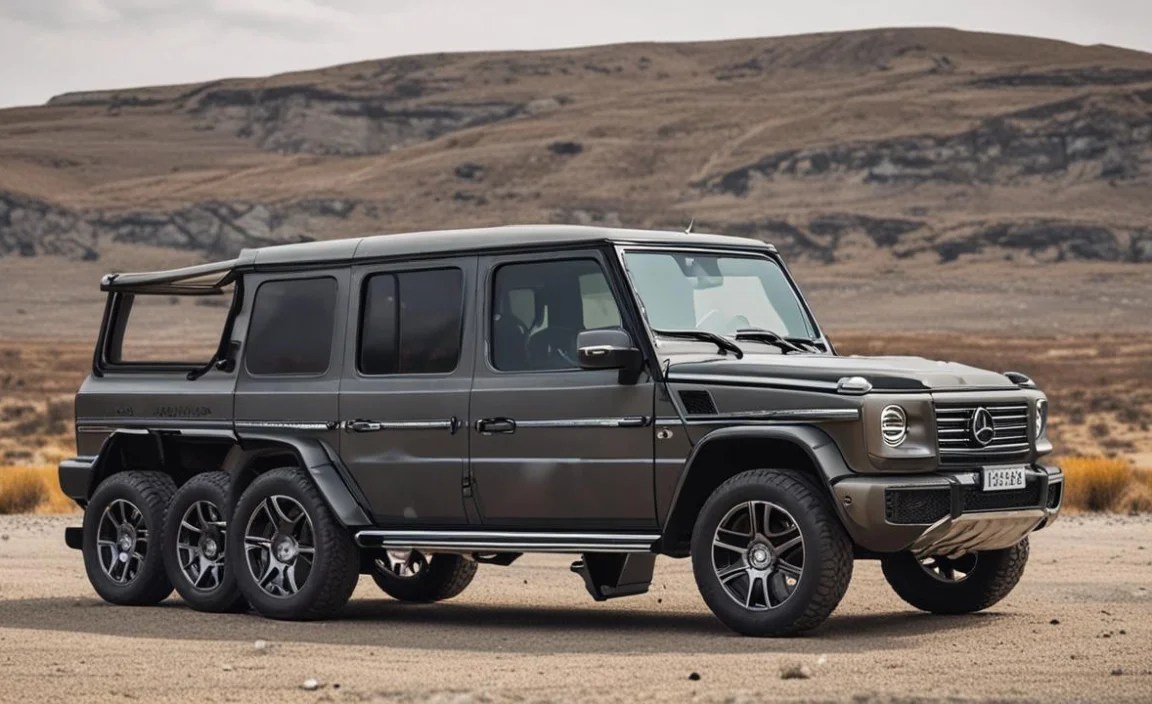
Both these titans offer potent engine options, catering to different performance desires.
The Mercedes-Benz G-Class is known for its muscular V8 engines. The G 550 typically comes with a twin-turbocharged 4.0-liter V8, producing ample horsepower and torque for brisk acceleration. For those seeking ultimate performance, the AMG G 63 ups the ante with a hand-built version of the same V8, tuned for significantly more power and an exhilarating driving experience. These engines, paired with a smooth-shifting automatic transmission, deliver potent, effortless performance that belies the G-Class’s imposing stature.
The Land Rover Defender offers a broader range of powertrain options, reflecting its more utilitarian and versatile approach. It typically features potent inline-four and inline-six Ingenium engines, available in both gasoline and diesel variants. The inline-six engines, often featuring mild-hybrid technology, provide a great balance of power and efficiency. For those seeking even more oomph, there’s the supercharged V8 option in the Defender V8 models, which injects a significant dose of raw performance, making the Defender surprisingly quick. Regardless of the engine choice, the Defender’s drivability is excellent, with strong pulling power ideal for towing or tackling challenging inclines.
Engine Options at a Glance:
| Model | Engine Type | Typical Output (Approx.) | Drivetrain |
|---|---|---|---|
| Mercedes-Benz G 550 | 4.0L Twin-Turbo V8 | 416 hp / 450 lb-ft | 4MATIC All-Wheel Drive |
| Mercedes-AMG G 63 | 4.0L Twin-Turbo V8 (Hand-built) | 577 hp / 627 lb-ft | AMG Performance 4MATIC All-Wheel Drive |
| Land Rover Defender (e.g., P300) | 2.0L Turbocharged Inline-4 | 296 hp / 295 lb-ft | Permanent Four-Wheel Drive |
| Land Rover Defender (e.g., P400) | 3.0L Turbocharged Inline-6 Mild-Hybrid | 395 hp / 406 lb-ft | Permanent Four-Wheel Drive |
| Land Rover Defender V8 | 5.0L Supercharged V8 | 518 hp / 461 lb-ft | Permanent Four-Wheel Drive |
Technology and Interior Amenities
This is where the two vehicles present the most significant contrast. The G-Class is a full-fledged luxury Mercedes-Benz, while the Defender prioritizes robust functionality with modern tech integration.
Inside a G-Class, you’re immersed in luxury. Expect opulent materials like Nappa leather, finely crafted wood veneers, and expansive digital displays powered by Mercedes-Benz’s MBUX infotainment system. Features like massaging seats, a premium Burmester sound system, ambient lighting, and advanced driver-assistance systems are standard or readily available. It’s a space designed for comfort, connectivity, and prestige. The user interface is polished and intuitive, offering a seamless experience familiar to any modern Mercedes owner.
The Defender’s interior is designed for durability and practicality, but it doesn’t skimp on modern convenience. It features a user-friendly Pivi Pro infotainment system, which is responsive and easy to navigate via its touchscreen display. The materials are chosen for their resilience – think durable fabrics or leathers designed to withstand the rigors of adventure. There are ample USB ports, clever storage solutions, and robust climate controls. While it may not have the sheer opulence of the G-Class, it offers everything a modern adventurer needs to stay connected and comfortable. It’s a thoroughly modern cabin, built with purpose.
Cost and Value Proposition
The G-Class and the Defender operate in different financial spheres, which is a crucial factor for many buyers.
The Mercedes-Benz G-Class is a significant investment, typically starting at a price point well over $100,000 and quickly escalating with options and higher trims like the AMG G 63. Its luxury positioning, iconic status, and powerful V8 engines contribute to its premium price tag. Resale value is generally strong due to its desirability and limited production. However, maintenance and repair costs for a vehicle of this caliber can also be substantial.
The Land Rover Defender, while still a premium vehicle, generally offers a more accessible entry point, especially in its base configurations. Prices typically start considerably lower than the G-Class, making it a more attainable option for those seeking its specific blend of capability and modern design. While still a luxury SUV, its value proposition leans more towards its exceptional utility and versatility rather than sheer opulence. Like the G-Class, it tends to hold its value well, especially in desirable trims and configurations.
General Pricing Tiers (Approximate starting MSRP):
- Mercedes-Benz G-Class: $110,000 – $180,000+
- Land Rover Defender: $60,000 – $100,000+
Note: Exact pricing varies significantly by model year, trim level, options, and market.
Which One is Right for You? The Final Verdict
Choosing between the Mercedes-Benz G-Class and the Land Rover Defender is a decision that boils down to your priorities and your intended use for the vehicle.
Choose the Mercedes-Benz G-Class if:
- Luxury and status are paramount: You want a vehicle that exudes prestige and offers a first-class interior experience.
- On-road refinement is as important as off-road capability: You desire a comfortable, powerful, and well-mannered SUV for daily driving and long trips that can also explore off-road.
- You appreciate iconic, timeless design: You love the G-Wagen’s uncompromised, boxy aesthetic and its enduring appeal.
- Budget is less of a concern: You’re prepared for the significant investment in purchase, maintenance, and running costs.
- You want the ultimate combination of celebrity status and ruggedness.
Choose the Land Rover Defender if:
- Uncompromising off-road capability and versatility are your top priorities: You plan to tackle challenging trails, remote locations, and need a vehicle built for genuine adventure.
- Practicality and durability are key: You need a robust interior that can withstand dirt, mud, and everyday use.
- You value heritage with modern technology: You love the Defender’s legacy but want a contemporary driving experience with advanced systems.
- Your budget is more restrained: You’re looking for exceptional off-road prowess and a premium experience at a more accessible price point than the G-Class.
- You need strong towing or load-carrying capabilities.
Both vehicles are extraordinary in their own right, representing the pinnacle of their respective design philosophies within the legendary SUV segment. The G-Class is the ultimate luxury statement that can conquer any terrain, while the Defender is the modern adventurer’s ultimate tool, refined for everyday use. Understanding your needs and desires will illuminate the path to your perfect, iconic SUV.
Explore the Mercedes-Benz G-Class
Discover the Land Rover Defender
Frequently Asked Questions (FAQ)
What is the historical significance of the G-Class and Defender?
The Mercedes-Benz G-Class originated as a military vehicle in 1979, designed for extreme off-road capability. The Land Rover Defender evolved from the original Land Rover Series I, introduced in 1948, which was envisioned as a robust, all-purpose workhorse for farming and exploration.
Are both vehicles body-on-frame SUVs?
Historically, both used robust body-on-frame construction for maximum off-road resilience. The current Mercedes-Benz G-Class maintains its ladder-frame chassis. The new generation Land Rover Defender, however, utilizes a sophisticated monocoque (unibody) chassis known as D7x, which Land Rover claims is their strongest ever, offering superior rigidity and refinement while still being exceptionally durable.
Which is better for extreme off-roading: G-Class or Defender?
Both are exceptionally capable. The G-Class’s advantage lies in its three lockable differentials, offering unparalleled traction control in the most extreme, low-traction scenarios. The Defender excels with its advanced air suspension, Terrain Response system, and superior suspension articulation, offering a more refined and adaptable off-road experience for many situations.
How do their on-road driving experiences compare?
The


