
Mercedes S Class CO2 Emissions: Ultimate Efficiency
Quick Summary
Achieving ultimate efficiency with your Mercedes S-Class involves understanding its CO2 emissions. Modern S-Class models, especially hybrids and electric variants, significantly reduce CO2 output. Regular maintenance, efficient driving habits, and choosing the right powertrain are key to minimizing your S-Class’s environmental impact and optimizing fuel economy.
The Mercedes S-Class is a legendary symbol of automotive luxury, engineering, and performance. For many, it represents the pinnacle of driving pleasure. However, in today’s world, environmental consciousness is just as important as comfort and power. You might be wondering about your S-Class’s CO2 emissions and how to ensure it’s as efficient as possible. It’s a common concern, especially with varying engine technologies and future regulations. Don’t worry, we’re here to break it down. We’ll explore what CO2 emissions mean for your S-Class and guide you through simple steps to maximize its efficiency. Let’s uncover how to drive your S-Class with both prestige and responsibility.
Understanding Mercedes S-Class CO2 Emissions

Carbon dioxide (CO2) emissions are a direct byproduct of burning fossil fuels, primarily in internal combustion engines (ICE). For vehicles like the Mercedes S-Class, these emissions are a crucial metric for evaluating their environmental impact and fuel efficiency. Regulatory bodies worldwide set limits on CO2 output, influencing vehicle design, powertrain choices, and even taxation.
The S-Class, being a flagship luxury sedan, has historically featured powerful, often larger, gasoline engines. These naturally produce more CO2 than smaller, more fuel-efficient cars. However, Mercedes-Benz has made significant strides in reducing emissions across its entire range, including the S-Class. This has been achieved through advancements in engine technology, hybridization, and the introduction of fully electric models.
Why CO2 Emissions Matter:
- Environmental Impact: CO2 is a greenhouse gas contributing to climate change. Lowering emissions helps mitigate this.
- Regulations: Governments impose emission standards that manufacturers must meet. Non-compliance can lead to hefty fines and restricted sales.
- Fuel Economy: Generally, lower CO2 emissions correlate with better fuel efficiency, saving you money on fuel.
- Vehicle Taxation: In many countries, vehicle taxes are based on CO2 emissions, meaning a lower output can reduce your annual costs.
CO2 Emissions in Different S-Class Powertrains
The S-Class has evolved, offering a spectrum of powertrains, each with a different CO2 footprint. Understanding these differences is key to choosing the most efficient option for your needs and preferences.
1. Traditional Internal Combustion Engines (ICE)
These are the classic gasoline or diesel engines. While refined and powerful, they are the primary source of CO2 emissions in conventionally powered S-Class models. Mercedes-Benz has continuously worked to improve these engines using technologies like direct injection, turbocharging, and particulate filters to reduce their environmental impact. However, compared to newer technologies, they inherently produce higher CO2 figures.
2. Mild-Hybrid (EQ Boost) Powertrains
Mercedes-Benz often uses its “EQ Boost” technology in many S-Class models. This typically involves a 48-volt electrical system working in tandem with the combustion engine. The electric motor assists the engine during acceleration and provides power for the onboard electrical systems. This reduces the load on the engine, leading to:
- Improved responsiveness
- Smoother idling and start-stop operation
- A noticeable reduction in CO2 emissions and improved fuel economy compared to non-hybrid counterparts.
The integration of EQ Boost is a significant step towards greater efficiency without compromising the S-Class’s luxurious driving experience.
3. Plug-In Hybrid (EQ Power) Powertrains
Plug-in hybrids (PHEVs) offer a compelling blend of electric and gasoline power. An S-Class plug-in hybrid, often badged with “e” or “h” designations, features a larger battery pack that can be charged externally. This allows for considerable electric-only driving range, ideal for daily commutes. When the electric range is depleted, the gasoline engine takes over. This offers:
- Zero tailpipe emissions during electric-only driving
- Significantly lower overall CO2 emissions for mixed driving
- The flexibility of a long-range gasoline engine for longer journeys
The key to maximizing efficiency with a PHEV is regular charging.
4. Fully Electric (EQS) Powertrain
The all-electric Mercedes-Benz EQS represents the ultimate in zero-emission luxury motoring within the S-Class family. Powered entirely by electricity, it produces no tailpipe CO2 emissions. Its environmental benefit is directly tied to the source of electricity used for charging. If charged using renewable energy, its lifecycle CO2 footprint is extremely low. The EQS offers:
- Zero tailpipe CO2 emissions
- Exceptional quietness and smooth acceleration
- Advanced technology and luxurious comfort synonymous with the S-Class
For those seeking the absolute lowest CO2 emissions from their S-Class, the EQS is the clear choice. You can learn more about electric vehicle initiatives and emission standards from organizations like the U.S. Environmental Protection Agency (EPA).
Maximizing Efficiency: Practical Tips for Your S-Class
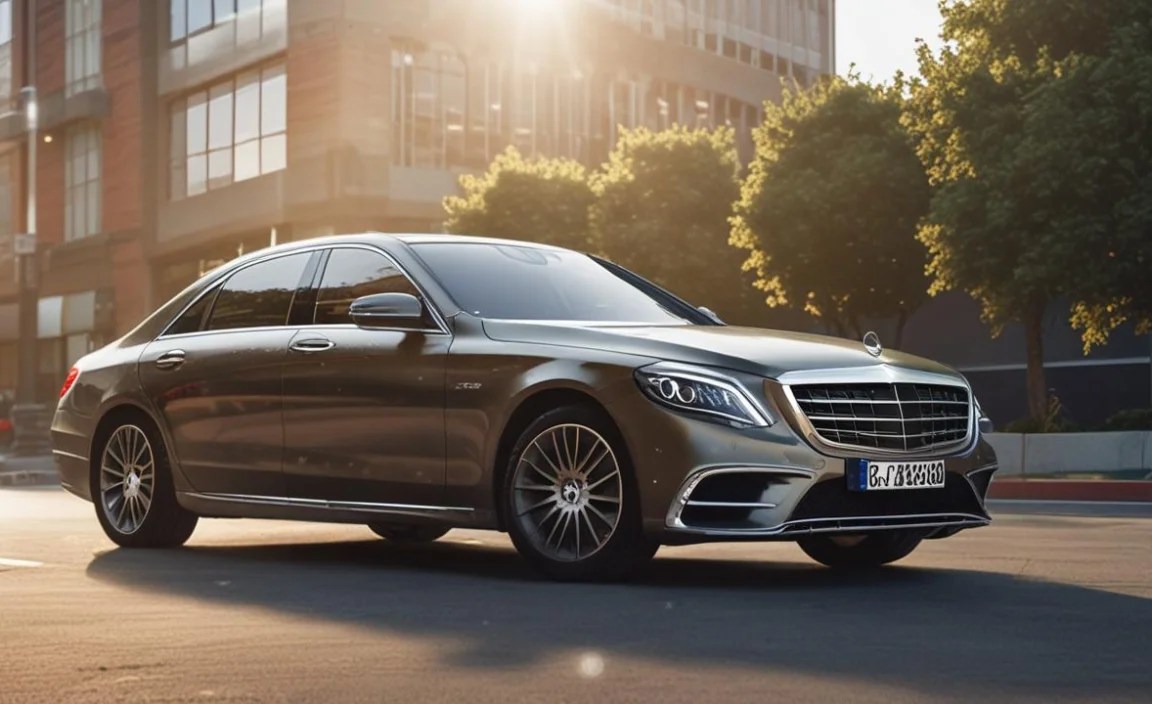
Regardless of your S-Class’s powertrain, adopting efficient driving habits and maintaining your vehicle properly are crucial for minimizing CO2 emissions and keeping your running costs down. Here’s how:
1. Drive Smarter, Not Harder
Your driving style has a direct impact on fuel consumption and, consequently, CO2 emissions. Even in a powerful S-Class, smooth and measured driving can make a difference.
- Smooth Acceleration and Braking: Avoid sudden bursts of acceleration and hard braking. Anticipate traffic flow and decelerate gradually. This uses less fuel and puts less strain on your brakes.
- Maintain Consistent Speed: On highways, use cruise control to maintain a steady speed. Fluctuations in speed require the engine to work harder, consuming more fuel.
- Observe Speed Limits: Fuel efficiency often decreases significantly at higher speeds. Driving at or below the speed limit is not only safer but also more economical.
- Minimize Idling: If you anticipate being stationary for more than a minute, it’s generally more fuel-efficient to turn off the engine, especially in non-hybrid models. Modern S-Class vehicles with start-stop systems handle this automatically.
- Use Eco Modes: Most S-Class models come with selectable driving modes, including an “Eco” or “Comfort” mode. These modes adjust throttle response, transmission shift points, and climate control to prioritize fuel efficiency.
2. Regular Maintenance is Key
A well-maintained S-Class runs more efficiently. Neglecting routine maintenance can lead to increased fuel consumption and higher CO2 emissions.
- Tire Pressure: Ensure your tires are inflated to the manufacturer’s recommended pressure. Underinflated tires increase rolling resistance, making the engine work harder and consume more fuel. Check your owner’s manual or the sticker on the driver’s side doorjamb for the correct pressure.
- Air Filter: A clogged air filter restricts airflow to the engine, reducing performance and fuel efficiency. Replace it according to your service schedule.
- Spark Plugs: Worn spark plugs can lead to incomplete combustion, wasting fuel and increasing emissions. Ensure they are checked and replaced as recommended.
- Oil Changes: Using the correct grade of motor oil and changing it regularly ensures your engine components are properly lubricated, reducing friction and wear, thus improving efficiency.
- Engine Tune-Ups: Follow Mercedes-Benz’s recommended service intervals. Regular check-ups ensure that all engine components are functioning optimally.
3. Optimize Aerodynamics and Weight
How you load and equip your S-Class can affect its efficiency.
- Reduce Aerodynamic Drag: Remove unnecessary exterior attachments like roof racks or bike carriers when not in use. These create drag, forcing the engine to burn more fuel. Keep windows closed at higher speeds to improve aerodynamics.
- Declutter Your Vehicle: Extra weight in the vehicle means the engine has to work harder to move it. Remove any unnecessary heavy items from your trunk or cabin.
4. Charging for Hybrid and Electric S-Class Models
For S-Class plug-in hybrids (EQ Power) and the all-electric EQS (EQ), regular charging is paramount to achieving the lowest possible CO2 emissions.
- Plug-In Hybrids (PHEVs): Make it a habit to charge your PHEV whenever possible – at home, at work, or at public charging stations. This maximizes your electric-only driving mileage, significantly reducing your reliance on gasoline and lowering CO2 output.
- Electric Vehicles (EVs): For the EQS, charging with electricity generated from renewable sources (solar, wind, hydropower) offers the lowest possible carbon footprint. Explore your local utilities’ green energy options for charging your EV.
Understanding the energy infrastructure for EVs is important. Resources like Alternative Fuels Data Center (AFDC) by the U.S. Department of Energy provide comprehensive information on EV charging.
Mercedes S-Class CO2 Emissions: By the Numbers

It’s helpful to see how different S-Class models stack up in terms of CO2 emissions. While exact figures can vary slightly based on model year, specific options, and testing cycles (like WLTP or EPA), the general trend is clear. Please note that these are approximate figures for illustrative purposes; always refer to the official specifications for the exact model year and configuration you are interested in.
The following table provides a snapshot of CO2 emissions (in g/km – grams per kilometer) for various S-Class variants. Lower numbers indicate greater efficiency.
| S-Class Model / Powertrain | Typical CO2 Emissions (g/km) | Notes |
|---|---|---|
| S 580 (V8 Gasoline) | 180 – 200 | Standard gasoline engine. Higher emissions than hybrid or EV. |
| S 580e (Plug-in Hybrid) | 30 – 50 (combined) | Significantly lower when using electric range regularly. |
| S 500/450 (Mild-Hybrid EQ Boost) | 160 – 185 | Improves efficiency over non-hybrid equivalents. |
| Mercedes-AMG S 63 E PERFORMANCE (Plug-in Hybrid) | Less than 50 (estimated) | High-performance hybrid; efficiency depends heavily on driving style. |
| Mercedes-Benz EQS 450+ (Electric) | 0 | Zero tailpipe emissions; overall impact depends on electricity source. |
| Mercedes-Benz EQS 580 4MATIC (Electric) | 0 | Zero tailpipe emissions; overall impact depends on electricity source. |
Understanding the CO2 Figures
g/km (Grams per Kilometer): This is the standard unit for measuring a vehicle’s CO2 output. It represents the amount of CO2 emitted for every kilometer driven.
- Lower is Better: A lower g/km figure indicates lower consumption of fuel and a smaller environmental footprint.
- Hybrid Impact: Plug-in hybrids have a dual rating – one for combined hybrid driving and a much lower (or zero) rating for electric-only driving. To achieve the lowest CO2 figures, regular charging of PHEVs is essential.
- Electric Advantage: Fully electric vehicles like the EQS have zero tailpipe emissions. Their carbon footprint is determined by the electricity source. The European Environment Agency provides insights into CO2 emissions from transport.
The Future of S-Class Efficiency and Sustainability

Mercedes-Benz is heavily invested in a sustainable future, with its “Ambition 2039” strategy aiming for a carbon-neutral new car fleet. This roadmap includes:
- Electrification: A continued shift towards hybrid and fully electric powertrains across all model lines, including the S-Class.
- Battery Technology: Advancements in battery density, charging speed, and longevity for electric vehicles.
- Sustainable Materials: Increasing the use of recycled and renewable materials in vehicle production.
- Manufacturing Processes: Reducing the carbon footprint of production facilities.
The S-Class, as the brand’s technological flagship, will undoubtedly continue to showcase and lead these innovations. Expect future S-Class generations to push the boundaries of efficiency and sustainability even further, whether through revolutionary hybrid systems or next-generation all-electric architectures.
Frequently Asked Questions (FAQ)
What are the CO2 emissions of a standard Mercedes S-Class?
A standard gasoline S-Class model, like an S 580, typically emits between 180-200 g/km of CO2. This can vary based on specific engine variants, drivetrain (RWD/AWD), and optional equipment affecting weight and aerodynamics. Mild-hybrid versions (EQ Boost) generally offer slightly lower figures.
How does a plug-in hybrid S-Class (e.g., S 580e) reduce CO2 emissions?
A plug-in hybrid S-Class can significantly reduce CO2 emissions by utilizing its electric-only range for short to medium distances. When fully charged and driven predominantly on electricity, its tailpipe CO2 emissions are effectively zero for those miles. Its combined CO2 rating is substantially lower than a pure gasoline model, especially if regularly charged and driven efficiently.
Is the electric Mercedes-Benz EQS CO2 neutral?
The Mercedes-Benz EQS itself produces zero tailpipe CO2 emissions, making it carbon-neutral in operation. However, its overall environmental impact depends on how the electricity used for charging is generated. Charging with renewable energy sources results in a significantly lower lifecycle carbon footprint compared to fossil fuel-powered vehicles.
What is the best way to improve my Mercedes S-Class’s fuel economy and reduce CO2?
The most effective ways include adopting smoother driving habits (gentle acceleration/braking), maintaining proper tire pressure, ensuring regular servicing, removing unnecessary weight and roof racks, and utilizing Eco driving modes. For hybrids and EVs, regular charging is crucial.
How has Mercedes-Benz focused on reducing CO2 emissions in the S-Class over the years?
Mercedes-Benz has progressively reduced S-Class CO2 emissions through engine downsizing, turbocharging, direct injection, advanced transmission technologies, the introduction of sophisticated mild-hybrid systems (EQ Boost), plug-in hybrid variants (EQ Power), and finally, fully electric models like the EQS. They also focus on lightweight construction and improved aerodynamics.
What are “g/km” and why are lower numbers better?
“g/km” stands for grams per kilometer, the standard measurement for a vehicle’s CO2 emissions. Lower g/km figures indicate that the car is burning less fuel to travel a kilometer, which means it’s more fuel-efficient and has a smaller environmental impact.
Does driving style significantly impact S-Class CO2 emissions?
Yes, absolutely. Aggressive driving with rapid acceleration and hard braking can increase fuel consumption and CO2 emissions by 10-30% or even more, compared to smooth, considerate driving. Anticipating traffic and minimizing speed fluctuations are key to efficient driving.
Conclusion
The Mercedes S-Class, a paragon of automotive excellence, is also on a journey towards enhanced efficiency and reduced environmental impact. By understanding the CO2 emissions associated with different S-Class powertrains – from intelligent mild-hybrids and versatile plug-in hybrids to the zero-emission EQS – you can make informed choices. Whether you own a current model or are considering a future purchase, adopting efficient driving techniques, ensuring meticulous vehicle maintenance, and embracing the benefits of electrification are paramount.
Your S-Class represents an investment in luxury and engineering. By actively managing its efficiency, you not only save on running costs but also contribute to a more sustainable automotive future. Mercedes-Benz’s commitment to “Ambition 2039” signals a clear direction: a future where luxury and responsibility go hand in hand. Drive with pride, drive with awareness, and enjoy the ultimate S-Class experience that’s as kind to the planet as it is to its occupants.


