
Mercedes S Class Chassis Number Guide: Ultimate Power Decoding
Quick Summary:
Decoding your Mercedes S-Class chassis number (VIN) unlocks its exact specifications, production details, and history. This guide simplifies the VIN, revealing engine, model year, assembly plant, and manufacturing sequence with expert insights, making it easy for any owner to understand their luxury vehicle’s identity.
The Mercedes-Benz S-Class is the epitome of automotive luxury and innovation. But when you look at your car, have you ever wondered what the string of letters and numbers on the dashboard or door jamb truly means? That’s your Vehicle Identification Number, or VIN, and for an S-Class, it’s a treasure trove of information. Many owners feel a bit lost deciphering this code, which is completely understandable—it looks complex! This guide is here to demystify your S-Class VIN. We’ll break down each section, showing you precisely what each character signifies, from the manufacturing plant to the exact model and year. Let’s decode the power and prestige built into your S-Class, step by step.
Understanding Your Mercedes S-Class Chassis Number (VIN)

The Vehicle Identification Number, or VIN, is a unique 17-character code assigned to every vehicle. For a Mercedes-Benz S-Class, this sequence is more than just an identifier; it’s a digital fingerprint containing critical information about the car’s origin, specifications, and manufacturing process. Think of it as your S-Class’s personal history book, written in a language that, once understood, tells a compelling story.
This number is crucial for various reasons:
- Authenticity Verification: Proving the car’s originality and identifying its specific configuration.
- Vehicle History: Accessing reports on accidents, recalls, and ownership changes.
- Parts Identification: Ensuring you order the correct replacement parts specific to your model and year.
- Ownership Documentation: Essential for insurance, registration, and resale.
- Technical Specification: Revealing details about the engine, transmission, and optional features.
Where to Find Your S-Class VIN
Before we dive into decoding, let’s ensure you know where to locate your S-Class VIN. The most common places are:
- Driver’s Side Dashboard: Visible through the windshield from the outside, near the base of the dashboard.
- Driver’s Side Door Jamb: Typically on a sticker inside the driver’s door frame when open.
- Vehicle Registration Documents: Found on your car’s title and registration papers.
- Insurance Policy: Listed on your insurance card or policy documents.
Look for a string of numbers and letters, usually starting with digits that identify the manufacturer and country.
Breaking Down the 17-Character VIN: A Character-by-Character Guide

The structure of a VIN is standardized globally, ensuring consistency. For your Mercedes-Benz S-Class, each of the 17 characters holds a specific piece of information. Let’s decode it position by position.
Characters 1-3: World Manufacturer Identifier (WMI)
These first three characters identify the manufacturer and the country of origin.
- “WDB”: This prefix universally identifies Mercedes-Benz (Daimler AG) as the manufacturer.
- “WD”: The “WD” part specifically denotes Daimler AG vehicles.
- “B”: The third character for Mercedes-Benz is consistently “B”.
So, any Mercedes-Benz VIN will start with “WDB”. This confirms your S-Class was manufactured by Daimler AG.
Characters 4-8: Vehicle Description Section
These characters provide specific details about your S-Class, often including information about its model series, body style, engine type, and restraint systems. The exact coding can be complex and varies by model year and internal Mercedes-Benz classification.
Character 4: Series/Body Style
This digit or letter typically indicates the S-Class model series (e.g., W222, W223) and body style like Sedan or Long Wheelbase. For example, ‘2’ might signify a specific S-Class configuration.
Character 5: Engine Type
This character usually denotes the engine variant. For instance, ‘1’ could represent a V6 gasoline engine, ‘2’ a V8 gasoline, ‘3’ a diesel, and so on. The specific mapping evolves with new generations.
Character 6: Safety Features/Chassis/Transmission Type
This position can describe the safety system (e.g., airbags) or the type of transmission and chassis.
Character 7: Body Style/Configuration
Further details about the body configuration, like a standard or long wheelbase.
Character 8: Model Specifics/Features
This character and the following one often combine to denote specific model variants or optional features integrated at the factory.
Example of Description Section (Hypothetical): If characters 4-8 were `2173B`, it might translate to an S-Class Sedan (2), with a base V6 engine (1), standard safety features (7), a specific wheelbase variant (3), and a base feature package (B).
Character 9: Check Digit
This is a crucial character. It’s a computer-generated number used to verify the VIN’s accuracy. When the VIN is entered into many computer systems, this digit is recalculated. If it doesn’t match the number in the VIN, it indicates an error in the VIN itself. This is a security feature to prevent VIN fraud.
Character 10: Model Year
This single character is universally used to indicate the model year of the vehicle. Mercedes-Benz uses a combination of letters and numbers, progressing in a cycle and skipping certain characters to avoid confusion. The cycle typically runs in 30-year increments.
| Year | Character | Year | Character | Year | Character |
| :— | :——– | :— | :——– | :— | :——– |
| 1980 | A | 1990 | K | 2000 | Y |
| 1981 | B | 1991 | L | 2001 | 1 |
| 1982 | C | 1992 | M | 2002 | 2 |
| 1983 | D | 1993 | N | 2003 | 3 |
| 1984 | E | 1994 | P | 2004 | 4 |
| 1985 | F | 1995 | R | 2005 | 5 |
| 1986 | G | 1996 | S | 2006 | 6 |
| 1987 | H | 1997 | T | 2007 | 7 |
| 1988 | J | 1998 | V | 2008 | 8 |
| 1989 | K | 1999 | W | 2009 | 9 |
Note: Letters I, O, and Q are typically not used to avoid confusion with numbers 1 and 0.
For instance, if Character 10 is ‘A’, it likely refers to a 1980 or 2010 model year. Context (like the production year which follows) helps discern the actual year. For modern S-Class models, you’ll see characters from ‘A’ onwards.
Character 11: Assembly Plant
This character indicates the specific factory where your S-Class was assembled. Mercedes-Benz has multiple production facilities worldwide. For S-Class vehicles, key plants include:
“5”: Sindelfingen, Germany (a primary S-Class assembly location).
“W”: Bremen, Germany.
“M”: Tuscaloosa, Alabama, USA (for some North American market models).
The specific codes can vary, but usually, a single letter or number designates the plant.
Characters 12-17: Serial Number
These last six digits form the unique sequential production number for your S-Class. Each vehicle produced at a given plant for a specific model year receives a unique serial number. This is the most personal part of your VIN, differentiating your car from every other S-Class ever made. It’s the direct line to its individual history and build record.
Decoding Specific S-Class Generations
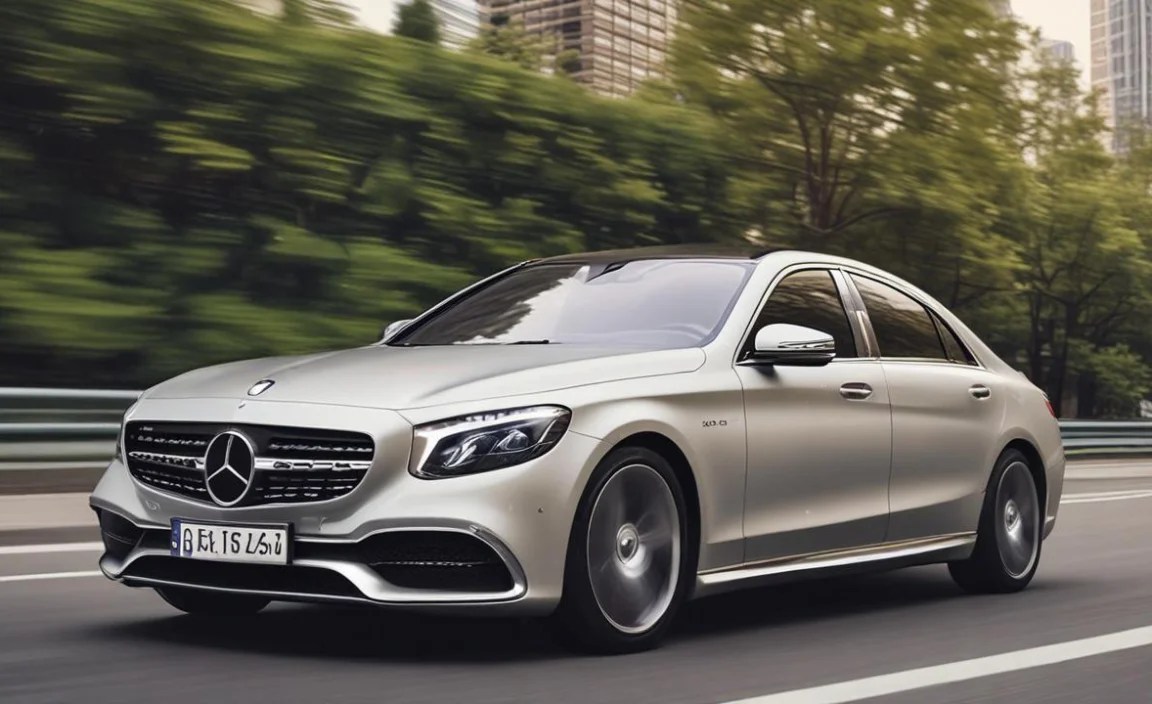
While the 17-character structure is standardized, some codes within the description section (Characters 4-8) might have subtle variations depending on the S-Class generation (e.g., W140, W220, W221, W222, W223) and its production year.
The W222 Generation (2013-2020)
For the W222 generation, the VIN might look something like this: `WDB XXXXXXXY ZZZZZZZZ`. Let’s assume `WDB` is constant.
Characters 4-8: These would detail the specific W222 variant, engine (e.g., S350, S550, S63 AMG), body style (standard or long wheelbase), and chassis code (e.g., 222.0xx for sedan).
Character 10 (Model Year): For example, a ‘G’ might indicate a 2016 model year.
Character 11 (Assembly Plant): ‘5’ often points to Sindelfingen.
The W223 Generation (2020-Present)
The latest W223 generation continues the VIN format.
Characters 4-8: These will reflect the new W223 platform, engine options (including hybrid and EV variants), and specific trims.
Character 10 (Model Year): For instance, an ‘L’ might represent a 2021 model year.
Character 11 (Assembly Plant): Again, ‘5’ remains a strong indicator for Sindelfingen.
Decoding AMG S-Class Models
AMG variants of the S-Class often have specific indicators within the VIN description section (Characters 4-8) that denote the higher-performance engine and special AMG chassis tuning. For example, an ‘8’ or ‘9’ in one of these positions might signify a V8 or V12 engine, respectively, common in AMG models like the S63 or S65.
How to Use Your VIN for Deeper Insights

Once you’ve located and understood the structure of your S-Class VIN, you can leverage it to gain valuable insights.
1. VIN Decoders Online
There are numerous online VIN decoder tools. By simply entering your 17-character VIN, these tools will interpret the data and provide a report that typically includes:
- Manufacturer
- Model Year
- Assembly Plant
- Engine Specifications
- Transmission Type
- General Vehicle Type
Reputable sites like the National Highway Traffic Safety Administration (NHTSA) offer free VIN lookups that can identify recalls. For more detailed information, specialized automotive databases can be accessed, though some may require a fee.
Here’s a great resource for checking safety recalls:
NHTSA Vehicle Safety Recall Information
2. Verifying Vehicle History Reports
Services like CarFax or AutoCheck use your VIN to compile invaluable vehicle history reports. These reports can reveal:
- Accident history
- Title issues (salvage, flood, etc.)
- Odometer readings
- Ownership records
- Service history (if recorded)
- Lien information
This is particularly important when buying a used S-Class to ensure you’re not acquiring hidden problems.
3. Ordering Parts
Your VIN is the most accurate way to identify the exact specifications of your S-Class, which is critical when ordering genuine Mercedes-Benz parts. Different model years, trims, and even production dates can have subtle differences in components. Using your VIN with a Mercedes-Benz dealership or a reputable parts supplier ensures you get parts that fit perfectly and meet factory standards.
4. Checking for Recalls
Mercedes-Benz, like all manufacturers, issues recalls for safety-related defects. Your VIN is essential for checking if your specific S-Class is affected by any open recalls. You can do this through the NHTSA website or directly on the Mercedes-Benz official website.
Common S-Class VIN Queries Answered

Let’s address some common questions enthusiasts and owners have about their S-Class VINs.
Frequently Asked Questions (FAQ)
Q1: Can I tell the exact trim level of my S-Class from the VIN?
While the VIN provides extensive details about the model, engine, and year, it often doesn’t directly tell you the specific trim level (e.g., Sport, Luxury, AMG Line) as precisely as sales brochures or the original window sticker would. However, the description characters can strongly hint at performance-oriented trims, especially for AMG models. You can usually confirm the exact trim by cross-referencing VIN decoder results with visual cues on the car or by consulting a Mercedes-Benz dealer using your VIN.
Q2: My VIN starts with WDB. Does this mean my car was definitely made in Germany?
Yes, the “WDB” prefix indicates that the manufacturer is Daimler AG (Mercedes-Benz). However, while the manufacturer is German, the final assembly location can vary. The third character of the WMI (though often part of the “WDB” identifier) and specifically the 11th character of the VIN will tell you the precise assembly plant – which could be Germany (Sindelfingen, Bremen) or potentially other locations like the USA for models destined for specific markets.
Q3: I see a lot of zeros in my VIN’s serial number part. Is that normal?
Yes, it’s very common for the serial number portion of a VIN to start with one or more zeros, especially for models produced early in a model year or at highly productive plants. For instance, a VIN ending in `000123` is a perfectly valid and common occurrence. The trailing numbers are sequential, and leading zeros do not diminish the uniqueness of the serial number.
Q4: What if my S-Class VIN has letters like ‘I’, ‘O’, or ‘Q’?
Standard VINs are designed to exclude the letters ‘I’, ‘O’, and ‘Q’ from positions 4 through 8, and 10 through 17. This is to prevent confusion with the numbers ‘1’ and ‘0’. If you encounter a VIN with these letters in those positions, it’s highly likely there’s a typo, or it’s not a standard VIN. Double-check the characters carefully.
Q5: How do I find the specific engine configuration for my S-Class using the VIN?
Engine information is typically encoded within characters 4 through 8 of the VIN. For example, a character in this range might indicate a V6, V8, V12, or a specific diesel or hybrid powertrain. While online VIN decoders will often list this, Daimler’s internal systems use a more detailed matrix. If you need precise engine codes, consulting a Mercedes-Benz technical manual or a dealership with your VIN is the most reliable method.
Q6: Is there a difference between the chassis number and the VIN?
For modern vehicles like the Mercedes-Benz S-Class, the terms “chassis number” and “VIN” are used interchangeably. The VIN is the unique 17-character identifier that contains all the essential information, including what would have traditionally been referred to as the chassis or frame number. Older vehicles might have had separate chassis numbers, but for current production, the VIN is the definitive identifier.
Q7: Can I determine the original color of my S-Class from the VIN?
The VIN does not typically encode the exterior or interior color of the vehicle. This information is usually found on a separate sticker (like the “data card” or “build sticker”) located in the engine bay, on the door jamb, or within the vehicle’s service booklet. Some advanced VIN decoders or Mercedes-Benz dealership systems might be able to cross-reference the VIN with factory build data to retrieve color codes.
Conclusion
Your Mercedes-Benz S-Class VIN is far more than just a serial number; it’s a comprehensive identifier rich with data about your vehicle’s lineage and specifications. By understanding the 17-character structure, from the manufacturer identifiers to the model year and assembly plant, you gain a deeper appreciation for the engineering and production that went into crafting your luxury sedan.
Whether you’re looking to order precise parts, verify a vehicle’s history, or simply satisfy your curiosity about your S-Class’s identity, decoding its VIN is an empowering step for any owner. This guide has equipped you with the knowledge to break down that complex code. Remember to use the VIN wisely for authenticity, maintenance, and peace of mind on your ownership journey. Happy decoding, and enjoy the unparalleled experience of driving your S-Class, now with a clearer understanding of its unique story.


