
Mercedes Actros Engine Types: Ultimate Power
The Mercedes Actros boasts a range of powerful and efficient engine types, each meticulously engineered to deliver ultimate performance for various transport needs. From robust in-line six-cylinder units to specialized options, understanding these engines is key to unlocking the full potential of this iconic truck.
When it comes to the heart of your Mercedes Actros, the engine is where the magic happens. It’s the workhorse that powers your business, ensuring reliability and efficiency on every journey. For many owners and prospective buyers, the sheer variety of engine options can feel a bit overwhelming. Which one is right for your specific hauling needs? Don’t worry, we’re here to demystify the powerful world of Mercedes Actros engines, breaking down the key differences and helping you understand what makes each one a champion in its own right.
Whether you’re focused on fuel economy for long-haul routes, raw power for demanding construction sites, or a balance of both, Mercedes-Benz has an engine designed to excel. We’ll explore the core engine families, their distinguishing features, and what they mean for your daily operations. Get ready to discover the ultimate power that drives the Mercedes Actros.
Understanding the Mercedes Actros Engine Philosophy

Mercedes-Benz has a long-standing reputation for engineering excellence, and their approach to truck engines is no different. The Actros lineup is built around a philosophy of delivering not just brute force, but also exceptional efficiency, durability, and cutting-edge technology. This focus ensures that each engine is optimized for its intended application, providing a seamless blend of performance and economy.
Key to this philosophy are several fundamental principles:
- Performance: Engines are designed to offer ample power and torque outputs that meet the diverse demands of modern logistics and heavy-duty operations.
- Efficiency: With rising fuel costs and environmental regulations, Mercedes-Benz places a significant emphasis on fuel economy. Advanced injection systems, turbocharging, and intelligent engine management contribute to reduced consumption.
- Reliability: The Actros is built for the long haul. Its engines are renowned for their robust construction and extended service life, minimizing downtime and operational costs.
- Emissions: Adherence to stringent Euro VI emission standards is a core requirement. This is achieved through sophisticated exhaust aftertreatment systems, including selective catalytic reduction (SCR).
- Smoothness and Comfort: Engine design also considers driver comfort. Many Actros engines are known for their quiet operation and smooth power delivery, crucial for long driving shifts.
The Core Mercedes Actros Engine Families

The Mercedes Actros primarily features engines from two main families: the OM 470 and the OM 471. While both are V6 or in-line six-cylinder powerhouses, they are tailored for different power ranges and operational profiles.
The OM 470 Series: Versatility and Efficiency
The OM 470 is a testament to Mercedes-Benz’s ability to engineer versatile and efficient engines. This compact yet powerful in-line six-cylinder engine is designed to offer a strong balance of performance and fuel economy, making it an excellent choice for a wide array of applications, particularly for medium-to-long-haul transport.
Key Features of the OM 470:
- Configuration: In-line 6-cylinder.
- Displacement: Typically around 10.7 liters.
- Power Outputs: Available in various power ratings, commonly ranging from approximately 320 hp to 530 hp, with corresponding torque figures to match.
- Fuel System: Features common-rail direct injection with X-Pulse peak pressure modulation, allowing for precise fuel delivery and combustion optimization.
- Turbocharging: Equipped with a variable geometry turbocharger (VGT) for responsive power delivery across the rev range.
- Emissions: Complies with Euro VI standards through advanced SCR technology.
- Applications: Well-suited for long-haul trucking, regional distribution, and vocational applications where a combination of power and fuel efficiency is paramount.
The OM 470 is designed for exceptional cost-effectiveness over its lifespan, with lower fuel consumption and effective emission control systems. Its robust construction ensures dependability, even under demanding conditions.
The OM 471 Series: Peak Performance and Power
When ultimate power and robust performance are the top priorities, the OM 471 series steps in. This engine family represents the pinnacle of Mercedes-Benz’s large displacement truck engine technology, engineered for the toughest jobs and the longest routes.
Key Features of the OM 471:
- Configuration: In-line 6-cylinder.
- Displacement: A larger displacement, typically around 12.8 liters.
- Power Outputs: Offers higher power and torque figures, commonly ranging from around 420 hp up to 580 hp and even higher in specialized variants. Torque figures can exceed 2600 Nm, ideal for heavy loads and steep inclines.
- Fuel System: Utilizes advanced common-rail injection with X-Pulse technology for highly efficient combustion.
- Turbocharging: Features a powerful turbocharger, often with an optimized wastegate system for maximum performance and efficiency.
- Advanced Cooling: Incorporates sophisticated thermal management systems to ensure optimal operating temperatures under heavy load.
- Emissions: Meets Euro VI standards with efficient SCR and particulate filter systems.
- Applications: Perfect for heavy-duty long-haul transport, demanding construction logistics, oversized cargo hauling, and any application requiring maximum torque and pulling power.
The OM 471 is engineered for longevity and sustained performance. Its larger displacement and higher power ratings make it the go-to choice for operators who need to move heavy loads quickly and efficiently, even in challenging environments. For more on engine technologies, Mercedes-Benz Truck’s official site often provides detailed specifications.
Specialized Engine Variants and Technologies

Beyond the core OM 470 and OM 471, Mercedes-Benz continuously refines its engine offerings with specialized variants and innovative technologies to meet evolving demands and regulations. These advancements often focus on enhancing efficiency, reducing emissions further, and improving the overall driving experience.
Tiered Power Outputs
Within each engine series (OM 470 and OM 471), Mercedes-Benz offers multiple power and torque variants. This allows operators to precisely match engine capability to their specific operational needs. For example, a truck used primarily for light regional deliveries might opt for a lower-powered OM 470 variant, while a vehicle tasked with heavy cross-continental hauls would benefit from a potent OM 471 configuration.
This careful calibration of power outputs ensures that you aren’t over-speccing or under-speccing your engine, leading to optimal fuel consumption and reduced wear and tear.
Euro VI Emissions Standards
All modern Mercedes Actros engines are designed to comply with the stringent Euro VI emissions standards. This is a critical aspect for any fleet operator, ensuring legal compliance and access to low-emission zones in urban areas. The primary technologies employed include:
- Selective Catalytic Reduction (SCR): This system injects a diesel exhaust fluid (DEF), such as AdBlue, into the exhaust stream. The DEF reacts with nitrogen oxides (NOx) in the exhaust, converting them into harmless nitrogen and water vapor.
- Diesel Particulate Filter (DPF): Captures soot and other particulate matter from the exhaust gases. The filter periodically regenerates itself by burning off accumulated soot.
- Exhaust Gas Recirculation (EGR): While less common in newer heavy-duty engines in combination with SCR, sophisticated EGR systems can help reduce NOx formation.
Understanding these systems is crucial for maintenance. You can find more detailed information on Euro VI compliance and emissions control from the United Nations Economic Commission for Europe (UNECE), which outlines global vehicle regulations.
Engine Braking Systems
The power of an Actros engine isn’t just about acceleration; it’s also about controlled deceleration. Mercedes-Benz integrates advanced engine braking systems, often referred to as the “PowerLine” or “Jake Brake” equivalent, designed to assist in slowing the vehicle.
- Exhaust Flap Brake: A simple but effective system that increases backpressure in the exhaust system, slowing the engine.
- Decompression Brake: A more powerful system that uses the engine’s own cylinders to create significant resistance, providing substantial braking force without the need for the service brakes.
These systems significantly reduce wear on the service brakes, enhance safety, and allow for more controlled descents on gradients.
Choosing the Right Mercedes Actros Engine for Your Needs

Selecting the ideal engine for your Mercedes Actros is a decision that directly impacts your operational efficiency, profitability, and overall satisfaction. It’s not a one-size-fits-all scenario; the best choice depends heavily on how and where you intend to use your truck.
Factors to Consider:
Here are the key considerations to guide your decision:
- Primary Route Type:
- Long-Haul: Focus on engines offering a balance of power and exceptional fuel efficiency, such as the OM 470 in its higher power ratings or the OM 471 tuned for economy.
- Regional Distribution: A mid-range OM 470 or OM 471 variant often provides the best blend of responsive power for varied routes and good fuel economy.
- Construction/Heavy Duty: Prioritize engines with high torque and robust power delivery, such as the higher-output OM 471 series, to handle heavy loads and difficult terrain.
- Load Capacity: The typical weight of your loads will dictate the amount of power and torque required. Heavier loads necessitate higher horsepower and torque figures.
- Terrain: Operating in hilly or mountainous regions demands more powerful engines with extensive torque capabilities for climbing.
- Fuel Efficiency Goals: If minimizing fuel costs is a top priority, look for engines with advanced injection technology and optimal power-to-displacement ratios designed for economy.
- Vehicle Configuration (e.g., tractor, rigid truck): Different configurations may have varying Gross Vehicle Weight (GVW) limits that influence the optimal engine choice.
- Total Cost of Ownership: Consider not only the initial purchase price but also fuel consumption, maintenance costs, and potential resale value.
Engine Power Comparisons at a Glance
To help visualize the offerings, here’s a simplified comparison of typical engine power and torque ranges for the main Actros series. Please note that exact specifications can vary by model year and regional availability.
| Engine Series | Typical Displacement | Typical Power Range (hp) | Typical Torque Range (Nm) | Primary Strengths |
|---|---|---|---|---|
| OM 470 | 10.7 L | 320 – 530 hp | 1400 – 2400 Nm | Versatility, Fuel Efficiency, Cost-Effectiveness |
| OM 471 | 12.8 L | 420 – 580+ hp | 2100 – 2600+ Nm | High Power, Maximum Torque, Heavy-Duty Performance |
It’s always recommended to consult with a Mercedes-Benz Trucks dealer or an expert to get the most precise specifications for the Actros model and engine variant you are considering.
Engine Maintenance and Longevity
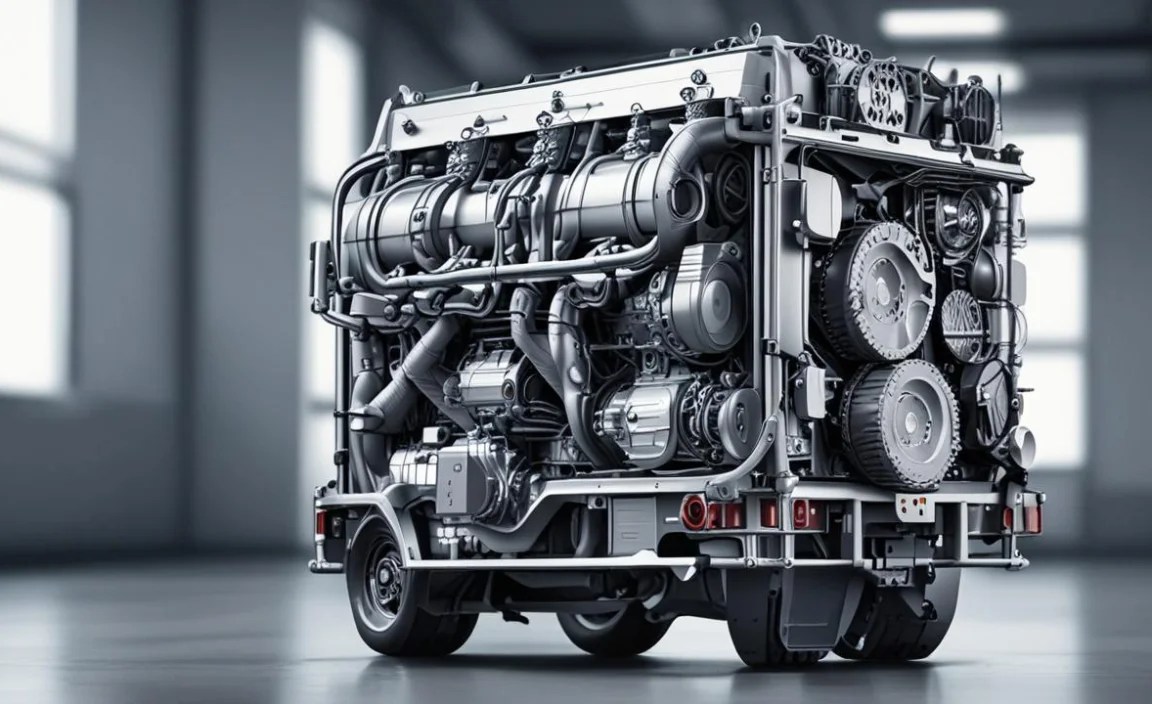
Even the most robust engine requires proper care to ensure it performs optimally for years to come. Understanding and implementing a regular maintenance schedule is crucial for maximizing the lifespan and efficiency of your Mercedes Actros engine.
Essential Maintenance Practices:
- Regular Oil Changes: Use only Mercedes-Benz approved engine oil of the correct viscosity grade for your engine and climate. Adhere to the manufacturer’s recommended service intervals for oil and filter changes. Dirty oil can lead to increased wear on internal components.
- Fluid Checks: Regularly check and maintain levels of coolant, power steering fluid, and AdBlue (for SCR systems). Low fluid levels can lead to overheating or system malfunctions.
- Air Filter Replacement: A clean air filter is vital for optimal combustion and performance. Replace it according to the servicing schedule or sooner if operating in dusty conditions. A clogged filter can reduce engine power and increase fuel consumption.
- Fuel Filter Maintenance: Clogged fuel filters can restrict fuel flow, leading to power loss and potential engine damage. Replace fuel filters at the recommended intervals.
- Cooling System Inspection: Ensure the radiator, hoses, and fan are in good condition. A properly functioning cooling system prevents the engine from overheating, which can cause severe damage.
- Belts and Hoses: Inspect drive belts for wear and tension, and check hoses for cracks or leaks. Worn components can fail unexpectedly, leading to breakdowns.
- Diagnostic Checks: Pay attention to any warning lights on the dashboard. Schedule professional diagnostics if you notice any unusual noises, vibrations, or performance changes.
For detailed maintenance procedures, always refer to your Mercedes Actros owner’s manual or the official Mercedes-Benz Trucks service documentation. Properly performed maintenance not only ensures the longevity of your engine but also helps maintain fuel efficiency and reduces the likelihood of costly unscheduled repairs.
Frequently Asked Questions (FAQ)
What is the most common Mercedes Actros engine?
The OM 470 and OM 471 series are the most common engine families found in the Mercedes Actros. The OM 470 is renowned for its versatility and efficiency, while the OM 471 is favored for its higher power and torque output in demanding applications.
How do I know which Actros engine is best for my business?
The best engine depends on your specific operational needs. Consider factors like route type, typical load weight, terrain, and fuel efficiency priorities. Consulting with a Mercedes-Benz Trucks dealer can provide personalized recommendations.
What does Euro VI mean for my Actros engine?
Euro VI is a European emissions standard. It means your Actros engine is equipped with advanced technologies like SCR (Selective Catalytic Reduction) and DPF (Diesel Particulate Filter) to significantly reduce harmful pollutants like NOx and particulate matter.
Are Mercedes Actros engines good on fuel?
Yes, Mercedes-Benz places a strong emphasis on fuel efficiency in its Actros engines. Through common-rail injection, turbocharging, and intelligent engine management, they are designed to deliver excellent miles per gallon (or kilometers per liter) for their class.
What is AdBlue and why is it important?
AdBlue is a diesel exhaust fluid (DEF) used in SCR systems to reduce NOx emissions. Your Actros engine requires a steady supply of AdBlue to meet Euro VI standards. Running out of AdBlue will typically cause the engine to enter a limp-home mode or prevent it from starting.
Can I tune my Mercedes Actros engine?
While professional tuning or remapping services exist, it’s generally not recommended for commercial vehicles. Tuning can void warranties, potentially damage the engine or emissions systems, and may lead to non-compliance with emissions regulations or operational permits.
How often should the engine oil be changed in a Mercedes Actros?
The exact interval depends on the specific engine model, operating conditions, and the type of oil used. Always refer to your Mercedes Actros owner’s manual for the manufacturer’s recommended oil change schedule. Typically, it’s based on mileage, operating hours, or time elapsed.
The Future of Actros Engine Technology
Mercedes-Benz is at the forefront of developing the future of heavy-duty transport, and their engine technology is evolving rapidly. While diesel engines like the OM 470 and OM 471 will continue to be refined for efficiency and emissions compliance, the company is also heavily investing in alternative powertrains.
We are seeing a significant push towards electrification with models like the eActros. These battery-electric trucks offer zero tailpipe emissions and are ideal for urban and regional distribution where charging infrastructure is available. Mercedes-Benz is also exploring hydrogen fuel cell technology as a potential long-term solution for zero-emission long-haul transport.
Despite these advancements, the engineering excellence demonstrated in the current OM 470 and OM 471 series sets a high bar. These diesel engines represent a mature, reliable, and powerful solution for a vast majority of transport needs today, optimized for performance and efficiency through decades of innovation.
Conclusion
The Mercedes Actros engine lineup, powered primarily by the sophisticated OM 470 and the formidable OM 471 series, offers a spectrum of ultimate power tailored to virtually every trucking requirement. Each engine is a marvel of engineering, designed not just to move goods, but to do so with unparalleled efficiency, unwavering reliability, and a keen awareness of environmental responsibility. From bolstering long-haul operations with


