
Mercedes GLA vs BMW X1: Ultimate Powerful Comparison
Quick Summary:
The Mercedes GLA offers a more luxurious, tech-forward interior and a sportier driving feel, ideal for city driving and style. The BMW X1 provides more interior space, robust practicality, and a slightly more commanding presence, making it a versatile choice for families and longer journeys. Both are excellent luxury compact SUVs, with the choice boiling down to personal priorities.
When you’re looking for a luxury compact SUV, two names often come to the forefront: the Mercedes-Benz GLA and the BMW X1. Both offer premium badges, comfortable interiors, and capable performance. But which one is the right fit for you? It’s a common dilemma for buyers who appreciate refined engineering and want more than just a standard vehicle.
Choosing between them can feel like a big decision, especially when both seem so appealing. At MercedesBlue, we understand the nuances that make each model unique. This guide is here to help you cut through the confusion. We’ll dive deep into what sets the GLA and X1 apart, from their performance and technology to their practicality and luxury appointments. Get ready to discover which premium compact SUV truly suits your lifestyle.
Frequently Asked Questions
What are the main differences between the Mercedes GLA and BMW X1?
The primary differences lie in their driving dynamics, interior design and luxury feel, and cargo space. The GLA leans towards a sportier, more engaging drive with a highly modern, driver-focused interior. The X1 prioritizes practicality, passenger space, and a slightly more traditional, yet still premium, SUV feel.
Which is better for city driving, the GLA or X1?
The Mercedes GLA is often considered slightly better for city driving due to its more compact dimensions, agile handling, and the advanced driver-assistance systems that make navigating tight urban environments easier. Its sportier suspension also gives it a more dynamic feel in city traffic.
Which has more cargo space, the Mercedes GLA or BMW X1?
The BMW X1 generally offers more cargo space and a more practical, squared-off rear for loading. While the GLA has adequate space for daily needs, the X1 typically wins when it comes to outright volume for luggage, strollers, or large shopping hauls.
Are both models available with all-wheel drive?
Yes, both the Mercedes GLA and BMW X1 are available with all-wheel-drive systems. Mercedes calls its system 4MATIC, while BMW’s is xDrive. These systems enhance traction and stability, especially in adverse weather conditions.
Which offers a more luxurious interior?
Mercedes-Benz is renowned for its interior luxury and ambiance. The Mercedes GLA typically features more upscale materials, ambient lighting options, and a more avant-garde dashboard design, giving it a slight edge in perceived luxury over the BMW X1.
Which SUV is more powerful?
Both models offer potent engine options. The GLA, especially in AMG trims, can deliver significantly higher performance. In their standard configurations, their power outputs are often very competitive, with subtle differences that vary by model year and specific engine choices. It’s best to compare the exact engine variants for power output.
Mercedes GLA vs. BMW X1: The Ultimate Powerful Comparison
Navigating the premium compact SUV segment can be a delightful, yet challenging, pursuit. Two stalwarts that consistently capture attention are the Mercedes-Benz GLA and the BMW X1. Both German automakers have crafted compelling packages designed to offer luxury, performance, and practicality in a more accessible, agile form factor than their larger siblings. But when it comes down to the nitty-gritty, which of these two rivals truly reigns supreme for your needs?
As Bryan Bowman of MercedesBlue, I’ve spent countless hours behind the wheel of these vehicles, dissecting their every feature and comparing their driving dynamics. Today, we’re going to break down the Mercedes GLA and BMW X1 with a powerful, in-depth comparison. We’ll explore everything from powertrain options and driving feel to interior comfort, technology, safety, and overall value. Whether you’re a seasoned enthusiast or a first-time luxury SUV shopper, this guide will equip you with the insights needed to make an informed decision. Let’s dive in!
Design and Exterior Styling

The aesthetic appeal of a vehicle is often the first handshake, and both the GLA and X1 present distinct personalities.
Mercedes-Benz GLA: Sporty and Sleek
The Mercedes-Benz GLA, particularly in its latest iterations, embodies a more coupé-like silhouette within the SUV category. It features flowing lines, a prominent grille with the iconic Mercedes star, and a lower, wider stance that hints at its dynamic capabilities. The design emphasizes sportiness and elegance, making it a visually striking presence on the road. LED lighting signatures are sharp and modern, adding to its sophisticated look. It certainly feels like a car that’s ready to attack the road with confidence.
- Key Design Elements:
- Aggressive front fascia with a large Mercedes star.
- Sloping roofline for a sporty profile.
- Sharp LED lighting.
- Available AMG styling packages for a more aggressive look.
BMW X1: Robust and Commanding
The BMW X1 takes a more traditional, upright SUV approach. Its design is characterized by familiar BMW proportions, a prominent kidney grille, and a more substantial presence. While it might not be as overtly sporty as the GLA, the X1 exudes a sense of robustness and purpose. The lines are clean and muscular, conveying capability and a ready-for-anything attitude. It offers a commanding view of the road, fitting well into the established BMW SAV (Sports Activity Vehicle) philosophy.
- Key Design Elements:
- Classic BMW grille and headlight design.
- More upright, traditional SUV shape.
- Muscular character lines.
- Taller stance, suggesting greater utility.
In terms of exterior appeal, the choice is subjective. The GLA speaks to those who prioritize a sleek, sporty aesthetic, while the X1 appeals to those who prefer a more traditional, robust SUV look.
Interior Quality and Design

Step inside, and the philosophies of Mercedes-Benz and BMW become even more apparent. Both aim for luxury, but they achieve it through different design languages and material call-outs.
Mercedes-Benz GLA: Tech-Forward Luxury
The Mercedes-Benz GLA’s interior is a masterclass in modern luxury and technology. The dashboard is dominated by the brand’s signature MBUX infotainment system, which often appears as a large, seamless display integrating the instrument cluster and central touchscreen under a single glass panel. This creates a futuristic and minimalist feel. Materials are generally excellent, with high-quality plastics, available genuine wood or aluminum trim, and comfortable, well-bolstered seats. Ambient lighting is extensive and customizable, adding to the premium, lounge-like atmosphere. The driver is at the center of the experience, with controls and displays intuitively placed.
For more insight into the technology Mercedes-Benz employs, you can explore their official innovation pages, like those detailing the MBUX intelligent voice assistant.
BMW X1: Driver-Centric and Practical
BMW cabins have long been praised for their driver-focused ergonomics, and the X1 is no exception. The design is clean, logical, and built with high-quality materials throughout. While it may lack the sheer visual drama of the GLA’s dual-screen setup, the X1 offers an intuitive layout with physical buttons for many climate and infotainment controls, which some drivers prefer for ease of use. The iDrive infotainment system is one of the best in the business for its responsiveness and ease of navigation, controllable via touchscreen, dial, or voice. Seats are supportive and comfortable, and the overall ambiance is one of refined, understated luxury.
Key interior highlights for both vehicles often include:
- Mercedes GLA:
- Available dual-screen digital display (10.25-inch screens).
- Advanced MBUX voice control.
- Premium material options and extensive ambient lighting.
- Sporty steering wheel design.
- BMW X1:
- Intuitive iDrive infotainment system.
- High-quality plastics and trims.
- Ergonomically designed dashboard for the driver.
- Comfortable and supportive seating.
- Available heads-up display.
Performance and Driving Dynamics
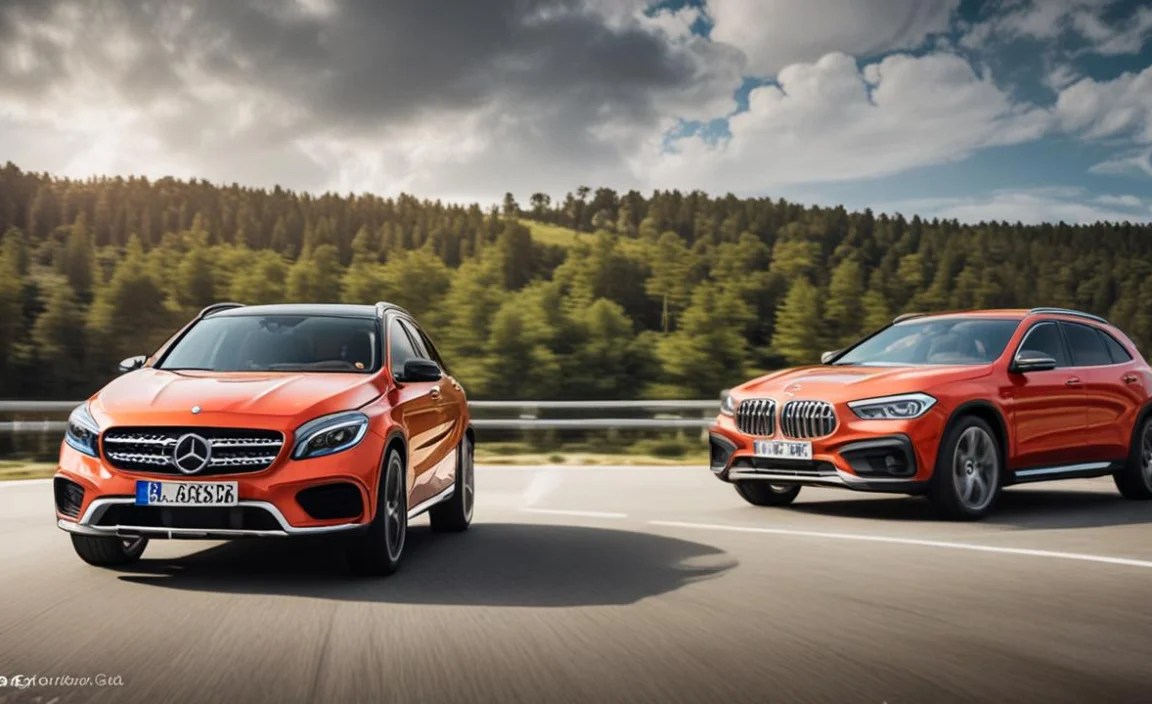
This is where the subtle differences in engineering philosophy become most apparent. Both offer engaging drives, but their character leans differently.
Mercedes-Benz GLA: Agile and Sporty
The GLA is engineered to feel nimble and engaging. In its standard GLA 250 configuration, it offers brisk acceleration from its turbocharged four-cylinder engine, paired with a smooth-shifting automatic transmission. The steering is precise and responsive, making it a joy to toss around corners. The ride can be firm, especially in sportier trims or with larger wheels, emphasizing its performance-oriented nature. For those seeking ultimate thrills, the Mercedes-AMG GLA models offer significantly more power and an even more dynamic, track-ready driving experience.
All-wheel-drive, Mercedes’s 4MATIC system, is widely available and enhances grip and stability, particularly in slippery conditions. Despite its SUV form, it drives more like a sport-tuned hatchback.
BMW X1: Refined and Capable
The BMW X1 typically employs a punchy turbocharged four-cylinder engine that provides more than enough power for daily driving and confident highway merging. Its transmission is smooth and responsive. While also offering agile handling thanks to BMW’s renowned chassis tuning, the X1 generally feels a bit more composed and less overtly sporty than the GLA. The ride is often a touch more compliant, making it a comfortable companion for longer journeys or rougher roads. It strikes an excellent balance between sporty engagement and everyday usability.
BMW’s xDrive all-wheel-drive system is also a popular option, delivering sure-footed performance. The X1 often feels more planted and predictable, offering a reassuring driving experience.
A comparative look at typical engine specifications (these can vary by model year and region):
| Feature | Mercedes-Benz GLA (e.g., GLA 250 4MATIC) | BMW X1 (e.g., xDrive28i / xDrive28i) |
|---|---|---|
| Engine Type | 2.0L Turbocharged Inline-4 | 2.0L Turbocharged Inline-4 |
| Horsepower (approx.) | 221 hp | 228 hp |
| Torque (approx.) | 258 lb-ft | 258 lb-ft |
| Transmission | 8-speed Dual-Clutch Automatic | 8-speed Steptronic Automatic |
| Drivetrain | Front-Wheel Drive or 4MATIC AWD | Front-Wheel Drive or xDrive AWD |
| 0-60 mph (approx.) | 6.8 – 7.1 seconds | 6.3 – 6.6 seconds |
For the absolute pinnacle of performance, the AMG variants of the Mercedes-AMG GLA push the boundaries significantly further than any standard X1 can.
Technology and Infotainment

In the luxury segment, technology is a crucial battleground. Both the GLA and X1 are well-equipped, but they offer different user experiences.
Mercedes-Benz GLA: MBUX Dominance
The GLA’s MBUX (Mercedes-Benz User Experience) system is its technological centerpiece. It’s known for its stunning graphics, intuitive voice control that understands natural language (“Hey Mercedes”), and seamless integration of features. The dual-screen setup provides a vast canvas for displays, navigation, and media. Apple CarPlay and Android Auto are standard, integrating your smartphone easily. The system is highly customizable, allowing drivers to tailor the interface to their preferences. Touch-sensitive controls on the steering wheel and the center console add to the high-tech feel, though they can require some adaptation.
BMW X1: User-Friendly iDrive
BMW’s iDrive system is a veteran in the infotainment world and remains one of the most user-friendly and responsive systems available. The combination of a touchscreen, a rotary dial controller on the center console, and voice commands offers multiple ways to interact with the system. It’s known for its logical menu structure and quick response times. Apple CarPlay and Android Auto are also standard, ensuring seamless smartphone integration. While it might not have the same “wow” factor as the GLA’s dual screens, iDrive is incredibly efficient and easy to master, which is invaluable for drivers who prioritize function and speed.
Common tech features you’ll find in both include:
- Standard:
- Apple CarPlay and Android Auto integration.
- Bluetooth connectivity.
- Multiple USB ports.
- Voice command functionality.
- Available:
- Navigation systems.
- Premium audio systems (e.g., Burmester in the GLA, Harman Kardon in the X1).
- Wireless charging pads.
- Heads-up displays.
Practicality and Space
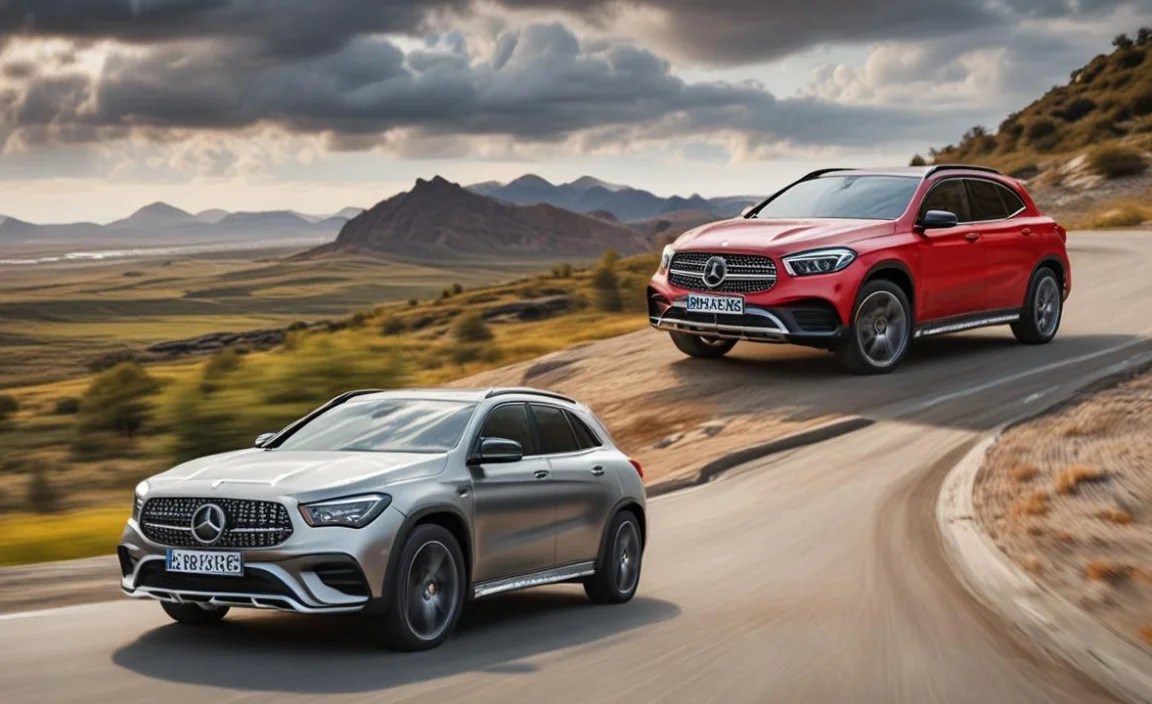
For many, a compact luxury SUV needs to be more than just stylish; it needs to be functional for everyday life.
Mercedes-Benz GLA: Compact Convenience
The GLA is designed for those who appreciate its manageable size, making it easier to park and maneuver in crowded urban environments. While its sloped roofline contributes to its sporty look, it can slightly impact rear headroom for taller passengers compared to the X1. The cargo area is adequate for most daily tasks, but it’s not the largest in its class. The interior offers thoughtful storage solutions, and the rear seats are comfortable for shorter journeys. It’s a great choice if your primary use case is city commuting with occasional trips.
BMW X1: Spacious and Versatile
The BMW X1 shines brightest when it comes to practicality and interior space. Its more upright design translates into generous passenger room, especially for rear-seat occupants, and a noticeably larger and more versatile cargo hold. The higher roofline and squarer rear tailgate make loading bulky items easier. The cabin feels airy and open, and the split-folding rear seats offer flexibility for carrying both passengers and gear. If you frequently transport family, pets, or larger items, the X1 presents a more compelling case for utility.
Let’s look at some typical cargo space figures:
| Feature | Mercedes-Benz GLA (approximate) | BMW X1 (approximate) |
|---|---|---|
| Cargo Space (behind rear seats) | ||
| Volume (cubic feet) | 15.4 – 16.7 cu ft. | 27.1 cu ft. |
| Cargo Space (rear seats folded) | ||
| Volume (cubic feet) | 43.6 – 50.5 cu ft. | 57.2 cu ft. |


