
Amazing Mercedes Radar Cruise by Model: Find Yours!
“`html
Mercedes Radar Cruise Control: A Model-by-Model Guide
Mercedes-Benz radar cruise control, also known as DISTRONIC, automatically adjusts your speed to maintain a safe following distance from the car ahead. It’s a sophisticated system that enhances driving comfort and safety. This guide breaks down how DISTRONIC works across different Mercedes models, helping you understand its features and benefits.
Ever wondered how your Mercedes seems to effortlessly maintain a safe distance on the highway? Or perhaps you’re considering a new Mercedes and want to understand the advanced driver assistance features? You’re not alone! Many drivers find the intricacies of radar cruise control systems a bit confusing. But don’t worry, we’ll walk you through the different versions of Mercedes’ radar cruise control (DISTRONIC) available on various models. We’ll cover everything from basic functionality to advanced features like Steering Assist and Active Lane Change Assist. Get ready to cruise with confidence!
What is Mercedes-Benz DISTRONIC?

DISTRONIC is Mercedes-Benz’s name for its adaptive cruise control system. It uses radar sensors to monitor the distance and speed of the vehicle in front of you. The system automatically adjusts your car’s speed to maintain a pre-set following distance, enhancing safety and convenience, especially on long drives.
How DISTRONIC Works: The Basics

DISTRONIC uses radar sensors, typically located in the front grille, to detect vehicles ahead. Here’s a simplified breakdown:
- Radar Sensors: Emit radar waves to measure the distance and speed of the vehicle in front.
- Control Unit: Processes the data from the radar sensors.
- Automatic Adjustment: Based on the data, the system accelerates or decelerates your car to maintain the set following distance.
DISTRONIC by Mercedes-Benz Model

The features and capabilities of DISTRONIC can vary depending on the Mercedes-Benz model and model year. Here’s a breakdown:
C-Class
The C-Class offers a standard DISTRONIC system that provides basic adaptive cruise control functionality. It maintains a set following distance and can bring the car to a complete stop in certain situations. Later models include Steering Assist.
E-Class
The E-Class typically features a more advanced version of DISTRONIC, often including Steering Assist, which helps keep the vehicle centered in its lane. Some models also offer Active Lane Change Assist.
S-Class
The S-Class boasts the most sophisticated DISTRONIC system, incorporating all available features, such as Steering Assist, Active Lane Change Assist, Route-Based Speed Adaptation, and more advanced emergency braking functions.
GLC/GLE/GLS SUVs
Mercedes SUVs like the GLC, GLE, and GLS offer DISTRONIC with similar capabilities as their sedan counterparts, depending on the trim level and options. Many include off-road optimization for the system.
Other Models
Models like the CLA, CLS, and various AMG versions also include DISTRONIC, with feature sets aligning with their respective class levels (entry-level, mid-level, or high-end).
Here’s a table summarizing the typical DISTRONIC features by model (note: this can vary by model year and optional packages):
| Model | DISTRONIC (Adaptive Cruise Control) | Steering Assist | Active Lane Change Assist | Route-Based Speed Adaptation |
|---|---|---|---|---|
| C-Class | Yes | Optional (Later Models) | No | No |
| E-Class | Yes | Yes | Optional | Yes |
| S-Class | Yes | Yes | Yes | Yes |
| GLC | Yes | Optional (Later Models) | No | No |
| GLE | Yes | Yes | Optional | Yes |
| GLS | Yes | Yes | Yes | Yes |
Key DISTRONIC Features Explained
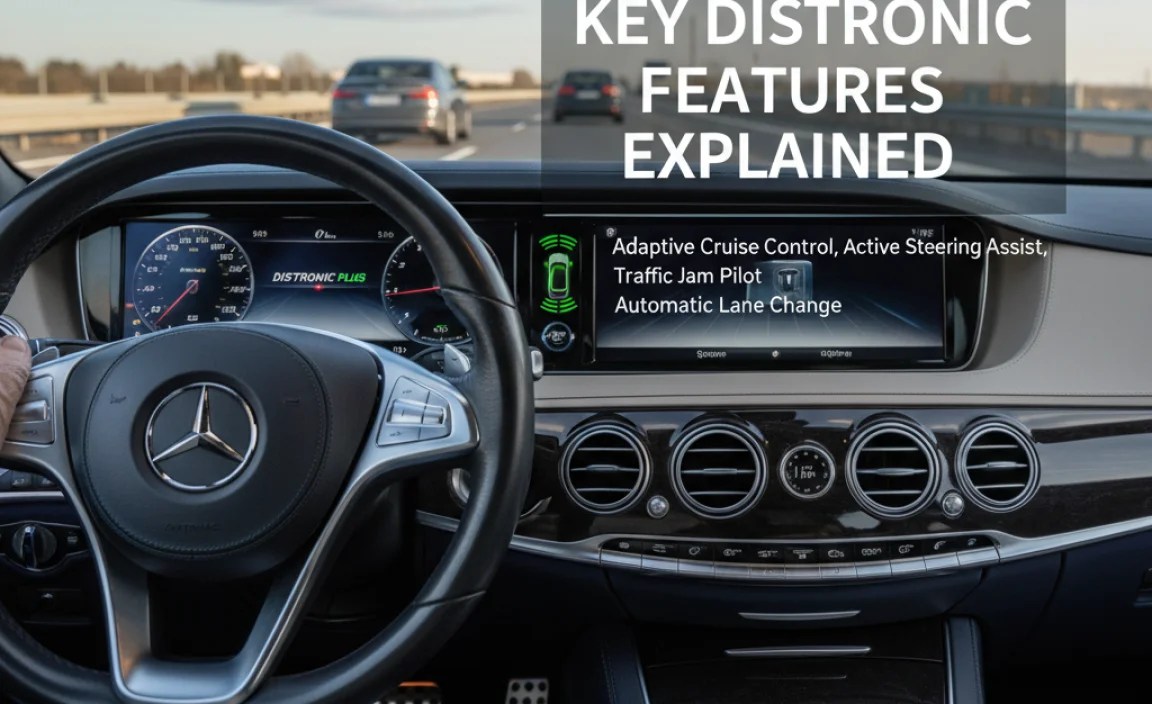
Let’s delve deeper into the individual features that make up the DISTRONIC system:
Adaptive Cruise Control
This is the core functionality. It maintains a set speed unless a slower vehicle is detected ahead. In that case, it automatically slows down to maintain the chosen following distance.
Steering Assist
Steering Assist uses cameras and sensors to detect lane markings and the vehicle ahead. It provides gentle steering inputs to help keep the car centered in its lane. This feature is particularly useful on long highway drives, reducing driver fatigue.
Active Lane Change Assist
Available on select models, Active Lane Change Assist can automatically change lanes for you. When you signal, the system checks for surrounding vehicles and, if safe, executes the lane change. This feature significantly enhances convenience and safety.
Route-Based Speed Adaptation
This intelligent feature uses navigation data to anticipate upcoming curves, intersections, and speed limit changes. It automatically adjusts the car’s speed to match the road conditions, providing a smoother and safer driving experience. This is particularly helpful in unfamiliar areas.
Traffic Sign Assist
Traffic Sign Assist uses a camera to read speed limit signs and displays the information on the instrument cluster. In conjunction with DISTRONIC, it can automatically adjust the vehicle’s speed to the posted limit.
How to Use Mercedes-Benz DISTRONIC

Using DISTRONIC is generally straightforward. Here’s a step-by-step guide:
- Activate the System: Press the DISTRONIC button, usually located on the steering wheel.
- Set Your Speed: Accelerate to your desired speed and then press the “SET” button.
- Adjust Following Distance: Use the following distance control (often a rotary dial or buttons on the steering wheel) to select your preferred distance from the vehicle ahead.
- Steering Assist (If Equipped): Activate Steering Assist via a separate button, usually located near the DISTRONIC controls.
Tips for Using DISTRONIC Effectively
- Be Aware: Always remain attentive and ready to take control of the vehicle. DISTRONIC is an assistance system, not a replacement for attentive driving.
- Weather Conditions: Be cautious when using DISTRONIC in adverse weather conditions such as heavy rain, snow, or fog. The radar sensors may have reduced visibility.
- Traffic Conditions: DISTRONIC performs best in steady highway driving. In stop-and-go traffic, be prepared to intervene.
- Understanding Limitations: DISTRONIC has limitations and may not react to all situations, such as stationary objects or pedestrians.
Troubleshooting Common DISTRONIC Issues
Sometimes, DISTRONIC may experience issues. Here are a few common problems and potential solutions:
- “DISTRONIC Inoperative” Message: This could be due to a blocked sensor, a system malfunction, or low battery voltage. Check the sensor area for obstructions and consult a Mercedes-Benz service center if the problem persists.
- Erratic Behavior: If DISTRONIC is behaving erratically, such as sudden braking or acceleration, disable the system immediately and seek professional assistance.
- Steering Assist Not Working: Ensure lane markings are clear and visible. The system may not function properly if lane markings are faded or obscured.
Keeping Your DISTRONIC System in Top Shape
Regular maintenance can help ensure your DISTRONIC system functions optimally:
- Keep Sensors Clean: Regularly clean the radar sensors located in the front grille to remove dirt, debris, and snow.
- Check for Damage: Inspect the sensors for any physical damage.
- Software Updates: Ensure your vehicle’s software is up to date. Software updates often include improvements and bug fixes for the DISTRONIC system. Check with your Mercedes-Benz dealer for available updates.
The Future of Mercedes-Benz Driver Assistance
Mercedes-Benz continues to innovate in the area of driver assistance technology. Future systems will likely include even more advanced features, such as enhanced object recognition, improved decision-making capabilities, and greater integration with navigation and traffic data.
Benefits of Using DISTRONIC
Here’s why you should consider using DISTRONIC in your Mercedes-Benz:
- Enhanced Safety: Helps prevent accidents by maintaining a safe following distance.
- Reduced Driver Fatigue: Makes long drives more comfortable and less tiring.
- Increased Convenience: Simplifies driving in highway conditions.
- Improved Fuel Efficiency: By maintaining a consistent speed, it can optimize fuel consumption.
DISTRONIC vs. Traditional Cruise Control
The key difference between DISTRONIC and traditional cruise control is that DISTRONIC adapts to the traffic around you. Traditional cruise control maintains a set speed regardless of other vehicles, requiring the driver to manually adjust speed and braking.
Is DISTRONIC Worth It?
For many Mercedes-Benz owners, DISTRONIC is a worthwhile investment. It enhances safety, reduces driver fatigue, and provides a more relaxed and enjoyable driving experience. If you frequently drive on highways or in stop-and-go traffic, DISTRONIC can be a valuable asset. Considering that safety is paramount, systems like DISTRONIC are becoming increasingly crucial for the modern driver. According to the National Highway Traffic Safety Administration (NHTSA), advanced driver-assistance systems (ADAS) show great promise in reducing crashes and saving lives. NHTSA Website
How to Determine if Your Mercedes Has DISTRONIC
Here are several ways to tell if your Mercedes-Benz is equipped with DISTRONIC:
- Check the Steering Wheel: Look for DISTRONIC buttons on the steering wheel. These buttons typically include a symbol of a car with a radar wave.
- Review Vehicle Options: Check your vehicle’s original window sticker or build sheet for the DISTRONIC option code.
- Consult the Owner’s Manual: The owner’s manual will provide information on all the features included in your vehicle.
- Check the Dashboard Display: When activated, DISTRONIC will display an icon on the instrument cluster.
Aftermarket DISTRONIC: Is It Possible?
While it may be technically possible to install an aftermarket DISTRONIC system in some vehicles, it’s generally not recommended. These systems may not integrate seamlessly with the vehicle’s existing electronics and could compromise safety. It’s always best to opt for a factory-installed DISTRONIC system.
Mercedes-Benz DISTRONIC: Model Year Changes
Mercedes-Benz frequently updates and improves its DISTRONIC system with each new model year. These updates may include enhanced features, improved performance, and greater reliability. When considering a Mercedes-Benz, it’s always a good idea to research the specific features available for the model year you’re interested in.
Understanding the Limitations of DISTRONIC
While DISTRONIC is a valuable driver assistance system, it’s important to understand its limitations:
- Not a Replacement for Attentive Driving: DISTRONIC is designed to assist, not replace, an attentive driver. Always remain alert and ready to take control of the vehicle.
- Limited Object Recognition: The system may not recognize all objects, such as pedestrians, cyclists, or animals.
- Weather Conditions: Adverse weather conditions can affect the performance of the radar sensors.
- Complex Traffic Situations: DISTRONIC may struggle in complex traffic situations, such as merging lanes or construction zones.
Tips for Optimizing DISTRONIC Performance
To get the most out of your Mercedes-Benz DISTRONIC system, consider these tips:
- Keep Sensors Clean: Regularly clean the radar sensors to ensure optimal performance.
- Adjust Following Distance: Experiment with different following distances to find the setting that best suits your driving style and traffic conditions.
- Familiarize Yourself with the System: Take the time to read the owner’s manual and understand all the features and limitations of DISTRONIC.
- Use in Appropriate Conditions: DISTRONIC performs best in highway driving and should be used with caution in stop-and-go traffic or adverse weather conditions.
DISTRONIC and Autonomous Driving
DISTRONIC is a key stepping stone towards fully autonomous driving. As technology advances, driver assistance systems like DISTRONIC will become increasingly sophisticated, eventually leading to self-driving vehicles. The continuous development of these systems is paving the way for a future where driving is safer, more convenient, and more efficient.
FAQ: Mercedes-Benz DISTRONIC
What is DISTRONIC PLUS?
DISTRONIC PLUS is an enhanced version of DISTRONIC that includes features like Steering Assist and Stop&Go Pilot, providing more comprehensive driver assistance.
Can DISTRONIC bring the car to a complete stop?
Yes, DISTRONIC can bring the car to a complete stop in certain situations, such as when the vehicle ahead stops. However, it is not a substitute for attentive driving.
How do I adjust the following distance in DISTRONIC?
You can adjust the following distance using the control buttons or rotary dial on the steering wheel, typically marked with icons representing different distances.
Does DISTRONIC work in stop-and-go traffic?
Yes, DISTRONIC can work in stop-and-go traffic, but it’s essential to remain attentive and ready to intervene as needed.
What happens if the DISTRONIC sensor is blocked?
If the DISTRONIC sensor is blocked, the system may become inoperative, and a warning message will appear on the dashboard. Clean the sensor to restore functionality.
Is DISTRONIC available on all Mercedes-Benz models?
DISTRONIC is available on most Mercedes-Benz models, but the specific features and capabilities may vary depending on the model and model year.
How does Steering Assist work with DISTRONIC?
Steering Assist uses cameras and sensors to detect lane markings and provides gentle steering inputs to help keep the car centered in its lane, working in conjunction with DISTRONIC’s speed and distance control.
Conclusion
Mercedes-Benz DISTRONIC is a sophisticated and valuable driver assistance system that enhances safety, reduces driver fatigue, and improves the overall driving experience. By understanding the features, benefits, and limitations of DISTRONIC, you can make the most of this advanced technology and enjoy a more relaxed and confident journey. Whether you’re a seasoned Mercedes-Benz owner or considering a new purchase, understanding DISTRONIC is key to appreciating the cutting-edge technology that Mercedes-Benz offers. From understanding the nuances of each model’s system to keeping your sensors clean, you are now well-equipped to confidently use and maintain your Mercedes-Benz DISTRONIC system.
“`


