
Rear Collision Prevention: Ultimate Safety
Quick Summary:
Rear collision prevention focuses on proactive driving habits, vehicle technology, and understanding your surroundings to avoid being hit from behind. Key strategies include maintaining safe following distances, checking mirrors, and utilizing advanced safety features in your Mercedes-Benz. Staying alert and defensive is your ultimate safety shield.
Nobody enjoys the jolt of a sudden stop, especially when it means another car might be about to crash into you. Rear-end collisions are among the most common types of accidents on the road. They can happen in a blink, often due to distracted driving or sudden braking. Fortunately, there are effective ways to prevent them, giving you peace of mind on every journey. This guide will walk you through simple yet crucial techniques to keep you safe from behind.
Understanding the Risks: Why Rear Collisions Happen

Rear collisions, or “fender benders” as they’re sometimes called, occur when a vehicle strikes the back of another. While they can range from minor inconveniences to serious incidents, the underlying causes are often consistent. Understanding these reasons is the first step toward prevention.
Common Causes of Rear-End Collisions:

- Following Too Closely (Tailgating): This is the leading cause. When you don’t leave enough space between your vehicle and the one in front, you have insufficient time to react if they brake suddenly.
- Distracted Driving: Texting, adjusting the radio, talking on the phone, or anything that takes your eyes off the road significantly increases risk. If you’re not looking, you won’t see the car ahead braking.
- Sudden Braking or Lane Changes by the Forward Vehicle: Sometimes, the vehicle ahead might slam on their brakes unexpectedly due to traffic, an obstacle, or a harsh maneuver.
- Poor Weather Conditions: Rain, snow, fog, or ice reduce tire traction and visibility, making it harder to stop quickly and increasing the likelihood of a collision when following too closely.
- Speeding: Traveling at excessive speeds reduces your reaction time and extends your stopping distance, making it harder to avoid a rear-end incident.
- Driver Fatigue: Being tired impairs judgment, slows reaction times, and can lead to dozing off, making you a hazard to yourself and others.
- Brake Failure or Malfunction: While less common, a sudden loss of braking ability in the vehicle ahead or behind can directly lead to a collision.
Proactive Driving Strategies for Rear Collision Prevention

While technology plays a significant role, your driving habits are your most powerful tool against rear-end collisions. Adopting a defensive driving mindset can drastically reduce your risk.
1. Master the Art of the “Three-Second Rule” (and Beyond)

- What it is: This is the golden rule for maintaining a safe following distance. Pick a stationary object (like a signpost or tree) that the vehicle in front of you passes. Start counting “one-thousand-one, one-thousand-two, one-thousand-three.” If you pass the same object before you finish counting, you’re too close.
- When to increase it: In adverse conditions (rain, snow, fog, heavy traffic, nighttime driving, or towing), extend this to four, five, or even six seconds. Visibility and stopping distances are compromised.
- Why it works: This buffer zone gives you ample time to react and stop smoothly if the vehicle in front brakes. It’s a simple yet incredibly effective habit.
2. Constant Mirror Checks
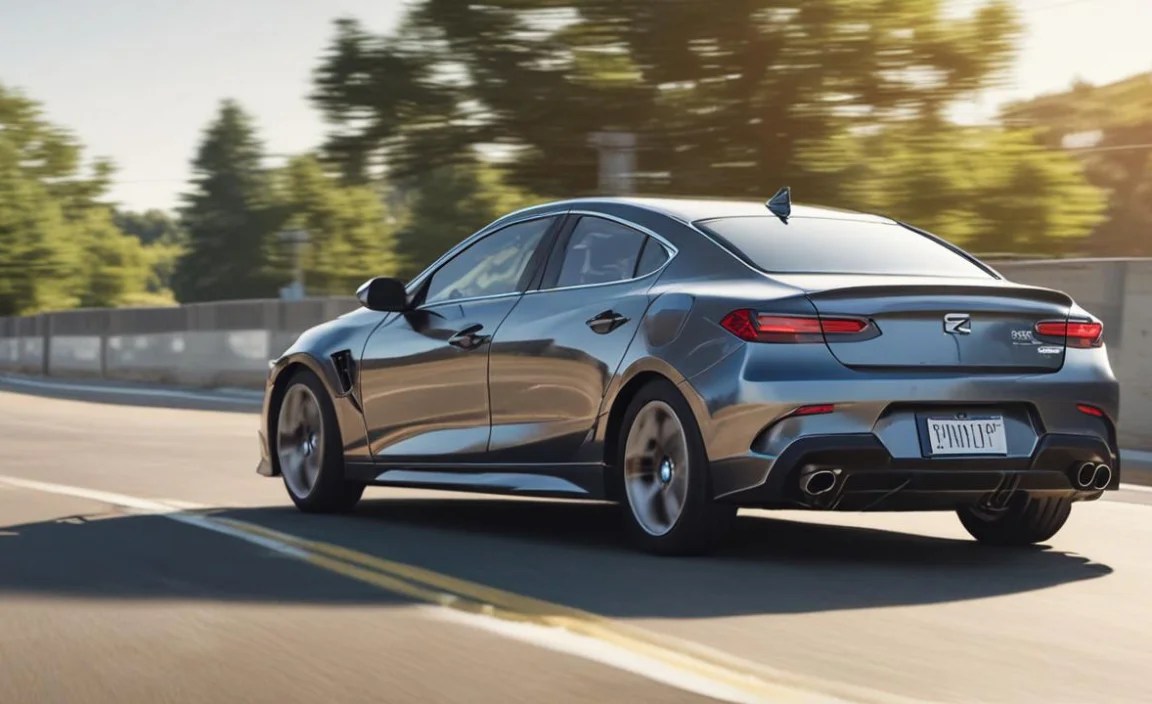
- Rearview Mirror: Glance at your rearview mirror every 5-8 seconds. This helps you gauge how close the car behind you is and if they’re maintaining a safe distance.
- Side Mirrors: Don’t forget your side mirrors. They provide crucial information about vehicles in your blind spots and to your sides.
- What to look for: Are the cars behind you keeping pace, or are they closing in rapidly? Is someone trying to merge into your lane?
3. Anticipate and Predict

Don’t just react; anticipate. Educate yourself about the driving behaviors of those around you. Look ahead not just at the car immediately in front, but at the traffic flow several cars ahead. Are brake lights appearing further up the road? Is there a merging lane ahead? This foresight allows you to adjust your speed and braking proactively, rather than abruptly.
4. Smooth Braking
Avoid slamming on your brakes unless absolutely necessary for an emergency. Gradual, smooth braking signals your intentions to the driver behind you and gives them more time to react. If you see traffic slowing ahead, begin to ease off the accelerator early and brake gently.
5. Signal Your Intentions Clearly

When changing lanes or merging, always use your turn signals well in advance. This alerts other drivers to your plans, giving them time to adjust their speed or position, thereby reducing the chance of a sudden, unexpected stop that could lead to a rear-end situation.
6. Be Aware of Your Surroundings

When stopped, look in your rearview mirror to see how close the car behind you is. If they are too close and you anticipate a potential impact, you might consider putting your vehicle in park, releasing the brake, and slightly rolling forward to create space, provided it’s safe to do so and doesn’t impede traffic. This is a last resort but can sometimes mitigate damage.
Leveraging Your Mercedes-Benz’s Advanced Safety Technology

Mercedes-Benz vehicles are renowned for their cutting-edge safety features. Understanding and utilizing these technologies can provide an extra layer of protection against rear collisions.
1. DISTRONIC PLUS® (Adaptive Cruise Control with Steering Assist)

This intelligent system goes beyond traditional cruise control. It automatically maintains a set speed and distance from the vehicle ahead. If the car in front slows down, DISTRONIC PLUS® brakes your vehicle; if it speeds up, your Mercedes accelerates. Many versions also include Steering Assist, helping to keep the vehicle centered in its lane.
How it helps prevent rear collisions: By continuously monitoring and adjusting your speed relative to the car ahead, it significantly reduces the risk of following too closely, especially in flowing traffic. It provides precise, timely braking without driver input.
2. Active Brake Assist (ABA)

Many modern Mercedes-Benz models are equipped with Active Brake Assist. This system can detect potential collisions with vehicles, pedestrians, or cyclists. If it detects an imminent collision and the driver doesn’t react, it can automatically initiate partial or full braking to mitigate the severity of the impact or prevent it altogether. It often works in conjunction with systems like DISTRONIC PLUS®.
How it helps prevent rear collisions: ABA acts as a critical safety net. Even if you don’t react in time, the car’s sophisticated sensors and braking system can intervene, potentially preventing a crash or significantly reducing its impact.
3. COLLISION PREVENTION ASSIST PLUS (CPA Plus)

This precursor to Active Brake Assist provides a visual warning if a collision risk is detected, followed by an audible warning. If the driver then brakes, CPA Plus can provide optimal brake force to avoid an accident. If the driver doesn’t respond and a collision is imminent, it can automatically apply the brakes.
How it helps prevent rear collisions: It gives you an earlier warning and can assist with braking, creating the necessary stopping power or distance to avert a collision.
4. Blind Spot Assist

While primarily focused on side-impact collisions, Blind Spot Assist can indirectly help with rear collision prevention. By alerting you to vehicles in your blind spots, it ensures you’re more aware of your surroundings. This awareness can help you make better decisions about lane changes and braking, reducing the likelihood of causing a situation where a car might rear-end you because you changed lanes unexpectedly.
5. Rearview Camera and Parking Sensors

These features are invaluable when reversing, but the sensors also provide audible warnings for objects approaching from behind while stationary or moving at low speeds (e.g., in heavy traffic or parking lots). Some advanced systems can even automatically apply brakes if an imminent collision is detected while reversing.
Maintaining Your Mercedes-Benz for Optimal Safety

Your vehicle’s safety systems rely on well-maintained components. Regular maintenance ensures these features function as intended.
Key Maintenance Checks:
- Brake System: Ensure your brake pads, rotors, and fluid are in excellent condition. Worn brakes significantly increase stopping distances.
- Tires: Properly inflated tires with adequate tread depth are crucial for grip and braking performance, especially in adverse weather.
- Sensors: Keep exterior sensors (radar, cameras) clean and free of dirt, ice, or debris. Blocked sensors can impair the performance of safety systems like Active Brake Assist and DISTRONIC PLUS®. Refer to your owner’s manual for cleaning instructions.
- Lights: Ensure your brake lights are functioning correctly. They are your primary way of signaling to others behind you that you are slowing down.
For a comprehensive understanding of your Mercedes-Benz’s specific safety systems and maintenance schedules, always consult your owner’s manual or a certified Mercedes-Benz service center.
When the Unthinkable Happens: What to Do in a Rear Collision

Despite your best efforts, rear collisions can still occur. Knowing what to do immediately afterward is essential for safety and handling the situation effectively.
- Stay Calm: The initial shock can be disorienting. Take a deep breath.
- Check for Injuries: Assess yourself and your passengers for any injuries. If anyone is hurt, call emergency services immediately.
- Move to Safety: If your vehicle is drivable and it’s safe to do so, move it to the side of the road, away from traffic. If not, turn on your hazard lights and stay in your vehicle if it’s safer than exiting into traffic (especially on a highway), or move to a safe location if possible.
- Call the Police: Unless it’s a very minor incident with no injuries and both parties agree to exchange information informally, it’s generally wise to have the police file a report.
- Exchange Information: Get the other driver’s name, address, phone number, insurance company, and policy number. Also, note their vehicle’s make, model, and license plate number.
- Document the Scene: Take photos of the damage to both vehicles, the surrounding area, road conditions, and license plates.
- Do Not Admit Fault: Stick to the facts when speaking with the other driver and the police. Let your insurance company handle liability.
Preventing Future Rear Collisions: A Summary of Best Practices
Rear collision prevention is a continuous effort, blending awareness, safe habits, and the intelligent use of your vehicle’s technology.
| Strategy | Description | Importance |
|---|---|---|
| Maintain Safe Following Distance | Use the 3-second rule, extending it in poor conditions. | Primary defense against sudden braking. |
| Scan Mirrors Regularly | Check rearview and side mirrors every 5-8 seconds. | Monitors traffic behind and to the sides. |
| Anticipate Traffic Flow | Look several cars ahead for potential hazards. | Allows for proactive, smooth adjustments. |
| Smooth Braking | Avoid abrupt stops; brake gently and progressively. | Signals intentions to following drivers. |
| Use Turn Signals | Signal lane changes and turns well in advance. | Informs other drivers of your intentions. |
| Utilize Mercedes-Benz Tech | Engage DISTRONIC PLUS®, Active Brake Assist, etc. | Provides an automated safety net and assistance. |
| Regular Maintenance | Ensure brakes, tires, and sensors are in top condition. | Keeps vehicle safety systems functioning optimally. |
Frequently Asked Questions About Rear Collision Prevention
Q1: What is the most common reason for rear-end collisions?

The most common reason is following too closely, also known as tailgating. This leaves insufficient space and time to react if the vehicle ahead stops suddenly.
Q2: How can I improve my chances of not being hit from behind?

The best ways include maintaining a safe following distance, checking your mirrors frequently to see who is behind you, signaling your intentions clearly, and driving smoothly without sudden braking or lane changes.
Q3: Are Mercedes-Benz safety features proactive or reactive?

Mercedes-Benz safety systems, like those found in our advanced driver-assistance suites, are often a combination of both. They are proactive in continuously monitoring the environment and can intervene reactively when a critical situation arises, such as automatic braking. Systems like DISTRONIC PLUS® are designed to proactively manage speed and distance.
Q4: What does “defensive driving” mean in the context of preventing rear collisions?

Defensive driving means actively anticipating potential hazards and taking steps to avoid them. For rear collisions, it involves being aware of traffic behind you, looking ahead for potential slowdowns, and driving in a way that gives you maximum space and time to react, rather than just reacting to immediate events.
Q5: Should I engage adaptive cruise control in heavy traffic?

Engaging adaptive cruise control (like DISTRONIC PLUS®) can be very beneficial in heavy traffic, as it automatically maintains a safe distance from the car ahead, reducing the need for constant braking and acceleration and helping to prevent rear-end situations. However, always remain attentive and ready to take over control if necessary.
Q6: What should I do if I see the car behind me is too close?

If a driver is following you too closely, try to change lanes when it is safe to do so to let them pass. If you cannot change lanes, avoid sudden braking. Instead, reduce your speed gradually to encourage them to slow down or create more space. If you anticipate a potential impact in a non-moving traffic situation, and it’s safe, you might consider slightly increasing the gap between your vehicle and the one in front.
Conclusion
Preventing rear collisions is within your control. By adopting a vigilant, defensive driving style, always maintaining a safe distance, and leveraging the advanced safety technologies your Mercedes-Benz offers, you significantly enhance your personal safety and the safety of others on the road. Remember, your awareness and proactive choices are the most powerful safety features you possess. Drive smart, drive safe, and enjoy every mile with the confidence that comes from being prepared.


