
Pickup Truck Towing vs SUV Towing Comparison: Ultimate Power
When it comes to hauling capability, pickup trucks generally offer superior towing power due to their robust chassis and drivetrain options. However, sophisticated SUVs, especially luxury models like Mercedes-Benz, can also handle significant loads, depending on their design and specific configurations. Understanding key specifications is crucial for making the right choice.
Choosing between a pickup truck and an SUV for towing involves more than just picking a vehicle with a trailer hitch. It’s a decision that impacts your capability, safety, and overall driving experience. Many factors come into play, and it’s easy to feel overwhelmed with specifications, ratings, and different types of equipment. Have you ever wondered which vehicle is truly the king of the hill when it comes to pulling power? This guide will demystify the towing capabilities of both pickup trucks and SUVs, focusing on what makes each distinct and when one might be a better fit than the other. We’ll break down the key differences, explore essential towing metrics, and help you understand which vehicle offers the “ultimate power” for your needs. Get ready to discover the towing strengths of these popular vehicle types.
Understanding Towing Terminology

Before we dive into the comparison, let’s clarify some important terms that are crucial for understanding towing capacity. Knowing these will help you make informed decisions and ensure you’re towing safely and legally.
Gross Vehicle Weight Rating (GVWR)
This is the maximum loaded weight a single vehicle (like your tow vehicle or your trailer) is designed to safely carry. It includes the weight of the vehicle itself, all passengers, fuel, cargo, and any accessories. For a trailer, GVWR is often found on a certification label on the trailer’s frame.
Curb Weight
This is the weight of the vehicle without any passengers, cargo, or fuel. It’s essentially the unladen weight of the vehicle as it rolls off the assembly line.
Gross Combined Weight Rating (GCWR)
This is the maximum allowable weight of the fully loaded tow vehicle and the fully loaded trailer combined. This is a critical number as exceeding it can lead to serious safety issues and potential vehicle damage. You can find GCWR information in your vehicle’s owner’s manual.
Towing Capacity
This is the maximum weight that your specific vehicle is designed to tow. It’s always less than the GCWR because it needs to account for the weight of the tow vehicle itself. Towing capacity is usually the metric most people refer to when discussing a vehicle’s “towing power.”
Payload Capacity
This refers to the maximum weight of passengers and cargo your vehicle can carry, including the tongue weight of a trailer. It’s important because the trailer’s tongue weight (the downward force the trailer tongue exerts on the hitch ball) counts towards your vehicle’s payload capacity.
Tongue Weight
The tongue weight is the vertical load that a trailer exerts on the towing vehicle’s hitch. It’s typically about 10-15% of the trailer’s total weight. Proper tongue weight is crucial for stability and safe towing.
The Core Differences: Pickup Trucks vs. SUVs

While both vehicle types can be equipped for towing, their fundamental designs lead to inherent differences in their towing capabilities and how they handle loads.
Pickup Trucks: Built for Brute Strength
Pickup trucks are designed with their primary purpose in mind: utility and hauling. They typically feature a body-on-frame construction, which means the truck’s body is bolted onto a separate, strong ladder frame. This robust construction provides excellent rigidity and durability, making them ideal for carrying heavy loads and towing substantial weight.
- Frame Strength: The ladder frame offers immense structural integrity, crucial for handling the stresses of heavy towing and off-road conditions.
- Drivetrain Options: Trucks are often available with more powerful engines (V8s, larger V6s, or even diesels) and heavy-duty transmissions and axles designed for sustained high-torque applications.
- Suspension: Leaf-spring rear suspension is common in many trucks, which is exceptionally well-suited for carrying heavy payloads in the bed and handling the weight of a loaded trailer.
- Towing Focus: Many pickup truck models are explicitly engineered with towing and hauling as a primary design consideration, often offering specific towing packages.
SUVs: Versatility with Varying Capabilities
SUVs, on the other hand, offer a blend of passenger comfort, cargo space, and towing ability. Modern SUVs often employ unibody construction, similar to passenger cars, which contributes to a smoother ride and better fuel efficiency. However, larger, more traditional SUVs might still use body-on-frame designs, giving them more truck-like towing capabilities.
- Construction: Most modern SUVs use unibody construction, which prioritizes ride comfort and handling but can sometimes limit extreme towing capacities compared to body-on-frame trucks.
- Engine Choices: SUVs offer a wide range of engines, from efficient 4-cylinders to powerful V8s and even some turbo-diesels that can deliver impressive towing performance. Luxury SUVs might feature sophisticated turbocharged V6 or V8 engines.
- Suspension: Coil-spring or air-suspension systems are more common in SUVs, designed to provide a comfortable ride but may require additional considerations for heavy towing.
- Versatility: SUVs often excel in their versatility, offering comfortable seating for passengers and ample cargo space when not towing, making them a popular choice for families who occasionally need to tow.
Towing Capacity: The Numbers Game

When comparing towing power, the numbers are paramount. Here’s how pickup trucks and SUVs generally stack up, and why.
Pickup Truck Towing Capacity
Generally, pickup trucks offer the highest towing capacities. Full-size and heavy-duty pickup trucks are engineered to handle the most demanding towing jobs. For example, a typical half-ton (e.g., Ford F-150, Ram 1500, Chevrolet Silverado 1500) can tow anywhere from 5,000 lbs to over 12,000 lbs, depending on the engine, configuration, and any optional towing packages. Heavy-duty trucks (e.g., Ford F-250/F-350, Ram 2500/3500, Chevrolet Silverado 2500HD/3500HD) can tow well over 20,000 lbs, with some exceeding 30,000 lbs when properly equipped for gooseneck or fifth-wheel towing.
These higher capacities are a direct result of their robust chassis, more powerful engine options (often including diesel), stronger transmissions, and heavy-duty suspension systems. Mercedes-Benz, while not traditionally known for pickup trucks in many global markets, has made waves with models like the X-Class pickup in select regions, though its capabilities are generally positioned in the mid-size truck segment.
SUV Towing Capacity
SUVs span a wider range of towing capabilities. Small to mid-size SUVs typically offer towing capacities between 1,500 lbs and 5,000 lbs, suitable for small trailers, pop-up campers, or jet skis. Larger, three-row SUVs and those with body-on-frame construction can achieve much higher ratings. For instance, a full-size luxury SUV like a Mercedes-Benz GLS or a Chevrolet Tahoe can tow between 7,000 lbs and 8,400 lbs when properly equipped.
Mercedes-Benz SUVs are engineered with advanced towing systems. For example, the Mercedes-Benz GLE and GLS models often come with optional trailer hitches and intelligent electronic aids designed to make towing more stable and secure. While these SUVs can tow a substantial load – easily handling a medium-sized travel trailer or a well-equipped horse trailer – they typically don’t reach the extreme towing figures of heavy-duty pickup trucks. Their strength lies in blending towing prowess with luxury, comfort, and advanced technology.
Typical Towing Capacity Ranges
| Vehicle Type | Typical Towing Capacity (lbs) | Primary Use Case |
|---|---|---|
| Compact SUV | 1,500 – 3,500 | Small utility trailers, kayaks, light campers |
| Mid-Size SUV | 3,500 – 6,500 | Medium trailers, small to medium boats, campers |
| Full-Size SUV (Unibody) | 5,000 – 8,500 | Large travel trailers, horse trailers (single/double axle) |
| Full-Size SUV (Body-on-Frame) | 6,000 – 10,000+ | Heavy travel trailers, larger boats, significant loads |
| Light-Duty Pickup Truck (e.g., 1500 series) | 5,000 – 13,000+ | Most travel trailers, campers, utility trailers |
| Heavy-Duty Pickup Truck (e.g., 2500/3500 series) | 12,000 – 30,000+ | Fifth-wheel trailers, gooseneck trailers, large RVs, heavy equipment |
Key Features That Influence Towing Power

Beyond the basic chassis type, several components and systems play a vital role in a vehicle’s towing capability.
Engine Power and Torque
Towing requires significant power to get a heavy load moving and maintain speed, especially on inclines. Torque, the rotational force produced by an engine, is especially important for towing. Higher torque, particularly at lower RPMs, allows a vehicle to accelerate heavy loads more easily and climb hills without struggling.
- Gasoline Engines: Modern V6 and V8 gasoline engines, especially turbocharged ones, offer a good balance of power and torque for many towing needs.
- Diesel Engines: Diesel engines are renowned for their immense torque output at low RPMs, making them ideal for heavy-duty towing. Many heavy-duty pickups come with powerful turbo-diesel options.
- Mercedes-Benz Engines: Luxury vehicles like Mercedes-Benz SUVs often feature sophisticated turbocharged inline-6 or V8 engines that produce substantial torque, enabling impressive towing performance while maintaining refinement.
Transmission
The transmission is the bridge between the engine’s power and the wheels. For towing, a robust transmission with a sufficient number of gears is beneficial. Lower gears provide the mechanical advantage needed to start heavy loads moving, while higher gears allow for more efficient cruising at highway speeds.
- Transmission Cooling: A dedicated transmission cooler is essential for towing, as the increased strain generates more heat, which can damage the transmission over time. Many vehicles with higher towing capacities come with integrated transmission coolers.
- Tow/Haul Mode: Many modern trucks and SUVs feature a “Tow/Haul” mode. This setting alters the transmission’s shift points, holding gears longer to keep the engine in its power band and using engine braking more effectively on descents.
Suspension and Chassis
The suspension system and the underlying chassis are critical for stability when towing. As previously mentioned, body-on-frame construction (typical for trucks and some larger SUVs) offers superior strength and rigidity for towing.
- Rear Axle Ratio: A lower rear axle ratio (e.g., 3.73 or 4.10) provides more torque to the wheels, which is advantageous for accelerating heavy loads. A higher ratio (e.g., 3.08 or 3.31) is better for fuel economy and lighter loads.
- Heavy-Duty Suspension Components: Trucks and some SUVs designed for towing often have upgraded shocks, springs, and stabilizers to handle the added weight and leverage of a trailer.
- Air Suspension: Some luxury SUVs, such as Mercedes-Benz models, offer adaptive or air suspension systems. These can automatically adjust ride height and stiffness, which can help level the vehicle when a trailer is attached and improve ride comfort.
Braking Systems
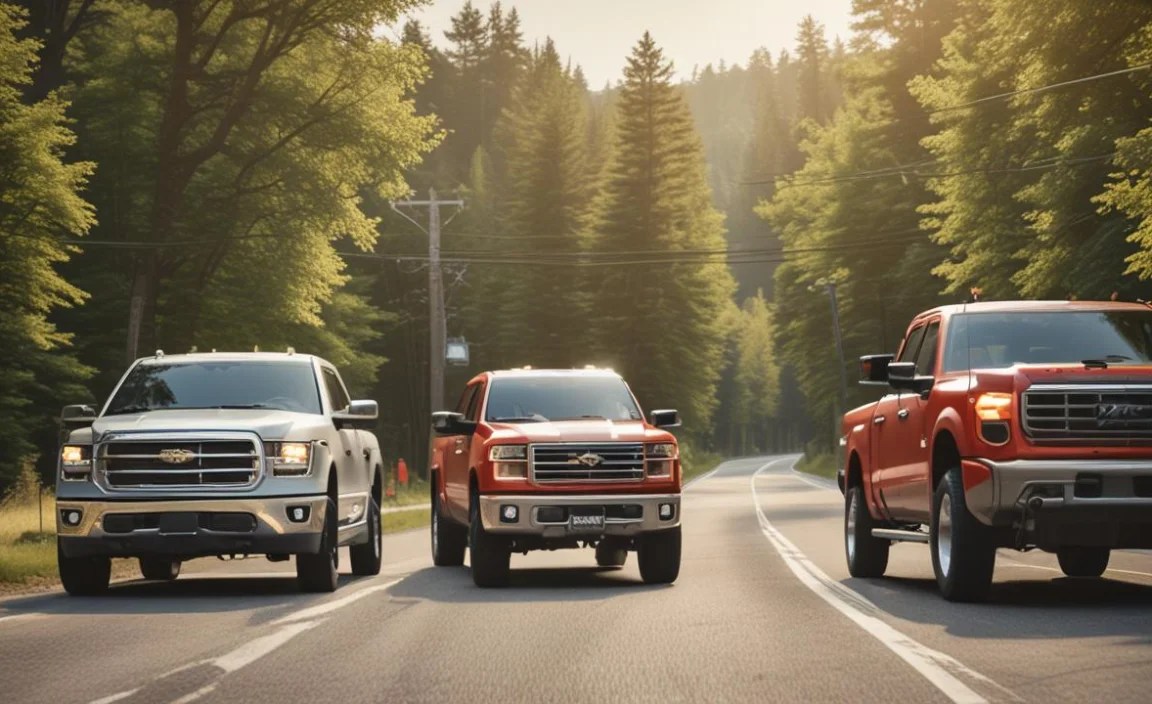
It’s not just about going; it’s about stopping safely. The towing vehicle’s brakes work in conjunction with the trailer’s brakes (if equipped) to bring the entire rig to a halt.
Integrated Trailer Brake Controller
An integrated trailer brake controller allows the driver to manage the trailer’s braking system directly from the vehicle. This ensures smoother and more synchronized braking, especially when towing heavy loads. It reduces stopping distance and enhances overall control, making towing significantly safer.
Trailer Sway Control Systems
Modern vehicles, especially SUVs like Mercedes-Benz models, often include trailer sway control. This system detects unwanted trailer movement and automatically applies braking or adjusts engine power to stabilize the vehicle. It is a critical safety feature for highway towing.
Choosing the Right Vehicle for Your Towing Needs
Selecting between a pickup truck and an SUV depends largely on how you plan to use the vehicle.
When to Choose a Pickup Truck
Pickup trucks are ideal if you:
- Regularly tow heavy loads (over 10,000 lbs)
- Need maximum towing capacity
- Frequently haul equipment or construction materials
- Require durability for demanding tasks
When to Choose an SUV
SUVs are better suited if you:
- Need a balance between towing and daily comfort
- Transport passengers regularly
- Tow moderate loads occasionally
- Prefer advanced technology and luxury features
Safety Tips for Towing
Towing safely is just as important as choosing the right vehicle.
- Always stay within your vehicle’s towing capacity
- Distribute weight properly to maintain balance
- Check tire pressure on both vehicle and trailer
- Use mirrors or cameras for better visibility
- Practice driving with a trailer before long trips
Safe towing ensures both performance and peace of mind.
Common Towing Mistakes to Avoid
Many drivers overlook simple mistakes that can lead to serious issues.
- Exceeding towing or payload limits
- Ignoring tongue weight balance
- Not using trailer brakes when required
- Skipping regular maintenance checks
- Driving too fast while towing
Avoiding these mistakes improves safety and vehicle longevity.
Conclusion
When comparing pickup trucks and SUVs for towing, the answer ultimately depends on your specific needs. Pickup trucks clearly dominate in terms of raw towing power, thanks to their rugged construction, powerful engines, and heavy-duty components. They are the best choice for hauling extremely heavy loads or handling demanding tasks.
On the other hand, SUVs—especially premium models like Mercedes-Benz—offer a compelling balance of capability, comfort, and versatility. While they may not match the maximum towing limits of heavy-duty trucks, they provide more than enough power for most everyday towing needs, combined with superior ride quality and advanced technology.
Understanding towing specifications, vehicle design, and real-world usage is key to making the right decision. Whether you prioritize strength or versatility, choosing the right vehicle ensures a safer, smoother, and more efficient towing experience.
Frequently Asked Questions (FAQs)
Q1: Can an SUV tow as much as a pickup truck?
Generally, no. Pickup trucks—especially heavy-duty models—have higher towing capacities due to their stronger frames and more powerful engines. However, large SUVs can still tow substantial loads.
Q2: What is the most important factor in towing capacity?
Engine torque is one of the most important factors, along with chassis strength, transmission, and suspension setup.
Q3: Are Mercedes-Benz SUVs good for towing?
Yes, models like the GLE and GLS offer strong towing capabilities combined with advanced safety features and luxury comfort.
Q4: Do I need trailer brakes for towing?
Yes, for heavier loads, trailer brakes are essential. They improve stopping power and overall safety, especially at higher speeds.
Q5: What happens if I exceed towing capacity?
Exceeding towing limits can cause engine strain, brake failure, poor handling, and serious safety risks. It can also damage your vehicle.
Q6: Is towing with an SUV harder than with a truck?
Not necessarily, but trucks generally provide better stability for very heavy loads. SUVs are easier to drive daily and can handle moderate towing efficiently.
Q7: What is tongue weight and why is it important?
Tongue weight is the downward force the trailer places on the hitch. Proper tongue weight ensures stability and prevents trailer sway.


