
Mercedes SUV Autopilot Features: Ultimate Driving
Mercedes SUV Autopilot Features: Ultimate Driving
Explore the advanced driver-assistance systems in Mercedes-Benz SUVs. Learn how to use features like DISTRONIC PLUS with Steering Assist and Active Lane Keeping Assist for a more relaxed and confident driving experience, enhancing safety and comfort on every journey.
Driving a Mercedes-Benz SUV should feel like a seamless extension of your will, an effortless glide through your day. But with the rapid advancements in automotive technology, understanding all the sophisticated systems designed to assist you can sometimes feel a bit overwhelming. Many owners wonder about the semi-autonomous capabilities, often referred to colloquially as “autopilot,” and how they enhance their driving experience. You’re not alone if you want to demystify these features and learn to use them confidently. This guide will break down the key “autopilot” functionalities in your Mercedes-Benz SUV, making them easy to understand and master for ultimate driving pleasure.
Frequently Asked Questions
What does “Autopilot” mean in a Mercedes-Benz SUV?
In a Mercedes-Benz SUV, “Autopilot” isn’t a fully autonomous system that lets you sleep or read. Instead, it refers to a suite of advanced driver-assistance systems (ADAS) that help with steering, acceleration, braking, and navigation. These systems enhance safety and reduce driver fatigue, but always require your active supervision.
Are Mercedes-Benz SUV “Autopilot” features standard or optional?
Many advanced driver-assistance systems are part of optional packages, such as the Driving Assistance Package Plus. Some basic features might be standard depending on the model and trim level. It’s always best to check your specific vehicle’s window sticker or consult your owner’s manual to confirm which features your SUV is equipped with.
What is DISTRONIC PLUS with Steering Assist?
DISTRONIC PLUS with Steering Assist is a system that combines adaptive cruise control and lane-keeping assist. It can help maintain a set speed and distance from the vehicle ahead, and it can also actively help you stay in your lane by subtly assisting with steering, especially on curves.
How does Active Lane Keeping Assist work?
Active Lane Keeping Assist uses cameras to monitor lane markings. If you unintentionally drift out of your lane, it can apply gentle braking to one side of the vehicle to steer you back into your lane. It can also vibrate the steering wheel to alert you.
Can Mercedes-Benz SUV “Autopilot” drive itself in traffic jams?
Yes, systems like Active Traffic Jam Assist can significantly assist you in heavy, slow-moving traffic. They can manage acceleration, braking, and even steering at speeds up to a certain limit (typically around 37 mph or 60 km/h), making stop-and-go situations far less stressful.
How do I know if my Mercedes-Benz SUV has “Autopilot” features?
Look for buttons on your steering wheel related to cruise control and lane keeping. Icons on your dashboard, such as a car within lane lines or a speedometer with other indicators, will also signal the availability and activation of these systems. Your owner’s manual is the definitive guide for your specific model.
Is it safe to rely on these “Autopilot” features?
These systems are designed to assist, not replace, the driver. It is crucial to keep your hands on the steering wheel and remain attentive to your surroundings. Mercedes-Benz systems are sophisticated and highly reliable, but they have limitations and cannot react to every potential hazard. Always be prepared to take over control immediately.
Understanding Mercedes-Benz SUV “Autopilot” Features

The term “Autopilot” might conjure images of science fiction, where a car drives itself from point A to point B without any human intervention. While current Mercedes-Benz SUV technology is incredibly advanced, it’s important to understand that these systems are designed as driver assistance features, not fully autonomous driving capabilities. They are meant to make your driving more comfortable, less fatiguing, and safer, but they always require your active attention and supervision.
Think of them as highly intelligent co-pilots, ready to lend a hand when needed, whether it’s maintaining speed and distance in highway traffic or gently guiding you back into your lane. By understanding and utilizing these features correctly, you can unlock a new level of relaxation and confidence behind the wheel of your Mercedes-Benz SUV.
Key “Autopilot” Features Explained
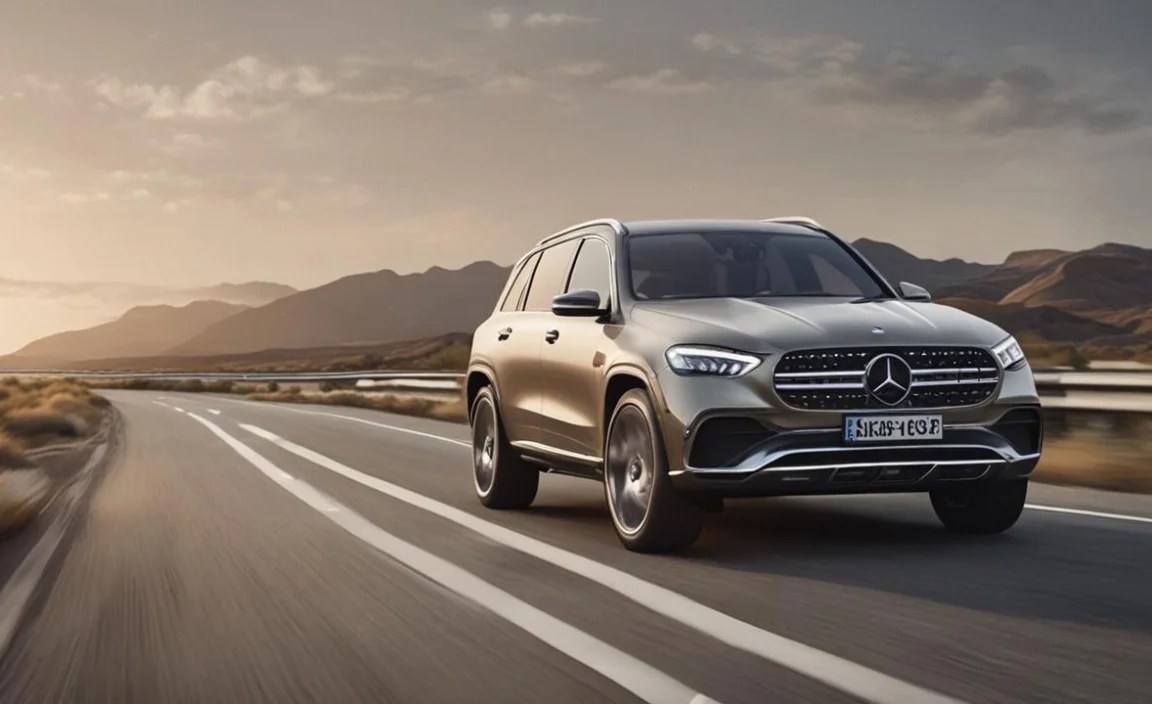
Mercedes-Benz equips its SUVs with a suite of intelligent systems to enhance the driving experience. These are often bundled within packages like the Driving Assistance Package or Driving Assistance Package Plus. Here are some of the most significant ones you’ll find:
1. DISTRONIC PLUS with Steering Assist
This is the cornerstone of Mercedes-Benz’s semi-autonomous driving capabilities. It integrates two crucial functions:
- Adaptive Cruise Control (ACC): Unlike traditional cruise control that maintains a set speed, DISTRONIC PLUS maintains a set speed AND a predetermined distance from the vehicle in front of you. If the car ahead slows down, your Mercedes will automatically decelerate. When it speeds up or moves out of the way, your SUV will accelerate back to your set speed. It uses radar sensors to monitor traffic ahead.
- Steering Assist: This function uses cameras to detect lane markings and the position of other vehicles. It gently intervenes by providing steering input to help keep your SUV centered within its lane. This is particularly helpful on highways and well-marked rural roads. It works in conjunction with DISTRONIC PLUS, assisting not just with speed and distance but also with keeping you on the right path.
2. Active Lane Keeping Assist
While DISTRONIC PLUS assists with steering, Active Lane Keeping Assist is a more direct intervention for lane discipline. It works even when DISTRONIC PLUS is not active.
- How it works: Cameras monitor the road to identify lane markings. If the system detects that your vehicle is unintentionally drifting out of its lane (e.g., without the turn signal being activated), it will alert you.
- Intervention: The alert can come in the form of a vibration in the steering wheel or a visual warning on the instrument cluster. In many cases, the system will also apply gentle braking to one side of the vehicle, nudging it back towards the center of the lane.
- Limitations: This system relies heavily on clear lane markings. It may not function optimally in poor weather conditions, during road construction, or on poorly demarcated roads.
3. Active Blind Spot Assist
This system significantly enhances safety by monitoring the blind spots on both sides of your vehicle.
- Detection: Using radar sensors, it detects vehicles in your blind spot.
- Warning: If you activate your turn signal to change lanes while a vehicle is detected in your blind spot, a visual warning will appear in the side-view mirror, and an audible warning will sound.
- Intervention: In critical situations, the system can also actively intervene by applying individual wheel braking to help prevent a collision when changing lanes.
4. Active Brake Assist
Often referred to as collision prevention assist, this is a vital safety feature designed to help avert or mitigate the severity of frontal collisions.
- Detection: It uses radar and camera systems to detect vehicles, pedestrians, and cyclists ahead.
- Warning: If a potential collision risk is identified, the system will first provide a visual warning, followed by an audible alert.
- Braking: If the driver doesn’t respond to the warnings, Active Brake Assist will automatically apply partial or full braking force to help prevent the collision or reduce its impact.
5. Active Parking Assist PARKTRONIC
While not strictly “autopilot” in the sense of steering on the highway, this system represents intelligent automation for a common driving task: parking.
- Functionality: This system can help you find suitable parking spaces (parallel and perpendicular) and then automatically steer the vehicle into them. Some advanced versions can also control acceleration, braking, and gear changes.
- Operation: You typically activate the system, select the parking maneuver, and then control the pedals (or the system does it all in fully automated versions) while it expertly maneuvers your SUV into the spot.
6. Active Traffic Jam Assist
For those who frequently encounter stop-and-go highway traffic, this is a game-changer. It builds upon DISTRONIC PLUS and Steering Assist.
- Speed Range: It operates at speeds up to approximately 37 mph (60 km/h) on highways.
- Benefits: The system can automatically keep the vehicle within its lane, maintain a safe distance from the vehicle ahead, and even initiate a crawl function to move along with traffic. This significantly reduces the stress and fatigue associated with congested driving conditions.
- Driver Engagement: Even with this advanced system, the driver must remain attentive, with hands on the steering wheel, ready to take over at any time. The system will prompt the driver to resume active driving if it detects the driver is inattentive.
How to Use Mercedes-Benz SUV “Autopilot” Features

Mastering these advanced systems is straightforward once you understand their activation and controls. The primary controls for these features are typically located on the steering wheel.
Activating DISTRONIC PLUS and Steering Assist
The controls for DISTRONIC PLUS and Steering Assist are usually grouped together on the left side of the steering wheel. You’ll typically find buttons to:
- Set Speed: A button to set your desired cruising speed.
- Adjust Distance: Buttons to increase or decrease the following distance from the vehicle ahead. You often have several levels of distance to choose from.
- Activate/Deactivate: A main button to turn the system on or off.
Once activated, you’ll see indicators on your dashboard showing that DISTRONIC PLUS is active, the set speed, and the selected following distance. When Steering Assist is also engaged (often indicated by steering wheel icons), the system will also actively help you stay within your lane.
Using Active Lane Keeping Assist
Active Lane Keeping Assist is often integrated with the DISTRONIC PLUS controls but can also be activated or deactivated independently. Look for a button with a car-and-lane icon.
- To turn it ON: Press the button. You will see a visual indicator change on your dashboard, often showing steering wheel icons or lane outlines in green or white.
- To turn it OFF: Press the button again.
- Driver Input: Remember, you must keep your hands on the steering wheel for the system to function. Most Mercedes systems have sensors in the steering wheel that detect your grip. If you remove your hands for too long, you’ll receive a warning.
Engaging Active Traffic Jam Assist
This advanced system usually requires DISTRONIC PLUS and Active Lane Keeping Assist to be active. The activation might be a single press of a button or integrated into them. Once conditions are met (e.g., slow-moving traffic on a highway), the system will indicate its readiness and will take over steering, acceleration, and braking within its operational limits.
Understanding Dashboard Indicators
Your instrument cluster is your primary guide. Pay close attention to the visual cues:
| Icon | Meaning |
|---|---|
| Speedometer with lines/car | DISTRONIC PLUS is active, showing set speed and distance. |
| Steering wheel icon (green/white) | Steering Assist is actively helping maintain lane position. |
| Flashing steering wheel or lane lines | Driver attention is required; hands should be on the wheel. |
| Red flashing warning light | Imminent collision risk; immediate driver action required. |
Best Practices and Safety Tips

While these “autopilot” features are designed to make driving easier and safer, their effective use hinges on responsible operation. Here are some essential best practices:
- Always Be Attentive: This cannot be stressed enough. These are assistance systems. Your responsibility as the driver is paramount. Keep your eyes on the road, your hands on the wheel, and your mind engaged.
- Know Your System’s Limitations: These systems rely on sensors, cameras, and radar. They can be affected by adverse weather conditions (heavy rain, snow, fog), poor road markings, bright sunlight, or debris.
- Read Your Owner’s Manual: Your specific Mercedes-Benz SUV has a detailed owner’s manual that explains precisely how each system functions, its limitations, and how to operate it in various scenarios. Familiarize yourself with it. Mercedes-Benz official resources, like the Mercedes-Benz USA Owner’s Manuals, are excellent sources for detailed information.
- Start Slow: When you first get your vehicle or are learning new features, practice in low-traffic, familiar environments. Gradually increase your exposure to different driving conditions.
- Hands on the Wheel Requirement: Most systems will alert you if you remove your hands from the steering wheel for too long. This is a critical safety feature.
- Understand When Not to Use: Avoid using these systems in complex urban environments (unless specifically designed for it like Active Traffic Jam Assist under strict conditions), on winding rural roads with poor visibility, or in any situation where you feel uncertain about the system’s performance.
- Regular Maintenance: Ensure your vehicle’s sensors and cameras are clean and free of obstruction. Dirt, snow, or damage can impair their function.
- System Resets: In some cases, after a significant impact or system malfunction, the driver assistance systems may need to be recalibrated by a qualified Mercedes-Benz technician.
The Future of Driving: Mercedes-Benz Innovation

Mercedes-Benz is at the forefront of automotive innovation, continually pushing the boundaries of what’s possible with intelligent driving systems. Features like DISTRONIC PLUS with Steering Assist and Active Traffic Jam Assist are stepping stones towards the future of autonomous driving.
The brand’s commitment to safety and comfort is evident in the meticulous engineering of these technologies. As the underlying technology matures, we can expect even more sophisticated systems that integrate seamlessly into our driving lives, offering greater convenience and enhanced safety. For instance, the drive towards Level 3 autonomy, where the car can handle certain driving tasks without driver intervention under specific conditions (like on highways with traffic jams), is an active area of development for manufacturers like Mercedes-Benz.
Understanding and responsibly using the current “autopilot” features in your Mercedes-Benz SUV is not just about convenience; it’s about embracing the cutting edge of automotive technology and experiencing driving in a more relaxed, assured manner. The goal is always to enhance the connection between the driver, the car, and the road, making every journey a testament to luxury, safety, and intelligent design.
Conclusion: Achieving the Ultimate Driving Experience
Navigating the advanced “autopilot” features within your Mercedes-Benz SUV can transform your driving. From the adaptive cruise control of DISTRONIC PLUS to the lane-centering help of Steering Assist and the traffic-taming prowess of Active Traffic Jam Assist, these systems are engineered to elevate your comfort and safety. Remember, they are powerful aids designed to work with you, not replace you. By understanding their functionality, practicing safe usage, and always remaining attentive, you can unlock the full potential of your Mercedes-Benz SUV, making every drive on highways and byways a more relaxed, confident, and ultimately superior experience. Embrace these intelligent systems and enjoy the ultimate drive.


