
Mercedes GLA Taillight Design: Stunning & Essential
The Mercedes GLA taillight design is a striking blend of form and function, crucial for both the vehicle’s iconic look and vital safety. These lights enhance the GLA’s sporty silhouette while ensuring visibility and signaling intent clearly to other road users.
The rear of any car tells a story, and for the Mercedes-Benz GLA, its taillights are a significant chapter. They’re not just about illumination; they’re a key element of the SUV’s distinctive aesthetic, contributing to its modern, athletic presence. But beyond their visual appeal, these lights are a critical safety feature, essential for communicating your presence and intentions to other drivers, especially in challenging light conditions.
Many owners find themselves curious about the intricacies of this design – what makes it so special? Perhaps you’re interested in the technology, the evolution of GLA taillight styles, or even common maintenance questions. Understanding these details can enhance your appreciation for your vehicle and ensure its optimal performance and safety.
Fear not! We’re about to dive deep into the world of Mercedes GLA taillight design. We’ll explore what defines them, their technological advancements, and why they are considered so essential. Get ready to see the GLA’s rear end in a whole new light. Let’s illuminate the path forward.
Frequently Asked Questions about Mercedes GLA Taillight Design
What makes Mercedes GLA taillights stand out compared to other cars?

Mercedes GLA taillights are designed to be distinctive, often featuring a sleek, elongated shape that complements the vehicle’s dynamic lines. They commonly utilize advanced LED technology for crisp, bright illumination and quick response times, as well as sophisticated light graphics that are instantly recognizable as Mercedes-Benz.
Are all Mercedes GLA taillights the same across different model years?

No, taillight designs can evolve with model year updates and generational changes. While the core Mercedes-Benz design language remains, specific details like the internal LED layout, the outer lens shape, and the integration with the overall bodywork can differ between the first-generation GLA (X156) and the second-generation GLA (H247).
What is the primary function of the taillights beyond just being lights?

Beyond illuminating when the headlights are on (rear parking lights) and providing brake light function, GLA taillights also house the turn signals (indicators) and, in many models, the reverse lights. Functionally, they are essential for safety, ensuring other road users can see your vehicle, know when you are braking, turning, or reversing.
How long do LED taillights on a Mercedes GLA typically last?

LEDs are known for their longevity. While specific lifespan varies based on usage and quality, LED taillights on a Mercedes GLA can often last for the vehicle’s lifetime, far exceeding the lifespan of traditional incandescent bulbs. They are generally considered maintenance-free in terms of bulb replacement.
Can I upgrade my Mercedes GLA’s taillights to a different design?

While aftermarket options exist, it’s crucial to ensure any upgrade is compliant with local regulations and safety standards. Genuine Mercedes-Benz accessories or professionally installed, certified aftermarket parts are recommended to maintain the vehicle’s integrity and safety. Improper modifications can affect electrical systems and vehicle safety.
What does it mean if my Mercedes GLA taillight is dim or flickering?

Dim or flickering taillights often indicate an issue with the LED module, the wiring harness, or potentially a problem with the vehicle’s control module. It’s advisable to have this checked by a qualified Mercedes-Benz technician, as LED systems are integrated and require specialized diagnostics.
Where can I find official information or diagrams for my GLA’s taillight system?

Official information, including technical diagrams and part numbers, can be found in your Mercedes-Benz owner’s manual or through the Mercedes-Benz Electronic Parts Catalog (EPC). Your local Mercedes-Benz dealership service department can also provide access to this information and assist with any service needs.
The Mercedes GLA Taillight Design: More Than Just Lights

When you look at a Mercedes-Benz GLA, the rear end immediately strikes you with its sophisticated integration of design elements. The taillights are central to this impression. They aren’t simply functional components bolted on; they are sculpted to flow seamlessly with the vehicle’s body lines, enhancing its sporty and compact SUV character. This meticulous attention to detail is a hallmark of Mercedes-Benz design philosophy, where aesthetics and engineering converge.
The GLA’s taillights typically adopt a multi-functional LED configuration. This means that a single unit, segmented by internal divisions, houses various lighting functions: rear fog lamps, brake lights, turn signals, and reversing lights. This efficiency in design is not only space-saving but also contributes to a cleaner, more organized rear visual. The graphical elements within the LEDs are also a signature, often featuring specific patterns that are instantly recognizable even from a distance.
Evolution of the GLA Taillight Design

The Mercedes-Benz GLA has seen a couple of generations, and with each, the taillight design has subtly evolved, reflecting advancements in lighting technology and shifting design trends.
- First Generation (X156, 2013-2020): The initial GLA featured taillights that were relatively slim and swept back, emphasizing the vehicle’s width and dynamic stance. They incorporated LED elements for key functions, contributing to a modern look for their time, though some had more bulb-based components in specific areas depending on the market. The graphics were distinct but perhaps less intricate than later iterations.
- Second Generation (H247, 2020-Present): The current generation saw a significant refinement. The taillights became even more sculpted, closely integrated into the bodywork and often featuring a more complex, multi-segment LED configuration. The light signature became more pronounced, with sharper, more defined graphics that enhance the vehicle’s premium appeal and improve visibility. The overall look is sleeker, wider, and more assertive, perfectly aligning with the GLA’s position as a sporty compact SUV.
Key Design Elements and Their Impact

Several design choices contribute to the effectiveness and appeal of the Mercedes GLA’s taillights:
- Slim and Wide Profile: The elongated, horizontal nature of the taillights visually broadens the rear of the GLA, giving it a more planted and aggressive stance on the road.
- Seamless Integration: They are designed to hug the contours of the rear fenders and tailgate, making them appear as an organic extension of the vehicle’s body rather than separate add-ons.
- LED Technology: The transition to full LED lighting provides several benefits:
- Brighter and Clearer Illumination: LEDs are significantly brighter than traditional incandescent bulbs, making the GLA more visible to others.
- Faster Illumination: The near-instantaneous illumination of LEDs means brake lights engage quicker, potentially reducing stopping distances for vehicles following behind.
- Distinct Light Signatures: Mercedes-Benz uses unique LED graphics to create recognizable daytime and nighttime signatures, enhancing brand identity and vehicle recognition.
- Multi-functionality: As mentioned, modern GLA taillights cleverly combine multiple lighting functions (parking, braking, signaling, reversing) within a single, aesthetically pleasing unit. This reduces complexity and visual clutter.
Beyond Aesthetics: The Technology within Your GLA Taillights

While the visual impact of the GLA’s taillights is undeniable, the technology behind them is equally impressive. Modern automotive lighting is a sophisticated field, and Mercedes-Benz is at the forefront of integrating advanced systems.
The Advantages of LED Lighting

The widespread adoption of Light Emitting Diodes (LEDs) in automotive lighting, including the GLA’s taillights, offers a substantial upgrade over older technologies.
- Energy Efficiency: LEDs consume significantly less power than incandescent bulbs. This reduced electrical load can contribute to better fuel efficiency and less strain on the vehicle’s electrical system.
- Durability: LEDs are solid-state devices, meaning they have no filaments to break or burn out. This makes them inherently more robust and less susceptible to vibrations and shocks, leading to a much longer operational lifespan.
- Color Accuracy and Consistency: LEDs produce a pure, consistent light color. For example, the red of a brake light is a vibrant, unmistakable hue, and the amber of a turn signal is clear and bright, enhancing communication with other drivers.
- Instantaneous Illumination: The lag time between activating a switch and the light turning on for an incandescent bulb is noticeable, albeit small. LEDs illuminate almost instantly, which is crucial for brake lights. Studies have shown that this fraction-of-a-second advantage can lead to shorter following distances and thus shorter reaction times for the driver behind. According to the National Highway Traffic Safety Administration (NHTSA), even minor improvements in reaction time can have a significant impact on accident prevention.
Integrated Control Systems

The taillights on a Mercedes-Benz GLA are not just simple on/off devices. They are controlled by sophisticated electronic modules within the vehicle’s network. These modules manage:
- Brightness Adjustment: In some configurations, the brake lights might have two levels of brightness – a dimmer illumination for normal braking and a brighter flash for harder braking, or they may adjust based on ambient light conditions.
- Turn Signal Synchronization: Ensuring turn signals flash at the correct rate and are correctly synchronized with the vehicle’s steering input.
- CAN Bus Communication: The lights communicate with other vehicle systems via the Controller Area Network (CAN) bus. This allows the car’s computer to monitor the status of each light, detect faults, and alert the driver if a bulb (or LED module) fails.
Adherence to Safety Standards

All automotive lighting, including the Mercedes GLA’s taillights, must meet stringent safety regulations. These regulations, set by bodies like the UNECE (United Nations Economic Commission for Europe) and national authorities like the NHTSA in the U.S., dictate factors such as the intensity of the light, the color, the field of view, and the durability of the units. Mercedes-Benz designs its taillights to not only meet but often exceed these standards, ensuring optimal safety for all road users.
Maintaining Your GLA’s Stunning Taillights

While LED taillights are remarkably durable and require minimal maintenance, there are still a few things owners can do to keep them looking their best and functioning correctly.
Cleaning Properly

Regular cleaning is key to maintaining the clarity and appearance of your taillights.
Recommended Cleaning Steps:
- Gentle Wash: Use a soft cloth or sponge with mild car wash soap and water. Avoid abrasive cleaners or scouring pads, which can scratch the plastic lens.
- Rinse Thoroughly: Ensure all soap residue is removed.
- Dry with a Microfiber Towel: This prevents water spots and streaks, leaving the lenses clear and shiny.
- Address Haze or Yellowing: Over time, UV exposure can cause the plastic lenses to become hazy or yellowed. Specialized plastic headlight restoration kits, available from reputable automotive suppliers like Meguiar’s, can often restore clarity. These kits typically involve sanding with progressively finer grits and then polishing. Always follow the kit’s instructions carefully and consider applying a UV protectant afterward.
Checking Functionality
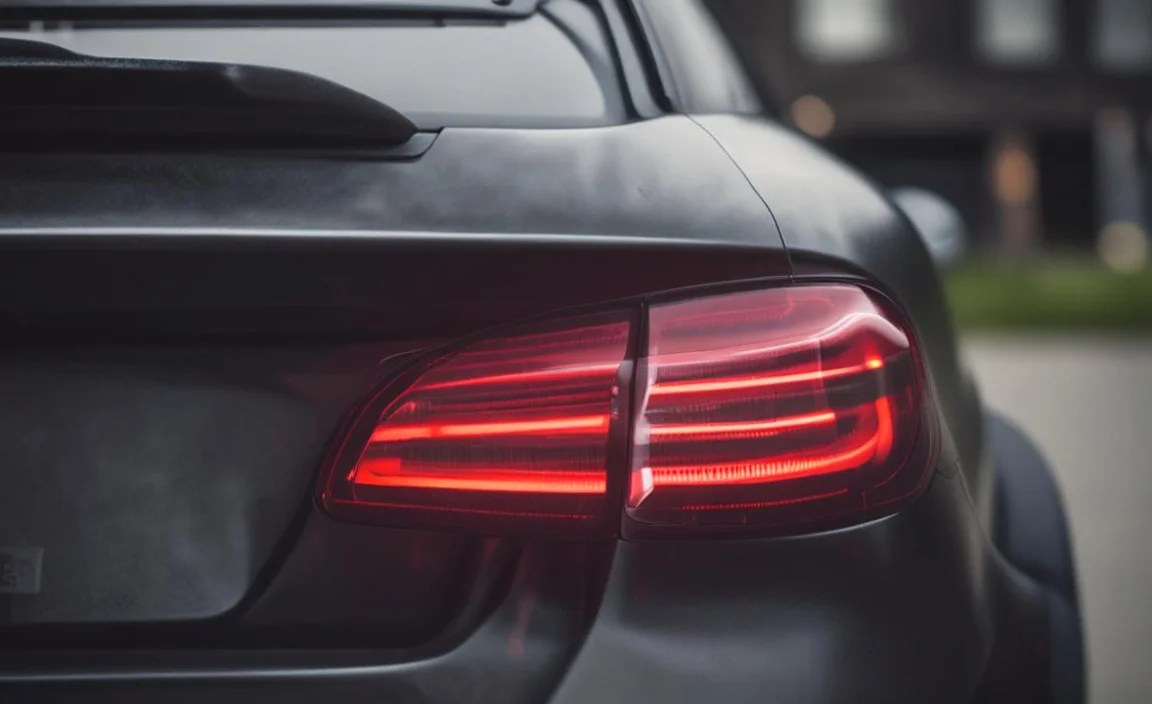
It’s good practice to periodically check that all functions of your taillights are working correctly. This is especially important before long journeys or in poor weather conditions.
How to Check:
- Daytime: Have someone stand behind the vehicle while you activate the brake pedal, turn on the left and right turn signals, and engage the reverse gear.
- Nighttime: Visually inspect all lights to ensure they are illuminated and functioning as expected.
Dealing with Condensation

It’s not uncommon to see a small amount of condensation inside a taillight assembly, especially after temperature changes or washing. This is often due to the natural breathing of the housing. However, if you notice persistent fogging or large water droplets accumulating, it could indicate a sealing issue.
If you suspect a seal issue:
- Inspect the Seal: Look for cracks or damage around the edges where the lens meets the housing, or where the taillight assembly mounts to the vehicle body.
- Check Breather Vents: Modern assemblies often have small breather vents designed to equalize pressure and moisture. Ensure these are not blocked by dirt or debris.
- Professional Inspection: Persistent moisture inside can lead to corrosion of electrical contacts and premature failure of the LED modules. If you cannot identify or resolve the cause, it’s best to have it inspected by a qualified technician. They have the tools and expertise to properly reseal or replace the unit if necessary.
Common Issues and Solutions

While rare, LED modules can fail. If a specific segment of your taillight stops working (e.g., a part of the brake light or turn signal), it usually means the LED module itself has failed. Unlike traditional bulbs, LED modules are not typically user-replaceable.
If an LED module fails:
- Diagnosis: A Mercedes-Benz dealership or a qualified independent specialist will use diagnostic tools to confirm the failure.
- Replacement: The entire taillight assembly will usually need to be replaced. This is a job that requires careful removal of interior trim panels and sometimes exterior elements to access the mounting bolts.
Here’s a quick comparison of potential issues:
| Symptom | Potential Cause | Recommended Action |
|---|---|---|
| Dim or flickering light | Faulty LED module, wiring issue, control module problem | Professional diagnosis and repair by a Mercedes-Benz specialist |
| No light from one or more functions | Failed LED module, connection issue | Professional diagnosis and LED module or assembly replacement |
| Condensation inside | Compromised seal, blocked breather vent | Inspect/clean vents, check seals. If persistent, professional resealing or replacement. |
| Cracked or damaged lens | Impact from debris, accident damage | Replacement of the taillight assembly. |
The Essential Role of Taillight Design for Safety and Value

It’s easy to focus on the cutting-edge technology and stunning aesthetics of the Mercedes GLA’s taillights, but their most critical role is ensuring safety. As integral parts of a vehicle’s safety system, functional and clear taillights are non-negotiable.
Visibility and Effective Communication

The brightness, clarity, and distinctiveness of the GLA’s LED taillights are paramount for road safety. They:
- Enhance Visibility: Make your vehicle more visible to other drivers, cyclists, and pedestrians, especially in adverse weather conditions like rain, fog, or snow, and low-light situations such as dawn, dusk, or night.
- Clearly Indicate Intentions: Bright, quickly activated brake lights signal deceleration. Clear, distinct turn signals leave no ambiguity about your intended maneuvers. Reverse lights clearly show when you are backing up.
- Reduce Accident Risk: By providing clear visual cues, well-functioning taillights significantly reduce the risk of rear-end collisions and other accidents.
Maintaining Vehicle Value and Aesthetics

Beyond safety, the design and condition of your taillights significantly influence the overall perception and value of your Mercedes-Benz GLA.
- First Impression: The rear of your vehicle is often seen as drivers approach or pass you. Well-maintained, stylish taillights contribute positively to the premium image of your GLA.
- Resale Value: A vehicle with pristine lighting units looks better cared for. Conversely, faded, cracked, or malfunctioning taillights can detract from resale value and signal potential neglect to buyers.
- Brand Integrity: For a marque like Mercedes-Benz, maintaining the integrity of its design language, including the distinctive lighting signatures, is crucial to brand


