
Mercedes Sedan vs BMW Sedan: The Ultimate Showdown
Choosing between a Mercedes-Benz sedan and a BMW sedan can be tough. Both offer luxury, performance, and style. This guide breaks down the key differences to help you decide which one is right for you. We’ll look at performance, comfort, technology, and more!
Are you torn between the sleek elegance of a Mercedes-Benz sedan and the sporty appeal of a BMW sedan? You’re not alone! Many car buyers face this dilemma. Both brands offer incredible vehicles, but they cater to slightly different preferences. This guide will walk you through a detailed comparison, covering everything from performance and handling to interior comfort and technology. By the end, you’ll have a clear understanding of which sedan best fits your needs and driving style. Let’s dive in!
FAQ: Mercedes-Benz vs BMW Sedans
- Q: Which is more comfortable, a Mercedes or a BMW?
- A: Generally, Mercedes-Benz sedans prioritize comfort with smoother rides and more luxurious interiors, while BMW sedans offer a slightly firmer, sportier feel.
- Q: Which car is more reliable, Mercedes-Benz or BMW?
- A: Reliability can vary by model year and specific vehicle. However, recent data suggests that Mercedes-Benz and BMW have similar reliability ratings, with maintenance being key for both brands.
- Q: Which is better for performance, Mercedes or BMW?
- A: BMW is often praised for its sporty handling and driver-focused experience. Mercedes-AMG models, however, offer incredible performance and power, rivaling BMW’s M series.
- Q: Which brand has better technology?
- A: Both Mercedes-Benz and BMW are leaders in automotive technology. Mercedes-Benz is known for its advanced infotainment systems and driver-assistance features, while BMW excels in connectivity and user interface design.
- Q: Are Mercedes-Benz sedans more expensive than BMW sedans?
- A: Pricing is comparable between Mercedes-Benz and BMW sedans, with variations depending on the specific model, trim level, and optional features. Generally, both are in the luxury price range.
- Q: Which car is better for city driving?
- A: Both Mercedes-Benz and BMW offer sedans well-suited for city driving, with features like parking assist, compact dimensions, and efficient engines. The best choice depends on personal preference for comfort versus sportiness.
- Q: Which brand holds its value better?
- A: Both Mercedes-Benz and BMW tend to hold their value well within the luxury car market. However, factors like mileage, condition, and specific model can influence resale value.
Performance and Handling

When it comes to performance, both Mercedes-Benz and BMW offer a range of engines and driving experiences. But they do it in slightly different ways. Let’s break it down:
Mercedes-Benz: Smooth Power
Mercedes-Benz sedans often prioritize a smooth and refined driving experience. Here’s what you can expect:
- Engine Options: A wide range, from fuel-efficient four-cylinders to powerful V8s in AMG models.
- Driving Feel: Generally more comfortable and relaxed, with a focus on effortless acceleration and a smooth ride.
- AMG Models: High-performance versions with powerful engines, sport-tuned suspensions, and aggressive styling.
BMW: Driver-Focused Agility
BMW sedans are known for their sporty handling and engaging driving dynamics:
- Engine Options: Similar to Mercedes, with a range of engines including efficient options and high-performance variants.
- Driving Feel: More direct and connected to the road, with responsive steering and a firm suspension.
- M Models: BMW’s high-performance division, offering track-ready performance and thrilling driving experiences.
Performance Comparison Table
Here’s a quick look at how some popular models compare in terms of performance:
| Model | Engine | Horsepower | 0-60 mph |
|---|---|---|---|
| Mercedes-Benz C 300 | 2.0L Turbocharged I4 | 255 hp | 6.0 seconds |
| BMW 330i | 2.0L Turbocharged I4 | 255 hp | 5.6 seconds |
| Mercedes-AMG C 63 S | 4.0L Biturbo V8 | 503 hp | 3.9 seconds |
| BMW M3 Competition | 3.0L Twin-Turbo I6 | 503 hp | 3.8 seconds |
Interior Comfort and Design

The interiors of Mercedes-Benz and BMW sedans reflect their distinct philosophies. Here’s what to expect:
Mercedes-Benz: Luxurious Refinement
Mercedes-Benz interiors are known for their luxurious materials, elegant design, and cutting-edge technology:
- Material Quality: High-quality leather, wood trim, and metal accents create a premium feel.
- Design: Sophisticated and modern, with flowing lines and a focus on comfort.
- Features: Available features include massaging seats, premium sound systems, and advanced ambient lighting.
BMW: Sporty and Functional
BMW interiors prioritize a driver-focused layout with high-quality materials and a sporty aesthetic:
- Material Quality: Premium materials with a focus on durability and a sporty feel.
- Design: Clean and functional, with an emphasis on ergonomics and ease of use.
- Features: Sport seats, driver-oriented dashboards, and available carbon fiber trim.
Interior Comparison Table
Here’s a comparison of interior features and design elements:
| Feature | Mercedes-Benz | BMW |
|---|---|---|
| Seat Comfort | Prioritizes comfort with softer cushioning and available massage functions. | Offers sporty support with firmer cushioning and adjustable bolsters. |
| Dashboard Design | Features a wide, flowing design with integrated displays and touch-sensitive controls. | Emphasizes a driver-oriented layout with angled displays and physical controls. |
| Material Quality | Utilizes high-quality leather, wood, and metal accents for a luxurious feel. | Employs premium materials with a focus on durability and a sporty aesthetic. |
| Technology Integration | Integrates technology seamlessly with advanced infotainment systems and driver-assistance features. | Focuses on connectivity and user interface design with intuitive controls and connected services. |
Technology and Innovation

Both Mercedes-Benz and BMW are at the forefront of automotive technology. Let’s see how they compare:
Mercedes-Benz: Intuitive Technology
Mercedes-Benz focuses on creating an intuitive and user-friendly technology experience:
- MBUX Infotainment System: A voice-activated system that learns your preferences and responds to natural language.
- Driver-Assistance Features: Advanced systems like adaptive cruise control, lane-keeping assist, and automatic emergency braking.
- Augmented Reality Navigation: Overlays navigation instructions onto a live video feed of the road ahead.
BMW: Connected and Customizable
BMW emphasizes connectivity and customization, allowing drivers to tailor the technology to their preferences:
- iDrive Infotainment System: A rotary dial and touchscreen interface that provides intuitive control over vehicle functions.
- BMW Connected App: Allows you to remotely control vehicle functions, monitor vehicle status, and access connected services.
- Over-the-Air Updates: Keeps your vehicle’s software up-to-date with the latest features and improvements.
Technology Comparison Table
Here’s a comparison of key technology features:
| Feature | Mercedes-Benz | BMW |
|---|---|---|
| Infotainment System | MBUX with voice control and touch screen. | iDrive with rotary dial, touch screen, and voice control. |
| Driver Assistance | Advanced systems including adaptive cruise control and lane keeping assist. | Comprehensive suite including lane departure warning and collision mitigation. |
| Connectivity | Mercedes me connect services. | BMW ConnectedDrive services. |
| Digital Key | Digital car key available via smartphone. | Digital key plus with enhanced security. |
Safety Features
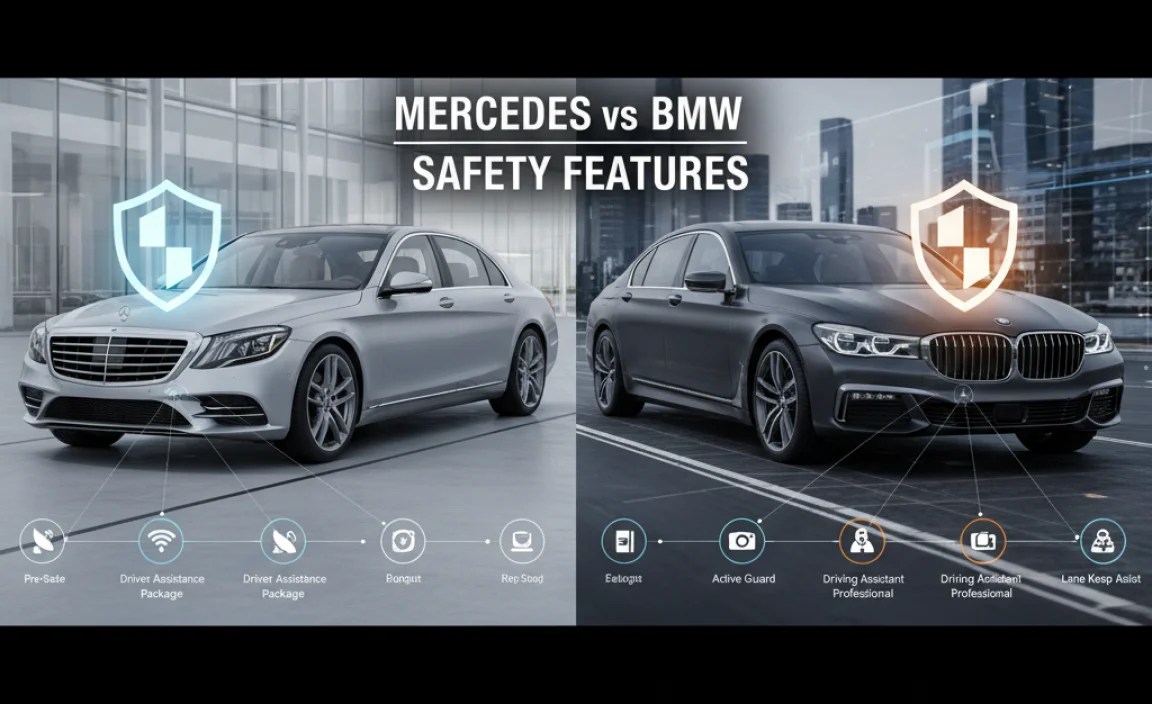
Safety is a top priority for both Mercedes-Benz and BMW. Both brands offer a comprehensive suite of safety features designed to protect you and your passengers.
Mercedes-Benz: Comprehensive Safety
Mercedes-Benz integrates advanced safety technologies to provide a safe and secure driving experience:
- PRE-SAFE®: Prepares the vehicle for a potential collision by tightening seatbelts, closing windows, and adjusting seats.
- Active Brake Assist: Can automatically apply the brakes to prevent or mitigate a collision.
- Evasive Steering Assist: Helps the driver steer around obstacles in emergency situations.
BMW: Proactive Protection
BMW focuses on proactive safety features that help drivers avoid accidents:
- Active Driving Assistant: Includes features like lane departure warning, frontal collision warning, and automatic emergency braking.
- Parking Assistant Plus: Makes parking easier with automated steering and braking.
- Surround View Cameras: Provides a 360-degree view of the vehicle’s surroundings.
Safety Feature Comparison Table
Here’s a comparison of key safety features:
| Feature | Mercedes-Benz | BMW |
|---|---|---|
| Pre-Collision System | PRE-SAFE® system prepares for impact. | Active Driving Assistant warns and intervenes. |
| Automatic Emergency Braking | Active Brake Assist. | Standard on most models. |
| Lane Keeping Assist | Standard and available options. | Part of Active Driving Assistant. |
| Parking Assistance | Active Parking Assist. | Parking Assistant Plus with surround view. |
Pricing and Value
The pricing of Mercedes-Benz and BMW sedans is generally comparable, but it can vary depending on the model, trim level, and optional features. Let’s take a closer look:
Mercedes-Benz: Premium Pricing
Mercedes-Benz sedans typically command a premium price due to their luxurious features and advanced technology:
- Base Models: Starting prices are competitive with other luxury brands.
- AMG Models: High-performance AMG models come with a significant price increase.
- Optional Features: Adding optional features can quickly increase the price of a Mercedes-Benz sedan.
BMW: Competitive Value
BMW sedans offer competitive value in the luxury segment, with a range of models and trim levels to choose from:
- Base Models: Starting prices are often slightly lower than comparable Mercedes-Benz models.
- M Models: High-performance M models are priced similarly to AMG models.
- Packages and Options: BMW offers a variety of packages and options to customize your vehicle.
Pricing Comparison Table
Here’s a comparison of starting prices for some popular models (Note: Prices may vary based on location and current incentives):
| Model | Starting Price (USD) |
|---|---|
| Mercedes-Benz C 300 | $48,000 |
| BMW 330i | $45,500 |
| Mercedes-AMG C 63 S | $80,000 |
| BMW M3 Competition | $77,000 |
Note: Prices are approximate and can vary based on location, options, and market conditions. Check official manufacturer websites for the most up-to-date information. Mercedes-Benz USA and BMW USA.
Maintenance and Reliability
Owning a luxury car means keeping up with maintenance. Both Mercedes-Benz and BMW require regular servicing to ensure they perform at their best. Let’s compare what you can expect:
Mercedes-Benz: Scheduled Maintenance
Mercedes-Benz has a specific maintenance schedule to keep your car running smoothly:
- Service A and Service B: These are the core maintenance services, alternating each year or every 10,000 miles. Service A includes an oil change, filter replacement, and inspection. Service B is more comprehensive, including additional checks and replacements.
- Specialized Services: Depending on the model and mileage, you’ll need other services like transmission fluid changes, spark plug replacements, and coolant flushes.
- Cost: Maintenance costs can be higher compared to non-luxury brands, but they ensure your Mercedes-Benz stays in top condition.
BMW: Condition Based Servicing
BMW uses a Condition Based Servicing (CBS) system, which monitors the wear and tear on your vehicle’s components:
- CBS Sensors: Sensors track the condition of your oil, brake pads, and other parts. The car then alerts you when service is needed.
- Flexible Intervals: Service intervals vary based on your driving style and conditions. This can potentially save you money by avoiding unnecessary maintenance.
- Maintenance Packages: BMW offers prepaid maintenance packages that cover scheduled services for a set period or mileage.
Reliability
Both Mercedes-Benz and BMW have similar reliability ratings, though this can vary by model and year. Regular maintenance is key to ensuring reliability for both brands.
Maintenance Comparison Table
Here’s a quick comparison of maintenance aspects:
| Aspect | Mercedes-Benz | BMW |
|---|---|---|
| Maintenance Schedule | Fixed intervals (Service A, Service B). | Condition Based Servicing (CBS). |
| Service Alerts | Based on mileage and time. | Based on sensor data and driving conditions. |
| Maintenance Costs | Generally higher than non-luxury brands. | Comparable to other luxury brands. |
| Prepaid Maintenance | Available. | Available. |
Which Sedan is Right for You?
Choosing between a Mercedes-Benz sedan and a BMW sedan depends on your priorities and driving style. Here’s a quick guide to help you decide:
Choose Mercedes-Benz If:
- You prioritize comfort and luxury.
- You want a smooth and refined driving experience.
- You appreciate advanced technology and intuitive features.
- You value a prestigious brand image.
Choose BMW If:
- You prioritize sporty handling and driving dynamics.
- You want a direct and connected feel to the road.
- You appreciate a driver-focused interior design.
- You value customization and connectivity.
Final Thoughts
The decision between a Mercedes-Benz sedan and a BMW sedan is a personal one. Both brands offer exceptional vehicles with their own unique strengths. Consider what you value most in a car – whether it’s luxurious comfort, sporty performance, advanced technology, or brand prestige – and choose the sedan that best aligns with your needs and preferences. Test drive both models to get a feel for their driving dynamics and interior comfort. Ultimately, the best sedan is the one that brings you the most enjoyment behind the wheel!
“`


