
Mercedes E Class Check Engine Light: Ultimate Guide
The Mercedes E-Class check engine light can illuminate for various reasons, ranging from simple fixes like a loose gas cap to more complex engine issues. This guide will help you understand what the light means, common causes in your E-Class, and the best steps to take, ensuring you diagnose and address the problem effectively.
Ah, the dreaded check engine light. For any Mercedes-Benz E-Class owner, seeing that steady or blinking amber symbol illuminate on the dashboard can be a moment of concern. It’s a universal sign that your sophisticated German engineering has detected something amiss, and it’s asking for your attention. While it might seem intimidating, understanding what triggers it and how to react can save you time, money, and unnecessary stress. This guide is crafted to demystify the Mercedes E-Class check engine light, providing you with the knowledge to recognize potential issues and the confidence to address them.
Your E-Class is engineered with intricate systems designed to monitor performance and emissions. When a deviation occurs, the onboard diagnostic (OBD-II) system alerts you, and the check engine light is the primary indicator. We’ll walk through the most common culprits, explain how to perform simple checks yourself, and advise when it’s best to consult a professional. Let’s get your E-Class back to its pristine, worry-free driving experience.
Frequently Asked Questions (FAQ)
What does a solid check engine light mean on my Mercedes E-Class?
A solid check engine light typically indicates a less urgent issue, though it still requires attention. It suggests that the vehicle’s computer has detected a fault, often related to emissions control or engine performance. You can usually continue driving, but it’s advisable to get it checked soon to prevent potential damage or reduced fuel efficiency.
When should I be concerned about the check engine light?
You should be highly concerned if the check engine light is blinking or flashing. This usually signifies a severe misfire or engine problem that could cause significant damage to your catalytic converter or other engine components. If the light is flashing and you notice rough idling, loss of power, or unusual noises, pull over safely and have the vehicle towed.
Can I drive my E-Class with the check engine light on?
For a solid check engine light, cautious driving is generally acceptable for short distances. However, it’s not recommended to drive extensively or at high speeds. If the light is flashing, you should avoid driving the vehicle altogether and arrange for a tow.
How do I reset the check engine light on my Mercedes E-Class?
While some minor issues, like a loose gas cap, might cause the light to reset itself after a few driving cycles, attempting to manually reset the check engine light without addressing the underlying problem is not recommended and can be damaging. The proper way to reset it is after the fault code has been diagnosed and repaired, often requiring an OBD-II scanner.
How much does it cost to fix a check engine light?
The cost varies dramatically depending on the cause. A loose gas cap might cost nothing to fix. However, issues like a faulty oxygen sensor could range from $150-$300, while a failing catalytic converter can cost upwards of $1,000 to $2,500 or more. Diagnosis is the first step, and reputable shops will provide an estimate before performing repairs.
How do I check for OBD-II codes on my E-Class?
You can use an OBD-II scanner. These devices plug into the diagnostic port, typically located under the dashboard on the driver’s side. Many auto parts stores offer free code reading services, or you can purchase your own scanner for home use, which can be a valuable tool for any Mercedes owner.
Are Mercedes E-Class check engine lights common?
Like any modern vehicle, the E-Class can experience check engine lights. Given the complexity of their advanced systems, issues can arise, but they are not necessarily indicative of a less reliable car. Regular maintenance and prompt attention to warning lights are key to keeping your E-Class running smoothly.
Understanding the Check Engine Light on Your E-Class

The check engine light, often depicted as an outline of an engine, is your Mercedes-Benz E-Class’s way of communicating with you. It’s part of the On-Board Diagnostics (OBD-II) system, a standardized technology mandated in vehicles since 1996. This system continuously monitors various engine components and emissions control systems. When it detects a fault or an issue that falls outside normal operating parameters, it stores a Diagnostic Trouble Code (DTC) and illuminates the check engine light on your instrument cluster.
Your E-Class, with its advanced engineering, is equipped with numerous sensors that feed data to the engine control module (ECM) or powertrain control module (PCM). These sensors monitor everything from oxygen levels in the exhaust to engine load, throttle position, and ignition timing. When any of these inputs suggest a problem that could affect performance, fuel economy, or emissions, the light comes on.
It’s crucial to understand that the check engine light is not a singular warning for one specific problem. It’s a general alert that a fault has been detected. The severity can range from minor to major, and the way the light behaves—solid or blinking—offers vital clues about the urgency of the situation.
Solid vs. Blinking Check Engine Light: What’s the Difference?
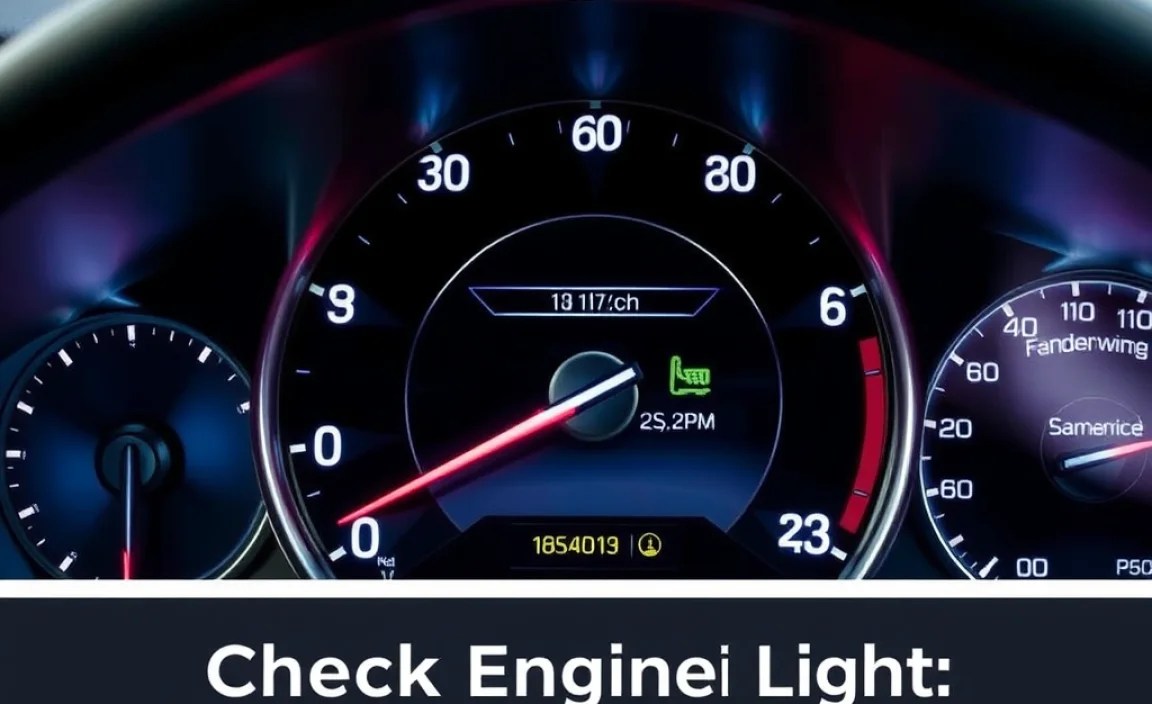
The behavior of the check engine light is your first indicator of how serious the detected issue might be. Mercedes-Benz, like all manufacturers, uses these visual cues strategically.
- Solid (Steady) Check Engine Light: This is the more common scenario. A steady light suggests that the OBD-II system has identified a fault, and a corresponding DTC has been stored. While it indicates a problem, it’s usually not an immediate emergency that requires you to stop driving. However, it does mean you should schedule a diagnostic appointment with your mechanic or a Mercedes-Benz specialist as soon as possible. Continuing to drive with a solid light could lead to further damage or decreased efficiency.
- Blinking (Flashing) Check Engine Light: This is a much more serious warning. A blinking light signifies a severe engine misfire or another critical fault that is actively harming the engine or catalytic converter. A catalytic converter is a vital emissions control device, and a severe misfire can send unburnt fuel into it, causing it to overheat and potentially fail. If your check engine light starts blinking, you should reduce your speed, avoid heavy acceleration, and if possible, pull over to a safe location and turn off the engine. It is highly recommended to have the vehicle towed to a repair facility rather than driving it further.
Common Causes of the Check Engine Light in a Mercedes E-Class

Your E-Class boasts sophisticated systems, and various components can trigger the check engine light. Here are some of the most frequent culprits:
1. Loose or Faulty Gas Cap
This is often the simplest and most overlooked cause. The fuel system is pressurized, and a loose, damaged, or missing gas cap can allow fuel vapors to escape, triggering the evaporative emission control (EVAP) system’s sensors. This can cause the check engine light to illuminate.
Fix: Ensure your gas cap is tightened until it clicks. If the cap is cracked or the seal is damaged, it needs to be replaced. After tightening or replacing the cap, the light may turn off after a few driving cycles.
2. Oxygen Sensor (O2 Sensor) Failure
Oxygen sensors measure the amount of unburned oxygen in your exhaust system. This data is crucial for the engine’s computer to calculate the optimal air-fuel ratio for efficient combustion. When an O2 sensor fails, it can lead to poor fuel economy, increased emissions, and rough idling.
Fix: Replace the faulty oxygen sensor. There are typically multiple O2 sensors, and a diagnostic scan will identify which one is malfunctioning.
3. Catalytic Converter Issues
The catalytic converter is part of the exhaust system responsible for converting harmful pollutants into less harmful gases. If it becomes clogged, damaged, or fails due to other issues (like a persistent misfire or faulty O2 sensor), it will trigger the check engine light. This is a costly repair, so addressing the root cause is essential.
Fix: Replacing a catalytic converter. It’s vital to diagnose why the converter failed; often, another component is the primary issue. For example, read about the importance of a well-functioning exhaust system from the Environmental Protection Agency (EPA) on emissions control.
4. Spark Plug or Ignition Coil Problems
Spark plugs ignite the air-fuel mixture in the engine cylinders. Ignition coils provide the electrical charge for the spark plugs. Worn-out spark plugs, fouled plugs, or failing ignition coils can cause misfires, leading to rough running, reduced power, and the illumination of the check engine light. This is a common cause for a blinking light.
Fix: Replace worn spark plugs and/or faulty ignition coils. Regular maintenance schedules typically include spark plug replacement.
5. Mass Airflow Sensor (MAF Sensor) Failure
The MAF sensor measures the amount of air entering the engine, which is critical for determining the correct amount of fuel to inject. A dirty or failing MAF sensor can cause the engine computer to get incorrect air intake readings, leading to poor performance, stalling, and the check engine light.
Fix: Sometimes, cleaning the MAF sensor with specialized MAF cleaner can resolve the issue. However, if the sensor is faulty, it will need to be replaced.
6. Evaporative Emission Control System (EVAP) Leaks
Beyond a loose gas cap, other components in the EVAP system, such as hoses, vents, or the charcoal canister, can develop leaks. These systems help prevent fuel vapors from escaping into the atmosphere. Leaks will trigger the check engine light.
Fix: A mechanic will use a smoke machine to detect and repair the specific leak in the EVAP system.
7. Exhaust Gas Recirculation (EGR) Valve Issues
The EGR valve helps reduce nitrogen oxide emissions by recirculating a portion of the exhaust gas back into the cylinders. If this valve gets stuck open or closed, or if its passages become clogged, it can affect engine performance and turn on the check engine light.
Fix: The EGR valve may need to be cleaned or replaced. Clogged passages might also require cleaning.
This partial list highlights the diversity of potential causes. Accurate diagnosis is key.
Diagnosing the Check Engine Light: DIY vs. Professional

When that illuminating amber symbol appears, your first instinct might be to panic or rush to the dealership. However, depending on your comfort level and the situation, you have options.
DIY Diagnosis
For the hands-on owner, a great first step is to use an OBD-II scanner. These devices plug into your E-Class’s diagnostic port (usually located beneath the steering wheel) and read the DTCs stored by the engine computer. You can purchase affordable scanners online or at most auto parts stores. Many auto parts retailers also offer free diagnostic code reading services.
Steps for DIY diagnosis:
- Check the Gas Cap: First, ensure your gas cap is securely tightened. If it was loose, tighten it and drive for a while. The light may reset on its own after several driving cycles.
- Purchase or Borrow an OBD-II Scanner: Get access to a compatible scanner.
- Locate the OBD-II Port: Open the driver’s side door and look under the dashboard. The port is usually on the left, near the steering column.
- Connect the Scanner: Plug the scanner into the port and follow its instructions to read the codes.
- Record the Code(s): Write down the P-codes (e.g., P0300, P0420).
- Research the Code: Use reliable online resources or the scanner’s manual to understand what the code means. For instance, a P0420 code often points to catalytic converter efficiency issues.
Tools you might need:
- OBD-II Scanner (handheld or Bluetooth adapter for smartphone)
- Owner’s manual
- Pen and paper or digital note-taking device
- Potentially a set of basic tools if you decide to investigate further (e.g., wrench for gas cap).
While OBD-II scanners are powerful, they provide codes, not definitive diagnoses. A code indicates a problem area but doesn’t always pinpoint the exact faulty part. For example, an O2 sensor code could be due to a failing sensor, a vacuum leak, or an exhaust leak.
Professional Diagnosis
This is often the most reliable and recommended approach, especially for a sophisticated vehicle like a Mercedes-Benz E-Class. Professional technicians have advanced diagnostic equipment, extensive experience, and access to specific repair databases.
- Dealership Service Center: They have specialized Mercedes-Benz diagnostic tools (like XENTRY/DAS) and genuine parts, ensuring the highest level of expertise for your E-Class.
- Independent Mercedes-Benz Specialist: These shops often offer dealership-level expertise at potentially lower costs. They focus specifically on Mercedes-Benz vehicles.
- Reputable General Auto Repair Shops: Many well-equipped shops can handle Mercedes-Benz diagnostics, especially those experienced with European luxury vehicles.
When to seek professional help:
- If the light is blinking.
- If you’re uncomfortable performing any DIY checks.
- If you’ve scanned the codes and are unsure of the diagnosis or repair.
- For complex systems like emissions control or powertrain.
A professional diagnosis ensures that the root cause is found and addressed correctly, preventing future issues.
Reading Diagnostic Trouble Codes (DTCs)

The heart of identifying the problem lies in reading the Diagnostic Trouble Codes (DTCs). These alphanumeric codes are generated by the OBD-II system and stored in the vehicle’s computer memory. They provide a standardized way to identify the nature of the fault detected.
Understanding DTC Structure:
All DTCs start with a letter, followed by four digits:
- First Letter: Indicates the system the code relates to.
- P: Powertrain (engine and transmission) – This is the most common for check engine lights.
- B: Body (interior and exterior accessories)
- C: Chassis (suspension, steering, brakes)
- U: Network (communication between modules)
- Second Digit: Indicates whether the code is standardized (0) or manufacturer-specific (1-9). For example, a ‘P0xxx’ code is generic, while a ‘P1xxx’ code is specific to the manufacturer (Mercedes-Benz in this case).
- Third and Fourth Digits: These numbers specify the particular fault within the system.
Common DTCs and What They Might Mean for Your E-Class:
Here’s a table of some common DTCs and their potential implications.
| DTC Code Example | Possible Meaning |
|---|


