
Mercedes A Class Automatic Headlight Control: Ultimate Power
Discover the “Ultimate Power” of your Mercedes A-Class Automatic Headlight Control: Effortless illumination adapts to your driving, enhancing safety and convenience without you lifting a finger. This guide unlocks its full potential.
Driving your Mercedes-Benz A-Class is a sophisticated experience, and sometimes, the most advanced features are the ones you barely notice. One such marvel is the automatic headlight control system. Ever driven into a tunnel or encountered sudden darkness, only to have your headlights seamlessly switch on? That’s your automatic headlight control at work, a testament to Mercedes-Benz’s commitment to intelligent design and driver assistance.
While this feature is designed to be incredibly intuitive, understanding how it functions can enhance your appreciation and ensure it’s always performing optimally. It’s not just about convenience; it’s about a continuous, proactive approach to your safety on the road. In this guide, we’ll demystify the magic behind your A-Class’s automatic headlights, explaining how they work, their benefits, and how you can ensure this “ultimate power” is always at your command.
How Does Mercedes A-Class Automatic Headlight Control Work?

At its core, the automatic headlight control system in your Mercedes-Benz A-Class relies on a sophisticated network of sensors and sophisticated software. The primary component is the ambient light sensor, often discreetly positioned on the dashboard or near the rearview mirror. This sensor constantly monitors the external light levels.
When the ambient light sensor detects a significant drop in light – for instance, as you enter a tunnel, as dusk settles, or during heavy rain – it sends a signal to the vehicle’s central computer, the Electronic Control Unit (ECU). The ECU then processes this information, considering other factors like vehicle speed and wiper status, before instructing the headlights to illuminate.
Conversely, when the sensor detects sufficient natural light – such as exiting a tunnel or when dawn breaks – it signals the ECU to switch the headlights off. This ensures your battery isn’t unnecessarily drained and provides optimal visibility without manual intervention.
The Role of Sensors and the ECU
The ambient light sensor is the eyes of the system. Modern A-Class models may also incorporate rain sensors, which are often housed in the same module as the light sensor behind the rearview mirror. This integrated system allows the vehicle to react not only to light conditions but also to precipitation, further automating functions like windshield wipers and, in some cases, adjusting headlight sensitivity.
The Electronic Control Unit (ECU) is the brain. It’s a powerful microcomputer that receives data from various sensors throughout the car. For the automatic headlights, the ECU interprets the data from the light sensor. It uses pre-programmed algorithms to decide precisely when to turn the lights on and off. These algorithms are designed to be sensitive enough to react quickly to changing conditions but not so sensitive that they cause the lights to flicker unnecessarily. This intelligent decision-making is what makes the system so seamless.
Factors that can influence the ECU’s decision include:
- The intensity and duration of the light change.
- The time of day.
- Wiper activation (if integrated).
- Tunnel entry and exit speeds.
Beyond Simple Light: Advanced Features
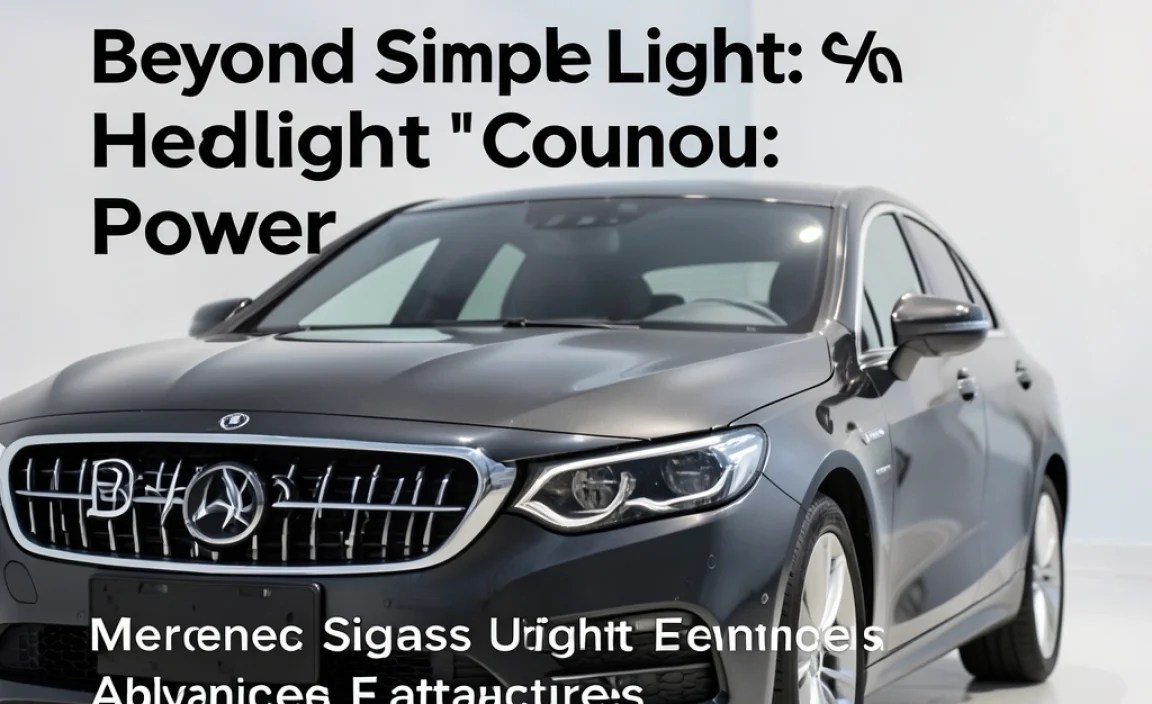
Mercedes-Benz doesn’t just stop at basic on/off functionality. The automatic headlight control in the A-Class can integrate with other advanced systems to provide a truly intelligent illumination solution.
Adaptive Highbeam Assist
This is where the “ultimate power” truly shines. Adaptive Highbeam Assist, available on many A-Class models, takes automatic headlights to the next level. Instead of simply turning high beams on or off, this system can dynamically adjust the light beam pattern. Using a camera mounted near the rearview mirror, it detects oncoming traffic and vehicles ahead. It then precisely masks out sections of the high beam, ensuring optimal road illumination without dazzling other drivers. This means you can often drive with your high beams on, benefiting from vastly improved visibility, even when there are other vehicles around.
Cornering Lights
Certain A-Class models are equipped with cornering lights. These are additional lights, often integrated into the fog lamp assembly or the main headlight unit, that illuminate when you turn the steering wheel at low speeds. This provides vital extra illumination in the direction you are turning, improving visibility of pedestrians, cyclists, and obstacles in blind spots when navigating junctions or tight corners. The automatic headlight system often works in conjunction with the turn signal and steering angle sensor to activate these lights.
Tunnel Detection
The system is specifically calibrated to recognize tunnel environments. When you enter a tunnel, the light sensor will detect the rapid decrease in ambient light. The ECU will then activate your low beam headlights. As you exit the tunnel, the sensor will pick up the increased light, and the headlights will switch off automatically. This avoids the common frustration of manually switching lights on and off multiple times during a journey that involves tunnels.
Activating and Configuring Your Automatic Headlights
For most users, the automatic headlight function is enabled by default. However, understanding how to check and configure it provides peace of mind.
Finding the Controls
The primary controls for your headlights, including the automatic mode, are typically located on the turn signal stalk on the left side of your steering wheel.
Here’s a general breakdown of the typical settings you’ll find:
- OFF: Headlights manual off.
- AUTO: Automatic headlight control enabled. The system will manage headlights based on ambient light conditions.
- Headlight Symbol (Manual On): Headlights will stay on regardless of ambient light.
- Auto with Snowflake (if applicable): This setting might engage automatic headlights when the ambient light is low AND it’s cold enough to suggest potential icy conditions, often linked to the exterior temperature sensor.
Using the MBUX System for Deeper Control
Your Mercedes-Benz A-Class, especially those equipped with the MBUX (Mercedes-Benz User Experience) infotainment system, offers advanced customization options. You can usually fine-tune the sensitivity and behavior of the automatic headlight system through the vehicle’s settings menu.
To access these settings:
- Navigate to the “Vehicle” menu on your MBUX display.
- Select “Lights.”
- Look for options related to “Headlight Assistance” or “Automatic Headlights.”
In this menu, you might find adjustments for:
- Sensitivity: You can often set how dark it needs to get before the lights activate. A lower sensitivity means lights turn on in brighter conditions; higher sensitivity requires darker conditions.
- Dwell Time: This setting can influence how long the system waits before turning lights off after detecting light.
- Welcome Light / Coming Home Function: This feature keeps the headlights on for a set period after you’ve turned off the engine, illuminating your path. You can usually configure the duration here.
- Automatic High Beams: If equipped, you can enable or disable Adaptive Highbeam Assist and sometimes adjust its behavior.
- The system is not set to “AUTO” mode.
- The ambient light sensor is obstructed (e.g., by dirt, stickers, or snow).
- A blown fuse specific to the headlight or control module.
- A malfunctioning light sensor or ECU.
Always refer to your specific A-Class owner’s manual for the most accurate instructions for your model year and trim, as MBUX interfaces can vary.
The “Ultimate Power” in Action: Benefits of Automatic Headlights

Harnessing the automatic headlight control system offers significant advantages beyond mere convenience.
Enhanced Safety
This is paramount. By ensuring your headlights are always on when needed, the system drastically reduces the risk of driving in insufficient light conditions. This is crucial during twilight hours, in adverse weather, or when entering unlit areas. Automatic headlights make your vehicle more visible to others, a critical factor in preventing accidents.
Improved Fuel Efficiency and Battery Life
Modern cars are designed to be efficient. Leaving headlights on unnecessarily, especially during daylight hours, can consume extra fuel and put a strain on the battery. The automatic system intelligently manages power consumption, turning lights off when they are not needed, thus contributing to better fuel economy and a longer battery lifespan.
Reduced Driver Distraction
Manually switching headlights on and off can be a distraction, particularly when navigating complex driving scenarios. The automatic system eliminates this cognitive load, allowing you to focus entirely on the road and traffic conditions. This simplicity contributes to a safer and more relaxed driving experience.
Compliance with Lighting Regulations
Many regions have laws requiring headlights to be on in poor visibility or during specific hours. Automatic headlights ensure you remain compliant with these regulations without needing to remember, reducing the risk of fines.
Table: Comparing Headlight Modes
| Mode | Description | Pros | Cons |
|---|---|---|---|
| OFF (Manual) | Headlights are only on when you manually switch them on. | Complete control over when lights are used. | Risk of forgetting to turn them on, leading to safety/regulatory issues. |
| AUTO (Automatic) | System uses sensors to turn headlights on/off based on light levels. | Ensures headlights are on when needed, enhances safety and visibility without driver intervention. | Slight delay may occur in rapid light changes; very rarely, sensors could be affected by extreme conditions (e.g., heavy dirt). |
| ON (Manual) | Headlights remain on constantly. | Maximum conspicuity in all conditions. | Can lead to unnecessary battery drain and fuel consumption in daylight. |
Troubleshooting Common Issues
While highly reliable, like any sophisticated system, automatic headlight control can occasionally present issues. Here’s how to approach common problems.
Headlights Not Turning On Automatically
Possible Causes:
Solutions:
- Ensure the headlight control is set to “AUTO.”
- Clean the windshield area around the rearview mirror where the sensor is located.
- Check the fuse box according to your owner’s manual for any relevant fuses.
- If the issue persists, a diagnostic scan by a qualified Mercedes-Benz technician is recommended. You can find professional diagnostics at Mercedes-Benz USA Service.
Headlights Not Turning Off Automatically
Possible Causes:
- The ambient light sensor is obstructed or dirty.
- A fault in the light sensor or ECU.
- The system might be configured with a long “Coming Home” or “Welcome Light” delay.
Solutions:
- Clean the area around the ambient light sensor.
- Check your MBUX settings for any extended “Coming Home” or “Welcome Light” functions and adjust the duration.
- Seek professional diagnosis if the problem continues.
Adaptive Highbeam Assist Not Working Correctly
Possible Causes:
- The camera lens for Adaptive Highbeam Assist is dirty or obstructed.
- Windshield replacement without proper recalibration of the camera.
- System faults requiring diagnosis.
Solutions:
- Ensure the camera lens on the windshield is clean.
- If the windshield was recently replaced, it’s critical that the camera system was properly calibrated. This requires specialized equipment.
- Consult a Mercedes-Benz service center for recalibration or diagnosis. Bosch provides tools used in professional calibration services for ADAS systems, including those found in Mercedes-Benz vehicles.
Maintenance and Care
Ensuring the longevity and optimal function of your automatic headlight system is straightforward.
Regular Checks:
- Clean your Windshield: Periodically clean the interior of your windshield, especially the area around the rearview mirror. This removes dust, grime, and any film that could obscure the ambient light sensor or camera lenses.
- Inspect the Exterior: Ensure no aftermarket tinting or other films obscure the sensor’s view from the outside.
- Keep it Updated: Ensure your vehicle’s software is up-to-date. Mercedes-Benz periodically releases software updates that can improve the performance and functionality of various systems, including lighting. Your dealer can advise on available updates.
When to Seek Professional Help:
While the system is robust, it’s a complex piece of automotive technology. If you encounter persistent issues that simple cleaning or mode selection doesn’t resolve, it’s always best to consult a certified Mercedes-Benz technician. They have the specialized diagnostic tools and expertise to identify and fix underlying electrical or sensor issues accurately.
Frequently Asked Questions
Q1: Do I need to do anything to activate my Mercedes A-Class automatic headlights?
A1: In most cases, the automatic headlight function is enabled by default. You typically just need to set the headlight control stalk to the “AUTO” position, and the system will manage your lights.
Q2: How can I adjust the sensitivity of the automatic headlights?
A2: Sensitivity adjustments are usually made through the MBUX infotainment system. Navigate to Vehicle > Lights > Automatic Headlights and look for a sensitivity setting.
Q3: What is the difference between automatic headlights and running the lights manually at all times?
A3: Automatic headlights use sensors to turn on only when needed, saving energy. Running lights manually at all times ensures you are always visible but can drain battery power unnecessarily in bright conditions.
Q4: Can my automatic headlights stay on when I park in a dark garage?
A4: Many Mercedes A-Class models have a “Coming Home” or “Welcome Light” function, which keeps the headlights on for a set duration after you turn off the engine, illuminating your path to your door. This setting can usually be configured in the MBUX system.
Q5: What should I do if my automatic headlights are flickering?
A5: Flickering can indicate a loose connection, a failing bulb, or an issue with the control module. It’s best to have this checked by a qualified technician.
Q6: Does the automatic headlight system also control the daytime running lights (DRLs)?
A6: Daytime Running Lights (DRLs) often operate independently of the automatic headlight system. DRLs are designed to be on during daylight for visibility. The automatic system typically controls the low beams and high beams when ambient light is insufficient.
Embrace the Intelligent Illumination

The automatic headlight control system in your Mercedes-Benz A-Class is a prime example of how advanced technology can enhance both your driving experience and safety. By intelligently adapting to changing light conditions, these systems ensure you always have optimal visibility without requiring your constant attention.
Understanding how these sensors and the ECU work, knowing how to configure settings via the MBUX system, and performing simple maintenance like keeping the windshield clean allows you to fully leverage this sophisticated feature. The “ultimate power” of your automatic headlights lies in their seamless ability to protect you and make every drive more confident and enjoyable. So, next time your headlights magically illuminate for a tunnel or twilight, take a moment to appreciate the intelligent engineering that keeps you safe, one beam of light at a time.
About Bryan Bowman and MercedesBlue
Bryan Bowman is the passionate automotive journalist behind MercedesBlue. With a deep love for the three-pointed star, Bryan aims to demystify the world of Mercedes-Benz for enthusiasts and owners alike. From intricate technical details to practical ownership advice, MercedesBlue offers clear, expert guidance to help you understand, maintain, and truly enjoy your Mercedes-Benz.


