
Mercedes Torque by Model: A Complete Guide
Want to know how much power your Mercedes-Benz packs? Torque is key! It’s what gets you moving and helps you accelerate. This guide breaks down the torque figures for different Mercedes models. You’ll learn what torque means, why it matters, and how it varies across the Mercedes lineup. Get ready to understand your car’s performance like never before!
Ever wondered why some cars feel faster than others, even with similar horsepower? The secret lies in torque. It’s the twisting force that gets your wheels turning. Finding the right torque for your needs can be confusing. But don’t worry, we’ll explain everything in simple terms. By the end of this article, you’ll be a torque expert!
We’ll cover:
- What torque is and why it’s important.
- Torque specs for popular Mercedes-Benz models.
- How torque affects your driving experience.
What is Torque?

Torque is a twisting force that causes rotation. Think of it as the force that turns a wrench. In a car, torque is what gets the wheels turning and moves the vehicle forward. It’s often measured in pound-feet (lb-ft) or Newton-meters (Nm).
Imagine pushing a merry-go-round. The harder you push, the more torque you apply. The more torque a car engine produces, the quicker it can accelerate. High torque at low RPMs (revolutions per minute) means strong pulling power from a standstill.
Torque is different from horsepower. Horsepower is a measure of how quickly work can be done. While torque gets you moving, horsepower keeps you going at higher speeds. Both are important for overall performance.
Why is Torque Important?

Torque affects several aspects of your driving experience:
- Acceleration: Higher torque means quicker acceleration.
- Towing Capacity: More torque allows you to tow heavier loads.
- Off-Road Performance: Torque helps you navigate challenging terrain.
- Daily Driving: Adequate torque makes driving easier and more responsive.
For daily driving, you want enough torque to easily merge onto highways and pass other cars. If you tow a trailer, you’ll need even more torque. Off-road, torque helps you crawl over rocks and through mud. A car with good torque feels more responsive and fun to drive.
Mercedes Torque by Model: A Detailed Look

Let’s explore the torque figures for various Mercedes-Benz models. Keep in mind that these numbers can vary slightly depending on the specific year, engine, and trim level.
Mercedes-Benz C-Class
The C-Class is a popular compact executive car. Here’s a look at the torque for different C-Class models:
| Model | Engine | Torque (lb-ft) |
|---|---|---|
| C 300 | 2.0L Turbocharged I4 | 295 |
| C 43 AMG | 3.0L V6 Biturbo | 384 |
| C 63 S AMG | 4.0L V8 Biturbo | 516 |
As you can see, the AMG models offer significantly more torque than the base C 300. This translates to much faster acceleration and a more thrilling driving experience.
Mercedes-Benz E-Class
The E-Class is a mid-size luxury car known for its comfort and technology. Here’s the torque output for various E-Class models:
| Model | Engine | Torque (lb-ft) |
|---|---|---|
| E 350 | 2.0L Turbocharged I4 | 273 |
| E 450 | 3.0L Inline-6 Turbo with EQ Boost | 369 |
| E 53 AMG | 3.0L Inline-6 Turbo with EQ Boost | 384 |
| E 63 S AMG | 4.0L V8 Biturbo | 627 |
The E-Class offers a range of engines with varying torque outputs. The E 63 S AMG delivers impressive torque for exhilarating performance.
Mercedes-Benz S-Class
The S-Class is the flagship sedan of Mercedes-Benz, representing the pinnacle of luxury and innovation. Here’s a look at the torque figures:
| Model | Engine | Torque (lb-ft) |
|---|---|---|
| S 500 | 3.0L Inline-6 Turbo with EQ Boost | 384 |
| S 580 | 4.0L V8 Biturbo with EQ Boost | 516 |
| S 63 E Performance AMG | 4.0L V8 Biturbo with Hybrid Assist | 1055 (Combined) |
The S-Class emphasizes smooth and effortless power delivery. The S 63 E Performance AMG is particularly notable, as its hybrid powertrain allows it to generate a combined torque of 1055 lb-ft.
Mercedes-Benz GLC
The GLC is a popular compact SUV that combines luxury with practicality. Here’s the torque for different GLC models:
| Model | Engine | Torque (lb-ft) |
|---|---|---|
| GLC 300 | 2.0L Turbocharged I4 | 295 |
| GLC 43 AMG | 3.0L V6 Biturbo | 384 |
| GLC 63 S AMG | 4.0L V8 Biturbo | 516 |
The GLC offers ample torque for everyday driving and light off-road adventures. The AMG models provide a significant boost in torque for enhanced performance.
Mercedes-Benz GLE
The GLE is a mid-size SUV that offers a blend of luxury, space, and capability. Here’s the torque output for various GLE models:
| Model | Engine | Torque (lb-ft) |
|---|---|---|
| GLE 350 | 2.0L Turbocharged I4 | 273 |
| GLE 450 | 3.0L Inline-6 Turbo with EQ Boost | 369 |
| GLE 53 AMG | 3.0L Inline-6 Turbo with EQ Boost | 384 |
| GLE 63 S AMG | 4.0L V8 Biturbo | 627 |
The GLE provides a comfortable and capable driving experience. The GLE 63 S AMG delivers substantial torque for thrilling performance.
Mercedes-Benz AMG GT
The AMG GT is a high-performance sports car that delivers exhilarating driving dynamics. Here’s a look at the torque figures:
| Model | Engine | Torque (lb-ft) |
|---|---|---|
| AMG GT | 4.0L V8 Biturbo | 465 |
| AMG GT S | 4.0L V8 Biturbo | 502 |
| AMG GT C | 4.0L V8 Biturbo | 516 |
| AMG GT Black Series | 4.0L V8 Biturbo | 590 |
The AMG GT models are designed for maximum performance. The Black Series offers the highest torque output for incredible acceleration and track capabilities.
Factors Affecting Torque
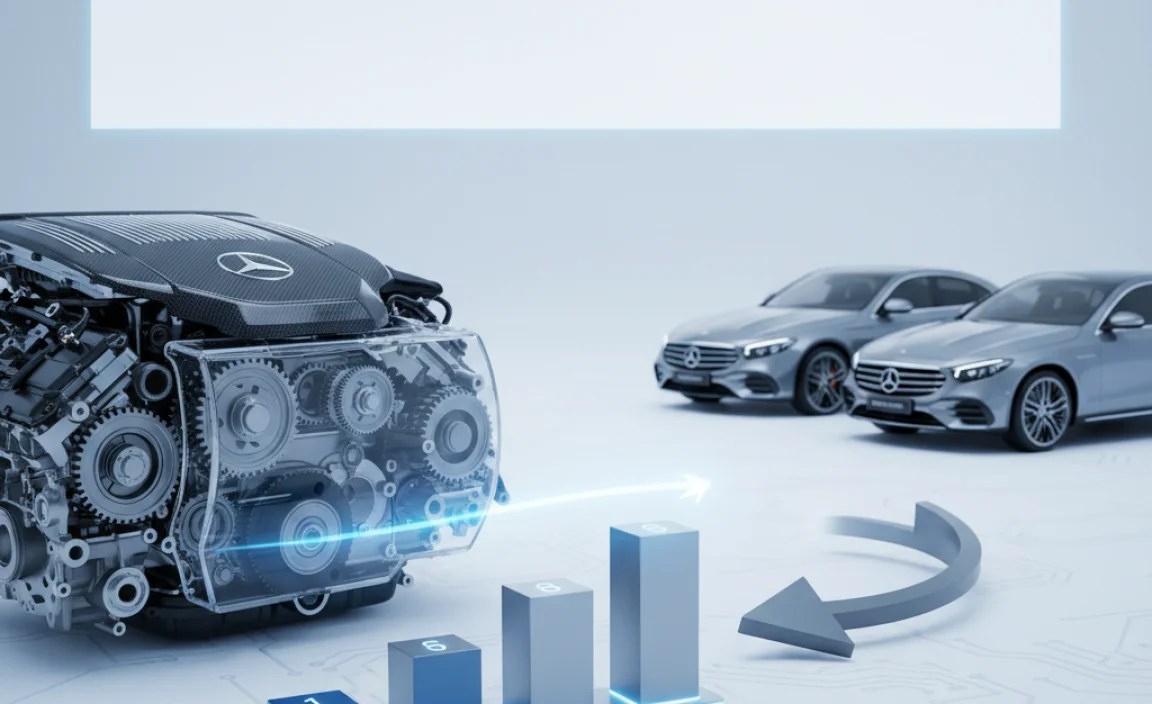
Several factors can affect the torque output of a Mercedes-Benz engine:
- Engine Size: Larger engines generally produce more torque.
- Turbocharging/Supercharging: Forced induction increases torque.
- Engine Tuning: Modifications can increase or decrease torque.
- Fuel Quality: Using premium fuel can optimize torque output.
- Altitude: Higher altitudes can reduce torque due to thinner air.
Engine size is a primary factor. A larger engine can burn more fuel and air, resulting in more power. Turbochargers and superchargers force more air into the engine, increasing torque. Engine tuning, often done by aftermarket specialists, can remap the engine’s computer to optimize torque output. Using the recommended fuel grade ensures the engine performs as designed. Altitude affects air density; thinner air at high altitudes means less oxygen for combustion, reducing torque.
How to Find the Torque Specs for Your Mercedes

Here are several ways to find the torque specifications for your specific Mercedes-Benz model:
- Owner’s Manual: The owner’s manual contains detailed specifications for your vehicle.
- Online Resources: Websites like Edmunds and Kelley Blue Book provide vehicle specs.
- Mercedes-Benz Website: The official Mercedes-Benz website often lists specifications for current models.
- VIN Decoder: Use a VIN (Vehicle Identification Number) decoder to access detailed information about your car.
- Mechanic or Dealership: A qualified mechanic or Mercedes-Benz dealership can provide accurate torque figures.
The owner’s manual is the most reliable source. Online resources are convenient but verify the information. The Mercedes-Benz website is helpful for newer models. A VIN decoder provides detailed information based on your car’s unique identification number. Finally, a mechanic or dealership can offer expert assistance and ensure accuracy.
Modifying Your Mercedes for More Torque
If you’re looking to increase the torque output of your Mercedes-Benz, consider these modifications:
- ECU Tuning: Remapping the engine control unit (ECU) can optimize torque.
- Performance Exhaust: Upgrading the exhaust system can improve airflow and increase torque.
- Cold Air Intake: A cold air intake can increase the amount of air entering the engine.
- Turbocharger Upgrade: Upgrading to a larger turbocharger can significantly increase torque, especially in turbocharged models.
ECU tuning adjusts parameters like fuel injection and ignition timing to boost torque. A performance exhaust reduces backpressure, improving engine efficiency. A cold air intake provides cooler, denser air for better combustion. A turbocharger upgrade forces more air into the engine, resulting in a substantial torque increase. Be sure to consult with a qualified mechanic or tuning specialist before making any modifications.
Torque vs. Horsepower: Which Matters More?
Torque and horsepower are both important, but they affect different aspects of performance:
- Torque: Determines how quickly a car can accelerate from a standstill.
- Horsepower: Determines how quickly a car can maintain speed at higher RPMs.
Torque is crucial for initial acceleration and pulling power. Horsepower is essential for maintaining high speeds and overall performance. For daily driving, torque is often more noticeable and useful. For track racing, horsepower becomes increasingly important.
FAQ: Understanding Mercedes Torque
Here are some frequently asked questions about Mercedes-Benz torque:
What is a good torque figure for a Mercedes-Benz?
A good torque figure depends on the model and intended use. For a daily driver, 250-300 lb-ft is often sufficient. Performance models may have 400 lb-ft or more.
How does torque affect fuel economy?
More torque can sometimes improve fuel economy, as the engine doesn’t need to work as hard to accelerate. However, aggressive driving will always reduce fuel economy.
Can I increase the torque of my Mercedes-Benz?
Yes, ECU tuning, exhaust upgrades, and cold air intakes can increase torque. A turbocharger upgrade will give you a substantial increase.
Is higher torque always better?
Not necessarily. More torque can make a car faster and more fun to drive, but it can also reduce fuel economy and tire life. It depends on your driving style and needs.
What is the difference between torque and horsepower?
Torque is a twisting force that gets the wheels turning. Horsepower is a measure of how quickly work can be done. Torque gets you moving, while horsepower keeps you going.
Where can I find the torque specs for my specific Mercedes model?
Check your owner’s manual, the Mercedes-Benz website, or use a VIN decoder. A mechanic or dealership can also provide this information.
Does altitude affect torque output?
Yes, higher altitudes can reduce torque due to thinner air. Engines need oxygen to burn fuel, so a lack of oxygen will result in lower power output.
Conclusion
Understanding torque is essential for appreciating the performance of your Mercedes-Benz. By knowing the torque figures for different models, you can make informed decisions about which car is right for you. Whether you prioritize daily driving comfort or high-performance thrills, Mercedes-Benz offers a range of vehicles with varying torque outputs to suit your needs. Now you know how to find your car’s torque specs, what they mean, and how to boost them if you want more power! Enjoy the drive!
“`


