
Mercedes Top Speed by Model: A Comprehensive Guide
Quick Summary: Mercedes-Benz top speeds vary significantly across models. Entry-level sedans like the A-Class reach around 130 mph, while high-performance AMG models can exceed 190 mph. Factors such as engine size, aerodynamics, and electronic limiters determine the maximum speed of each vehicle. This guide breaks down top speeds by model, giving you a clear understanding of Mercedes-Benz performance capabilities.
Ever wondered just how fast your Mercedes-Benz can really go? It’s a common question among enthusiasts and owners alike. The top speed of a Mercedes isn’t just a number; it represents the engineering, performance, and luxury that the brand embodies. Many factors influence these speeds, and understanding them can enhance your appreciation for your vehicle.
In this guide, we’ll explore the top speeds of various Mercedes-Benz models. We’ll cover everything from the A-Class to the AMG GT, giving you a clear picture of what each car can achieve. Ready to dive in? Let’s get started!
Understanding Top Speed in Mercedes-Benz Vehicles

Several factors influence the top speed of a Mercedes-Benz. These include engine type, vehicle weight, aerodynamics, and electronic speed limiters. Let’s take a closer look at each.
Engine Type
The engine is the heart of any car, and it plays a crucial role in determining top speed. Mercedes-Benz offers a range of engines, from efficient four-cylinder options to powerful V8s and even hybrid powertrains.
- Four-Cylinder Engines: Typically found in entry-level models like the A-Class and C-Class. They offer a good balance of efficiency and performance.
- Six-Cylinder Engines: Common in mid-range models like the E-Class and GLE. These engines provide more power and smoother performance.
- V8 Engines: Reserved for high-performance AMG models like the C 63 and S 63. V8 engines deliver exhilarating power and acceleration.
- Hybrid Powertrains: Found in models like the C-Class Hybrid and S-Class Hybrid. These combine an internal combustion engine with an electric motor for enhanced efficiency and performance.
Vehicle Weight
The weight of a vehicle directly affects its acceleration and top speed. Lighter cars generally accelerate faster and reach higher speeds compared to heavier ones, given the same engine.
Aerodynamics
Aerodynamics refers to how air flows around a vehicle. A streamlined design reduces drag, allowing the car to move more efficiently at high speeds. Mercedes-Benz invests heavily in aerodynamic testing to optimize the shape of their vehicles.
Electronic Speed Limiters
Many Mercedes-Benz vehicles come with electronic speed limiters. These limiters are often set for safety and regulatory reasons. For example, many models have a limiter set at 155 mph (250 km/h), although some AMG variants may have higher limits or no limit at all.
Mercedes-Benz Top Speed by Model

Now, let’s explore the top speeds of specific Mercedes-Benz models. This section will provide a comprehensive overview, from the entry-level A-Class to the high-performance AMG GT.
A-Class
The A-Class is Mercedes-Benz’s entry-level luxury hatchback/sedan. It’s designed for urban driving and offers a blend of comfort and efficiency.
- A 220: Around 130 mph (210 km/h)
- A 250: Around 149 mph (240 km/h)
- AMG A 35: Around 155 mph (250 km/h) (electronically limited)
- AMG A 45 S: Around 168 mph (270 km/h)
C-Class
The C-Class is a popular compact executive car, known for its luxurious interior and balanced performance.
- C 300: Around 130 mph (210 km/h)
- C 43 AMG: Around 155 mph (250 km/h) (electronically limited)
- C 63 S AMG: Around 180 mph (290 km/h) (with AMG Driver’s Package)
E-Class
The E-Class is a mid-size luxury car that offers a smooth ride, advanced technology, and a range of powerful engines.
- E 350: Around 130 mph (210 km/h)
- E 450: Around 155 mph (250 km/h) (electronically limited)
- E 53 AMG: Around 155 mph (250 km/h) (electronically limited)
- E 63 S AMG: Around 186 mph (300 km/h) (with AMG Driver’s Package)
S-Class
The S-Class is Mercedes-Benz’s flagship luxury sedan, renowned for its opulent interior, cutting-edge technology, and exceptional comfort.
- S 500: Around 155 mph (250 km/h) (electronically limited)
- S 580: Around 155 mph (250 km/h) (electronically limited)
- S 63 E Performance AMG: Around 180 mph (290 km/h) (electronically limited)
CLA
The CLA is a stylish coupe-like sedan based on the A-Class platform. It offers a sporty design and agile handling.
- CLA 250: Around 130 mph (210 km/h)
- AMG CLA 35: Around 155 mph (250 km/h) (electronically limited)
- AMG CLA 45 S: Around 168 mph (270 km/h)
CLS
The CLS is a larger, more luxurious coupe-like sedan. It combines elegance with powerful performance.
- CLS 450: Around 155 mph (250 km/h) (electronically limited)
- AMG CLS 53: Around 155 mph (250 km/h) (electronically limited)
GLA
The GLA is a subcompact luxury SUV that offers a raised driving position and versatile cargo space.
- GLA 250: Around 130 mph (210 km/h)
- AMG GLA 35: Around 155 mph (250 km/h) (electronically limited)
- AMG GLA 45 S: Around 168 mph (270 km/h)
GLB
The GLB is a compact SUV that offers a spacious interior and optional third-row seating.
- GLB 250: Around 130 mph (210 km/h)
- AMG GLB 35: Around 155 mph (250 km/h) (electronically limited)
GLC
The GLC is a mid-size luxury SUV that blends comfort, performance, and practicality.
- GLC 300: Around 130 mph (210 km/h)
- GLC 43 AMG: Around 155 mph (250 km/h) (electronically limited)
- GLC 63 S AMG: Around 174 mph (280 km/h) (electronically limited)
GLE
The GLE is a mid-size luxury SUV that offers a spacious interior, advanced technology, and powerful engine options.
- GLE 350: Around 130 mph (210 km/h)
- GLE 450: Around 130 mph (210 km/h)
- GLE 53 AMG: Around 155 mph (250 km/h) (electronically limited)
- GLE 63 S AMG: Around 174 mph (280 km/h) (electronically limited)
GLS
The GLS is a full-size luxury SUV that offers a spacious cabin, comfortable seating for up to seven passengers, and a range of powerful engines.
- GLS 450: Around 130 mph (210 km/h)
- GLS 580: Around 130 mph (210 km/h)
- GLS 63 AMG: Around 174 mph (280 km/h) (electronically limited)
AMG GT
The AMG GT is a high-performance sports car that delivers exhilarating acceleration, sharp handling, and a thrilling driving experience.
- AMG GT: Around 190 mph (304 km/h)
- AMG GT S: Around 193 mph (310 km/h)
- AMG GT C: Around 196 mph (315 km/h)
- AMG GT R: Around 198 mph (318 km/h)
- AMG GT Black Series: Around 202 mph (325 km/h)
SL
The SL is a luxury roadster that combines open-top driving with high performance and sophisticated features.
- SL 43: Around 155 mph (249 km/h) (electronically limited)
- SL 55 AMG: Around 175 mph (282 km/h) (electronically limited)
- SL 63 AMG: Around 196 mph (315 km/h) (electronically limited)
Mercedes-Benz Top Speed Comparison Table

Here’s a table summarizing the top speeds of various Mercedes-Benz models:
| Model | Top Speed (mph) | Top Speed (km/h) |
|---|---|---|
| A 220 | 130 | 210 |
| A 250 | 149 | 240 |
| AMG A 35 | 155 | 250 |
| AMG A 45 S | 168 | 270 |
| C 300 | 130 | 210 |
| C 43 AMG | 155 | 250 |
| C 63 S AMG | 180 | 290 |
| E 350 | 130 | 210 |
| E 450 | 155 | 250 |
| E 53 AMG | 155 | 250 |
| E 63 S AMG | 186 | 300 |
| S 500 | 155 | 250 |
| S 580 | 155 | 250 |
| S 63 E Performance AMG | 180 | 290 |
| CLA 250 | 130 | 210 |
| AMG CLA 35 | 155 | 250 |
| AMG CLA 45 S | 168 | 270 |
| CLS 450 | 155 | 250 |
| AMG CLS 53 | 155 | 250 |
| GLA 250 | 130 | 210 |
| AMG GLA 35 | 155 | 250 |
| AMG GLA 45 S | 168 | 270 |
| GLB 250 | 130 | 210 |
| AMG GLB 35 | 155 | 250 |
| GLC 300 | 130 | 210 |
| GLC 43 AMG | 155 | 250 |
| GLC 63 S AMG | 174 | 280 |
| GLE 350 | 130 | 210 |
| GLE 450 | 130 | 210 |
| GLE 53 AMG | 155 | 250 |
| GLE 63 S AMG | 174 | 280 |
| GLS 450 | 130 | 210 |
| GLS 580 | 130 | 210 |
| GLS 63 AMG | 174 | 280 |
| AMG GT | 190 | 304 |
| AMG GT S | 193 | 310 |
| AMG GT C | 196 | 315 |
| AMG GT R | 198 | 318 |
| AMG GT Black Series | 202 | 325 |
| SL 43 | 155 | 249 |
| SL 55 AMG | 175 | 282 |
| SL 63 AMG | 196 | 315 |
Factors Affecting Real-World Top Speed

While manufacturers provide official top speed figures, several real-world factors can affect how fast your Mercedes-Benz can actually go.
- Road Conditions: Uneven surfaces, potholes, and other road imperfections can reduce top speed.
- Weather Conditions: Rain, snow, and strong winds can significantly impact a vehicle’s aerodynamics and grip, reducing top speed.
- Tire Condition: Worn tires can reduce grip and increase the risk of tire failure at high speeds.
- Fuel Level: A full tank of fuel adds weight, which can slightly reduce top speed.
- Altitude: Higher altitudes mean thinner air, which can reduce engine power and top speed.
- Maintenance: Regular maintenance, including oil changes and filter replacements, ensures optimal engine performance and top speed.
Safety Considerations
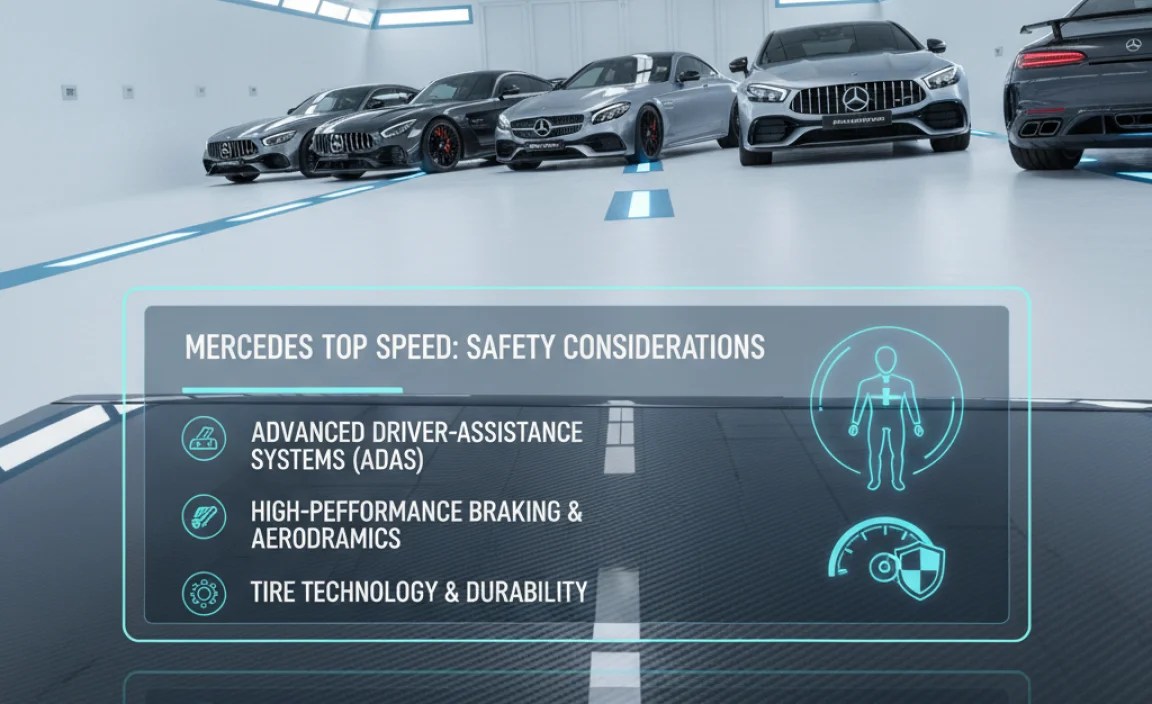
Attempting to reach top speed can be dangerous and should only be done in a controlled environment, such as a racetrack. Always adhere to local traffic laws and prioritize safety.
Here are some essential safety considerations:
- Use a Racetrack: Racetracks are designed for high-speed driving and offer a safe environment with trained professionals and emergency services on hand.
- Check Tire Pressure: Ensure your tires are properly inflated and in good condition before attempting high-speed runs.
- Wear a Helmet: A helmet provides crucial head protection in the event of an accident.
- Understand Your Car: Familiarize yourself with your vehicle’s handling characteristics and safety features.
- Avoid Public Roads: Never attempt to reach top speed on public roads, where unexpected hazards and other drivers can create dangerous situations.
Modifying Your Mercedes-Benz for Higher Performance
If you’re looking to increase the top speed of your Mercedes-Benz, several modifications can help. However, keep in mind that modifications can affect your vehicle’s warranty and may not be legal in all areas. Always consult with a qualified mechanic before making any modifications.
- ECU Tuning: ECU tuning can optimize engine performance by adjusting parameters such as fuel injection, ignition timing, and boost pressure. Reputable tuners include companies like Brabus and Renntech.
- Performance Exhaust System: A performance exhaust system can reduce backpressure and improve engine breathing, resulting in increased power. Brands like Akrapovic offer high-quality exhaust systems for Mercedes-Benz vehicles.
- Upgraded Air Intake: An upgraded air intake can increase airflow to the engine, improving performance. Companies like K&N offer performance air filters and intake systems.
- Turbocharger Upgrade: Upgrading the turbocharger can significantly increase engine power, especially in turbocharged models.
- Aerodynamic Enhancements: Adding aerodynamic components like spoilers, diffusers, and front splitters can reduce drag and improve stability at high speeds.
Note: Modifying your car can impact its safety and reliability. Always consult with experienced professionals and use high-quality parts. Also, check your local laws regarding vehicle modifications. The Specialty Equipment Market Association (SEMA) is a good resource for learning more about vehicle modifications and regulations.
Frequently Asked Questions (FAQ)
1. What is an electronic speed limiter?
An electronic speed limiter is a device that restricts a vehicle’s top speed, typically for safety or regulatory reasons. Many Mercedes-Benz models have limiters set at 155 mph (250 km/h).
2. Can I remove the speed limiter on my Mercedes-Benz?
Yes, it’s possible to remove or raise the speed limiter through ECU tuning. However, this should only be done by qualified professionals and may affect your vehicle’s warranty.
3. Does vehicle weight affect top speed?
Yes, vehicle weight affects top speed. Lighter cars generally accelerate faster and reach higher speeds compared to heavier ones, given the same engine.
4. How do road conditions affect top speed?
Uneven road surfaces, potholes, and other imperfections can reduce top speed by increasing resistance and affecting the vehicle’s stability.
5. What is the top speed of an AMG GT Black Series?
The AMG GT Black Series has a top speed of around 202 mph (325 km/h), making it one of the fastest Mercedes-Benz models.
6. Can weather conditions impact my car’s top speed?
Yes, weather conditions like rain, snow, and strong winds can significantly impact a vehicle’s aerodynamics and grip, thus reducing its top speed.
7. Are top speed figures always accurate?
While manufacturers provide official top speed figures, real-world conditions, such as road quality, weather, and vehicle maintenance, can affect actual achievable speeds.
Conclusion
Understanding the top speed of your Mercedes-Benz involves considering various factors, from engine type and aerodynamics to electronic limiters and real-world conditions. Whether you own an entry-level A-Class or a high-performance AMG GT, knowing the capabilities of your vehicle can enhance your driving experience.
Remember, attempting to reach top speed should only be done in a safe, controlled environment like a racetrack. Always prioritize safety and adhere to local traffic laws. With the right knowledge and precautions, you can appreciate the performance engineering that Mercedes-Benz is known for.
Now that you’re armed with this knowledge, you can better understand and appreciate the performance capabilities of your Mercedes-Benz. Happy driving!
“`


