
Mercedes Forced Induction Models: Ultimate Performance
What are Mercedes Forced Induction Models? They’re Mercedes-Benz vehicles equipped with turbochargers or superchargers to significantly boost engine power and performance. These systems force more air into the engine, allowing it to burn more fuel and produce exhilarating acceleration and torque.
Welcome to MercedesBlue! Today, we’re diving into the thrilling world of forced induction in Mercedes-Benz vehicles. If you’ve ever felt that surge of power when you put your foot down, Chances are, a sophisticated forced induction system was at play. It’s a core part of what makes many Mercedes models so special. But what exactly is forced induction, and how does it work its magic? For many, it can seem like complex engineering. Don’t worry! We’re here to break it down in a way that’s easy to understand, no matter your experience level. Prepare to unlock a deeper appreciation for the performance beneath the hood of your favorite Mercedes.
What Exactly is Forced Induction?

Forced induction is a method used to increase an internal combustion engine’s power output. Unlike naturally aspirated engines, which rely solely on atmospheric pressure to draw air into the cylinders, forced induction systems actively force more air into the combustion chamber. This allows for a richer fuel-air mixture, leading to a more powerful explosion and, consequently, more horsepower and torque. It’s like giving your engine an extra lungful of air to breathe, enabling it to perform at a higher level.
The two primary types of forced induction systems are turbocharging and supercharging. Both achieve the same goal—boosting engine performance—but they do so using different mechanisms. Understanding these differences is key to appreciating the nuances of Mercedes-Benz’s engineering prowess.
Turbocharging: Harnessing Exhaust Energy
A turbocharger, often simply called a “turbo,” is an ingenious device that uses the engine’s own exhaust gases to spin a turbine. This turbine is connected by a shaft to another turbine, known as the compressor wheel. As the exhaust gases spin the turbine, the compressor wheel spins at incredibly high speeds, drawing in fresh air from the atmosphere and compressing it. This compressed air, which is denser and contains more oxygen, is then fed into the engine’s intake manifold. More oxygen means the engine can burn more fuel, generating significantly more power.
Key Components of a Turbocharger:
- Turbine: Driven by exhaust gases.
- Compressor: Compresses intake air.
- Wastegate: A valve that controls the amount of exhaust gas flowing to the turbine, preventing excessive boost pressure.
- Intercooler: Cools the compressed air before it enters the engine. Hot air is less dense, so cooling it makes it even more potent.
While turbochargers are highly efficient, they can sometimes suffer from “turbo lag”—a slight delay between pressing the accelerator and the turbocharger delivering its full boost. Modern Mercedes-Benz engineering has significantly minimized this effect through advanced designs, electric assistance, and sophisticated engine management systems.
Supercharging: Direct Mechanical Drive
A supercharger, on the other hand, is mechanically driven by the engine itself, typically via a belt connected to the crankshaft. This direct connection means that as soon as the engine is running, the supercharger is active, compressing and delivering air to the intake. This eliminates the lag often associated with turbochargers because there’s no need to wait for exhaust gases to build pressure.
Superchargers are excellent for providing instant throttle response and strong low-end torque, making them a favorite for performance applications where immediate power delivery is crucial. However, because they draw mechanical power directly from the engine, they can be slightly less fuel-efficient under certain conditions compared to a well-tuned turbocharger.
Common Types of Superchargers:
- Roots Supercharger: Uses two meshing rotors to push air into the engine. Known for its strong low-end torque.
- Twin-Screw Supercharger: Features two helical screws that compress air as it’s drawn through. Offers high efficiency and power.
- Centrifugal Supercharger: Resembles a turbocharger but is belt-driven. Its boost typically increases with engine RPM.
A Legacy of Performance: Mercedes-Benz and Forced Induction

Mercedes-Benz has a long and illustrious history with forced induction. The company was an early adopter, and its engineers have consistently pushed the boundaries of what’s possible. From iconic racing machines to exhilarating production cars, forced induction has been central to the brand’s performance identity.
One of the most famous early adopters was the legendary 300 SL “Gullwing,” which featured a fuel-injected, supercharged inline-six engine. Later, Mercedes-Benz revolutionized the market with its AMG division, integrating high-performance forced induction systems into its potent V8 and V12 engines. Today, virtually all of Mercedes-Benz’s performance-oriented models, especially those bearing the AMG badge, rely on carefully engineered turbocharging or, in some classic and specific applications, supercharging.
Iconic Models with Forced Induction Brilliance
Over the decades, Mercedes-Benz has produced a staggering number of models that showcase the power of forced induction. These vehicles aren’t just about raw speed; they represent a harmonious blend of luxury, engineering precision, and thrilling performance.
- Mercedes-AMG C 63: Famously powered by a twin-turbocharged 4.0-liter V8 engine, delivering immense power and a distinctive AMG growl.
- Mercedes-AMG GT: This sports car lineup is entirely built around potent twin-turbocharged V8 engines, offering agile handling and explosive acceleration.
- Mercedes-AMG E 63: Features a twin-turbocharged 4.0-liter V8, often paired with all-wheel drive (4MATIC+) for exceptional traction and devastating performance.
- Mercedes-Benz S 550/S 580: Even luxury sedans from Mercedes-Benz incorporate twin-turbocharged V8 engines, providing effortless power for smooth, refined performance.
- Mercedes-Benz SL: From its legendary past with supercharging to its modern twin-turbocharged iterations, the SL maintains its status as a grand touring icon.
These models, among many others, demonstrate how Mercedes-Benz leverages forced induction not just for speed, but to enhance the overall driving experience, offering a level of responsiveness and power that naturally aspirated engines often can’t match.
How Does Your Mercedes Use Forced Induction?

Modern Mercedes-Benz vehicles utilize sophisticated forced induction systems designed for optimal performance, efficiency, and drivability. The engineering is incredibly advanced, ensuring that the added power doesn’t come at the expense of smoothness or reliability.
Turbocharged Engines in Modern Mercedes
The vast majority of Mercedes-Benz and AMG models today feature twin-turbocharged engines. This setup uses two smaller turbochargers instead of one large one. There are several advantages to this:
- Reduced Lag: Smaller turbines spin up faster, significantly cutting down on response time.
- Improved Packaging: Two smaller turbos can often fit more easily into the engine bay, especially in V-engine configurations where they can be placed within the “V” of the cylinders.
- Broader Powerband: Allows for strong power delivery across a wider range of engine speeds.
Many AMG V8 engines, for instance, are twin-turbocharged with the turbos mounted “hot-V” style, meaning they are nestled within the cylinder banks. This design offers benefits in terms of packaging, response, and reduces the distance exhaust gases need to travel. The intercoolers are also often integrated into the intake manifold system for maximum efficiency.
Electric Assistance
Mercedes-Benz has also embraced mild-hybrid technology, which can include electric assistance for the turbochargers. This might involve an electric motor integrated into the turbocharger assembly. This motor can spin the turbocharger up to speed instantaneously, completely eliminating turbo lag. Once the exhaust gases are sufficient to spin the turbo, the electric motor disengages. This technology is a glimpse into the future of performance engines, bridging the gap between combustion and electric power.
Supercharged Engines in Mercedes Heritage
While turbocharging is dominant today, supercharging has a distinguished place in Mercedes-Benz history. The legendary “Kompressor” badge signified these supercharged powerhouses. Models like the C-Class (W203/S203), SLK-Class (R171), and some E-Class variants from the early to mid-2000s featured supercharged engines, most notably the 3.2L, 3.5L, and 5.4L V6 and V8 engines. These provided a thrilling, linear power delivery that many enthusiasts still fondly remember.
Understanding Performance Metrics: What the Numbers Mean

When discussing forced induction models, you’ll encounter specific metrics that tell you about their performance capabilities. It’s helpful to understand what these mean.
Horsepower (HP)
Horsepower is a measure of the engine’s power output. It dictates how quickly a vehicle can accelerate and its top speed. Forced induction systems significantly increase horsepower by allowing the engine to burn more fuel and air.
Torque (lb-ft or Nm)
Torque is a measure of rotational force. It’s what gives a car its “pulling power” or “grunt.” High torque, especially at lower RPMs, means a car feels responsive and effortless to drive, making it ideal for accelerating from a stop or overtaking. Forced induction systems are particularly effective at boosting torque, often providing a much wider torque curve than naturally aspirated engines.
Boost Pressure (PSI or Bar)
Boost pressure is the amount of extra air pressure the turbocharger or supercharger is forcing into the engine’s intake manifold above atmospheric pressure. Higher boost pressure generally means more power. This is carefully managed by the car’s engine control unit (ECU) and components like wastegates.
Displacement (Liters or Cubic Inches)
Engine displacement refers to the total volume of air the cylinders can contain. A common trend in modern Mercedes-Benz vehicles is downsizing. Smaller displacement engines paired with forced induction can produce power outputs comparable to or exceeding larger, naturally aspirated engines, while also offering improved fuel efficiency when driven moderately.
Optimizing Performance and Maintenance
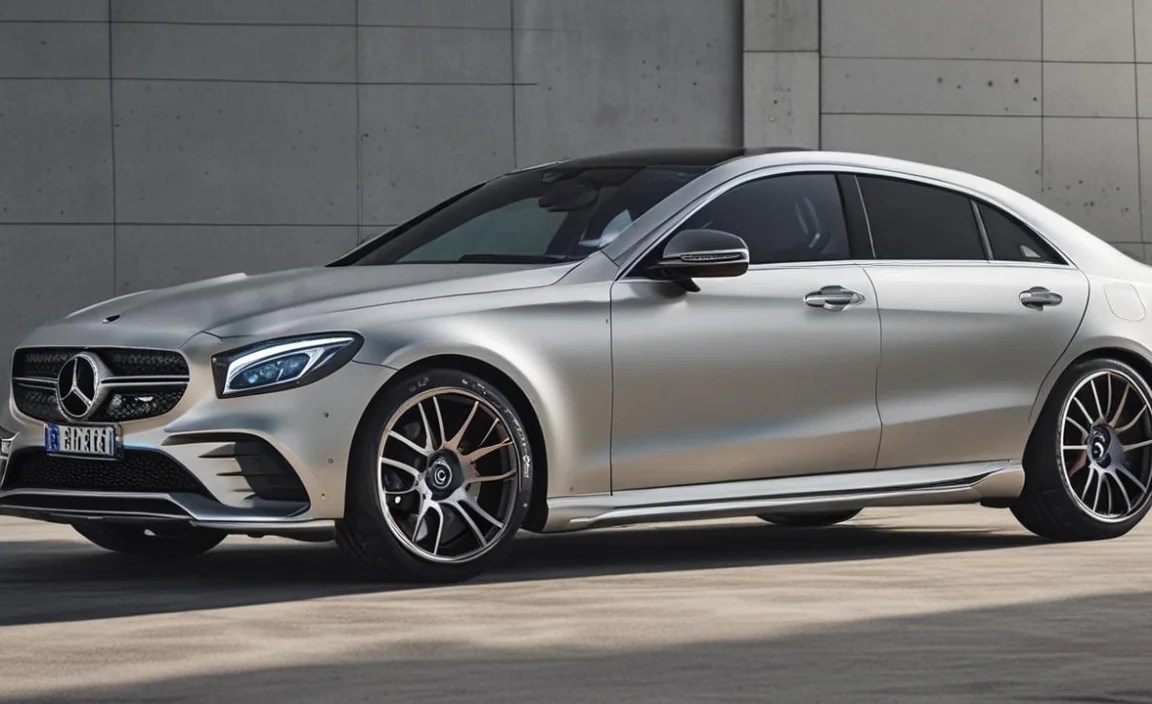
To ensure your Mercedes-Benz forced induction model continues to deliver exhilarating performance, proper maintenance and understanding its needs are crucial.
Regular Maintenance is Key
Forced induction systems operate under higher pressures and temperatures, making regular maintenance even more critical than in naturally aspirated engines. Always adhere to the manufacturer’s recommended service intervals.
- Oil Changes: High-quality synthetic oil is essential. It lubricates the turbocharger bearings, which spin at incredibly high RPMs, and helps dissipate heat. Ensure you use the specific oil recommended by Mercedes-Benz for your model.
- Air Filters: A clean engine air filter is vital for any engine, but especially for forced induction. It ensures unrestricted airflow to the compressor, preventing power loss and potential damage.
- Cooling System: The intercooler and engine cooling system must be in peak condition. Overheating can reduce performance and put stress on engine components.
- Spark Plugs & Ignition: Ensure you use the correct type of spark plugs specified for your engine and maintain the ignition system. The higher combustion pressures require precise ignition timing.
Understanding Turbo Lag and Heat Management
While modern systems minimize lag, it’s still a factor. Driving smoothly and allowing the engine to reach optimal temperatures before demanding maximum performance will prolong the life of your components. After a spirited drive, allowing the engine to idle for a minute or two (“cool-down”) can help the turbocharger cool down gradually, especially in older or higher-performance applications, though modern systems have integrated cooling mechanisms to manage this.
Performance Upgrades and Considerations
For enthusiasts looking to push their Mercedes further, performance tuning is an option. However, this should always be done with caution and by reputable specialists.
- ECU Tuning: Remapping the engine’s computer can adjust boost pressure, fuel delivery, and ignition timing for more power.
- Upgraded Intercoolers: Larger, more efficient intercoolers can reduce intake air temperature, allowing for more aggressive tuning and consistent power.
- Performance Exhaust Systems: A less restrictive exhaust can help exhaust gases exit the turbocharger more freely, improving spool time and power.
It’s important to note that significant modifications can affect emissions compliance and warranty. Always research and consult with experts before undertaking performance upgrades. Resources like the EPA overview of automotive emissions control can provide context on regulatory considerations.
Differences Between Turbocharged and Supercharged Mercedes Models
While both systems boost power, the driving experience they offer can be distinct. Here’s a quick comparison:
| Feature | Turbocharged Mercedes Models | Supercharged Mercedes Models (Heritage) |
|---|---|---|
| Power Source | Exhaust Gases | Engine Crankshaft (Belt Driven) |
| Power Delivery | Can have slight lag but with strong top-end power; modern turbos offer very quick response. | Instantaneous boost, strong low-end torque, linear power curve. |
| Efficiency | Generally more fuel-efficient, especially at cruising speeds. | Can be slightly less fuel-efficient due to parasitic engine load. |
| Complexity | Complex system with turbine, compressor, wastegate, intercooler. | Mechanically simpler, but still uses intercoolers and bypass valves. |
| Sound | Often a characteristic whistle or spooling sound; can be muted by modern designs. | Distinctive whine often associated with superchargers. |
| Modern Application | Dominant in current Mercedes-Benz and AMG lineup. | Primarily found in older models (e.g., “Kompressor” badged cars). |
Which is Right for You?
For most buyers today, a modern twin-turbocharged Mercedes-Benz offers the best of both worlds: exhilarating performance, excellent response, and competitive efficiency. If you’re drawn to the raw, immediate punch and a more visceral connection to the engine’s power delivery, seeking out a well-maintained classic “Kompressor” model might be an appealing, albeit niche, choice.
FAQs About Mercedes Forced Induction Models
What does “turbo lag” mean in a Mercedes?
Turbo lag is a slight delay between when you press the accelerator pedal and when the turbocharger spins fast enough to provide its full boost pressure. Modern Mercedes turbos have minimized this significantly, but you might still notice it; for instance, on a cold engine or when accelerating from very low RPMs.
Are supercharged Mercedes models more reliable than turbocharged ones?
Both systems, when properly maintained according to Mercedes-Benz specifications, are highly reliable. Superchargers, being mechanically driven, might have fewer complex components than a turbocharger system with its intricate wastegates and oil/coolant lines. However, modern turbo systems are incredibly robust.
Can I convert my naturally aspirated Mercedes to a forced induction model?
While technically possible with extensive custom fabrication and tuning, it is extremely complex, expensive, and generally not recommended. You would essentially need to replace the engine and all associated systems (ECU, fuel, intake, exhaust, cooling). It’s far more practical and cost-effective to purchase a factory-built forced induction Mercedes model.
How can I tell if my Mercedes has a turbocharger or supercharger?
The easiest way is to check the vehicle’s badging. Many older supercharged models (like the C230 Kompressor, SLK230 Kompressor) have “Kompressor” badges on the rear. Modern turbocharged models often don’t have specific “turbo” badges, but checking your owner’s manual or the vehicle’s specifications online will confirm its engine type.
What is “boost” in my Mercedes engine?
<


