
Mercedes Autonomous Models Future: Ultimate Luxury
Mercedes autonomous models future is about combining unparalleled luxury with advanced self-driving technology, promising a seamless and elevated driving experience that redefines personal transportation.
The allure of a Mercedes-Benz has always been its blend of sophisticated engineering and opulent comfort. Now, imagine that experience elevated further – where the car itself handles the drive, allowing you to relax, work, or simply enjoy the journey. This is the promise of Mercedes autonomous models of the future. It’s not just about getting from point A to point B; it’s about how you experience that travel. As automotive technology races forward, Mercedes-Benz is at the forefront, envisioning a future where self-driving capabilities integrate perfectly with their signature luxury, creating vehicles that are both intelligent companions and sanctuaries on wheels.
Here, we’ll explore what this future holds, demystifying the technology and painting a vivid picture of the ultimate luxury autonomous driving experience. We’ll look at the innovations driving this evolution and what you can expect from the next generation of Mercedes-Benz vehicles.
Mercedes-Benz and the Evolution of Autonomous Driving

For decades, Mercedes-Benz has been synonymous with automotive innovation. From groundbreaking safety features like ABS and airbags to the pioneering spirit in luxury sedan design, the brand has consistently pushed boundaries. The journey towards autonomy is a natural progression of this heritage. It’s about enhancing the driver’s experience, not replacing it, by taking over complex or tedious driving tasks.
The concept of autonomous driving, often referred to as self-driving or driverless technology, is categorized into different levels. These levels, typically defined by the SAE International (J3016 standards), help us understand the capabilities of these systems. Mercedes-Benz is particularly focused on achieving higher levels of autonomy, where the vehicle can handle most, if not all, driving tasks under specific conditions.
Understanding Autonomous Driving Levels

Before diving into the future of Mercedes autonomous models, let’s quickly understand the established levels of driving automation:
Level 0: No Automation
The human driver performs all driving tasks.
Level 1: Driver Assistance
A single automated system assists or takes over longitudinal or lateral vehicle motion (e.g., adaptive cruise control or lane keeping assist).
Level 2: Partial Automation
Automated systems can assist or take over both longitudinal and lateral vehicle motion simultaneously (e.g., adaptive cruise control with steering assist). The driver must remain engaged and monitor the driving environment.
Level 3: Conditional Automation
The system can perform all aspects of the driving task and monitor the driving environment under specific operating conditions. The driver can disengage from driving when prompted by the system.
Level 4: High Automation
The system can perform all aspects of the driving task and monitor the driving environment within a defined operational design domain (ODD). The driver does not need to take over when the system is engaged within its ODD.
Level 5: Full Automation
The system can perform all driving tasks under all conditions that a human driver could manage.
Mercedes-Benz is heavily invested in developing systems that will eventually reach Level 3 and beyond, aiming to provide truly hands-off and eyes-off driving experiences in certain scenarios.
The Mercedes-Benz Vision for Autonomous Luxury

What does “ultimate luxury” mean in an autonomous vehicle? For Mercedes-Benz, it translates into several key areas:
Unparalleled Comfort and Relaxation
Imagine a commute where traffic jams become opportunities to unwind. Autonomous systems will allow for entirely redesigned interiors. Seats can swivel to face each other, creating a mobile lounge. Advanced climate control, ambient lighting, and noise-canceling technology will ensure a serene environment. Passengers can engage in conversations, catch up on work, or simply enjoy the passing scenery without the stress of driving.
Seamless Connectivity and Productivity
The autonomous Mercedes will be an extension of your digital life. High-speed internet, integrated infotainment systems, and advanced voice control will allow for effortless communication and productivity. Large, high-resolution displays can serve as mobile workstations or entertainment hubs. Video conferencing, streaming services, and access to cloud-based applications will transform travel time into valuable personal or professional time.
Advanced Safety and Security
While the car drives itself, safety remains paramount and is inherent in Mercedes-Benz’s DNA. Autonomous systems employ sophisticated sensors, cameras, and artificial intelligence to perceive and react to their surroundings faster and more reliably than human drivers. Redundant systems ensure that even in the unlikely event of a component failure, the vehicle can navigate to a safe stop. This not only protects occupants but also contributes to overall road safety.
Personalized Experiences
Future models will learn your preferences. The car will adjust seating positions, cabin temperature, music, and even route suggestions based on your habits and real-time needs. It’s about creating a bespoke environment tailored to each individual occupant and every journey.
Key Technologies Powering Mercedes Autonomous Models
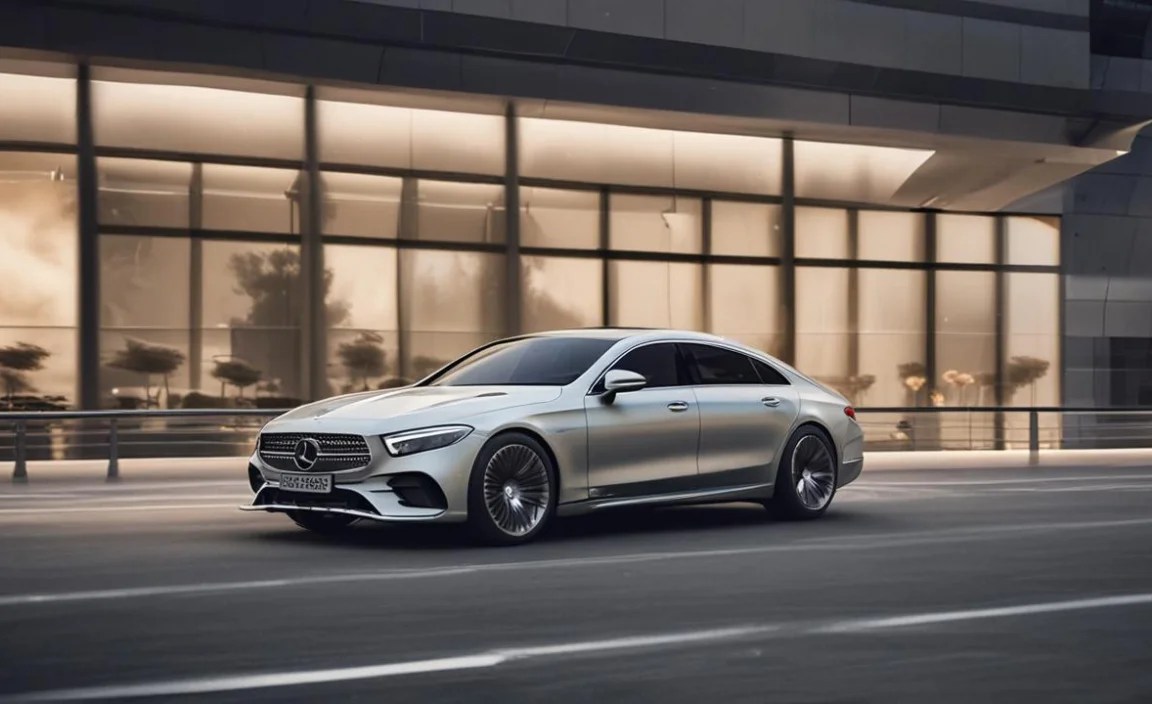
The realization of this vision relies on a suite of cutting-edge technologies working in harmony. Here are some of the core components:
1. Advanced Sensor Suite: This includes high-resolution cameras for visual recognition, radar for detecting objects and their speed, and lidar for precise 3D mapping of the environment. These sensors provide a 360-degree view, enabling the car to “see” everything around it, day or night, in various weather conditions.
2. High-Performance Computing: Massive amounts of data from sensors need to be processed in real-time. Powerful onboard computers, often featuring specialized AI chips, analyze this data to make split-second driving decisions.
3. Artificial Intelligence (AI) and Machine Learning (ML): AI algorithms are the brains of the autonomous system. They interpret sensor data, predict the behavior of other road users, and plan safe driving maneuvers. ML allows the system to learn from experience and continuously improve its performance.
4. High-Definition (HD) Mapping: Detailed, up-to-date maps that include lane markers, road boundaries, traffic signs, and even the precise elevation of the road are crucial for navigation and precision driving.
5. Vehicle-to-Everything (V2X) Communication: This technology allows the car to communicate with other vehicles (V2V), infrastructure like traffic lights (V2I), pedestrians (V2P), and the network (V2N). This connectivity provides an even more comprehensive awareness of the driving environment, enabling proactive and safer maneuvers.
6. Redundant Systems: For safety, critical systems like steering, braking, and power supply are duplicated. If one system fails, a backup immediately takes over, ensuring uninterrupted operation.
Current Examples and Future Roadmap
Mercedes-Benz has been progressively introducing advanced driver-assistance systems (ADAS) that pave the way for full autonomy. Systems like DISTRONIC PLUS (adaptive cruise control with steering assist) are already Level 2 capabilities. However, the company is pushing beyond this.
A significant step was the introduction of DRIVE PILOT, a Level 3 system that allows for conditional automated driving. This system was first certified in Germany and is available on select models like the S-Class and EQS Sedan under specific conditions, such as in dense traffic on suitable stretches of highway. When DRIVE PILOT is engaged, the driver is permitted to take their eyes off the road and their hands off the steering wheel, allowing them to engage in secondary activities.
The future roadmap involves:
- Expanding the operational design domain (ODD) for Level 3 systems.
- Developing fully autonomous (Level 4) capabilities for specific use cases, like robo-taxis or delivery services, in controlled environments.
- Integrating advanced AI for more intuitive interaction and personalization.
- Enhancing V2X communication to create a safer and more efficient traffic flow for all.
- Transforming vehicle interiors to be more like mobile living spaces.
The Interior Transformation: A Lounge on Wheels
The most noticeable impact of autonomy will be on the interior. Without the need for constant driver attention, the cabin transforms from a cockpit into a personalized space.
Here’s what we can anticipate:
- Reconfigurable Seating: Flexible seating arrangements will allow for face-to-face conversations, making the car ideal for small meetings or family time.
- Immersive Entertainment: Larger, integrated screens, high-fidelity sound systems, and augmented reality displays will create a captivating entertainment experience.
- Productivity Hubs: Fold-out tables, enhanced Wi-Fi, and easy access to cloud-based applications will turn the car into a mobile office.
- Advanced Wellness Features: Sophisticated ambient lighting, aromatherapy dispensers, advanced air filtration, and even massage functions will contribute to passenger well-being.
- Intuitive Controls: While autonomous, manual control will still be available. However, interfaces will become more gesture-based and voice-command driven, offering a seamless blend of interaction.
Challenges and Considerations
The path to widespread autonomous driving isn’t without its hurdles. Mercedes-Benz, like all automakers, is navigating complex challenges:
1. Regulatory Framework: Governments worldwide are still developing comprehensive regulations for autonomous vehicles. Standardization and legal frameworks are essential for widespread adoption.
2. Public Acceptance and Trust: Building public confidence in autonomous technology is crucial. Education and demonstrable safety are key to overcoming any apprehension.
3. Cybersecurity: Protecting connected and autonomous vehicles from cyber threats is a top priority. Robust security measures are non-negotiable.
4. Edge Cases and Environmental Variability: Autonomous systems must reliably handle unpredictable situations (edge cases) and varying weather and road conditions, which require immense data and sophisticated AI.
5. Ethical Considerations: In unavoidable accident scenarios, AI systems may need to make difficult ethical decisions. These “trolley problem” scenarios are a subject of ongoing debate and research.
The Mercedes-Benz S-Class: A Pioneer in Autonomy
The S-Class has long been the flagship for Mercedes-Benz innovation, and this holds true for autonomous driving. The current generation S-Class, equipped with systems like DRIVE PILOT, showcases the brand’s commitment.
| Feature | Description | Autonomous Level |
|---|---|---|
| DRIVE PILOT | Enables conditional automated driving in traffic jams on suitable motorways. Allows hands-off driving. | Level 3 |
| ATTENTION ASSIST | Monitors driver behavior to detect drowsiness or inattention. | Level 0 (Driver Monitoring) |
| ACTIVE LANE CHANGE ASSIST | Can assist with changing lanes on multi-lane roads, under certain conditions. | Level 2 |
| ROUTE-BASED SPEED ADAPTATION | Automatically adjusts speed based on road geometry (curves, intersections) and speed limits. | Level 2 |
These systems are not just about convenience; they are stepping stones towards a future where driving is an option, not an obligation. The interior of the S-Class itself reflects this, with advanced ambient lighting, premium materials, and sophisticated digital displays that create a luxurious and calming atmosphere, perfectly suited for either active driving or relaxed autonomous travel.
The Future of Mercedes Autonomous Models: FAQs
What is the most advanced autonomous driving feature currently available in Mercedes-Benz vehicles?
The most advanced system is DRIVE PILOT, a Level 3 conditional automated driving system available in certain S-Class and EQS Sedan models in specific regions. It allows the driver to take their hands off the wheel and eyes off the road under predefined conditions in traffic jams.
Will Mercedes autonomous cars replace the driver entirely?
Mercedes-Benz envisions a future where higher levels of autonomy are possible, potentially reaching full automation (Level 5) in some scenarios. However, for the foreseeable future, the focus is on systems that assist the driver and offer convenience and relaxation, with the driver still able to take over when needed or desired.
How does Mercedes-Benz ensure safety in its autonomous systems?
Safety is paramount. Mercedes-Benz employs a multi-layered approach including advanced sensor redundancy (cameras, radar, lidar), robust AI algorithms, comprehensive testing, fail-safe mechanisms, and adherence to stringent safety standards. V2X communication also plays a role in enhancing situational awareness.
What is the target year for widespread Level 4 or Level 5 autonomy from Mercedes-Benz?
Automotive companies are cautious about setting exact timelines for widespread Level 4 and 5 autonomy due to the complexity of technology development, regulatory approvals, and public acceptance. Mercedes-Benz continues to expand its capabilities progressively, focusing on bringing advanced driver assistance and conditional automation to market first.
How will autonomous driving affect the design of Mercedes-Benz interiors?
Autonomous capabilities will lead to a significant transformation of interiors, moving away from driver-centric cockpits to more lounge-like or mobile workspace environments. This includes reconfigurable seating, integrated entertainment systems, enhanced connectivity, and advanced comfort features, turning the cabin into a multi-functional space.
Can I buy a Mercedes-Benz with full self-driving capabilities today?
Currently, you cannot purchase a Mercedes-Benz with full self-driving capabilities (Level 5 autonomy) that operates everywhere under all conditions. However, you can purchase models equipped with advanced driver-assistance systems (Level 2) and the highly sophisticated DRIVE PILOT (Level 3) for specific automated driving scenarios.
Conclusion: A Glimpse into the Future of Driving
The Mercedes autonomous models of the future represent a profound shift in how we perceive and experience personal transportation. It’s a future where the stress of the commute dissolves, replaced by opportunities for rest, productivity, or connection. Mercedes-Benz is not just building cars; they are crafting intelligent, luxurious mobile environments that adapt to your life.
By integrating advanced sensor technology, powerful AI, and seamless connectivity


