
Mercedes EQV Towing: Ultimate Payload Capacity
The Mercedes EQV boasts impressive towing capabilities for an electric van, with a focus on its payload capacity. Properly understanding the EQV’s towing limits and payload is crucial for safe and legal operation, ensuring you can carry both passengers and cargo without exceeding the vehicle’s designed specifications for electric vehicle towing.
The allure of the Mercedes-Benz EQV is undeniable, blending luxury, comfort, and cutting-edge electric performance with the practicality of a spacious van. For many owners, especially those who use their EQV for business, family adventures, or even as a capable support vehicle, the question of how much it can tow, specifically its payload capacity, is paramount. It’s a common point of confusion, particularly with electric vehicles where understanding weight limits is key to safety and longevity. At MercedesBlue, we believe in demystifying these aspects, ensuring you feel confident and informed. This guide will break down the Mercedes EQV’s towing and payload capacities, so you can plan your journeys with certainty.
Understanding Towing and Payload for Your EQV

When we talk about vehicle capacity, especially for a versatile vehicle like the Mercedes-Benz EQV, two key terms often come up: towing capacity and payload capacity. While they sound similar, they refer to distinct limits that are vital for safe operation. Understanding the difference is the first step to maximizing your EQV’s potential without compromising its performance or safety.
What is Towing Capacity?
Towing capacity refers to the maximum weight that your vehicle is designed to safely pull behind it. This includes the weight of the trailer itself, plus any cargo loaded into the trailer. For the EQV, this figure dictates what kind of trailer you can hitch up – whether it’s a small utility trailer, a caravan for a weekend getaway, or a trailer for equipment.
What is Payload Capacity?
Payload capacity, on the other hand, is the maximum weight of optional equipment, passengers, and cargo that your vehicle can carry within the vehicle itself. Think of it as the sum of the weight of everyone inside the EQV, plus everything you load into its cabin, storage areas, and on its roof (if applicable). For an electric vehicle like the EQV, the battery pack itself contributes significantly to the vehicle’s curb weight, meaning the payload capacity is a critical figure to manage.
Why Payload Matters for the EQV
The Mercedes-Benz EQV is an electric vehicle, and like all EVs, its battery is heavy. This substantial battery weight means that the vehicle’s Gross Vehicle Weight Rating (GVWR) is reached more quickly than with a conventionally powered van. GVWR is the maximum permissible operating weight of your vehicle, including the vehicle itself, passengers, and cargo. Exceeding the GVWR, which is directly tied to payload, can negatively affect braking, handling, and tire wear, and is often illegal. Therefore, understanding and respecting your EQV’s payload capacity is even more critical for safe operation.
Mercedes EQV Towing Specifications

The Mercedes-Benz EQV is engineered for versatility, and its towing capabilities reflect this. While it’s an electric vehicle, it doesn’t shy away from the practical needs of transporting goods or leisure equipment. However, it is important to note that specific towing figures can vary slightly depending on the exact model year, configuration, and regional market. Always consult your vehicle’s owner’s manual for the most accurate and up-to-date specifications.
Generally, the Mercedes-Benz EQV is rated to tow up to 750 kg (unbraked trailer) and up to 2,000 kg (braked trailer). This allows for substantial flexibility when it comes to towing. A braked trailer is essential for heavier loads, as it has its own braking system that works in conjunction with the towing vehicle, significantly improving stability and stopping power.
Key considerations for towing with your EQV:
- Braked vs. Unbraked Trailers: The difference in towing capacity between unbraked and braked trailers is significant. Always ensure your trailer is properly equipped for the weight you intend to tow.
- Trailer Tongue Weight: This is the downward force the trailer exerts on the tow ball. It typically should be between 10-15% of the trailer’s loaded weight. An incorrect tongue weight can lead to trailer sway and instability.
- Towing Stability: As an electric vehicle, the EQV offers a low center of gravity thanks to the battery placement, which can contribute to towing stability. However, excessive speed and crosswinds can still affect handling.
- Range Impact: Towing a trailer will put an additional load on the EQV’s battery, significantly reducing its electric range. Plan your charging strategy accordingly, especially on longer journeys. You can find more information on electric vehicle range and factors affecting it on resources like the Alternative Fuels Data Center.
Mercedes EQV Payload Capacity Guide

The payload capacity is where many EQV owners need the most clarity. It’s crucial to understand that the stated payload capacity on the specification sheet is for a base vehicle. The actual payload capacity you have available will be less, reduced by any optional extras and accessories fitted to your specific EQV.
Calculating Your EQV’s Payload Capacity:
The fundamental formula for calculating remaining payload is:
Available Payload = GVWR - Curb Weight - Optional Equipment Weight
Let’s break down these terms:
- Gross Vehicle Weight Rating (GVWR): This is the maximum permissible weight of your fully loaded vehicle, as determined by the manufacturer. It’s usually found on a sticker in the driver’s side door jamb or in the owner’s manual.
- Curb Weight: This is the weight of the vehicle itself, including standard equipment and all necessary operating consumables (like coolant, brake fluid, and a full battery charge), but without passengers or cargo. For the EQV, this will include the weight of the battery.
- Optional Equipment Weight: This includes any features fitted to your EQV that are not part of the standard specification. Examples include upgraded seating, premium sound systems, auxiliary heaters, additional storage solutions, or higher-spec wheels.
Example Calculation (Illustrative – figures may vary):
Let’s assume for a hypothetical EQV model:
- GVWR: 3,500 kg
- Curb Weight (with battery): 2,800 kg
- Weight of Optional Extras (e.g., premium seats, roof rails): 150 kg
In this example:
Available Payload = 3,500 kg - 2,800 kg - 150 kg = 550 kg
This 550 kg would then be the maximum combined weight for all passengers and any cargo loaded inside the vehicle.
Factors Affecting EQV Payload
Several factors can influence the payload capacity of your particular Mercedes-Benz EQV:
- Trim Level: Higher trim levels often come with more standard equipment, which increases the curb weight and reduces available payload.
- Battery Size: While all EQVs have a battery, models with larger battery packs will have a higher curb weight, potentially impacting payload.
- Optional Features & Accessories: Every added feature, from a panoramic sunroof to advanced driver assistance systems, adds weight. Aftermarket accessories like bike racks, roof boxes, or even upgraded floor mats contribute to the overall weight.
- Number of Seats: While less common for the EQV to have vastly different seating configurations sold as standard, the weight of seats themselves and their mounting hardware contributes.
Finding Your EQV’s Specific Limits
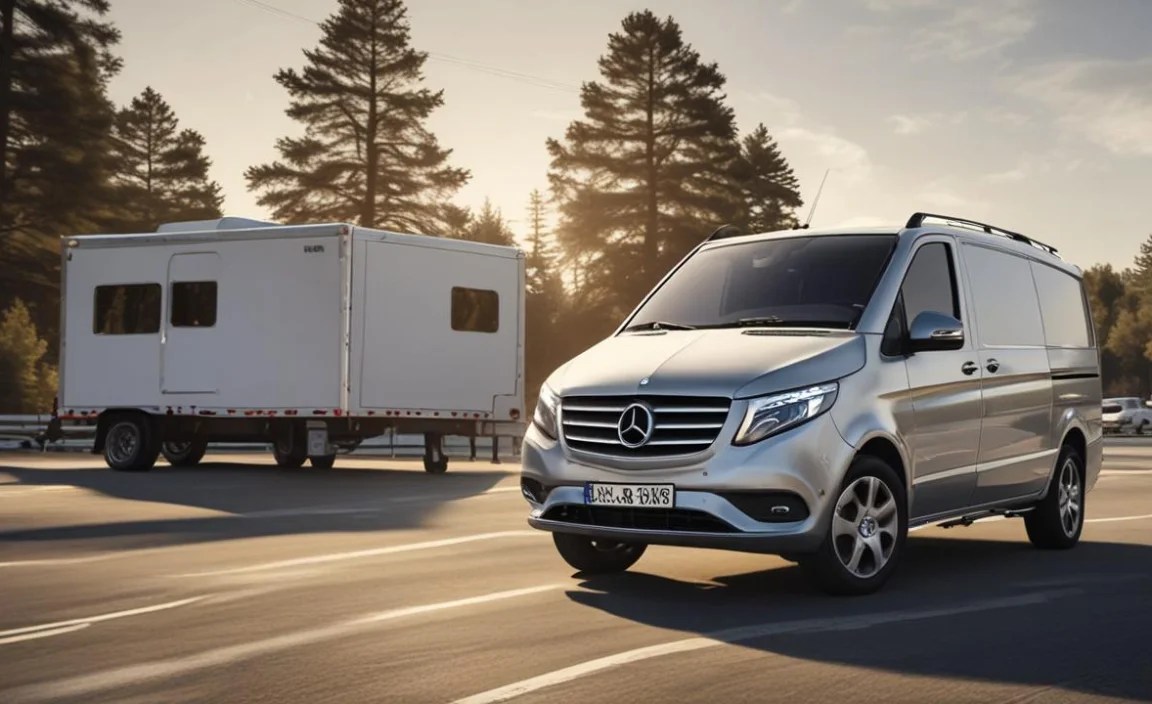
Accurately determining the towing and payload capacity for your specific Mercedes-Benz EQV is critical. Relying on general figures can lead to overloading and safety risks. Fortunately, Mercedes-Benz provides clear documentation to help you find this information.
Consult Your Owner’s Manual
The most definitive source of information is your vehicle’s owner’s manual. It will detail the GVWR, towing capacities (braked and unbraked), and often the vehicle’s curb weight. Look in the sections related to “Weights and Loads,” “Towing,” or “Technical Data.”
Vehicle Certification Label
This label, typically found on the driver’s side B-pillar (the door jamb), is a treasure trove of information. It will clearly state the GVWR. By knowing your vehicle’s curb weight (often found in the manual or on a separate sticker), you can calculate your available payload by subtracting the curb weight from the GVWR.
Mercedes-Benz Dealership
If you’re still unsure, or if your manual is missing, your local Mercedes-Benz dealership can assist. They have access to the official specifications for every model and can help you calculate your specific vehicle’s payload capacity.
Understanding Gross Axle Weight Ratings (GAWR)

Beyond the overall GVWR, it’s equally important to consider the Gross Axle Weight Ratings (GAWR) for both the front and rear axles. GAWR specifies the maximum weight that each axle is designed to safely support.
Why GAWR is Important:
- Weight Distribution: When loading your EQV or attaching a trailer, the weight isn’t always distributed evenly. You might exceed the GAWR of one axle even if you’re within the overall GVWR.
- Safe Handling: Axle ratings are crucial for maintaining proper tire contact with the road and ensuring stable handling. Overloading an axle can lead to tire failure, suspension damage, and compromised control.
- Trailer Stability: Incorrect weight distribution, particularly how weight is transferred from the trailer to the tow vehicle’s rear axle, can impact the effectiveness of trailer brakes and increase the risk of dangerous sway.
Locating GAWR:
The GAWR for both front and rear axles is typically found on the same Vehicle Certification Label mentioned earlier, often listed below the GVWR.
Managing GAWR:
- Load distribution within the vehicle: Try to keep heavy items as low and as close to the center of the vehicle as possible.
- Trailer setup: Ensure your trailer is loaded correctly, with appropriate tongue weight, to prevent excessive stress on the rear axle of your EQV.
Comparative Specs: EQV vs. Competitors
When considering an electric van for its practicality, especially its towing and payload capabilities, it’s useful to see how the Mercedes-Benz EQV stacks up against its rivals. While direct comparisons can be challenging due to varying configurations and market availability, here’s a general overview:
The Electric Van Landscape
The electric van market is rapidly evolving. Competitors often include models from brands like Ford (e.g., E-Transit), Peugeot (e-Traveller), Citroën (ë-SpaceTourer), and Volkswagen (ID. Buzz Cargo). These vehicles cater to similar needs, from commercial use to passenger transport, and all are working to balance EV technology with traditional van utility.
EQV Advantage: Luxury and Refinement
The EQV’s primary differentiator is its Mercedes-Benz heritage, offering a level of luxury, build quality, and refinement that often surpasses competitors. This extends to its interior comfort and the driving experience, even when loaded or towing.
Towing and Payload Comparison Table (General Figures)
Please note that these are generalized figures. Exact specifications can vary significantly by model year, trim, and specific market regulations. Always verify with official manufacturer data for the exact vehicle you are considering.
| Vehicle | Max Braked Towing Capacity (approx.) | Max Payload Capacity (approx.) | Key Considerations |
|---|---|---|---|
| Mercedes-Benz EQV | 2,000 kg | ~500-600 kg (Varies greatly) | Luxury focus, comfortable ride, premium interior. EV range impacted by towing. |
| Ford E-Transit (Passenger/Crew Van variants) | Up to 2,000 kg | ~900-1,100 kg (Varies greatly) | Strong payload, robust construction, wide availability. Less luxury-oriented than EQV. |
| Volkswagen ID. Buzz (Passenger variant) | 1,000 kg | ~500-600 kg (Varies greatly) | Retro styling, innovative interior. Lower towing capacity than EQV and E-Transit. |
| Peugeot e-Traveller / Citroën ë-SpaceTourer | Up to 1,000 kg | ~500-700 kg (Varies greatly) | Practical, spacious, often more affordable. Towing capacity is modest. |
As the table illustrates, the Mercedes-Benz EQV holds its own in terms of towing capacity, matching some of the larger offerings. Its payload capacity, like most passenger-focused electric vans, requires careful attention to optional equipment and passenger load. The E-Transit often leads in pure payload figures, typically designed with commercial hauling in mind. The ID. Buzz and French counterparts offer competitive space but have lower towing limits.
Safe Towing and Loading Practices
Towing and properly loading a vehicle like the EQV go hand-in-hand with safety. Exceeding limits or loading incorrectly can lead to dangerous situations. Here are essential practices to ensure you and your cargo, or your trailer, travel safely.
Pre-Trip Checks
Before every trip involving towing or a heavily loaded vehicle, perform these checks:
- Tires: Ensure all tires (on the vehicle and trailer) are inflated to the correct pressure for the load. Check for any signs of wear or damage. For towing, higher pressures might be recommended.
- Brakes: Test the trailer brakes (if applicable) independently. Ensure the vehicle’s brakes are functioning correctly.
- Lights: Verify that all trailer lights (brake lights, turn signals, running lights) are working and properly connected.
- Hitch and Coupler: Double-check that the trailer hitch is securely attached to the EQV and that the trailer coupler is properly engaged and locked onto the tow ball. Use a safety chain.
- Mirrors: Adjust your side mirrors for optimal visibility of the trailer and surrounding traffic. Extension mirrors may be necessary for wider trailers.
Loading Your EQV
To stay within your payload and GAWR limits:
- Know Your Weights: Always know the GVWR and GAWR of your EQV.
- Distribute Weight: Place heavier items low and as close to the center of the vehicle as possible to maintain stable handling.
- Count Passengers: Remember that each passenger has a weight. Even a small child adds to the payload.
- Account for Cargo: Don’t forget the weight of luggage, sports equipment, tools, or anything else you put inside.
- Avoid Overloading: If you’re unsure about the weight of your cargo, use a weighbridge to get an accurate measurement. You can find local weighbridges through searches for “public weighbridge near me” or by contacting local haulage companies.
Towing Techniques
- Smooth Acceleration and Braking: Avoid sudden movements. Gradual acceleration and braking will help maintain control and reduce strain on the vehicle and trailer.
- Wider Turns: Remember that the trailer will follow a different path than your vehicle. Allow extra space for turns to avoid hitting curbs or obstacles.
- Be Aware of Wind: Crosswinds from passing trucks or natural gusts can push the trailer. Be prepared to correct gently.
- Reversing with a Trailer: This takes practice. Guide the


