
SLK R170 vs R171: Ultimate Tech Showdown
The Mercedes-Benz SLK R170 and R171 offer distinct technological advancements from their respective eras. The R171 generally boasts more modern infotainment, safety features, and engine technology compared to the earlier R170, though both provide a rewarding convertible experience.
Choosing between two iconic Mercedes-Benz models can be a delightful challenge, especially when they represent different chapters in the marque’s evolution. The Mercedes-Benz SLK series, known for its compact roadster charm and innovative retractable hardtop, offers two distinct generations: the R170 and the later R171. For many enthusiasts and potential buyers, understanding the technological differences between these two model lines is key to making an informed decision. This isn’t just about aesthetics; it’s about experiencing the driving dynamics, comfort, and safety features that Mercedes-Benz engineered into each generation. We’re here to break down the tech showdown between the SLK R170 and R171, helping you navigate their innovations and identify which one best suits your desires.
SLK R170 vs R171: A Tale of Two Generations

The Mercedes-Benz SLK first arrived as the R170 in 1996, immediately capturing attention with its groundbreaking vario-roof system, a retractable hardtop that transformed the car from a coupe to an open-top roadster at the touch of a button. It embodied a new era of compact luxury convertibles. A decade later, in 2004, Mercedes-Benz introduced the R171, building upon the R170’s success with significant technological upgrades, refined styling, and enhanced performance. While both share the SLK DNA, their technological footprints are distinctly different, reflecting the progress in automotive engineering and consumer expectations over roughly ten years.
For those new to the SLK world or considering an upgrade, the differences in technology can seem daunting. This guide aims to demystify these advancements, highlighting key areas where each generation shines. We’ll explore everything from infotainment systems and safety innovations to engine management and driver aids, ensuring you can appreciate the engineering that went into each model.
The Vario-Roof: A Shared Innovation, Evolved

The most defining feature of both the R170 and R171 SLK is its retractable hardtop, the ‘vario-roof’. Mercedes-Benz pioneered this in the R170, offering the security and weather protection of a coupe with the open-air freedom of a convertible, all without the need for manual top operation. This was a significant technological leap for its time.
- R170 Vario-Roof: Early models utilized a hydraulic system to stow the roof. The process was revolutionary but could be complex and sometimes prone to leaks if seals or hydraulic lines weren’t meticulously maintained.
- R171 Vario-Roof: The R171 refined the vario-roof. While still hydraulic, it generally became more robust and reliable. Later models even introduced an electrohydraulic system for smoother operation. Some R171s also gained optional panoramic glass roof sections, which could be retracted with the roof or at least offered a tinted, see-through experience.
For owners, understanding the maintenance of this complex system is crucial, regardless of generation. Regular inspection of seals, checking fluid levels (if accessible), and ensuring smooth operation without binding are key preventative measures. Resources like the official Mercedes-Benz Owner’s Manuals can provide specific care instructions for your model year.
Powertrain and Performance Technology

The engines and underpinnings of the SLK also saw considerable evolution between the R170 and R171 generations, impacting performance, efficiency, and driver engagement.
R170 Engine Offerings

The R170 was initially offered with a supercharged 2.0-liter inline-four (SLK 200 Kompressor) and a naturally aspirated 2.3-liter inline-four (SLK 230 Kompressor). Later, a 3.2-liter V6 engine was introduced for the SLK 32 AMG, offering a significant performance upgrade.
- Supercharging Technology: The Kompressor engines utilized a Lysholm-type supercharger, which provided immediate torque and responsive acceleration, a characteristic Mercedes-Benz trait.
- Transmission Options: Buyers could choose between a 5-speed automatic and a 6-speed manual transmission for most models.
R171 Engine Advancements

The R171 saw more modern engine technologies and a broader range of power outputs. Engine options included:
- R171.045 (SLK 200 Kompressor): Featuring a 1.8-liter supercharged inline-four, offering improved efficiency over the R170’s 2.0-liter.
- R171.445 (SLK 350): Introduced a potent 3.5-liter naturally aspirated V6 engine, delivering excellent performance without the complexity of forced induction.
- R171.473 (SLK 55 AMG): This AMG variant housed a beefy 5.4-liter naturally aspirated V8, a true powerhouse offering exhilarating acceleration.
- Transmission Advancements: The R171 generally came with a 6-speed manual or a 7-speed automatic transmission (7G-TRONIC), offering smoother shifts and better fuel economy than the earlier 5-speed automatics.
The R171’s engines generally benefited from updated ECU (Engine Control Unit) tuning and sensor technology, leading to more precise fuel delivery and emissions control. For those interested in performance data, resources like Ultimate Specs offer detailed engine and performance metrics for both generations.
Interior Technology and Comfort Features

Step inside, and the generational divide in technology becomes more apparent. While the R170 offered a luxurious and functional cabin for its time, the R171 brought more contemporary comfort and convenience features.
R170 Interior Technology

The R170 interior was characterized by its premium materials, ergonomic design, and focus on driver experience. Key features included:
- Audio Systems: Basic AM/FM radio with CD player and optional cassette. Sound quality was good, but lacked modern connectivity.
- Climate Control: Manual or optional automatic climate control systems were available.
- Instrumentation: Classic Mercedes-Benz analog gauges, clear and easy to read.
- Optional Navigation: Early, often bulky, and somewhat rudimentary GPS navigation systems were available on higher trims or as an option.
R171 Interior Advancements

The R171’s interior received a significant technology and styling update:
- COMAND System: More advanced COMAND (Cockpit Management and Navigation Display) systems became common, offering improved navigation, integrated audio controls, and often Bluetooth connectivity for phone calls.
- Improved Audio: Higher-quality audio systems, including optional Harman Kardon sound, with better speaker placement and digital signal processing.
- Multi-function Steering Wheel: Introduced across more trims, allowing control of audio, phone, and trip computer functions without removing hands from the wheel.
- Optional Airscarf: A standout feature on the R171, the Airscarf system blows warm air from vents in the headrests, extending comfortable open-top driving into cooler seasons.
- Automatic Climate Control: Dual-zone automatic climate control became more prevalent, offering greater comfort for driver and passenger.
For a deeper dive into the R171’s interior features, you can often find detailed descriptions and reviews on automotive enthusiast forums and specialized Mercedes-Benz sites.
Safety and Driver Assistance Systems

Safety has always been a Mercedes-Benz hallmark, and both the R170 and R171 reflect the safety standards and advancements of their respective eras. However, the R171 incorporated more sophisticated electronic safety systems.
R170 Safety Features

The R170 was built with a strong focus on passive safety:
- Anti-lock Braking System (ABS): Standard on all models.
- Electronic Stability Program (ESP): Introduced later in the R170’s production run, a crucial system for maintaining control during evasive maneuvers.
- Airbags: Front airbags and side airbags were standard.
- Roll-over Protection: Integrated rollover hoops behind the seats provided crucial protection in the event of a rollover.
R171 Safety Innovations

The R171 built upon the R170’s foundation with enhanced and more advanced safety technologies:
- Enhanced ESP: The ESP system in the R171 was generally more refined and integrated with other systems.
- Brake Assist (BAS): Standard, it automatically provides maximum braking force when sudden braking is detected.
- Optional Bi-Xenon Headlights: For improved visibility at night.
- Advanced Roll-over Protection: The R171 featured a more integrated and robust pop-up roll-over protection system that deployed automatically when sensors detected a potential rollover.
- Tire Pressure Monitoring System (TPMS): Became more common, alerting drivers to underinflated tires.
- Sensors and Electronic Aids: The R171 benefited from more advanced sensor technology that fed data into its electronic control units, allowing for more precise management of safety systems. The National Highway Traffic Safety Administration (NHTSA) provides safety ratings and recall information for vehicles, which can be a valuable resource for comparing models.
Technology Comparison Table
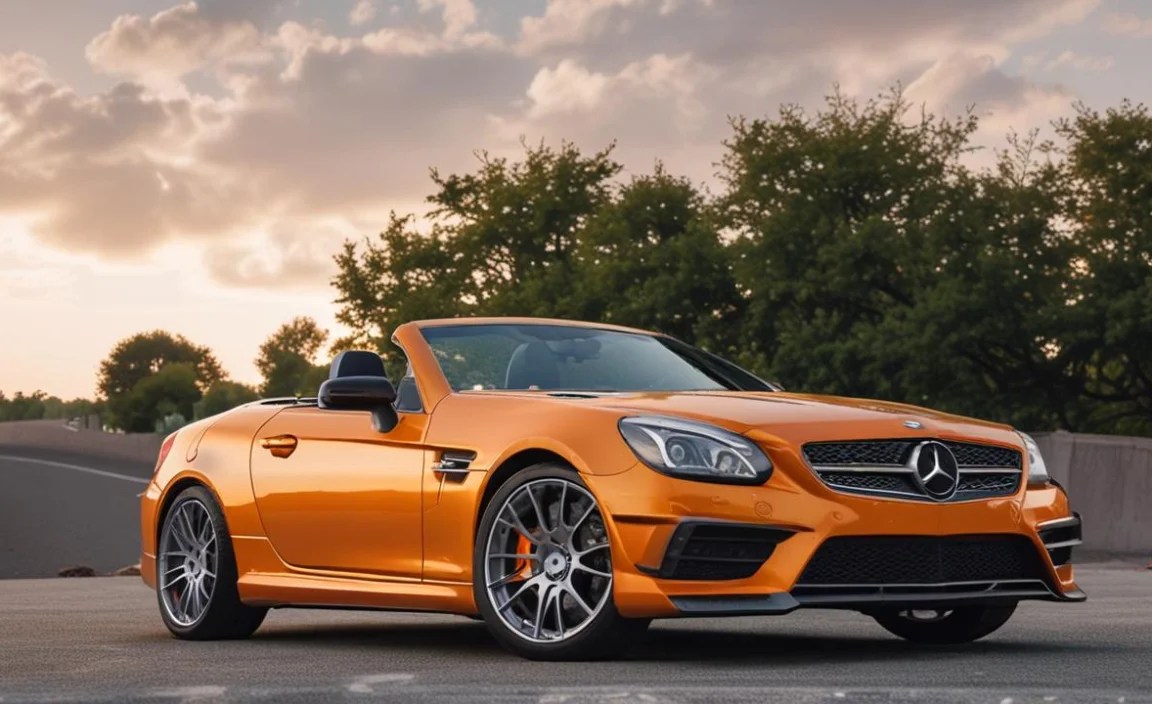
To summarize the key technological differences, here’s a comparative table:
| Feature | Mercedes-Benz SLK R170 (Approx. 1996-2004) | Mercedes-Benz SLK R171 (Approx. 2004-2011) |
|---|---|---|
| Retractable Hardtop | Hydraulic Vario-Roof | Refined electro-hydraulic Vario-Roof; Optional panoramic glass roof |
| Infotainment Head Unit | Basic radio/CD player; Optional early navigation | COMAND system with improved navigation, CD/DVD, optional Bluetooth |
| Engine Management | Supercharged (Kompressor) inline-fours, V6; ECU | Supercharged inline-fours, naturally aspirated V6/V8; Advanced ECU tuning |
| Transmission Options | 5-speed Automatic, 6-speed Manual | 6-speed Manual, 7-speed Automatic (7G-TRONIC) |
| Climate Control | Manual or basic Automatic climate control | Dual-zone Automatic climate control common; Optional Airscarf |
| Driver Aids | ABS; ESP introduced later | ABS, Enhanced ESP, Brake Assist (BAS), optional Xenon headlights, TPMS |
| Safety Systems | Front & Side Airbags, Roll-over hoops | Advanced Roll-over protection (deployable), enhanced airbags |
Driving Experience and Technology Integration

The integration of technology significantly impacts how each SLK drives and feels. The R170, while advanced for its time, offers a more direct, analog-style driving experience, especially with the manual transmission. Its supercharged engines provide a distinct thrum and immediate response. The R171, on the other hand, feels more refined and modern. The 7G-TRONIC transmission offers smooth, almost imperceptible shifts, and the more advanced ESP and chassis tuning contribute to a more stable and composed ride.
For enthusiasts who appreciate raw feedback, the R170 might hold a unique appeal. However, for those seeking a more comfortable, technologically integrated, and efficient driving experience with modern conveniences, the R171 clearly takes the lead. The R171’s ability to handle daily driving with greater ease, thanks to its more advanced transmissions and electronics, makes it a compelling choice for a broader range of owners.
Maintenance and Reliability: A Tech Perspective

When comparing the R170 to the R171 from a maintenance and reliability standpoint, the generational difference in technology plays a key role. Generally speaking, more advanced technology can sometimes mean more complex repairs and potentially higher costs if components fail.
- R170: Being an older design, many common issues on the R170 are well-documented by enthusiasts and mechanics. The vario-roof hydraulic system is a prime example requiring regular attention. However, the simpler electronics and fewer complex sensors can sometimes make troubleshooting more straightforward. OEM and aftermarket parts are readily available.
- R171: The R171 benefits from Mercedes-Benz’s continuous product development. Its systems are generally more robust and reliable due to its later introduction and refined engineering. However, the increased complexity of systems like the COMAND unit, 7G-TRONIC transmission, and more sophisticated electronics means that diagnosing and repairing faults can require specialized knowledge and diagnostic tools, often found at Mercedes-Benz dealerships or specialized independent shops. For instance, diagnosing issues with the CAN bus network requires specific tools.
For DIY owners, the R170 might offer a slightly more accessible entry point for basic maintenance and repairs due to its simpler systems. However, both generations demand diligent maintenance to preserve their luxurious feel and technological integrity. Consulting reputable repair guides or joining online Mercedes-Benz communities can provide invaluable insights specific to each model.
Frequently Asked Questions (FAQs)
Q1: What are the main technological differences between the SLK R170 and R171?

The R171 generally features more advanced infotainment (COMAND system), a smoother 7-speed automatic transmission, more sophisticated safety systems (like deployable roll-over protection), and updated engine management compared to the R170’s simpler, yet still capable, technology. The R171 also introduced features like Airscarf, which was not available on the R170.
Q2: Which infotainment system is better: R170 or R171?

The R171’s COMAND system is significantly more advanced and user-friendly than the R170’s basic audio and optional navigation. The R171 offers better display clarity, more features, and often Bluetooth connectivity, making it a more modern and convenient experience.
Q3: Is the vario-roof in the R171 more reliable than in the R170?

While both use complex hydraulic systems, the R171’s vario-roof is generally considered more refined and potentially more reliable due to engineering improvements and fewer common issues reported over time. However, proper maintenance is key for both generations.
Q4: Are there significant differences in engine technology between the two models?

Yes, while both utilize supercharging in their ‘Kompressor’ variants, the R171 benefits from newer engine management software, more efficient engine designs (e.g., smaller displacement yet comparable or better power in some cases), and a wider range of engine options, including a potent naturally aspirated V6 and V8 in AMG guise.
Q5: Which model has better safety features, the R170 or R171?

The R171 incorporates more advanced safety technologies, including more sophisticated ESP, optional bi-xenon headlights for improved visibility, and a more sophisticated system for roll-over protection that deploys automatically. Both generations, however, offer good passive safety for their time.
Q6: Can I upgrade the technology in an R170 to be more like an R171?

While some upgrades are possible, such as installing an aftermarket infotainment system with modern connectivity or retrofitting ESP if it wasn’t originally equipped, it’s challenging and often costly to replicate the full suite of R171’s integrated technologies. The R170’s architecture is fundamentally different.
Conclusion: Choosing Your SLK
The Mercedes-Benz SLK R170 and R171 each represent a distinct era of automotive innovation, offering a unique blend of compact roadster thrills and Mercedes-Benz luxury. The R170, the trailblazer, introduced the revolutionary vario-roof and offered a more direct, engaging driving experience with its robust, albeit simpler, technology. It’s a classic that still provides significant enjoyment and a taste


