
Mercedes Vito Driving Techniques: Ultimate Performance
Quick Summary:
Mastering Mercedes Vito driving techniques optimizes performance, fuel efficiency, and safety. Learn to leverage its powerful engine, adaptive systems, and nimble handling for a superior driving experience. This guide breaks down essential techniques for smoother rides, better control, and unlocking your Vito’s full potential.
The Mercedes-Benz Vito is more than just a workhorse; it’s a versatile vehicle designed for comfort, capability, and a touch of Mercedes-Benz refinement. Whether you’re navigating city streets for deliveries, embarking on a long-haul journey, or carrying precious cargo, understanding how to drive your Vito for ultimate performance can significantly enhance your daily experience. Many drivers simply hop in and go, but a few key driving techniques can unlock smoother rides, better fuel economy, and a more confident command of the road. If you’ve ever felt your Vito could be more responsive, or you simply want to maximize its potential, you’re in the right place. We’ll guide you through the essential techniques to make every drive more efficient and enjoyable.
Frequently Asked Questions
Q1: What is the most important driving technique for a Mercedes Vito?
A1: The most important technique is smooth acceleration and braking. This conserves fuel, reduces wear on components like brakes and tires, and provides a more comfortable ride for occupants and cargo.
Q2: How can I improve fuel efficiency in my Mercedes Vito?
A2: Proper tire inflation is crucial, along with aerodynamic driving (minimizing unnecessary braking and accelerating). Anticipating traffic flow and using eco-driving modes, if equipped, also help significantly.
Q3: Is an automatic transmission in a Vito different to drive than a manual?
A3: Yes. Automatic transmissions in modern Vitos, like the 7G-TRONIC or 9G-TRONIC, handle gear changes for you, allowing you to focus more on steering and braking. You primarily select Drive (D), Reverse (R), or Park (P), and the vehicle manages the rest. Some offer manual override options via paddle shifters for sportier driving.
Q4: How do I handle the Vito on slippery surfaces?
A4: Gentle acceleration and steering inputs are key. Avoid sudden movements. If equipped with ESP® (Electronic Stability Program), trust it to help regain control, but always reduce speed before entering turns on slippery roads.
Q5: Are there special techniques for parking a Mercedes Vito?
A5: Yes. Utilize the available parking aids like rearview cameras and parking sensors. Practice with wide turns and use gentle throttle and brake control. Engage hill-hold assist on inclines to prevent rolling back.
Q6: Can I use my Vito for towing, and what techniques are important?
A6: Yes, if properly equipped. When towing, increase your following distance considerably, brake much earlier, and avoid sudden lane changes. Understand your vehicle’s towing capacity and ensure the trailer is correctly loaded and secured.
Understanding Your Vito’s Performance

The Mercedes-Benz Vito is engineered with a balance of power and practicality. Its reputation for reliability and comfort is well-earned, but to truly extract “ultimate performance,” we need to look beyond just pressing the accelerator. Performance, in the context of a vehicle like the Vito, isn’t solely about speed; it’s about efficiency, control, and the overall driving experience. This means smoother acceleration, more responsive braking, better handling through corners, and maximizing fuel economy.
Key to understanding your Vito’s performance is recognizing its underlying systems. Modern Vitos often feature advanced drivetrain technologies and driver assistance systems. Familiarizing yourself with these can unlock their full potential. Understanding how the engine management system works, how the transmission shifts gears, and how electronic stability systems function is the first step to driving more effectively.
For instance, knowing when to engage specific driving modes (if available) or how to intuitively manage the throttle can make a noticeable difference. This isn’t about aggressive driving; it’s about a more harmonious interaction between you and your vehicle, leading to a superior outcome in terms of comfort, efficiency, and even vehicle longevity.
Smooth Acceleration and Braking: The Foundation

The cornerstone of any advanced driving technique, especially for a vehicle like the Vito, is mastering smooth inputs. This applies directly to how you depress the accelerator and how you apply the brakes. Abrupt acceleration wastes fuel and puts unnecessary strain on the engine and drivetrain. Similarly, slamming on the brakes wears out your brake pads and discs prematurely and can unsettle the vehicle, especially when loaded.
Accelerator Techniques
Think of the accelerator pedal not as an on/off switch, but as a sensitive control. For the ultimate performance and efficiency:
- Gentle Initial Press: When starting from a standstill or at low speeds, apply the accelerator gently and progressively. Allow the engine to smoothly build revs and the transmission to select the optimal gear.
- Anticipate Stops: If you see a red light or slow-moving traffic ahead, lift your foot off the accelerator early. Let the vehicle’s momentum carry you forward. This allows for a much gentler, more controlled braking application as you get closer.
- Maintain Steady Speed: On cruise control on highways, use it liberally. On non-cruise control stretches, aim for a consistently steady speed. Avoid fidgeting with the pedal; small, constant adjustments are far less efficient than finding a good cruising speed and maintaining it.
- Power When Needed: While smoothness is key, don’t be afraid to use adequate power when merging into traffic or ascending hills. The Vito has ample power, but it needs to be applied correctly to avoid bogging down or an unnecessarily harsh surge.
Braking Technologies and Methods
Modern Vitos are equipped with sophisticated braking systems, including Anti-lock Braking System (ABS) and Electronic Brakeforce Distribution (EBD). Understanding how to work with these systems is crucial.
- Progressive Pressure: Apply brake pedal pressure smoothly and progressively. This allows ABS to function optimally if a sudden stop is required, preventing wheel lock-up.
- Brake Early for Loads: If you’re carrying a heavy load or towing, your stopping distance will be significantly longer. Start braking much earlier than you normally would.
- Coasting to Slow: As mentioned with acceleration, utilize engine braking and momentum. Lifting off the throttle before a corner or gradient change can often slow the vehicle sufficiently without needing the brakes.
| Braking Situation | Smooth Technique | Benefit |
|---|---|---|
| Normal Traffic | Lift off accelerator, then gentle brake pedal application. | Reduced brake wear, better fuel economy, comfortable ride. |
| Heavy Load/Towing | Initiate braking much earlier with sustained, progressive pressure. | Enhanced safety, less strain on brakes, controlled deceleration. |
| Downhill Gradients | Use a lower gear (if manual or selectable) or gentle, intermittent braking. | Prevents overheating of brakes, maintains control. |
Cornering and Handling Techniques

The Mercedes-Benz Vito, with its van-derived chassis, offers surprisingly agile handling for its size. However, understanding its weight distribution and dynamics is key to cornering effectively and safely. The goal here is controlled entry, minimal steering and throttle input mid-corner, and smooth exit.
Speed Management
This is paramount. The biggest mistake drivers make is entering a corner too fast. The Vito is not a sports car, and treating it as such will lead to understeer (where the front won’t turn enough) or even instability.
- Brake Before the Bend: This is the golden rule. Slow down before you turn the steering wheel. Use smooth, progressive braking.
- Look Through the Corner: As you approach the bend, scan ahead to see where you want the vehicle to go. This naturally guides your steering.
- Find the Apex: The apex is the innermost point of the corner. Driving a clean line involves approaching wide, turning in to the apex, and then straightening out towards the exit.
Steering and Throttle During Cornering
Once you’re committed to a corner:
- Minimal Steering Input: Once you’ve turned in, try to avoid making further adjustments to the steering wheel if possible. Unnecessary steering movements can upset the balance of the vehicle.
- Smooth Throttle Application: Once you can see the exit and are straightening the wheel, gently apply the accelerator. This helps to pull the vehicle out of the corner and brings performance back into play. If you accelerate too early or too aggressively mid-corner, you can induce or worsen understeer.
- Weight Transfer: Understand that accelerating shifts weight to the rear, and braking shifts it to the front. This affects grip. Smooth transitions minimize unsettling weight transfers.
Electronic Stability Program (ESP®)
Your Vito is equipped with ESP®. This system is your safety net. It uses sensors to detect when the vehicle is losing grip and will subtly apply brakes to individual wheels and reduce engine power to help you regain control. While it’s a fantastic safety feature, it’s not a substitute for good driving technique. Relying on ESP® means you were driving beyond the vehicle’s or your limits.
Maximizing Powertrain Efficiency
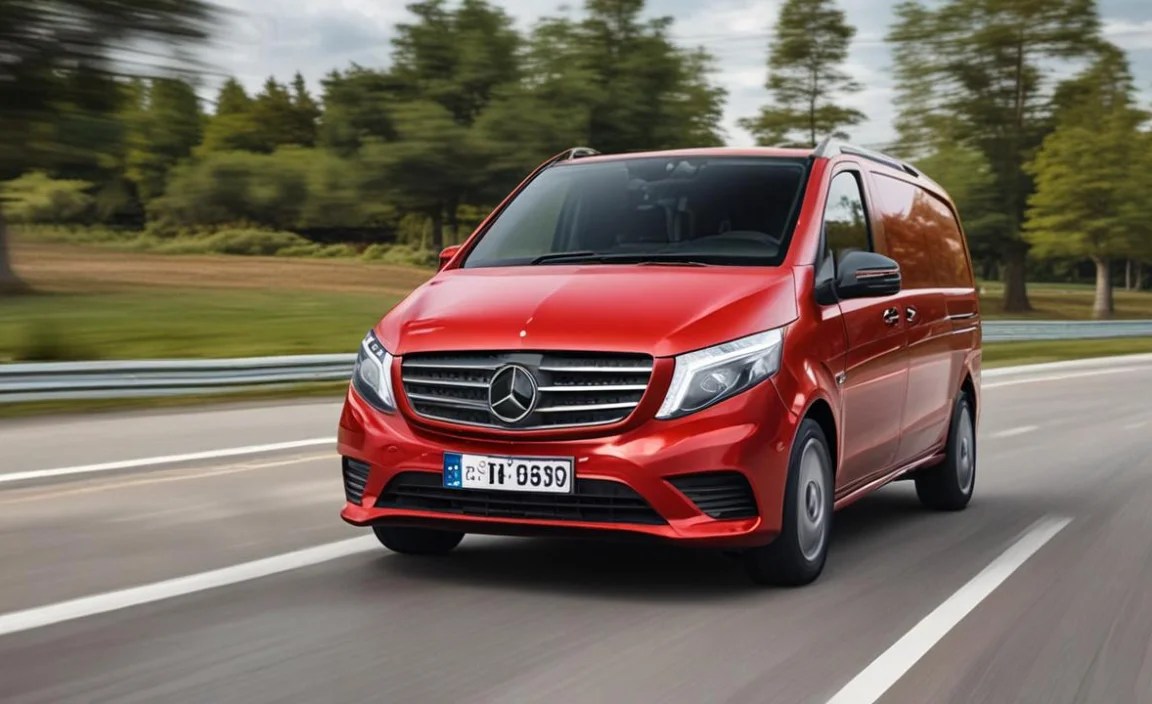
Modern Mercedes-Benz engines are remarkably efficient, but driving style plays a huge role in their real-world performance. Ultimate performance for a work-oriented vehicle like the Vito often translates to achieving maximum distance on the least amount of fuel.
Understanding Gear Selection
If you have an automatic transmission (which is most common in Vitos), the system is designed to be intelligent. However, understanding its behavior can help.
Automatic Transmissions (e.g., 7G-TRONIC, 9G-TRONIC):
- These transmissions aim to keep the engine in its most efficient RPM range.
- They can often detect inclines and hold gears longer, or downshift to assist with engine braking.
- If your Vito has selectable drive modes (like ECO, Comfort, Sport), using ECO mode will often adjust throttle response and shift points to prioritize fuel saving.
- For long descents, some transmissions allow you to select a lower gear (e.g., by using the paddle shifters or a specific selector). This uses engine braking to control speed, saving your brakes.
Tyre Pressure and Aerodynamics
These are often overlooked but are critical for efficiency and performance.
- Tyre Pressure: Underinflated tyres increase rolling resistance, meaning the engine has to work harder to move the vehicle. This directly impacts fuel economy and tyre wear. Always check your tyre pressures when the tyres are cold and inflate them to the manufacturer’s recommended levels, usually found on a sticker in the driver’s door jamb or fuel filler cap. NHTSA provides extensive guidance on tire safety and maintenance.
- Aerodynamics: A Vito’s shape is designed to be functional, but at speed, it still creates drag.
- Keep windows closed at higher speeds.
- Remove any roof racks or external accessories when not in use.
- Avoid carrying unnecessary weight, as increased mass requires more energy to move.
Eco-Driving Strategies
This encompasses a set of habits that maximize fuel efficiency:
- Anticipation is Key: As discussed earlier, look well ahead. Anticipating traffic lights, junctions, and other vehicles allows you to reduce speed using the throttle lift-off rather than harsh braking. This smooths out your driving and saves fuel.
- Avoid Excessive Idling: If you’re going to be stationary for more than a minute, it’s often more fuel-efficient to switch off the engine, especially if your Vito is equipped with an automatic start/stop system.
- Calibrated Acceleration: When starting from rest, imagine you have an egg under your accelerator pedal, or that you are trying not to stir milk into coffee with the pedal. This ensures smooth, gradual acceleration.
Advanced Driver Assistance Systems (ADAS)

Modern Mercedes-Benz Vitos are often equipped with a suite of Advanced Driver Assistance Systems (ADAS) that contribute significantly to both safety and performance. Understanding and using these systems correctly enhances your driving experience and helps you extract the best from your vehicle.
Adaptive Cruise Control (DISTRONIC)
If your Vito is equipped with DISTRONIC, it’s a game-changer for highway driving. This system maintains a pre-set speed but also automatically adjusts it to keep a safe distance from the vehicle in front. For ultimate performance, use it to:
- Maintain Optimal Speed: DISTRONIC is programmed to maintain a steady, efficient speed, often smoother than many drivers can achieve manually.
- Reduce Driver Fatigue: By managing speed and distance, it allows you to relax more on long journeys, reducing mental load.
- Smooth Acceleration/Deceleration: The system is designed to react smoothly, preventing the jerky accelerations and braking that waste fuel and cause discomfort.
Important Note: DISTRONIC is a driver assistance system and requires the driver to remain attentive and ready to take over at any moment. Always monitor traffic conditions and be prepared to brake or steer.
Lane Keeping Assist and Blind Spot Assist
These systems are designed to prevent accidental lane departures and monitor your blind spots.
- Lane Keeping Assist (LKA): This system uses cameras to monitor lane markings. If you drift out of your lane without signaling, it can provide a gentle steering correction. Use the lane markings on the road as your guide, and let LKA assist in keeping you centered.
- Blind Spot Assist: This system warns you if a vehicle is in your blind spot, typically with a visual indicator in the side mirror. Always check your mirrors and blind spots, but this provides an extra layer of awareness, crucial due to the Vito’s size.
Parking Assist and Cameras
Maneuvering a vehicle of the Vito’s size can be daunting, but parking aids make it significantly easier and safer.
- Reversing Camera: Provides a clear view of what’s behind your van, showing obstacles and distance guidelines.
- Parking Sensors: Emit audible warnings as you get closer to obstacles.
- Active Parking Assist: Some Vitos can even help steer themselves into parking spots.
When parking, use these systems in conjunction with your own observation. They assist, but you are ultimately responsible for safe parking. Gentle throttle and brake control are essential for precise maneuvering.
Winter Driving and Special Conditions
Driving a Mercedes-Benz Vito in challenging conditions requires a slightly different approach to maximize performance and ensure safety. The inherent stability of the Vito is a strong foundation, but specific techniques can make all the difference.
Driving on Snow and Ice
Reduced traction means all inputs need to be smoother, gentler, and more deliberate.
- Reduce


