
V-Class vs Nissan NV3500 Comparison: Ultimate Luxury
The V-Class offers unparalleled luxury and refined driving dynamics, while the Nissan NV3500 prioritizes utility and robust capability. If ultimate comfort and premium features are your goal, the V-Class is the clear choice. For hauling and commercial needs, the NV3500 excels, but it doesn’t compete in the luxury segment.
Choosing the right van can be a significant decision, especially when comparing vehicles that seem to cater to different needs. You might be looking for a vehicle that offers spaciousness and versatility, perhaps for family trips or even a unique business venture. Then, you come across two very different options: the Mercedes-Benz V-Class and the Nissan NV3500. At first glance, they occupy entirely separate worlds. But understanding their core strengths and how they stack up against each other is key to making an informed choice. This guide will break down the V-Class and the Nissan NV3500, helping you see exactly where each excels and if one might just surprise you.
We’ll dive into design, performance, interior comfort, technology, and, of course, the crucial question of luxury. By the end of this comparison, you’ll have a clear picture of which van might be the perfect fit for your lifestyle or business needs. Let’s explore these two distinct vehicles and see what they bring to the table.
Frequently Asked Questions
What is the main difference between the Mercedes-Benz V-Class and the Nissan NV3500?
The primary difference lies in their intended purpose and target audience. The Mercedes-Benz V-Class is designed as a premium passenger van, focusing on luxury, comfort, and sophisticated driving experience. The Nissan NV3500 is a heavy-duty commercial cargo van, built for practicality, durability, and utility, with less emphasis on luxury features.
Which van is more luxurious?
The Mercedes-Benz V-Class is significantly more luxurious. It offers premium materials, advanced comfort features, sophisticated styling, and a near-car-like driving experience, rivaling high-end SUVs and sedans.
Which van is better for carrying passengers comfortably for long distances?
The Mercedes-Benz V-Class is designed for passenger comfort. It features plush seating, ample legroom, advanced climate control, and a refined ride that makes long journeys enjoyable for all occupants.
Which van is better for hauling cargo or commercial use?
The Nissan NV3500 is purpose-built for commercial use. It offers a robust chassis, higher payload capacity, and a more utilitarian interior designed to withstand heavy use and transport large volumes of goods.
What about fuel efficiency between these two vans?
Generally, vans designed for luxury and refined driving, like the V-Class, often employ more efficient engine technologies and aerodynamics, which can lead to better fuel economy compared to a larger, heavier commercial van like the NV3500, though specific configurations will vary.
Can the V-Class be used for commercial purposes?
Yes, the V-Class can be used for commercial passenger transport, such as executive shuttles, airport transfers, or luxury taxi services, where comfort and image are paramount. However, it’s not designed for heavy cargo hauling.
Is the Nissan NV3500 available with luxury features?
The Nissan NV3500 is available in different trim levels, but even the highest trims focus on practical comfort and functionality for a commercial environment rather than the opulent luxury found in vehicles like the V-Class.
Design and Exterior Appeal

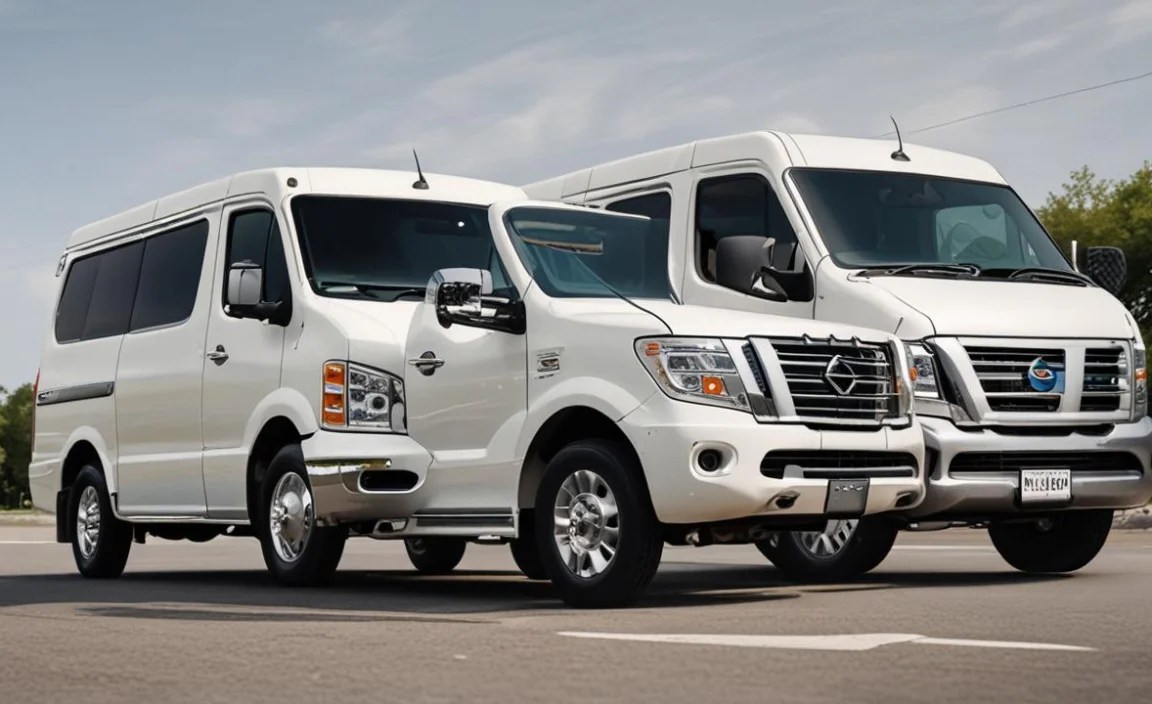
When you first lay eyes on the Mercedes-Benz V-Class and the Nissan NV3500, it’s immediately clear they are speaking different automotive languages. Mercedes-Benz has instilled the V-Class with the brand’s signature elegance and modern design cues. It’s not just a van; it’s an extension of the luxury sedan or SUV in its lineup. The exterior features flowing lines, a prominent grille with the iconic three-pointed star, sleek headlamps, and stylish alloy wheels that give it an executive presence. It looks at home arriving at a five-star hotel or a corporate headquarters.
The Nissan NV3500, on the other hand, presents a much more utilitarian and robust aesthetic. Its design prioritizes functionality and practicality above all else. The exterior is typically boxy, maximizing interior space and ease of access for cargo. It sports larger headlamps designed for maximum visibility and a no-nonsense front fascia. While it has its own functional appeal, especially for those who appreciate its workhorse nature, it doesn’t aim for the sophisticated styling that defines the V-Class. Think of it as a capable builder arriving at a job site versus a limousine pulling up to an event.
V-Class Exterior Highlights:
- Sleek, aerodynamic profile
- Signature Mercedes-Benz grille and badging
- Chrome accents and premium paint options
- Optional panoramic sunroof
- Available LED intelligent lighting systems
Nissan NV3500 Exterior Highlights:
- Tall, upright stance for maximum interior volume
- Robust construction for durability
- Large windows for visibility (in passenger versions)
- Wide-opening rear doors for cargo access
- Functional, no-frills design
The choice between them here isn’t about one being “better” than the other, but rather about what you want the vehicle’s exterior to communicate. If you desire an image of prestige and refined taste, the V-Class delivers. If you need a vehicle that looks and feels like a dependable tool for business, the NV3500 fits that bill perfectly.
Interior: The Ultimate Luxury vs. Practicality

This is where the distinction between the V-Class and the Nissan NV3500 becomes stark—almost a chasm. The Mercedes-Benz V-Class is engineered to provide an experience akin to its luxury car siblings, but with the added space of a van. Step inside, and you’re greeted by high-quality materials: supple leather upholstery, finely crafted dashboard trim, and soft-touch surfaces throughout. The seating is exceptionally comfortable, with options for captain’s chairs that can swivel, recline, and offer massage functions, turning passenger rows into mobile lounges.
Ambient lighting, refined cabin insulation that suppresses road noise, and a sophisticated climate control system create an oasis of calm. Whether you’re a driver or a passenger, the V-Class prioritizes your comfort and well-being. It’s designed for chauffeur-driven use, family road trips where everyone arrives refreshed, or VIP transport. For an in-depth look at the materials and craftsmanship in Mercedes-Benz interiors, you can often find excellent resources from automotive engineering societies or design publications that analyze the ergonomics and material science involved.
The Nissan NV3500, in contrast, is built for the demands of commercial work. While passenger versions exist and offer a decent level of comfort for everyday use, the interior materials are durable and less refined. Plastics are common, seating is designed for endurance rather than plushness, and the overall aesthetic is functional. Noise insulation is present but not to the same degree as the V-Class; the focus is on utility. The NV3500’s interior is about efficient use of space, easy cleaning, and providing a robust environment for tools, equipment, or multiple passengers on a work trip.
V-Class Interior Features (Luxury Focus):
- Premium leather seating options
- Configurable seating arrangements (including swivel chairs)
- Multi-zone automatic climate control
- Advanced infotainment system with large displays
- Soft-touch materials and wood or metal trim accents
- Excellent sound deadening for a quiet cabin
- Optional premium sound systems
Nissan NV3500 Interior Features (Utility Focus):
- Durable cloth or vinyl seating
- Upright seating position for better visibility and access
- Ample headroom and legroom
- Basic climate control
- Functional dashboard layout with easy-reach controls
- Optional infotainment and navigation systems
- Hard-wearing surfaces built for cleaning and longevity
When you compare the interiors, the V-Class is unequivocally the champion of luxury and passenger comfort, offering an experience that justifies its premium positioning. The NV3500 shines in its honesty of purpose – it’s a practical, robust space designed to get the job done without unnecessary frills.
Performance and Driving Dynamics
Beneath the skin, the V-Class and Nissan NV3500 offer contrasting approaches to getting down the road. The V-Class is engineered to deliver a driving experience that is smooth, refined, and car-like. Mercedes-Benz typically equips the V-Class with efficient yet capable turbocharged four-cylinder diesel or gasoline engines. These powertrains are tuned for a balance of responsive acceleration and commendable fuel economy, especially the diesel variants which are known for their torque and efficiency over long distances. Coupled with a sophisticated automatic transmission and Mercedes-Benz’s signature comfortable suspension, the V-Class glides over the road, minimizing bumps and vibrations.
Steering is precise, and the overall handling is surprisingly nimble for a vehicle of its size, making it easy to maneuver in urban environments. Mercedes-Benz also focuses heavily on safety, equipping the V-Class with a suite of advanced driver-assistance systems, such as adaptive cruise control, lane-keeping assist, and automatic emergency braking, further enhancing the relaxed and secure driving experience.
The Nissan NV3500 is a different beast, built on a ladder frame chassis, much like a traditional truck, to handle heavier loads and rougher conditions. It typically comes with more powerful V6 or V8 gasoline engines designed for brute force and towing capability. While these engines provide ample power for acceleration, especially when loaded, they are generally less fuel-efficient than the V-Class’s offerings. The NV3500’s suspension is more robust, designed to carry significant weight, which means the ride can be firmer and less refined than in the V-Class. Handling is more truck-like; it’s stable and capable, but not as agile or precise as the German luxury van. The focus here is on durability, towing capacity, and the ability to handle demanding work environments.
| Feature | Mercedes-Benz V-Class | Nissan NV3500 |
|---|---|---|
| Typical Engine Options | 2.0L Turbocharged Diesel/Gasoline (often 4-cylinder) | 3.5L V6 or 5.6L V8 Gasoline |
| Horsepower Range (Approx.) | 134-211 hp | 261-317 hp |
| Torque Focus | Strong low-end torque (diesel) for smooth response | High torque for towing/hauling |
| Transmission | Smooth automatic transmission (e.g., 7-speed, 9-speed) | Robust automatic transmission (e.g., 5-speed, 7-speed) |
| Ride Quality | Smooth, refined, absorbent | Firmer, more robust, can be less refined |
| Handling | Agile for its size, precise steering | Stable, truck-like handling |
| Fuel Economy | Generally better, especially diesel | Lower due to larger engines and heavier build |
| Towing Capacity | Moderate | Significantly higher |
For a deeper dive into vehicle dynamics and suspension engineering, resources from automotive engineering bodies like SAE International can offer detailed insights into how different chassis designs and suspension tuning affect ride and handling characteristics.
Technology and Infotainment: Modern Convenience vs. Essential Tools

In the realm of technology, both vans offer distinct packages tailored to their intended uses. The Mercedes-Benz V-Class is equipped with Mercedes-Benz’s latest infotainment systems, often mirroring those found in their luxury sedans and SUVs. This means a large, high-resolution central display, intuitive touchpad or voice control, seamless smartphone integration (Apple CarPlay, Android Auto), and sophisticated navigation systems. The user interface is typically sleek and modern, designed for ease of use and aesthetic appeal. Beyond infotainment, the V-Class boasts an array of advanced connectivity features, numerous USB ports, and often an available premium sound system to enhance the passenger experience. The driver also benefits from digital instrument clusters and advanced telematics.
The Nissan NV3500’s technology suite is more focused on practicality and the needs of a commercial user or a busy family. While it offers a touchscreen infotainment system, it’s generally more straightforward, prioritizing essential functions like navigation, Bluetooth connectivity, and perhaps a rearview camera. Smartphones are usually supported, but the integration might be less seamless or offer fewer advanced features compared to the V-Class. The focus is on providing easy access to information and communication tools that support productivity or navigation on the go, rather than an immersive entertainment experience. Robust build quality means controls are designed for durability and ease of operation, even with gloves on or in challenging conditions.
V-Class Technology Highlights:
- Large, high-resolution central display
- Intuitive touchpad or voice command interface
- Advanced navigation system
- Full smartphone integration (Apple CarPlay, Android Auto)
- Optional Burmester® surround sound system
- Multiple USB ports and charging options
- Available digital instrument cluster
Nissan NV3500 Technology Highlights:
- User-friendly touchscreen infotainment system
- Bluetooth for hands-free calling and audio streaming
- Optional navigation system
- Rearview monitor for parking assistance
- Basic USB ports
- Durable, easy-to-clean interfaces
For those interested in the engineering behind these systems, publications from organizations like the IEEE (Institute of Electrical and Electronics Engineers) often feature articles on automotive electronics, connectivity, and user interface design.
Practicality and Usability: Different Tools for Different Jobs

When it comes to sheer practicality, both the V-Class and the NV3500 excel, but in vastly different domains. The V-Class’s practicality shines in its configuration flexibility for passengers. Its spacious cabin can be arranged to maximize legroom, create comfortable seating areas, or accommodate luggage for extended trips. Features like sliding doors with wide openings make access easy for all passengers, and the modular seating allows for various configurations, from maximizing cargo space for specific needs (like transporting equipment for a mobile business) to creating a full VIP lounge setup. Its agility for its size, coupled with advanced safety features, makes it a practical choice for chauffeuring, group travel, or even as a luxury campervan conversion base.
The Nissan NV3500 is the definition of utilitarian practicality. Its tall, boxy shape is optimized for maximum cargo volume. The wide rear doors and available side doors offer simple, direct access to the load area. The interior is designed to be durable and easy to clean, ideal for tools, materials, or anything that might get messy. Payload capacity is a key advantage, allowing it to carry substantial weight. For businesses, it’s a mobile workshop, a delivery vehicle, or a transporter of goods that require a robust environment. Its ability to be upfitted with shelving, racking systems, and specialized equipment makes it incredibly versatile for commercial applications. The U.S. General Services Administration (GSA) often provides specifications and guidelines for fleet vehicles that highlight the practical design considerations for commercial use, which the NV3500 embodies.
V-Class Practicality Strengths:
- Passenger comfort and space maximization
- Flexible seating arrangements
- Easy passenger access via sliding doors
- Refined driving experience for long-distance travel
- Versatile for VIP transport, family needs, or luxury camper conversions
Nissan NV3500 Practicality Strengths:
- Maximum cargo volume and payload capacity
- Easy cargo access (large doors)
- Durable and easy-to-clean interior
- Ideal for commercial use, upfitting by tradespeople
- Robust construction for demanding conditions
Which Van is Right for You?
Deciding between the Mercedes-Benz V-Class and the Nissan NV3500 boils down to a fundamental question: what is the primary purpose of your vehicle? If your priority is unparalleled luxury, supreme comfort for passengers, a refined driving experience, and a vehicle


