
Mercedes SUV vs Tesla Model Y: The Ultimate Showdown
The Mercedes SUV vs. Tesla Model Y showdown is about more than just electric vs. luxury; it’s a clash of driving philosophies. For a refined yet capable family hauler that blends traditional luxury with modern innovation, a Mercedes SUV often leads. If performance, cutting-edge tech, and a minimalist EV experience are paramount, the Tesla Model Y is a compelling choice. Let’s break down which suits your needs best.
Choosing a new SUV can feel overwhelming, especially when comparing established luxury brands with disruptive innovators. Two names that frequently come up in this debate are Mercedes-Benz SUVs and the Tesla Model Y. This isn’t just about picking a car; it’s about aligning your drive with your lifestyle, priorities, and appreciation for automotive engineering. Mercedes-Benz has a long-standing reputation for comfort, craftsmanship, and sophisticated performance, while Tesla has redefined the electric vehicle landscape with its focus on technology and range. We understand that navigating these differences can be tricky, but don’t worry. This guide will walk you through the crucial aspects of each, helping you make an informed decision with confidence. Get ready to discover which contender truly excels for you.
This comparison will dive deep into what each vehicle offers, from their design DNA and driving dynamics to their technological prowess and practicality. We’ll explore pricing, performance figures, interior comfort, and the overall ownership experience. By the end, you’ll have a clear understanding of whether the opulent embrace of a Mercedes SUV or the futuristic charge of a Tesla Model Y is the right fit for your garage.
Mercedes SUV vs Tesla Model Y: The Core Differences

At their heart, a Mercedes-Benz SUV and a Tesla Model Y represent fundamentally different automotive philosophies. Mercedes-Benz has spent decades perfecting an experience built on luxury, refinement, and a palpable sense of occasion. Their SUVs, whether the compact GLA or the sprawling GLS, are engineered to deliver a smooth, quiet ride, meticulously crafted interiors, and advanced driver assistance systems that often anticipate your needs. They embody a traditional approach to luxury motoring, where every material, every switch, and every mile is designed to feel premium.
The Tesla Model Y, on the other hand, is a product of a company that views a car as a connected device on wheels. Its appeal lies in its cutting-edge electric powertrain, impressive range, minimalist interior dominated by a large touchscreen, and impressive performance. Tesla prioritizes software, over-the-air updates, and a seamless charging network. It’s an experience that’s undeniably modern and forward-thinking, appealing to those who embrace technology and the pure electric driving sensation.
Powertrain and Performance

When it comes to what’s under the hood (or floor, in the case of EVs), the divergence is stark.
Mercedes-Benz SUVs

Mercedes-Benz offers a range of SUVs with diverse powertrain options, including highly efficient gasoline engines, plug-in hybrids, and, increasingly, all-electric models like the EQS SUV and EQE SUV. Even their gasoline engines are tuned for a blend of power and smooth delivery, often featuring mild-hybrid technology to enhance efficiency and responsiveness. For performance enthusiasts, AMG variants offer exhilarating acceleration and handling, though they come with a premium price tag and less focus on pure fuel economy.
- Internal Combustion Engines (ICE): Smooth power delivery, familiar driving feel, wide range of options.
- Plug-in Hybrids (PHEVs): Offer electric-only range for daily commutes with gasoline for longer trips.
- All-Electric (EQ models): Dedicated EV platforms offering advanced efficiency and smooth acceleration, but often with a higher initial cost.
- AMG Performance: Focus on exhilarating speed and dynamic handling, often sacrificing some comfort.
You can explore the full range of Mercedes-Benz powertrains and their efficiency ratings on the official Mercedes-Benz USA website, which provides detailed specifications for each model.
Tesla Model Y

The Model Y is exclusively electric. It offers impressive performance, particularly in its Long Range and Performance trims, thanks to instant torque from its electric motors. It’s designed to offer a brisk and exhilarating acceleration that often surprises drivers accustomed to traditional engines. Charging infrastructure through Tesla’s Supercharger network is a significant advantage for long-distance travel.
- Electric Motors: Instant torque for rapid acceleration, quiet operation.
- Battery Power: Significant range, though real-world figures can vary with driving style and conditions.
- All-Wheel Drive: Standard on most trims for enhanced traction.
- Performance Variants: Offer supercar-like acceleration.
For an understanding of how EV powertrains work, resources like the U.S. Department of Energy’s Alternative Fuels Data Center offer valuable insights into electric vehicle technology.
Interior Design and Comfort

This is where the luxury versus tech debate truly comes to a head.
Mercedes-Benz SUVs

The interiors of Mercedes-Benz SUVs are renowned for their opulence and meticulous craftsmanship. Expect high-quality materials such as Nappa leather, real wood trims, and soft-touch surfaces. The seats are typically designed for supreme comfort, offering extensive adjustability and heating/cooling functions. Mercedes also excels in creating a serene cabin environment, with excellent sound insulation and a sophisticated ambient lighting system. The user interface, while advanced with the MBUX system, often incorporates physical controls for immediate access to common functions.
Key interior highlights include:
- Premium materials (leather, wood, metal accents).
- Ergonomically designed, highly comfortable seating.
- Advanced climate control with air purification.
- Sophisticated ambient lighting systems.
- Intuitive MBUX infotainment system with voice control.
- Generous passenger and cargo space.
Tesla Model Y

Tesla’s interior philosophy is one of minimalist elegance. The Model Y cabin is dominated by a large central touchscreen that controls almost every vehicle function, from climate and navigation to entertainment and driving settings. This clean, uncluttered design is a hallmark of Tesla. While the materials are generally good quality, they may not feel as inherently luxurious as those in a Mercedes. The focus is on a modern, tech-forward aesthetic, with ample natural light thanks to the panoramic glass roof. Seating is comfortable, and the spaciousness is commendable for its size.
Key interior highlights include:
- Minimalist dashboard design.
- Large central touchscreen for all controls.
- Vegan leather upholstery.
- Spacious cabin with good visibility.
- Panoramic glass roof.
- Wireless phone charging and multiple USB ports.
Technology and Infotainment

Both brands offer cutting-edge technology, but with very different approaches.
Mercedes-Benz SUVs

Mercedes-Benz utilizes its sophisticated MBUX (Mercedes-Benz User Experience) system. It combines a digital instrument cluster with a large central touchscreen, often featuring haptic feedback and even a touchpad. The system is highly customizable, offers natural voice recognition (“Hey Mercedes”), and integrates seamlessly with smartphone mirroring (Apple CarPlay, Android Auto). Mercedes is also a leader in advanced driver-assistance systems (ADAS), offering features like adaptive cruise control, lane-keeping assist, and semi-autonomous driving capabilities that are intuitive and reassuring.
- MBUX infotainment system with dual screens.
- Advanced voice control (“Hey Mercedes”).
- Standard Apple CarPlay and Android Auto.
- Comprehensive suite of ADAS features.
- Augmented reality navigation (on some models).
Tesla Model Y

The Model Y’s infotainment is centered around its 15-inch touchscreen. It’s intuitive and responsive, with access to a world of features, including streaming services, games, and Tesla’s proprietary navigation. A key differentiator is Tesla’s ability to deliver over-the-air (OTA) software updates, which can add new features, improve performance, and enhance existing functionalities without requiring a dealership visit. Autopilot, Tesla’s ADAS suite, is highly capable, and its Full Self-Driving (FSD) capability, though still requiring driver supervision, pushes the boundaries of semi-autonomous driving.
- Single, large central touchscreen.
- Over-the-air (OTA) software updates.
- Integrated streaming and entertainment.
- Tesla’s Autopilot and optional Full Self-Driving (FSD) capabilities.
- Intuitive navigation with charging station integration.
Practicality and Versatility

Both are SUVs, so cargo space and passenger comfort are key.
Mercedes-Benz SUVs

Mercedes-Benz SUVs are designed with family life in mind. Cargo volumes are generally generous and can be expanded by folding down rear seats. Many models offer optional third-row seating (e.g., GLE, GLS), making them suitable for larger families or carpooling. The interior layout is practical, with good storage solutions and easy access for passengers. Towing capacities on larger models are also typically robust.
Cargo Space Comparison (Approximate):
| Model | Behind 2nd Row (cu. ft.) | Max Cargo (cu. ft.) |
|---|---|---|
| Mercedes-Benz GLC | 19.4–21.8 | 56.5 |
| Tesla Model Y | 30.2 (rear trunk) + 4.5 (frunk) | 76.0 (rear seats folded) |
| Mercedes-Benz GLE | 33.0–35.6 | 74.8–80.3 |
| Mercedes-Benz GLS | 12.0 (with 3rd row up) | 77.8–93.8 (with 3rd row folded) |
Note: Cargo space figures can vary slightly by year and configuration.
Tesla Model Y

The Model Y excels in practicality for its footprint. It offers a significant amount of cargo space, including a front trunk (“frunk”) and a rear cargo area that expands considerably when the seats are folded. The hatchback design provides easy access to the cargo area. While it doesn’t typically offer a third row like some larger Mercedes SUVs, it’s a very versatile vehicle for everyday needs and weekend adventures. Its electric nature also means no exhaust system to encroach on its rear cargo space.
- Ample cargo space, including a frunk.
- Flexible seating arrangements.
- Easy-access hatchback design.
- Flat-folding rear seats for maximum utility.
Pricing and Value

The cost of entry and long-term value are important considerations.
Mercedes-Benz SUVs

Mercedes-Benz SUVs generally command a higher starting price than the Tesla Model Y, reflecting their premium branding, extensive use of luxury materials, and heritage in luxury manufacturing. However, they often retain strong resale values, particularly popular models and AMG variants. The cost of maintenance, while typically higher than for a Model Y, is part of the luxury ownership experience. When considering a Mercedes, think about the overall package of comfort, prestige, and refined performance.
To understand the ongoing costs associated with vehicle ownership, resources like the EPA’s FuelEconomy.gov website can provide estimated running costs, though specific to Mercedes models, local dealership information is best.
Tesla Model Y

The Tesla Model Y typically offers a competitive starting price for a premium electric SUV, especially when considering its performance and technology. Its value proposition is enhanced by lower running costs due to electricity being cheaper than gasoline per mile, and potentially fewer maintenance needs (no oil changes, fewer moving parts). Government incentives and tax credits for electric vehicles can also significantly reduce the upfront cost. Resale values have historically been strong, though the EV market is evolving rapidly.
- Competitive base price for an EV SUV.
- Lower running costs (electricity vs. fuel).
- Potential for government EV incentives.
- Strong resale value (historically).
- Reduced maintenance needs.
Comparing Specific Models: A Closer Look
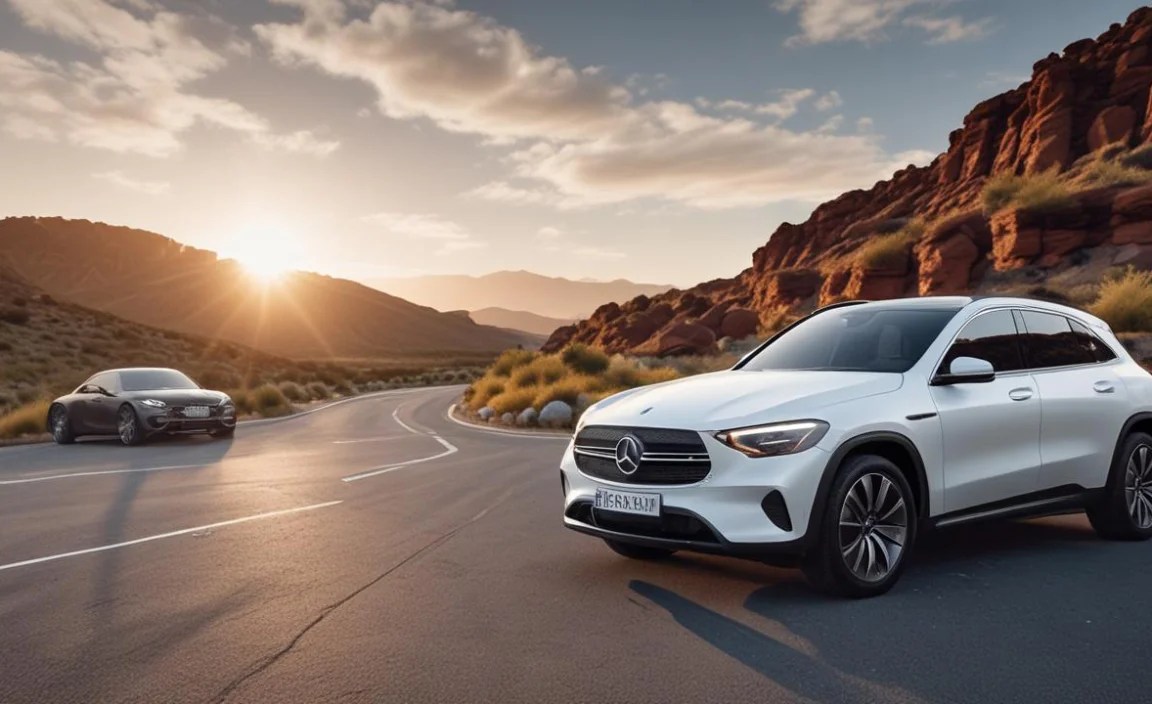
While we’re comparing the general categories, it’s helpful to look at how specific models stack up. A common comparison point for the Model Y might be a compact to mid-size luxury SUV.
Tesla Model Y vs. Mercedes-Benz GLC

The Mercedes-Benz GLC is often considered a direct competitor to the Tesla Model Y in terms of size and target market. The GLC offers a more traditional luxury experience with a refined interior, a wider range of powertrain options (including a potent AMG version), and the signature Mercedes driving experience. The Model Y counters with superior electric range, more advanced technology in its interface and OTA updates, and typically quicker straight-line acceleration.
| Feature | Tesla Model Y | Mercedes-Benz GLC |
|---|---|---|
| Powertrain | All-Electric | Gasoline, Mild-Hybrid, Plug-in Hybrid, AMG Performance |
| Starting Price (Approx. USD) | ~$40,000 – $50,000 | ~$47,000 – $60,000+ |
| Range (EPA Est.) | 300-330 miles | N/A (Gasoline/Hybrid) |
| 0-60 MPH (Approx.) | 4.8 – 3.5 seconds | 5.3 – 6.1 seconds (GLC 300) / 3.4 seconds (AMG GLC 63 S) |
| Interior Feel | Minimalist, Tech-focused | Luxurious, Refined, Traditional |
| Infotainment | Large Touchscreen, OTA Updates | MBUX System, Voice Control, Physical Controls |
| Cargo Space | Very Good + Frunk | Good, but typically less than Model Y |
Note: Prices and specifications are estimates and subject to change. Refer to manufacturer sites for current details.
Tesla Model Y vs. Mercedes-Benz EQE SUV

For a more direct electric-to-electric comparison, the Mercedes-Benz EQE SUV is a closer rival to the Model Y in terms of being an all-electric SUV. However, the EQE SUV positions itself in a higher luxury segment, offering a more opulent interior, a smoother and quieter ride, and more advanced Mercedes-Benz comfort features. The Model Y often has an edge in raw range and charging speed, and its more focused, tech-centric approach can be a significant draw for some buyers.
Key Considerations for Each Buyer Type

To help you crystallize your decision, consider who each vehicle best serves:
Who Should Consider a Mercedes-Benz SUV?
- The Luxury Connoisseur: If you value exquisite craftsmanship, premium materials, and a serene driving environment above all else, a Mercedes SUV delivers.
- The Traditionalist Driver: Those who appreciate the feel of a well-engineered gasoline or hybrid engine, the tactile feedback of physical controls, and a refined, familiar driving experience.
- The Family Requiring Flexibility: Larger Mercedes SUVs like the GLE and GLS offer optional third-row seating and robust towing capabilities for diverse family needs.
- The Performance Enthusiast (who still wants luxury): AMG versions of Mercedes SUVs offer thrilling performance without sacrificing the brand’s core luxury tenets.
Who Should Consider a Tesla Model Y?
- The Tech-Forward Innovator: If you’re excited by cutting-edge technology, seamless software integration, and over-the-air updates, the Model Y is a leader.
- The Dedicated EV Adopter: For those committed to electric driving, seeking impressive range, access to a vast charging network, and the thrill of instant EV acceleration.
- The Pragmatic Commuter/Driver: The Model Y offers excellent efficiency, lower running costs, and a simple, modern driving experience that appeals to many.
- The Value-Conscious Buyer (in the EV space): When factoring in incentives and lower running costs, the Model Y can represent strong long-term value.
FAQ: Mercedes SUV vs Tesla Model Y
Is a Mercedes SUV generally more luxurious than a Tesla Model Y?

Yes, typically. Mercedes-Benz has a long-standing reputation for using higher-grade materials, more intricate interior designs, and offering a higher level of overall cabin refinement and comfort compared to the minimalist approach of the Tesla Model Y.
Which EV has better range: a Mercedes electric SUV or a Tesla Model Y?

<p


