
Mercedes AMG GLA Fuel Economy: Legendary Efficiency
Quick Summary:
The Mercedes-AMG GLA achieves surprisingly impressive fuel economy for its potent performance, blending AMG power with everyday usability and efficiency you might not expect from a luxury performance SUV.
Mercedes-Benz is renowned for crafting vehicles that offer a harmonious blend of luxury, performance, and innovative technology. When you think of AMG models, images of raw power and exhilarating speed often come to mind. The Mercedes-AMG GLA is no exception, delivering thrilling driving dynamics. However, for many drivers, a crucial consideration alongside performance is fuel economy. It’s a common question: can a high-performance vehicle like the AMG GLA truly be fuel-efficient? The answer is a resounding yes. This guide will demystify the fuel economy of the Mercedes-AMG GLA, offering clear insights and practical advice for owners and prospective buyers. We’ll explore what contributes to its efficiency, compare different models, and provide tips to maximize your mileage.
Understanding Mercedes-AMG GLA Fuel Economy

The concept of an “AMG” vehicle often conjures thoughts of track-ready performance, roaring engines, and a thirst for fuel that matches their power. While AMG cars are undeniably engineered for performance, Mercedes-Benz has made significant strides in optimizing their powertrains for better efficiency, even in their most potent offerings. The Mercedes-AMG GLA is a prime example of this evolving engineering philosophy. It aims to deliver the exhilarating AMG experience without punishing your wallet at the pump to the degree one might assume.
Fuel economy for any vehicle is a complex interplay of engine design, transmission technology, vehicle weight, aerodynamics, and driving habits. For the AMG GLA, Mercedes-Benz employs advanced technologies to strike a balance between its formidable power output and a desire for commendable miles per gallon (MPG). This means sophisticated engine management systems, efficient turbocharging, and intelligent transmission tuning all play a role.
Understanding these factors allows owners to appreciate the engineering behind their vehicle and make informed choices about driving and maintenance. Let’s delve into the specifics of how the AMG GLA achieves its remarkable efficiency.
Key Factors Influencing AMG GLA Fuel Economy
Several engineering and design elements contribute to the fuel economy of the Mercedes-AMG GLA. These aren’t just random occurrences; they are deliberate choices made by Mercedes-Benz engineers to enhance overall vehicle performance and efficiency.
- Engine Technology: Modern AMG engines, including those found in the GLA, feature technologies like direct injection and turbocharging. Direct injection precisely meters fuel into the combustion chamber, leading to more complete combustion and less waste. Turbocharging allows smaller displacement engines to produce significant power that would otherwise require a larger, less efficient engine.
- Transmission Efficiency: The AMG SPEEDSHIFT dual-clutch transmissions (DCTs) found in AMG vehicles are designed for quick shifts and minimal power loss. Their rapid gear changes and optimized gear ratios help keep the engine operating within its most efficient RPM range for longer periods.
- Aerodynamics: The sleek, coupe-like design of the GLA is not just for aesthetics. It’s carefully sculpted to reduce drag. Lower aerodynamic drag means the engine doesn’t have to work as hard to push the vehicle through the air, especially at higher speeds, which directly benefits fuel economy.
- Vehicle Weight: While AMG vehicles are built with robust components, Mercedes-Benz also utilizes lightweight materials where possible without compromising structural integrity or safety. A lighter vehicle requires less energy (and thus less fuel) to accelerate and maintain speed.
- Driving Modes: The AMG GLA typically offers various drive modes (e.g., “Comfort,” “Sport,” “Sport+”). The “Comfort” mode, in particular, is tuned to optimize throttle response, gear shifts, and other engine parameters for maximum fuel efficiency.
- Start/Stop Technology: Most modern AMG GLA models are equipped with a ECO start/stop function. This system automatically shuts off the engine when the vehicle is stationary (e.g., at a traffic light) and seamlessly restarts it when the driver releases the brake pedal, saving fuel that would otherwise be consumed while idling.
AMG GLA Models and Their Fuel Economy Figures
The specific fuel economy figures for the Mercedes-AMG GLA can vary slightly depending on the model year and powertrain configuration. Mercedes-Benz provides official EPA estimates for each model, which offer a standardized benchmark.
For example, a common model is the Mercedes-AMG GLA 35 4MATIC. This variant typically offers a strong balance of performance and efficiency. Another prominent model is the more potent Mercedes-AMG GLA 45 4MATIC+, which, while delivering superior performance, might have slightly different fuel economy ratings due to its more powerful engine and tuning.
It’s important to note that real-world fuel economy can differ from EPA estimates. EPA figures are derived from standardized testing conditions. Your actual mileage will depend on factors such as your driving style, terrain, traffic conditions, vehicle maintenance, and the use of accessories like air conditioning.
| Model Year (Example) | Engine | Drivetrain | City MPG | Highway MPG | Combined MPG |
|---|---|---|---|---|---|
| 2023 AMG GLA 35 4MATIC | 2.0L Turbocharged Inline-4 | 8-Speed DCT, 4MATIC AWD | 23 | 30 | 26 |
| 2023 AMG GLA 45 4MATIC+ | 2.0L Turbocharged Inline-4 | 8-Speed DCT, 4MATIC+ AWD | 20 | 29 | 23 |
To find the most accurate and up-to-date EPA fuel economy ratings for a specific Mercedes-AMG GLA model year, you can consult the official EPA’s FuelEconomy.gov website. This resource provides comprehensive data for all vehicles sold in the United States.
Maximizing Your AMG GLA Fuel Economy

Even with sophisticated engineering, your driving habits and vehicle maintenance play a significant role in how many miles you get per gallon. Fortunately, adopting a few smart practices can help you achieve better fuel economy from your Mercedes-AMG GLA.
Driving Techniques for Better Mileage
Your right foot has more influence on fuel consumption than you might think. Gentle, consistent driving habits are key. Here’s how to drive more efficiently:
- Smooth Acceleration and Braking: Avoid sudden bursts of acceleration and hard braking. Gradually apply the accelerator and anticipate stops, coasting when possible. This minimizes unnecessary fuel expenditure and is easier on your vehicle’s components.
- Maintain Consistent Speed: Cruise control is your friend on highways. It helps maintain a steady speed, which is significantly more fuel-efficient than constantly adjusting your speed manually.
- Observe Speed Limits: Fuel consumption increases dramatically at higher speeds due to increased aerodynamic drag. Driving at or near the speed limit, especially on highways, will improve your MPG.
- Utilize “Comfort” Mode: When fuel economy is a priority, select the “Comfort” driving mode. This mode softens throttle response and optimizes gear shifts for efficiency, ensuring the engine isn’t unnecessarily revved.
- Minimize Idling: If you expect to be stopped for more than a minute, it’s usually more fuel-efficient to turn off the engine, especially if you don’t have the ECO start/stop system engaged or if it’s disabled.
Routine Maintenance for Optimal Efficiency
A well-maintained vehicle performs better and is more fuel-efficient. Adhering to Mercedes-Benz’s recommended service schedule is crucial.
- Tire Pressure: Properly inflated tires are essential. Underinflated tires increase rolling resistance, forcing the engine to work harder. Check your tire pressure regularly, ideally when the tires are cold, and inflate them to the manufacturer’s recommended pressure, usually found on a sticker in the driver’s side doorjamb. You can find general information on tire care and maintenance from reputable sources like the National Highway Traffic Safety Administration (NHTSA).
- Regular Servicing: Ensure your vehicle receives all scheduled maintenance, including oil changes, air filter replacements, and spark plug checks. Clean air filters allow the engine to breathe more easily, essential for efficient combustion.
- Wheel Alignment: Misaligned wheels can cause uneven tire wear and increase drag, impacting fuel economy. Have your alignment checked periodically, especially after hitting potholes or curbs.
- Use Recommended Fuel: Always use the octane rating of gasoline recommended by Mercedes-Benz for your AMG GLA. While premium fuel is typically required for AMG engines, using a lower octane than specified can lead to reduced performance and potentially less efficient combustion.
Understanding Your Dashboard Indicators
Your AMG GLA is equipped with sophisticated instrumentation designed to give you insight into your vehicle’s performance, including its fuel consumption. Pay attention to these:
- Average Fuel Consumption Display: Most modern Mercedes-Benz vehicles show the average fuel consumption over a set period or distance. Monitoring this can help you gauge the impact of your driving habits and make adjustments.
- Instantaneous Fuel Consumption Gauge: Some displays show real-time fuel usage. Watching this can be an effective way to learn how different driving actions—like accelerating hard versus coasting—affect your MPG.
- ECO Display: This feature often provides feedback on your driving efficiency, sometimes offering tips or scoring your performance.
The Performance vs. Efficiency Dilemma
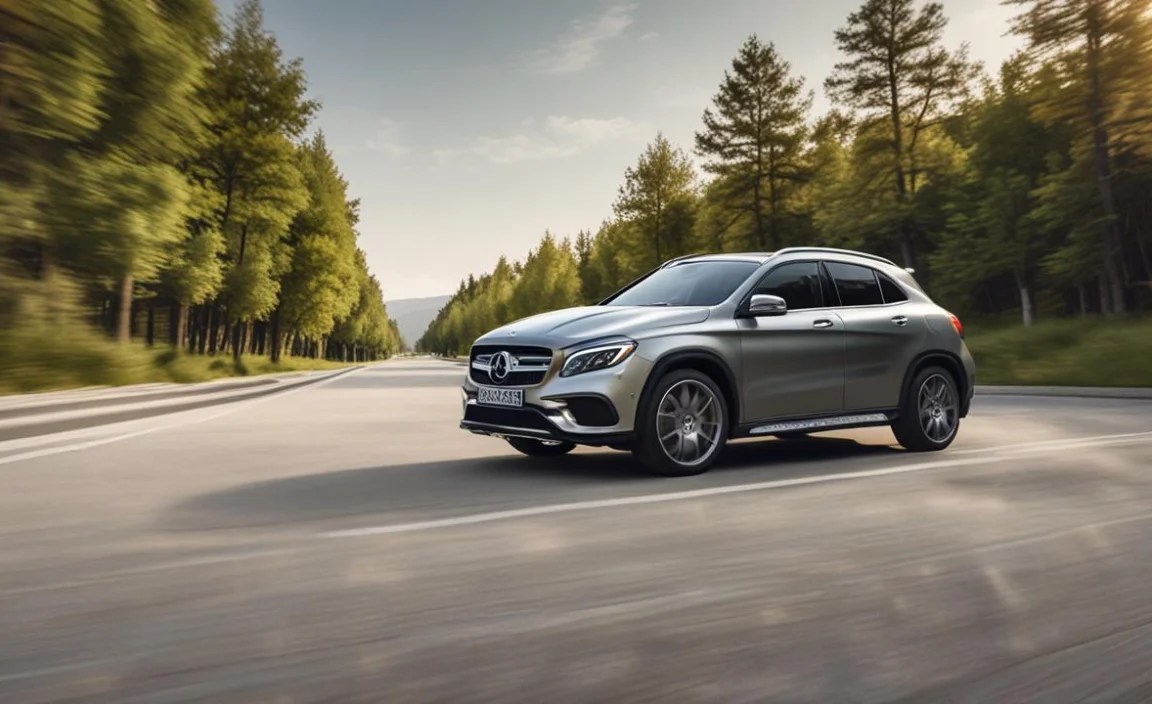
It’s natural to question whether a performance-oriented vehicle like the Mercedes-AMG GLA can truly be efficient. The answer lies in the context and the advancement of automotive engineering. When compared to older performance vehicles, or even non-performance vehicles of a similar size and capability a decade or two ago, the AMG GLA’s fuel economy is remarkably good.
Mercedes-Benz has invested heavily in technologies that allow engines to be both powerful and efficient. This includes not just the engine and transmission but also the overall vehicle design, including aerodynamics and weight management. The goal is often to provide a high level of performance when you want it, but also to offer responsible and more economical operation when desired.
However, it’s crucial to set realistic expectations. An AMG GLA, by its very nature, is designed to deliver a more exhilarating driving experience than a standard GLA model or a non-performance luxury car. This means that while its efficiency is impressive for its class, it will likely still consume more fuel than a compact economy car or a hybrid vehicle. The trade-off is the performance, handling, and the luxurious AMG driving experience that you are paying for.
| Factor | Impact on Fuel Economy | AMG GLA Implication |
|---|---|---|
| Engine Power Output | Higher power generally requires more fuel. | AMG engines are tuned for high performance, so efficiency is relative to power. |
| Aerodynamics | Sleeker designs reduce drag, improving MPG. | The GLA’s sporty silhouette is designed with aero efficiency in mind. |
| Weight | Lighter vehicles use less fuel. | Mercedes uses advanced materials, but AMG components can add weight. |
| Transmission | Efficient transmissions minimize power loss. | AMG SPEEDSHIFT DCTs are optimized for quick shifts and efficiency. |
| Driving Style | Aggressive driving drastically reduces MPG. | Gentle driving is key to maximizing AMG GLA efficiency. |
AMG Efficiency Technologies in Detail
Let’s take a closer look at some of the specific technologies that contribute to the AMG GLA’s efficiency:
- Variable Valve Timing (VVT): This technology adjusts the timing of the engine’s intake and exhaust valves. Optimizing valve timing based on engine load and speed improves both power and fuel efficiency across a wider operating range.
- Cylinder Deactivation (less common in smaller AMG engines but present in larger siblings): While not a primary feature in all GLA variants, some AMG engines employ cylinder deactivation. Under light loads, some cylinders are temporarily shut down, allowing the remaining cylinders to work harder and more efficiently, effectively turning a V8 into a V4, for example. This is more prevalent in larger AMG engines but illustrates the direction of efficient performance.
- Water-Cooled Exhaust Manifold: Integrated directly into the cylinder head, this design improves exhaust gas flow and thermal management. This allows for quicker turbo spool-up and more efficient energy extraction from the exhaust gases, contributing to both performance and reduced fuel consumption at partial loads.
- Twin-Scroll Turbocharger: This type of turbocharger design separates the exhaust manifold paths for cylinders. This reduces exhaust gas backpressure and allows the turbocharger to spin up faster, providing more responsive power delivery and better efficiency compared to traditional single-scroll turbos.
These advanced systems work in concert to deliver the AMG promise of potent performance while keeping fuel consumption more in check than one might expect. It’s a testament to the sophisticated engineering capabilities at Mercedes-AMG.
Frequently Asked Questions (FAQ)
Q1: Is the Mercedes-AMG GLA a fuel-efficient SUV?
For a luxury performance SUV, the Mercedes-AMG GLA offers surprisingly competitive fuel economy. While not as efficient as a hybrid or economy car, its MPG ratings are strong when considering its powerful AMG engine and performance capabilities. Owners can achieve good mileage by adopting efficient driving habits and maintaining the vehicle properly.
Q2: What is the primary reason for the AMG GLA’s good fuel economy?
The impressive fuel economy of the AMG GLA is a result of advanced engineering, including sophisticated engine technologies like direct injection and turbocharging, highly efficient dual-clutch transmissions, optimized aerodynamics, and the integration of features like ECO start/stop systems. Mercedes-Benz balances power with efficiency through these technological advancements.
Q3: Does driving style significantly impact AMG GLA fuel economy?
Yes, absolutely. Aggressive driving with hard acceleration and braking can significantly decrease your fuel efficiency. Conversely, adopting a smooth, consistent driving style, observing speed limits, and utilizing cruise control on highways can markedly improve the MPG you achieve from your AMG GLA.
Q4: What is the difference in fuel economy between the AMG GLA 35 and AMG GLA 45?
Typically, the AMG GLA 35 offers slightly better fuel economy than the more powerful AMG GLA 45. This is because the GLA 45 features a higher-output engine, which, while delivering superior performance, generally consumes more fuel. The exact figures vary by model year but expect the GLA 35 to be more economical.
Q5: Should I use premium fuel in my AMG GLA, and how does it affect economy?
Yes, Mercedes-AMG vehicles require premium unleaded gasoline (typically 91 octane or higher) due to their high-compression, high-performance engines. Using the recommended premium fuel ensures optimal engine performance and efficiency. Using lower octane fuel can lead to reduced power and may negatively impact fuel economy, as the engine management system might have to retard ignition timing to prevent knock.
Q6: How can regular maintenance help my AMG GLA’s fuel efficiency?
Regular maintenance is vital. Ensuring your tires are properly inflated, air filters are clean, and your vehicle is up-to-date on scheduled servicing (like oil changes and spark plug replacements) all contribute to optimal


