
Mercedes A Class Collision Avoidance System: Ultimate Safety
The Mercedes A-Class Collision Avoidance System is a vital safety feature designed to help prevent or mitigate forward collisions. Using advanced sensors and cameras, it warns the driver of potential hazards and can even apply the brakes automatically, acting as a crucial co-pilot on the road to enhance your safety.
Driving a Mercedes-Benz A-Class means embracing innovation and safety. Among its many advanced features, the Collision Avoidance System stands out as a guardian on your journey. This intelligent system is designed to help you navigate traffic with greater confidence by actively monitoring the road ahead. Ever found yourself in a situation where you wished your car could react even faster? This system is precisely for those moments. It’s more than just a warning; it’s an integrated safety net working in the background. Understanding how it operates can significantly boost your awareness and peace of mind.
In this guide, we’ll break down the Mercedes A-Class Collision Avoidance System in a way that’s easy to understand, even if you’re new to advanced automotive technology. We’ll explore what it is, how it works, and what you can do to ensure it’s functioning optimally, turning potential worries into confident driving.
Understanding the Mercedes A-Class Collision Avoidance System

At its core, the Mercedes A-Class Collision Avoidance System, often referred to as COLLISION PREVENTION ASSIST PLUS or similar depending on the model year and specific package fitted, is an active safety feature. It aims to prevent or reduce the severity of collisions, particularly those occurring from the front. This system acts as a vigilant co-pilot, constantly scanning the environment ahead of your vehicle.
It’s important to understand that this system isn’t designed to replace the driver’s attention but to supplement it. Think of it as an extra pair of eyes. When it detects a potential hazard, it provides timely warnings and, if necessary, intervenes with braking to help avoid an impact or lessen its force. This technology is a testament to Mercedes-Benz’s commitment to ‘the best or nothing’ when it comes to safety.
How Does It Work? The Technology Behind the Safety
The magic behind the Collision Avoidance System lies in a sophisticated network of sensors and cameras working in unison. These components continuously gather data about the surrounding environment, allowing the car’s onboard computer to assess potential risks.
Here’s a simplified look at the key technologies involved:
- Radar Sensors: Strategically placed, typically in the front bumper or grille, these sensors emit radar waves. By measuring the time it takes for the waves to bounce back after hitting an object, the system can determine the distance and relative speed of vehicles and other obstacles in front of your A-Class.
- Cameras: A forward-facing camera, often integrated into the windscreen near the rearview mirror, plays a crucial role. It visually analyzes the road, identifying lane markings, other vehicles, pedestrians, and cyclists. Advanced algorithms help it interpret the visual data, understanding the context of the road ahead.
- Control Unit: All the data from the sensors and cameras is fed into a central control unit. This “brain” processes the information in real-time, compares it against predefined safety parameters, and decides whether a potential collision is imminent.
This seamless integration allows the system to build a comprehensive picture of the driving situation, enabling it to react faster than a human driver might in critical moments.
The Stages of Intervention
The Collision Avoidance System doesn’t just jump straight to braking. It follows a graduated approach to alert and assist the driver, respecting the driver’s primary control over the vehicle.
Generally, the system operates in distinct stages:
- Warning: When the system detects a risk of collision, it first alerts the driver. This usually begins with a visual warning on the dashboard display – often an icon illustrating a car and a potential obstacle. This is typically followed by an audible warning, a distinct beep or chime, to grab your immediate attention.
- Adaptive Brake Assistance: If the driver doesn’t react to the warning, or if the system deems a collision highly probable, it prepares the braking system. This means that when the driver applies the brakes, the system will provide increased braking force, beyond what the driver applied, to help mitigate the impact.
- Autonomous Emergency Braking (AEB): In critical situations where a collision is unavoidable and the driver has not sufficiently braked, the system can automatically apply the brakes with full force. The goal here is to either prevent the collision entirely or, at the very least, significantly reduce the speed at impact, thereby minimizing injury and damage.
It’s vital to remember that the effectiveness of these stages depends on various factors, including vehicle speed, road conditions, and the size and type of the obstacle. For more detailed technical specifications and limitations, you can refer to the official Mercedes-Benz driving assistance systems overview.
Key Components and Features of the System

The Collision Avoidance System in the Mercedes A-Class is usually part of a larger suite of advanced driver-assistance systems (ADAS). Understanding its specific components and related features can shed more light on its capabilities.
COLLISION PREVENTION ASSIST PLUS
While older models might have had COLLISION PREVENTION ASSIST, the “PLUS” designation signifies a more advanced version, typically including the autonomous emergency braking (AEB) functionality. This system is designed to be more proactive and responsive.
Key aspects of COLLISION PREVENTION ASSIST PLUS typically include:
- Distance Warning: It can alert you if you are too close to the vehicle in front.
- Adaptive Brake Assist: It reinforces your braking to help avoid or reduce the impact of a collision.
- Autonomous Emergency Braking: It automatically applies the brakes if a collision is imminent and you fail to react.
Integration with Other Safety Systems
The Collision Avoidance System doesn’t operate in isolation. It’s often deeply integrated with other advanced safety and driver assistance features that might be present in your A-Class, creating a comprehensive protective environment.
These can include:
- Active Brake Assist: This is a more general term that encompasses emergency braking functionalities and can often detect not just vehicles but also pedestrians and cyclists.
- DISTRONIC PLUS (Adaptive Cruise Control): While primarily a convenience feature that maintains a set distance from the vehicle ahead, it uses the same radar and camera technology. Its ability to automatically brake and accelerate can work in conjunction with or as a precursor to collision avoidance reactions.
- Active Lane Keeping Assist: This system helps you stay within your lane, and when combined with collision avoidance, it contributes to overall vehicle stability and safety.
- Blind Spot Assist: Though focused on side-approaching vehicles, its sensors contribute to the car’s overall awareness of its surroundings.
The interplay between these systems enhances the overall safety envelope of your Mercedes A-Class, providing layers of protection.
When Does the System Activate? Scenarios and Limitations

The Collision Avoidance System is designed to be highly effective in common driving scenarios, but like all technologies, it has its operating parameters and limitations. Knowing when it’s most likely to activate and understanding its boundaries is crucial for safe operation.
Typical Activation Scenarios
The system is most effective in situations involving the vehicle directly in front of you, especially in typical urban and highway driving conditions:
- Approaching a slower-moving or stationary vehicle: If you are traveling at a speed and fail to react as a vehicle ahead slows down significantly or stops, the system will likely provide warnings and potentially brake.
- Sudden braking by the vehicle ahead: If the car in front of you brakes sharply, the Collision Avoidance System can detect this deceleration and initiate a response.
- Following too closely: The distance warning function will alert you if you are tailgating.
- Cross-traffic at junctions (in some advanced systems): More sophisticated versions can detect crossing traffic at intersections, although this is less common for the standard Collision Avoidance System and more typical of advanced Active Brake Assist features.
Important Limitations to Consider
While incredibly advanced, the Collision Avoidance System cannot defy the laws of physics or overcome all driving challenges. Being aware of its limitations helps manage expectations and reinforce the need for driver vigilance.
- Weather Conditions: Heavy rain, snow, fog, or even direct sunlight glare can impair the performance of the radar sensors and cameras, potentially reducing the system’s effectiveness or causing temporary deactivation.
- Sensor Obstruction: Dirt, mud, ice, or debris covering the sensors or camera lens will prevent them from accurately perceiving the environment.
- Speed Limitations: The system has operational speed limits. It might not function effectively at very high speeds or may have a minimum speed threshold below which it deactivates.
- Type of Obstacle: While good at detecting vehicles, the system may have more difficulty identifying less predictable obstacles like animals, debris on the road, or pedestrians at certain angles or in low light conditions.
- Complex Road Situations: Sharp bends, complex intersections with multiple lanes, or construction zones with unclear markings can sometimes confuse the system.
- Driver Override: The system is designed to assist, not replace, the driver. If the driver takes decisive action (e.g., steering sharply or braking firmly), these actions will typically override the system’s automatic intervention.
The U.S. Department of Transportation’s National Highway Traffic Safety Administration (NHTSA) provides extensive resources on the capabilities and testing of automatic emergency braking systems, offering a broader perspective on this technology category: NHTSA Driver Assistance Technologies.
Ensuring Your Collision Avoidance System is Ready
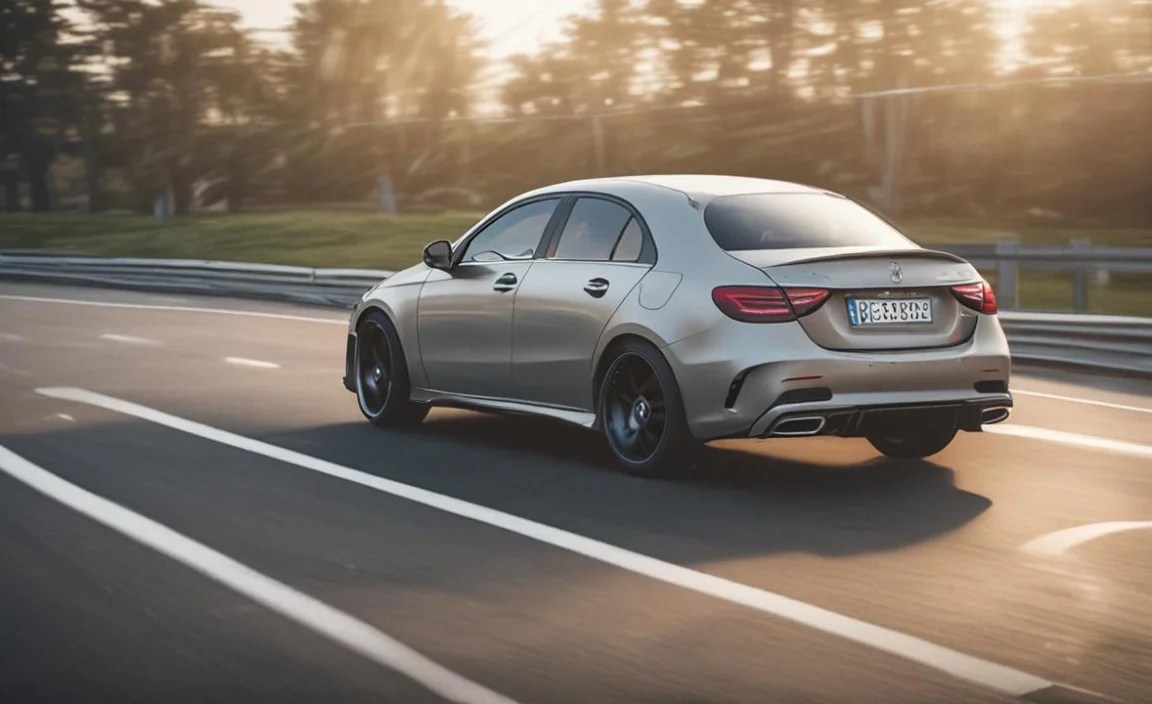
For the Collision Avoidance System to perform at its best, it needs to be properly maintained and the driver needs to be aware of its status.
Checking System Status on Your A-Class
Your Mercedes A-Class provides clear indicators regarding the status of its safety systems. You can usually check this directly through your vehicle’s instrument cluster and infotainment system.
Here’s how you might typically check:
- Instrument Cluster Display: When you start your car, the system performs a self-check. Any active warnings or system faults related to the Collision Avoidance System will usually be displayed here. You might see icons or text messages indicating if the system is unavailable or has a fault.
- Vehicle Settings Menu: Navigate through your infotainment system’s settings (often under “Assistance” or “Driver Assistance”) to find specific information about the Collision Avoidance System. Here, you can usually see if it’s active, deactivated, or if there are any specific issues.
- System Deactivation Indicator: There might be a specific warning light on the dashboard that illuminates if the system is deactivated (either by you or due to a detected fault/condition like sensor obstruction).
What to Do if the System is Unavailable or Faulty
If you notice that the Collision Avoidance System is unavailable, showing a fault, or not behaving as expected, it’s important to take action.
- Check for Sensor Obstruction: The most common reason for temporary unavailability, especially in adverse weather, is a blocked sensor or camera. Carefully clean the front of the vehicle, paying attention to the grille, bumper, and windscreen area where the sensors and camera are located.
- Restart the Vehicle: Sometimes, a simple engine restart can resolve temporary electronic glitches. Turn off the car completely, wait a minute, and then start it again to see if the system resets.
- Consult Your Owner’s Manual: Your A-Class owner’s manual is an invaluable resource. It will have specific information about the warning lights and messages related to the Collision Avoidance System for your particular model year and configuration.
- Contact a Mercedes-Benz Dealership: If cleaning the sensors and restarting the vehicle doesn’t resolve the issue, or if you see persistent warning lights, it indicates a potential technical problem. It is essential to have the system checked by a qualified Mercedes-Benz technician. They have the specialized diagnostic tools to identify and rectify any faults accurately. Attempting to repair complex electronic systems yourself can lead to further damage or compromise safety.
For general advice on vehicle maintenance and safety, the SaferCar.gov website (a partner of NHTSA) offers additional consumer information.
Maintaining Your Mercedes A-Class for Optimal Safety

Regular maintenance is key to ensuring all your vehicle’s safety systems, including the Collision Avoidance System, function as intended. This goes beyond routine oil changes and tire rotations.
Routine Checks and Cleaning
The simplest and most effective form of maintenance for this system is regular cleaning and visual inspection:
- Sensor Cleaning: Make it a habit to wash your A-Class regularly, paying particular attention to the front grille and bumper area. This ensures that dirt, salt, mud, or other debris don’t obstruct the radar sensors.
- Windscreen Care: Keep the area of the windscreen where the forward-facing camera is located clean and free from smudges, streaks, or damage. Ensure any repairs, like chip filling or windscreen replacement, are performed by professionals who can recalibrate the camera.
- Visual Inspection: Periodically check the plastic covers on the front bumper for any signs of damage. If these are cracked or loose, they could compromise the sensors.
Importance of Professional Servicing
While driver-level maintenance is important, professional service by a Mercedes-Benz authorized dealership or a trusted independent specialist is crucial for the long-term health of the Collision Avoidance System.
- Software Updates: Mercedes-Benz regularly releases software updates for its control units, which can improve the performance and accuracy of driver assistance systems. Technicians will ensure your A-Class has the latest updates.
- Calibration: If the windscreen is replaced, or if any components related to the sensor system are disturbed or replaced, the sensors and camera will likely require precise recalibration using specialized equipment. This is a job for professionals.
- Diagnostic Checks: During routine servicing, technicians can perform diagnostic checks on the ADAS modules to identify any potential issues before they become critical faults.
- Component Integrity: They can verify the correct installation and alignment of all sensors and cameras, ensuring they are functioning within their specified parameters.
Your Role as a Driver
Ultimately, the most critical factor in leveraging the Collision Avoidance System is responsible driving. This technology is an aid, not a substitute for attentive driving. Always maintain a safe following distance, be aware of your surroundings, and be prepared to take control at any moment.
Understanding the Collision Avoidance System in Different A-Class Generations
Mercedes-Benz continuously evolves its technology, and the Collision Avoidance System has seen enhancements across different generations of the A-Class. While the core principle remains the same – collision prevention – the sophistication and specific functionalities have grown.
First Generation (W176, 2012-2018)
The W176 generation introduced COLLISION PREVENTION ASSIST as standard on many models. This system typically featured:
- Audible and visual warnings if the distance to the vehicle ahead was too small.
- Adaptive Brake Assist, which provided increased braking force if the driver applied the brakes.
- It did not typically include autonomous emergency braking as standard, though it was an option or became standard in later years of this generation for certain markets or trims.
Second Generation (W177, 2018-Present)
The current W177 A-Class generation significantly elevated the capabilities of its safety systems, often featuring the more advanced COLLISION PREVENTION ASSIST PLUS as standard. This iteration typically includes:
- Enhanced radar and camera systems for more precise detection.
- Standard Autonomous Emergency Braking (AEB) that can apply the brakes automatically to prevent or mitigate collisions with vehicles, and often also with pedestrians and cyclists depending on the specific package.
- Active Brake Assist functionalities, which can react to stationary objects and crossing traffic in certain scenarios.
- Seamless integration with other advanced driver-assistance systems like Active Distance Assist DISTRONIC (optional).
The specific features can vary based on the model year, country of sale, and optional packages fitted by the original buyer. This continuous development means that newer A-Class models benefit from the latest advancements in automotive safety technology.
Frequently Asked Questions (FAQ)
What is the main purpose of the Mercedes A-Class Collision Avoidance System?
The primary goal is to help prevent or reduce the severity of forward collisions by warning the driver of potential hazards and, if necessary, automatically applying the brakes.
How does the system detect potential collisions?
It uses a combination of radar sensors in the front of the car and a forward-facing camera to monitor the distance and speed of vehicles and other objects ahead.
Can the Collision Avoidance System prevent all accidents?
No, it is an assistance system designed to help the driver. It cannot prevent all accidents


