
Pickup Truck Winter Driving Tips: Effortless Control
Quick Summary: Master pickup truck winter driving with these essential tips for gaining effortless control: prioritize proper tires, manage weight distribution, adjust driving habits for reduced traction, and always practice safe vehicle maintenance.
Winter driving, especially in a pickup truck, can feel daunting. The thought of navigating icy roads and snowy conditions can create a knot of anxiety. However, with the right knowledge and preparation, commanding your pickup truck through winter’s challenges can become a surprisingly confident and even enjoyable experience. We’re here to demystify winter driving, offering clear, actionable advice that will transform how you approach the cold season.
This guide is designed to give you the confidence and control to handle whatever winter throws your way. We’ll cover everything from essential equipment checks to advanced driving techniques, ensuring you and your truck are ready for the snow and ice.
Why Winter Driving Demands Special Attention for Pickup Trucks

Pickup trucks, with their characteristic rear-wheel-drive bias and higher center of gravity, present unique challenges in winter. While their ruggedness is an asset, it can also translate to less predictable handling on low-traction surfaces. Understanding these nuances is the first step toward safe winter operation. Unlike a sedan, a pickup’s frame and suspension are often designed for heavier loads, which can alter its weight distribution and responsiveness in slippery conditions.
Rear wheels on many trucks bear a smaller percentage of the vehicle’s total weight, especially when unloaded. This means the rear tires have less grip, making them more prone to spinning or sliding out during acceleration, braking, or cornering. Four-wheel-drive (4WD) systems provide significant advantages, but they aren’t a substitute for careful driving and proper preparation. Knowing how to engage and utilize these systems, along with understanding the limitations, is paramount.
Essential Preparations for Your Pickup Truck

Before the first snowflake falls, a thorough check and potential upgrade of your pickup truck are crucial. These preparations ensure your vehicle is mechanically sound and equipped to handle the demanding winter environment.
Tires: Your Most Important Connection to the Road
Tires are arguably the single most critical component for winter driving safety. All-season tires offer a compromise, but for true winter confidence, dedicated winter tires are a game-changer. They are specifically designed with rubber compounds that remain flexible in cold temperatures and tread patterns with deep grooves and biting edges (sipes) to grip snow and ice.
- Winter Tires: Look for the snowflake-on-a-mountain symbol (3PMSF) on the sidewall. This indicates they meet severe snow service requirements. They are engineered to provide superior traction and braking in temperatures below 45°F (7°C).
- Tire Pressure: Cold weather causes tire pressure to drop. Check your tire pressure regularly (at least once a month) when the tires are cold, and inflate them to the manufacturer’s recommended PSI found on your driver’s side doorjamb or in your owner’s manual. Proper inflation ensures optimal contact with the road.
- Tread Depth: Worn tires, even winter tires, lose their effectiveness. Ensure your tread depth is adequate. A simple way to check is the penny test: insert a penny into the deepest part of the tread with Lincoln’s head upside down. If you can see the top of Lincoln’s head, your tread is too worn and needs replacement. The legal minimum tread depth is 2/32 of an inch, but for winter, you’ll want significantly more.
- Spare Tire: Don’t forget your spare! Ensure it’s properly inflated and that you have the necessary tools (jack, lug wrench) to change a tire.
Weight Distribution: Finding the Balance
An unloaded pickup truck can be tail-happy due to the lighter load over the rear axle. Adding strategic weight can significantly improve rear-wheel traction.
- Ballast: The classic method involves placing heavy, non-perishable items in the bed of your truck. Sandbags, bags of salt or sand (for traction), or even well-secured water barrels can be effective.
- Placement: Distribute the weight over the rear axle, ideally just in front of it, to maximize its impact on traction.
- Secure Everything: Always ensure any added weight is secured properly with straps or netting to prevent shifting during braking or sudden maneuvers. Loose objects can become dangerous projectiles.
Fluid Checks and Winterization
Your truck’s vital fluids need attention to prevent freezing and ensure optimal performance in sub-zero temperatures.
- Antifreeze/Coolant: Ensure your coolant is at the correct level and has the proper mix of antifreeze to prevent the engine from freezing. A 50/50 mix of antifreeze and water is common, but consult your owner’s manual for specific recommendations for your climate. You can test the freeze protection level with a hydrometer.
- Windshield Wiper Fluid: Switch to a winter-blend washer fluid that is rated for low temperatures to prevent it from freezing on your windshield, impairing visibility. Consider a formula rated for temperatures significantly below what you expect to encounter.
- Engine Oil: In extremely cold climates, consider using a lower viscosity engine oil during winter. Thinner oil flows more easily at low temperatures, reducing wear during cold starts. Check your owner’s manual for recommended winter oil grades.
- Brake Fluid and Power Steering Fluid: Ensure these are at the correct levels and free of contamination.
Visibility is Key
Winter weather severely compromises visibility. Ensuring all your lights are functional and your windows are clear is not just about comfort, but survival.
- Headlights, Taillights, and Signals: Clean them regularly. If any bulbs are dim or out, replace them promptly.
- Wiper Blades: Worn wiper blades will smear rather than clear snow and rain, making visibility impossible. Replace them if they leave streaks or chatter. Consider winter-specific wiper blades that are encased in rubber to prevent ice buildup.
- Defroster and Heater: Ensure your HVAC system is working properly, especially the defroster functions for both the front and rear windows.
- Anti-Fog Treatment: Apply an anti-fog treatment to the inside of your windows occasionally.
Driving Techniques for Optimal Control
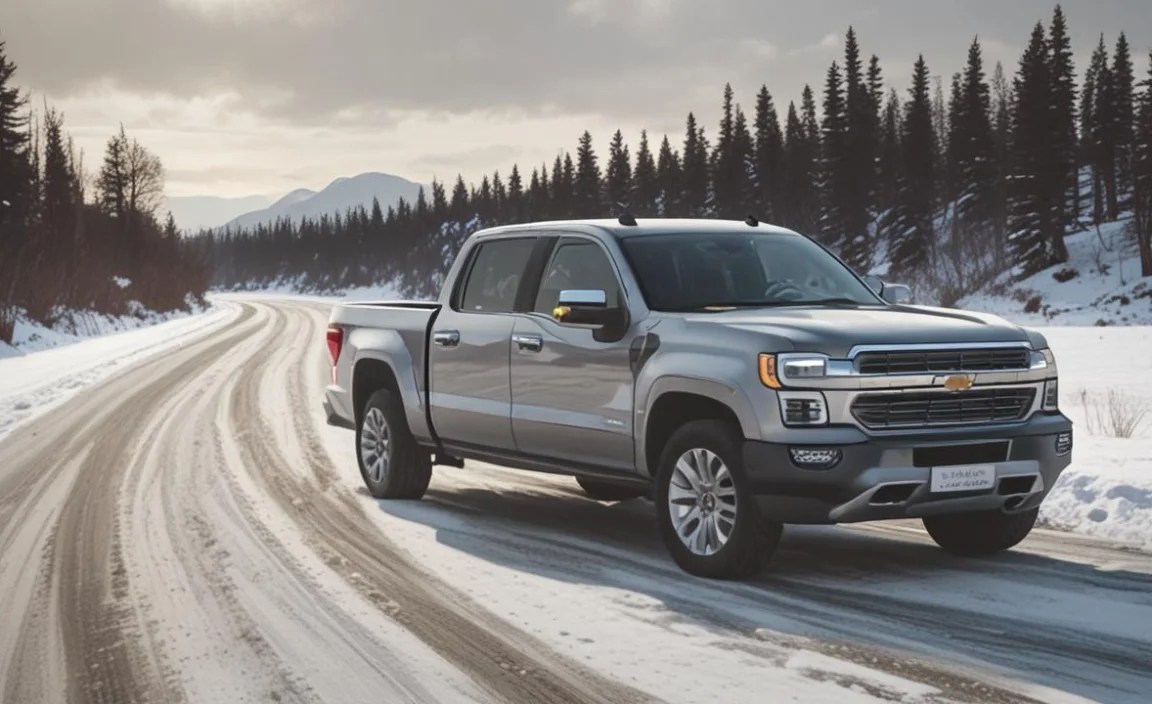
Once your truck is prepared, your driving habits become the next line of defense against winter hazards. Smooth, deliberate actions are the key.
Smooth is the Name of the Game
The fundamental principle of winter driving is to be as gentle and predictable as possible with your vehicle’s controls. Any sudden movements – acceleration, braking, or steering – can upset the delicate balance of traction.
- Gentle Acceleration: Apply the accelerator slowly and smoothly to prevent the drive wheels from spinning. If you have a 4WD/AWD system, engage it as recommended for your vehicle, but remember it doesn’t create traction, it distributes power.
- Smooth Braking: Brake as early and as gently as possible. Anticipate stops well in advance. If your truck has ABS (Anti-lock Braking System), you will feel a pulsing sensation in the brake pedal when engaged. Do not pump the brakes; maintain firm, steady pressure. For vehicles without ABS, a gentle pumping action can help prevent skidding.
- Steer with Precision: Make steering inputs gradually and avoid sharp turns. Look where you want to go, and your hands will naturally follow.
Understanding Your Drivetrain (2WD vs. 4WD/AWD)
Knowing how your truck’s drivetrain works in different conditions is vital.
Rear-Wheel Drive (RWD): This is common for many pickups. As discussed, when unloaded, RWD trucks can have limited traction at the rear. In snow, this means your rear end can more easily lose grip. Use gentle acceleration, and be prepared for oversteer (the rear of the vehicle sliding out) if you turn too sharply or accelerate too hard, especially in corners.
Four-Wheel Drive (4WD) / All-Wheel Drive (AWD): These systems send power to all four wheels, significantly improving traction. However, they have limitations:
- When to Engage: Most part-time 4WD systems (often found on trucks) should only be used on slippery surfaces (snow, ice, mud, gravel). Driving in 4WD on dry pavement can cause drivetrain binding and damage. Full-time 4WD or AWD systems can typically be used on any surface. Consult your owner’s manual.
- 4WD Isn’t Magic: Remember, 4WD increases your ability to accelerate and get moving, but it does NOT improve your ability to steer or brake. You can still slide, skid, and crash in 4WD.
- Electronic Aids: Many modern trucks have traction control and stability control systems. These are invaluable in winter, but they work by reducing engine power or applying brakes to individual wheels to help you regain control. Do not rely on them as a substitute for good driving habits.
Maintaining Safe Following Distances
The stopping distance on snow and ice can be dramatically longer than on dry pavement. Doubling, or even tripling, your following distance is essential.
- The Rule of Thumb: On dry roads, aim for a 2-3 second gap. In winter, that should increase to at least 4-6 seconds, and potentially much more on very slippery surfaces or in whiteout conditions.
- The “Snow Check”: Pick a stationary object ahead of you (like a signpost or a bridge support). When the vehicle in front of you passes it, start counting seconds. If you don’t reach the same object after counting 4-6 seconds, you are following too closely.
Braking Techniques for Reduced Traction
Braking is where understanding your ABS is crucial, or how to manage without it.
- With ABS: If your truck has ABS, apply firm, steady pressure to the brake pedal. Don’t pump the brakes. You’ll feel a pulsing or grinding sensation through the pedal and hear noises; this is normal. The system is working to prevent wheel lock-up, allowing you to maintain steering control while braking.
- Without ABS: If your truck predates ABS, or if the system is off, you may need to gently “pump” the brakes. Apply pressure until you feel the wheels starting to lock up, then ease off slightly until they start rolling again, and reapply. This technique requires practice and can reduce steering control.
- Engine Braking: Downshifting to a lower gear can help slow your truck, especially on downhill slopes, reducing reliance on your brakes. This helps maintain control and prevents brake fade.
Navigating Hills and Slopes
Hills are treacherous in winter. Momentum is your friend, but control your speed.
- Uphill: Get a good run at it, but not too fast. Maintain a steady speed. If you stop, you may not be able to get going again. If you’re in a 4WD vehicle, engage it before you start climbing.
- Downhill: This is often more dangerous. Downshift to a lower gear before you start descending. Drive slowly and steadily, using your brakes sparingly. Avoid sudden braking or steering. If you start to slide, try to steer gently into the slide and ease off the accelerator.
The Importance of Looking Ahead
The further up the road you can see, the more time you have to react. This is amplified in winter.
- Scan the Road: Constantly scan the road surface for changes in traction – patches of ice, snow drifts, packed snow, or bare patches of asphalt.
- Anticipate Hazards: Look for brake lights of vehicles ahead, look for pedestrians, and be aware of potential hazards like icy bridges, shaded areas that might retain ice, and intersections where snow often gets compacted.
Four-Wheel Drive (4WD) vs. All-Wheel Drive (AWD) Explained

Many pickup trucks come with 4WD systems, while some SUVs and crossovers (and even a few car-based trucks) might feature AWD. Understanding the difference can help you use them effectively.
Four-Wheel Drive (4WD): Typically found in more robust, body-on-frame trucks designed for off-roading and heavy-duty use. Most 4WD systems are “part-time,” meaning you manually engage 4WD when needed. This system typically has a transfer case with different modes (e.g., 2H for normal driving, 4H for slippery conditions, 4L for low-speed crawling with maximum torque). When in 4H or 4L, power is split 50/50 between the front and rear axles.
- Pros: Excellent for serious off-roading, heavy towing in adverse conditions, and maintaining traction in extreme winter scenarios. 4L provides immense torque for climbing or pulling.
- Cons: Part-time systems should not be used on dry pavement due to potential drivetrain binding. Often heavier and can slightly decrease fuel economy even when not engaged.
All-Wheel Drive (AWD): Usually found in unibody vehicles or some more car-like trucks, AWD systems are designed to provide enhanced traction for everyday driving on a variety of surfaces. AWD systems are typically “full-time” or “automatic,” meaning they are always engaged or will automatically engage when wheel slip is detected. They use differentials to allow for speed differences between the front and rear wheels.
- Pros: Provides consistent traction improvement in varying weather conditions without driver intervention. Can be used on dry pavement. Generally more fuel-efficient and lighter than 4WD.
- Cons: Less robust for extreme off-roading or heavy, low-speed towing compared to a true 4WD system.
Key Takeaway: For pickup trucks, especially those intended for work or serious off-road use, 4WD is the more common and often more robust choice. For SUVs and car-based trucks seeking enhanced on-road grip in all conditions, AWD is prevalent. Always check your vehicle’s specific documentation for how and when to use its drivetrain system.
Emergency Preparedness: What to Keep in Your Truck

Even with the best preparation, getting stranded in winter is a possibility. Being prepared can make a significant difference in your comfort and safety.
- Emergency Kit:
- First-aid kit
- Jumper cables
- Flashlight with extra batteries
- Blankets or sleeping bags
- Non-perishable food (energy bars, nuts, dried fruit) and water
- Shovel (collapsible is ideal)
- Bag of sand or kitty litter (for traction)
- Tow strap or rope
- Basic tool kit
- Waterproof matches or lighter
- Cell phone charger or power bank
- Warm hat, gloves, and extra layers of clothing
- Brightly colored cloth or flare to signal for help
- Hand warmers
- Considerations for Extended Stays: If you live in an area with severe winters or frequently drive in remote locations, consider adding:
- A small amount of fuel in a safe container (if permitted and handled properly)
- A portable shovel and sand/salt
- Emergency radio (hand-crank or battery-powered)
Knowing what to do if you get stuck is as important as having the gear. The National Highway Traffic Safety Administration (NHTSA) offers excellent resources on winter driving preparedness:
Common Pickup Truck Winter Driving Myths Debunked
There are many long-held beliefs about winter driving that aren’t always helpful or accurate. Let’s clarify a few.
| Myth | Reality |
|---|---|
| 4WD/AWD means I can drive as fast as I want. | 4WD/AWD improves acceleration and getting moving, but it does not improve steering or braking. You can still lose control and crash. |
| All-season tires are good enough for winter. | While they perform better than summer tires, all-season tires are a compromise. Dedicated winter tires offer significantly better grip and shorter stopping distances on snow and ice. |
| Putting weight in the truck bed will always fix traction issues. | Weight helps, especially in RWD trucks, but it must be properly placed over the drive axle. It doesn’t replace the need for good tires and smooth driving. |
| You can drive in 4WD low range (4L) on the highway. | 4L is for low speeds and maximum torque. Driving in 4L at highway speeds is dangerous and will cause severe drivetrain damage. Always use 4H or 2H for higher speeds. |
| Snow makes roads safer because everyone drives slower. | While many drivers slow down, overall visibility is reduced, and stopping distances are longer, increasing the potential for multi-vehicle accidents. |


