
Mercedes Turning Radius by Model
Quick Summary: The turning radius of a Mercedes-Benz varies significantly by model. Compact cars like the A-Class have tighter turning circles (around 36-37 feet), making them easier to maneuver in cities. Larger sedans and SUVs, such as the S-Class or GLS, require more space, with turning radii typically between 39 and 42 feet. Knowing your vehicle’s turning radius is essential for confident driving and parking.
Ever tried making a U-turn in a tight spot and found yourself needing to do a three-point turn instead? It’s a common frustration, especially with larger vehicles. The turning radius of your Mercedes-Benz is a critical factor in how easily you can navigate city streets, parking garages, and tight corners. Don’t worry; understanding the turning radius of your Mercedes model is easier than you think. This guide will break it down, model by model, so you’ll be ready to handle any driving situation with confidence.
Understanding Turning Radius
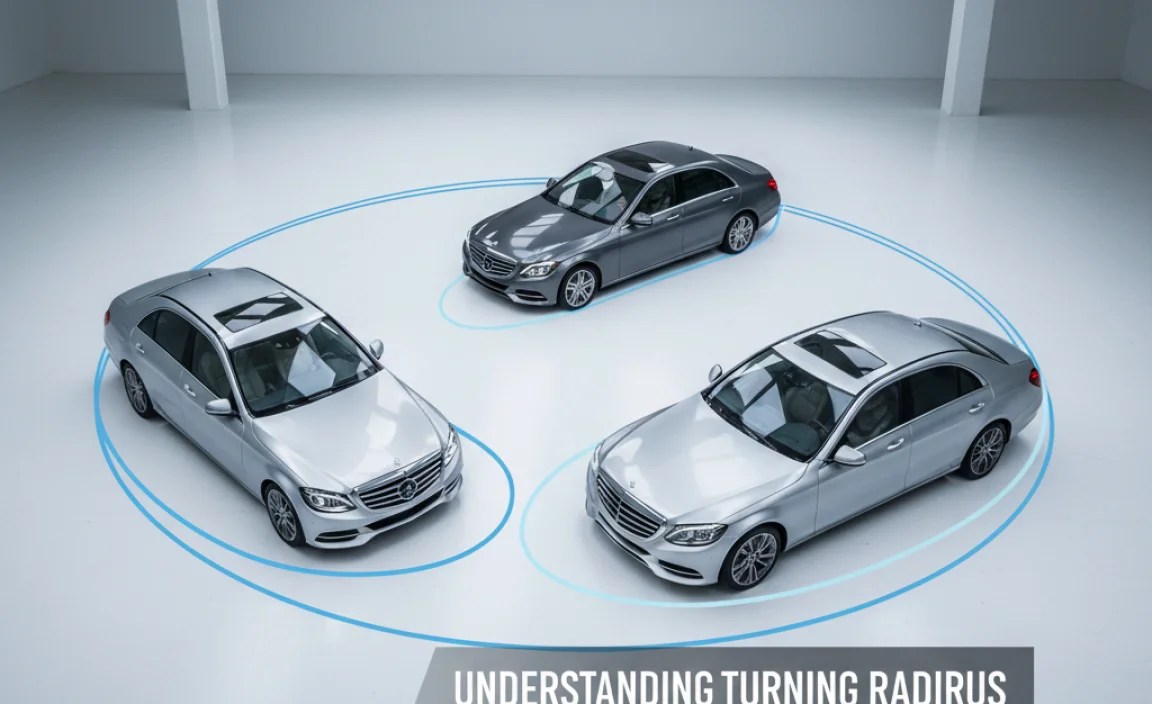
Turning radius is the diameter of the smallest circle a vehicle can make while turning. It’s measured from the center of that circle to the outside of the vehicle. A smaller turning radius means the car can turn more sharply, making it more maneuverable in tight spaces.
Why Turning Radius Matters
Knowing your Mercedes’ turning radius is crucial for several reasons:
- City Driving: Easily navigate crowded streets and tight corners.
- Parking: Effortlessly maneuver into parking spaces.
- Safety: Avoid collisions by understanding your vehicle’s limits.
- Overall Handling: Predict how your car will respond in different driving scenarios.
Mercedes Turning Radius by Model

Here’s a breakdown of the turning radius for various Mercedes-Benz models. Note that these figures can vary slightly depending on the specific trim, options (like rear-axle steering), and model year. Always check your vehicle’s specifications for the most accurate information.
Compact Cars
Mercedes compact cars are designed for urban environments, offering excellent maneuverability.
- A-Class (Hatchback/Sedan): Approximately 36-37 feet
- CLA Coupe/Sedan: Approximately 37-38 feet
- GLA SUV: Approximately 37-38 feet
Sedans and Coupes
These models balance luxury with practicality, providing a comfortable ride with decent turning capabilities.
- C-Class Sedan/Coupe: Approximately 37-39 feet
- E-Class Sedan/Coupe: Approximately 38-40 feet
- S-Class Sedan: Approximately 39-42 feet (can be significantly reduced with rear-axle steering)
SUVs and Wagons
Mercedes SUVs and wagons offer more space but generally have larger turning radii.
- GLC SUV/Coupe: Approximately 38-40 feet
- GLE SUV/Coupe: Approximately 39-41 feet
- GLS SUV: Approximately 40-42 feet
- C-Class Wagon: Approximately 38-39 feet
- E-Class Wagon: Approximately 39-40 feet
High-Performance AMG Models
AMG models often have similar turning radii to their base counterparts, but performance enhancements can slightly affect these measurements.
- AMG A 35/45: Approximately 36-37 feet
- AMG C 43/63: Approximately 37-39 feet
- AMG E 53/63: Approximately 38-40 feet
- AMG GLC 43/63: Approximately 38-40 feet
- AMG GLE 53/63: Approximately 39-41 feet
Here is a table summarizing the turning radius for various models:
| Model | Turning Radius (Approximate) |
|---|---|
| A-Class | 36-37 feet |
| CLA | 37-38 feet |
| GLA | 37-38 feet |
| C-Class | 37-39 feet |
| E-Class | 38-40 feet |
| S-Class | 39-42 feet |
| GLC | 38-40 feet |
| GLE | 39-41 feet |
| GLS | 40-42 feet |
| AMG A 35/45 | 36-37 feet |
| AMG C 43/63 | 37-39 feet |
| AMG E 53/63 | 38-40 feet |
| AMG GLC 43/63 | 38-40 feet |
| AMG GLE 53/63 | 39-41 feet |
Factors Affecting Turning Radius

Several factors can influence a vehicle’s turning radius:
- Wheelbase: Longer wheelbases typically result in larger turning radii.
- Steering Angle: The maximum angle the front wheels can turn.
- Vehicle Size: Larger vehicles inherently need more space to turn.
- Tire Size: Wider tires can sometimes slightly increase the turning radius.
- Rear-Axle Steering: Available on some models, this feature significantly reduces the turning radius.
How to Find Your Mercedes’ Exact Turning Radius

While the figures above provide a general guide, the most accurate turning radius for your specific vehicle can be found in your owner’s manual or by checking the manufacturer’s specifications online. Here’s how:
- Check Your Owner’s Manual: The turning radius is usually listed in the specifications section.
- Mercedes-Benz Website: Visit the official Mercedes-Benz website and look up the specifications for your model and year.
- VIN Lookup: Use a VIN decoder tool online. These tools can provide detailed information about your vehicle, including its turning radius. A reliable VIN decoder can be found at the National Highway Traffic Safety Administration (NHTSA) website.
- Contact Your Dealer: Your local Mercedes-Benz dealer can provide precise specifications for your vehicle.
Advanced Technologies that Enhance Maneuverability

Mercedes-Benz incorporates several technologies to improve vehicle maneuverability, particularly in urban environments.
Rear-Axle Steering
Rear-axle steering is an optional feature available on some Mercedes models, such as the S-Class and EQS. It works by turning the rear wheels slightly in the opposite direction to the front wheels at low speeds, effectively reducing the turning radius. At higher speeds, the rear wheels turn in the same direction as the front wheels to enhance stability.
Benefits of Rear-Axle Steering:
- Reduced Turning Radius: Makes the car much easier to maneuver in tight spaces.
- Enhanced Stability: Improves handling at higher speeds.
- Easier Parking: Simplifies parking in challenging spots.
Active Parking Assist
Active Parking Assist uses sensors to detect suitable parking spaces and automatically steers the vehicle into the space. This technology can handle both parallel and perpendicular parking, making it easier to park in various situations.
Benefits of Active Parking Assist:
- Hands-Free Parking: Reduces the stress of parking in difficult spots.
- Increased Safety: Minimizes the risk of collisions while parking.
- Time-Saving: Parks the car quickly and efficiently.
360-Degree Camera
The 360-degree camera system provides a bird’s-eye view of the vehicle and its surroundings, making it easier to navigate tight spaces and avoid obstacles. This system uses multiple cameras to create a composite image, giving the driver a comprehensive view of the vehicle’s environment.
Benefits of a 360-Degree Camera:
- Improved Visibility: Provides a complete view of the vehicle’s surroundings.
- Enhanced Safety: Helps avoid collisions with obstacles.
- Easier Maneuvering: Simplifies parking and navigating tight spaces.
Driving Tips for Large Turning Radii
If you drive a Mercedes with a larger turning radius, here are some tips to help you navigate tight spaces:
- Plan Ahead: Anticipate turns and maneuvers in advance.
- Use Your Mirrors: Rely on your mirrors and cameras to monitor your surroundings.
- Take It Slow: Approach tight spaces at a slow speed to allow for adjustments.
- Consider Three-Point Turns: If necessary, don’t hesitate to perform a three-point turn.
- Practice: Familiarize yourself with your vehicle’s turning radius in a safe, open area.
Modifying Turning Radius
While it’s not generally recommended to modify the turning radius of your Mercedes due to safety and engineering considerations, there are a few aftermarket options that some owners explore.
Aftermarket Steering Kits
Some aftermarket companies offer steering kits that claim to improve the turning radius. However, these kits can be expensive and may compromise the vehicle’s handling and safety. It’s essential to research thoroughly and consult with a qualified mechanic before considering such modifications.
Wheel Spacers
Wheel spacers can slightly alter the turning radius by changing the offset of the wheels. However, this modification can also affect the vehicle’s handling and stability. It’s crucial to use high-quality spacers and ensure they are properly installed.
Professional Consultation
If you’re considering any modifications to your vehicle’s steering or suspension, it’s always best to consult with a professional mechanic or Mercedes-Benz specialist. They can provide expert advice and ensure that any modifications are safe and appropriate for your vehicle.
Common Mistakes to Avoid
When dealing with turning radii, avoid these common mistakes:
- Ignoring the Vehicle’s Size: Always be aware of your vehicle’s dimensions and how they affect its maneuverability.
- Turning Too Quickly: Avoid making sudden turns, especially in tight spaces.
- Not Using Mirrors: Always use your mirrors and cameras to monitor your surroundings.
- Forgetting About Obstacles: Be aware of potential obstacles, such as curbs, parked cars, and pedestrians.
FAQ: Mercedes Turning Radius
Here are some frequently asked questions about Mercedes turning radii:
- What is turning radius?
- Turning radius is the diameter of the smallest circle a vehicle can make while turning. It’s a key factor in maneuverability.
- Why does turning radius matter?
- It affects how easily you can navigate city streets, park, and avoid collisions.
- Where can I find my Mercedes’ turning radius?
- Check your owner’s manual, the Mercedes-Benz website, or use a VIN lookup tool.
- Do AMG models have different turning radii?
- AMG models generally have similar turning radii to their base counterparts, but performance enhancements can slightly affect these measurements.
- What is rear-axle steering?
- It’s an optional feature that turns the rear wheels to reduce the turning radius at low speeds and enhance stability at high speeds.
- Can I modify my car’s turning radius?
- While possible with aftermarket kits or wheel spacers, it’s generally not recommended due to potential safety and handling issues. Consult a professional first.
- What if my car has a large turning radius?
- Plan ahead, use your mirrors, take it slow, and practice in a safe area.
Conclusion
Understanding the turning radius of your Mercedes-Benz is essential for safe and confident driving. Whether you’re navigating city streets, parking in tight spots, or simply enjoying the open road, knowing your vehicle’s capabilities will enhance your driving experience. By consulting your owner’s manual, utilizing advanced technologies like rear-axle steering, and following the driving tips outlined in this guide, you’ll be well-equipped to handle any driving situation with ease. So, take the time to familiarize yourself with your Mercedes’ turning radius and enjoy the journey!
“`


