
Mercedes-Benz Tail Lights by Model
Quick Summary: Want to know about Mercedes-Benz tail lights? Each model has unique tail lights! From the classic C-Class to the luxurious S-Class and sporty AMG versions, the designs vary. Learn about the different styles, technology like LED and OLED, and what makes each one special. This guide helps you understand the tail lights on your Mercedes.
Mercedes-Benz tail lights aren’t just for safety; they’re a signature design element. Ever wondered what makes the tail lights on a C-Class different from those on an S-Class? Or how AMG models stand out? Understanding these differences can help you appreciate the details of your car. It also helps when you need to replace or upgrade them. This guide breaks down Mercedes tail lights by model, making it easy to understand. We’ll cover design, technology, and more!
Mercedes-Benz Tail Light Evolution

Mercedes-Benz has a rich history of innovation in automotive lighting. Over the years, tail light designs and technology have significantly evolved. Let’s explore this evolution.
Early Tail Light Designs
In the early days, Mercedes-Benz tail lights were simple and functional. They primarily used incandescent bulbs and basic red lenses. The focus was on visibility and safety, with minimal emphasis on aesthetics.
Transition to Halogen
As technology advanced, halogen bulbs replaced incandescent ones. Halogen lights provided brighter and more focused illumination. This improvement enhanced visibility and safety. The designs remained relatively simple but became more integrated into the vehicle’s body.
Introduction of LED Technology
The introduction of LED (Light Emitting Diode) technology marked a significant turning point. LED lights offered numerous advantages:
- Increased Brightness: LEDs are significantly brighter than halogen bulbs.
- Energy Efficiency: They consume less power, reducing the load on the vehicle’s electrical system.
- Longer Lifespan: LEDs last much longer, reducing the need for frequent replacements.
- Design Flexibility: LEDs allowed for more complex and stylish designs.
Mercedes-Benz began incorporating LED tail lights into their models, starting with high-end vehicles like the S-Class. The designs became more sophisticated, often featuring intricate patterns and light signatures.
The OLED Revolution
The next major advancement was the introduction of OLED (Organic Light Emitting Diode) technology. OLED lights offer even greater benefits:
- Uniform Light: OLEDs produce a more uniform and vibrant light compared to LEDs.
- Slim Design: OLEDs are incredibly thin, allowing for seamless integration into the vehicle’s design.
- Enhanced Aesthetics: OLEDs enable dynamic lighting effects and complex 3D designs.
Mercedes-Benz has been at the forefront of OLED tail light technology, incorporating it into models like the S-Class and E-Class. These lights not only enhance safety but also add a touch of luxury and sophistication.
Current Trends and Future Innovations
Today, Mercedes-Benz tail lights are characterized by:
- Dynamic Lighting: Animated light sequences that activate when the car is unlocked or when braking.
- Adaptive Lighting: Tail lights that adjust their brightness based on ambient light conditions.
- Integrated Sensors: Some tail lights incorporate sensors for advanced safety features like blind-spot monitoring.
Looking ahead, Mercedes-Benz is expected to continue pushing the boundaries of tail light technology. Future innovations may include:
- Laser Tail Lights: Offering even greater brightness and precision.
- Holographic Displays: Projecting images or information onto the road behind the vehicle.
- AI-Powered Lighting: Tail lights that can communicate with other vehicles and pedestrians to enhance safety.
Mercedes-Benz Tail Lights by Model

Mercedes-Benz offers a wide range of models, each with its unique tail light design. Here’s a breakdown by model.
C-Class
The C-Class tail lights are known for their sleek and modern design. They typically feature LED technology, providing bright and efficient illumination. The design is often characterized by horizontal lines and a clean, uncluttered appearance.
Key Features:
- LED technology
- Horizontal design
- Clean appearance
E-Class
The E-Class tail lights often incorporate OLED technology, offering a more sophisticated and dynamic look. The design may include intricate light patterns and animated sequences. These tail lights blend seamlessly into the vehicle’s overall design.
Key Features:
- OLED technology
- Intricate light patterns
- Animated sequences
S-Class
The S-Class tail lights represent the pinnacle of Mercedes-Benz lighting technology. They feature advanced OLED technology, dynamic lighting effects, and a luxurious design. The S-Class tail lights are designed to make a statement and enhance the vehicle’s prestige.
Key Features:
- Advanced OLED technology
- Dynamic lighting effects
- Luxurious design
GLC
The GLC tail lights combine functionality with a modern aesthetic. They typically feature LED technology and a design that complements the vehicle’s sporty and versatile nature. The tail lights are designed to provide excellent visibility and safety.
Key Features:
- LED technology
- Sporty design
- Excellent visibility
GLE
The GLE tail lights are designed to be both stylish and functional. They often feature LED technology and a distinctive light signature. The design is characterized by its bold lines and a strong presence.
Key Features:
- LED technology
- Distinctive light signature
- Bold lines
AMG Models
AMG models feature unique tail light designs that reflect their high-performance nature. These tail lights often include smoked lenses, aggressive styling, and distinctive LED patterns. The AMG tail lights are designed to enhance the vehicle’s sporty appearance and performance.
Key Features:
- Smoked lenses
- Aggressive styling
- Distinctive LED patterns
Tail Light Technology: LED vs. OLED
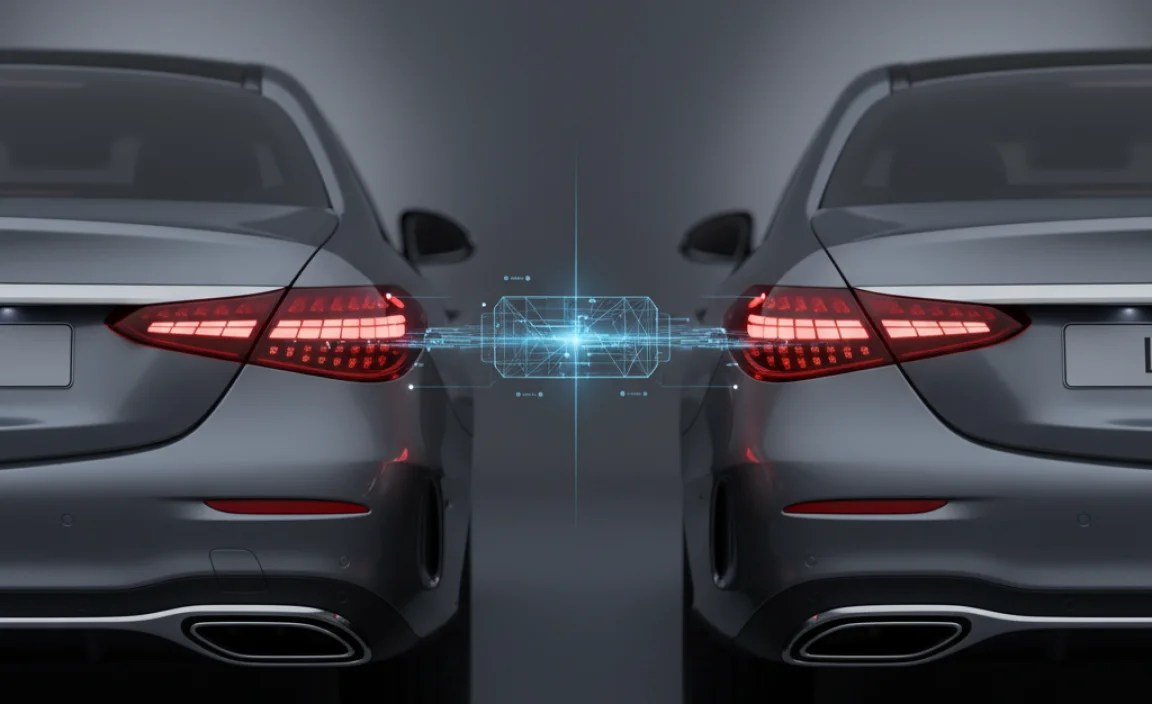
Mercedes-Benz uses both LED and OLED technology in its tail lights. Understanding the differences between these technologies can help you appreciate the features of your vehicle.
LED (Light Emitting Diode)
LED technology has been around for several years and is widely used in automotive lighting. LEDs offer several advantages:
- Brightness: LEDs are significantly brighter than traditional bulbs.
- Energy Efficiency: They consume less power, reducing the load on the vehicle’s electrical system.
- Lifespan: LEDs last much longer, reducing the need for frequent replacements.
- Design Flexibility: LEDs can be arranged in various patterns and shapes, allowing for more creative designs.
However, LEDs have some limitations. They can produce a somewhat uneven light distribution, and their design flexibility is not as great as OLEDs.
OLED (Organic Light Emitting Diode)
OLED technology is a newer development in automotive lighting. OLEDs offer several advantages over LEDs:
- Uniform Light: OLEDs produce a more uniform and vibrant light compared to LEDs.
- Slim Design: OLEDs are incredibly thin, allowing for seamless integration into the vehicle’s design.
- Enhanced Aesthetics: OLEDs enable dynamic lighting effects and complex 3D designs.
OLEDs also have some drawbacks. They are more expensive than LEDs, and their lifespan can be affected by heat and humidity.
Comparison Table
Here’s a table comparing LED and OLED tail light technologies:
| Feature | LED | OLED |
|---|---|---|
| Brightness | High | Very High |
| Energy Efficiency | High | Very High |
| Lifespan | Long | Long (but sensitive to heat and humidity) |
| Design Flexibility | Good | Excellent |
| Light Uniformity | Moderate | Excellent |
| Cost | Moderate | High |
Replacing Your Mercedes-Benz Tail Lights

If your Mercedes-Benz tail lights are damaged or not functioning properly, you may need to replace them. Here’s a step-by-step guide on how to do it.
Tools You’ll Need
- New tail light assembly
- Screwdriver set
- Socket set
- Pliers
- Gloves
- Safety glasses
Step-by-Step Guide
- Preparation:
- Park your car on a level surface and turn off the engine.
- Engage the parking brake.
- Open the trunk or liftgate to access the tail light assembly.
- Remove the Old Tail Light:
- Locate the screws or bolts holding the tail light assembly in place.
- Use the appropriate screwdriver or socket to remove the screws or bolts.
- Carefully pull the tail light assembly away from the vehicle.
- Disconnect any electrical connectors attached to the tail light.
- Install the New Tail Light:
- Connect the electrical connectors to the new tail light assembly.
- Align the new tail light assembly with the mounting holes.
- Reinstall the screws or bolts to secure the tail light in place.
- Ensure the tail light is properly aligned and flush with the vehicle’s body.
- Test the Tail Light:
- Turn on the car’s ignition.
- Activate the tail lights, brake lights, and turn signals to ensure they are functioning correctly.
- If any lights are not working, double-check the electrical connections and bulb installation.
- Clean Up:
- Dispose of the old tail light assembly properly.
- Clean the area around the new tail light to remove any dirt or debris.
Where to Buy Replacement Tail Lights
You can purchase replacement tail lights from several sources:
- Mercedes-Benz Dealerships: Offer genuine OEM (Original Equipment Manufacturer) parts.
- Auto Parts Stores: Provide a wide selection of aftermarket and OEM parts.
- Online Retailers: Offer competitive prices and a convenient shopping experience.
When purchasing replacement tail lights, ensure they are compatible with your specific Mercedes-Benz model and year.
Maintaining Your Mercedes-Benz Tail Lights

Proper maintenance can extend the life of your tail lights and ensure they function correctly. Here are some tips:
- Regular Cleaning: Clean your tail lights regularly to remove dirt, dust, and debris. Use a mild soap and water solution and a soft cloth.
- Check for Cracks: Inspect your tail lights regularly for cracks or damage. Replace any damaged tail lights immediately to prevent water intrusion and electrical problems.
- Inspect Bulbs: Check the bulbs regularly to ensure they are functioning correctly. Replace any burnt-out bulbs promptly.
- Protect from UV Rays: Use a UV protectant spray to prevent the lenses from fading or yellowing over time.
- Professional Inspection: Have your tail lights inspected by a professional mechanic during routine maintenance.
Troubleshooting Common Tail Light Problems
Here are some common tail light problems and how to troubleshoot them:
- Tail Light Not Working:
- Check the bulb and replace if necessary.
- Check the fuse and replace if blown.
- Inspect the electrical connections for corrosion or damage.
- Dim Tail Light:
- Clean the lens to remove any dirt or debris.
- Check the bulb and replace if it is old or weak.
- Inspect the electrical connections for corrosion or damage.
- Flickering Tail Light:
- Check the bulb and replace if it is loose or faulty.
- Inspect the electrical connections for corrosion or damage.
- Check the ground connection for proper grounding.
The Future of Mercedes-Benz Tail Lights
Mercedes-Benz is committed to innovation in automotive lighting. The future of Mercedes-Benz tail lights is likely to include:
- Laser Technology: Offering even greater brightness and precision.
- Holographic Displays: Projecting images or information onto the road behind the vehicle.
- AI-Powered Lighting: Tail lights that can communicate with other vehicles and pedestrians to enhance safety.
As technology advances, Mercedes-Benz tail lights will continue to evolve, providing enhanced safety, style, and functionality. Stay tuned for more exciting developments in the world of Mercedes-Benz lighting!
Resources
- Mercedes-Benz USA – Future Vehicles
- National Highway Traffic Safety Administration (NHTSA)
Understanding the tail lights on your Mercedes-Benz, from their design and technology to maintenance and troubleshooting, can enhance your appreciation for your vehicle. Whether it’s the classic design of the C-Class, the advanced OLED technology of the E-Class, or the sporty styling of the AMG models, each tail light tells a story of innovation and luxury. Keep your lights in top condition to ensure safety and style on the road. Now you know your Mercedes tail lights by model!
Frequently Asked Questions (FAQ)
- Why are tail lights important?Tail lights make your car visible to other drivers, especially at night or in bad weather. They also signal when you’re braking or turning.
- What is LED technology in tail lights?LED (Light Emitting Diode) lights are brighter, last longer, and use less energy than traditional bulbs. They also offer more design flexibility.
- What is OLED technology in tail lights?OLED (Organic Light Emitting Diode) lights create a more uniform and vibrant light. They also allow for slimmer and more complex designs.
- How do I know if my tail light needs replacing?If the light is dim, flickering, or completely out, it needs to be replaced. Also, check for cracks or damage to the lens.
- Can I upgrade my tail lights?Yes, you can often upgrade to LED or OLED tail lights, depending on your car model. Make sure the new lights are compatible with your car.
- Are tail light designs different for AMG models?Yes, AMG models often have unique tail light designs that reflect their sporty performance.
- Where can I find replacement tail lights?You can find replacement tail lights at Mercedes-Benz dealerships, auto parts stores, and online retailers.


