
Mercedes SL Roadster Design: A Comprehensive Guide
The Mercedes SL Roadster design blends classic roadster proportions with modern luxury. Key elements include a long wheelbase, short overhangs, a powerful rear end, and a minimalist interior focused on the driver. The latest models feature a soft top for weight reduction and a return to the SL’s sporty roots, combining performance with iconic style.
The Mercedes SL Roadster is an icon. For decades, it has turned heads with its sleek lines and luxurious feel. But understanding the design language of an SL isn’t always easy. It can be tricky to know what makes each generation unique. Many owners struggle to appreciate the subtle details that set these cars apart.
This guide breaks down everything you need to know about the Mercedes SL Roadster design. We’ll cover the key elements that define its look. You’ll learn how the design has evolved over the years. By the end, you’ll have a clear understanding of what makes the SL Roadster so special.
Here’s what we’ll explore:
- The core design principles of the SL Roadster.
- How each generation has interpreted these principles.
- The key features that define the SL’s exterior and interior.
- What the future might hold for the SL Roadster design.
Understanding the Core Design Principles

The Mercedes SL Roadster design is built on a few core principles. These principles have guided the design of every SL since the first model in 1954. Understanding these principles is key to appreciating the SL’s design.
1. Sportiness and Elegance
The SL Roadster is designed to be both sporty and elegant. It’s a car that looks good whether it’s parked in front of a fancy restaurant or tearing up a winding road. This balance is achieved through careful attention to proportion and detail.
2. Open-Top Driving Experience
The SL is, first and foremost, a roadster. This means that the open-top driving experience is central to its design. The car’s lines are designed to look good with the top up or down. The interior is designed to be comfortable and stylish, even when exposed to the elements.
3. Innovation and Technology
Mercedes-Benz is known for its innovative technology. The SL Roadster is no exception. Each generation of SL has introduced new technologies and design features. These innovations have helped to keep the SL at the forefront of automotive design.
4. Timelessness
The SL Roadster is designed to be timeless. While each generation has its own unique look, they all share a common DNA. This ensures that even older SLs still look good today. It’s a testament to the enduring quality of the SL’s design.
A Look at Each Generation’s Design

The Mercedes SL Roadster has gone through several generations. Each generation has its own unique design. Let’s take a look at how the design has evolved over the years.
1. The 300 SL “Gullwing” (W198, 1954-1957)
The original SL was a race car for the road. Its most distinctive feature was its gullwing doors. This was necessary because the car’s tubular space frame chassis had high sills. The gullwing doors made it easier to get in and out. The design was radical for its time. It quickly became an icon.
- Key Design Features: Gullwing doors, tubular space frame, sleek lines.
- Impact: Established the SL as a performance icon.
2. The 190 SL (W121, 1955-1963)
The 190 SL was a more affordable and practical version of the 300 SL. It didn’t have the gullwing doors or the powerful engine. But it did have the same sleek lines and sporty feel. The 190 SL was a success. It helped to broaden the appeal of the SL brand.
- Key Design Features: Sleek lines, sporty feel, more affordable.
- Impact: Broadened the appeal of the SL brand.
3. The “Pagoda” SL (W113, 1963-1971)
The W113 SL is known as the “Pagoda” because of its distinctive roofline. The roof was designed with a slightly concave shape. This gave it a unique look. It also made the car safer in a rollover. The Pagoda SL is now a classic. It’s highly sought after by collectors.
- Key Design Features: Concave roofline, improved safety, timeless design.
- Impact: Established the SL as a stylish and safe roadster.
4. The R107 (1971-1989)
The R107 SL was a departure from previous models. It was larger and more luxurious. It was designed to appeal to the American market. The R107 was a huge success. It was produced for 18 years, making it one of the longest-running Mercedes-Benz models.
- Key Design Features: Larger size, luxurious interior, American market appeal.
- Impact: Became one of the longest-running Mercedes-Benz models.
5. The R129 (1989-2001)
The R129 SL was a return to the SL’s sporty roots. It featured a more modern design. It also had advanced technology, such as automatic roll bar deployment. The R129 was a popular car. It helped to revive the SL’s image as a high-performance roadster.
- Key Design Features: Modern design, advanced technology, high-performance.
- Impact: Revived the SL’s image as a high-performance roadster.
6. The R230 (2001-2012)
The R230 SL introduced a retractable hardtop. This allowed the car to be a coupe and a roadster. The design was controversial at first. But it proved to be popular with buyers. The R230 also featured advanced technology, such as Active Body Control.
- Key Design Features: Retractable hardtop, advanced technology, coupe and roadster in one.
- Impact: Introduced a new level of versatility to the SL.
7. The R231 (2012-2020)
The R231 SL was an evolution of the R230. It featured a lighter aluminum body. It also had a more refined design. The R231 continued the SL’s tradition of luxury and performance.
- Key Design Features: Lighter aluminum body, refined design, continued luxury and performance.
- Impact: Further refined the SL’s image as a luxury performance roadster.
8. The R232 (2021-Present)
The R232 SL marks a return to the classic soft-top design. It also features a 2+2 seating configuration for the first time since the R107. The design blends modern Mercedes styling with classic SL proportions.
- Key Design Features: Soft-top, 2+2 seating, modern Mercedes styling.
- Impact: Combines modern features with classic SL design elements.
Key Exterior Design Elements
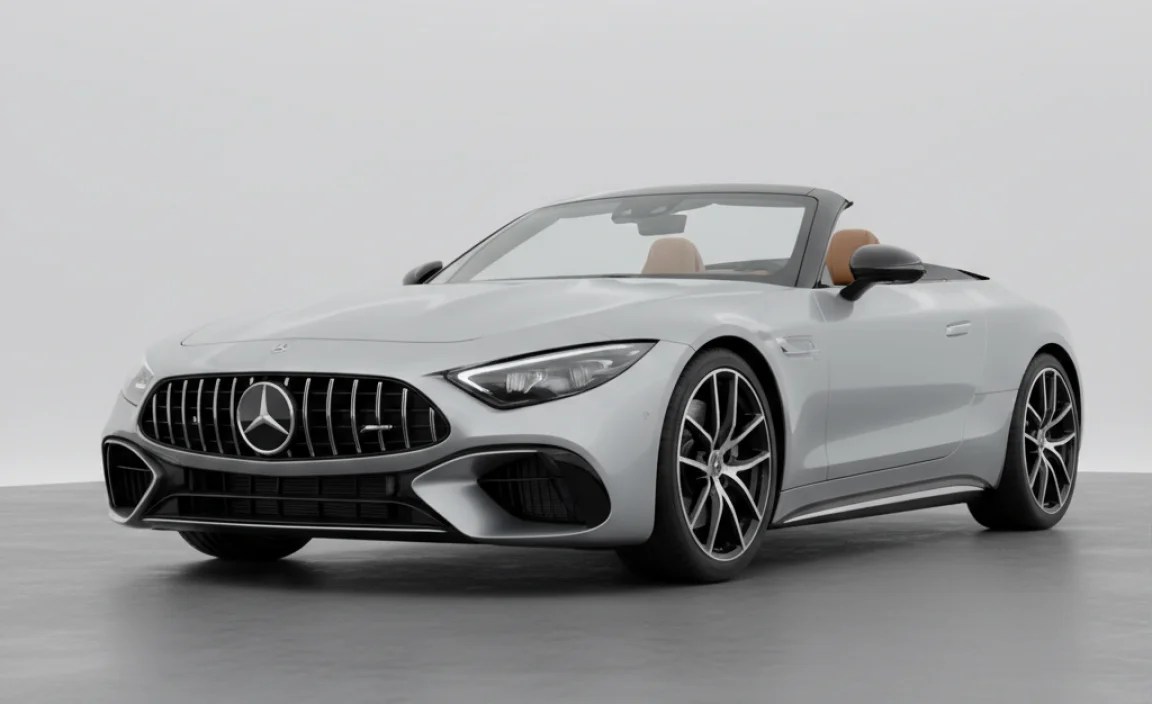
The exterior design of the Mercedes SL Roadster is defined by several key elements. These elements contribute to the SL’s overall look and feel.
1. Proportions
The SL Roadster has classic roadster proportions. This means a long hood, a short rear deck, and a low stance. These proportions give the SL a sporty and elegant look. The long wheelbase contributes to a smooth ride and stable handling.
2. Grille
The grille is a key element of the SL’s design. It’s typically large and prominent. It features the Mercedes-Benz star in the center. The grille design has evolved over the years. But it has always been a key part of the SL’s identity.
3. Headlights
The headlights are another important design element. They’ve evolved from round lights to more angular designs. Modern SLs feature advanced LED lighting technology. This provides excellent visibility and adds to the car’s modern look.
4. Side Profile
The side profile of the SL is sleek and elegant. The lines flow smoothly from the front to the rear. The side profile is also designed to look good with the top up or down. This is important for a roadster.
5. Rear End
The rear end of the SL is typically powerful and muscular. It features wide taillights and a prominent bumper. The rear end design has become more aerodynamic over time. This improves fuel efficiency and handling.
Key Interior Design Elements
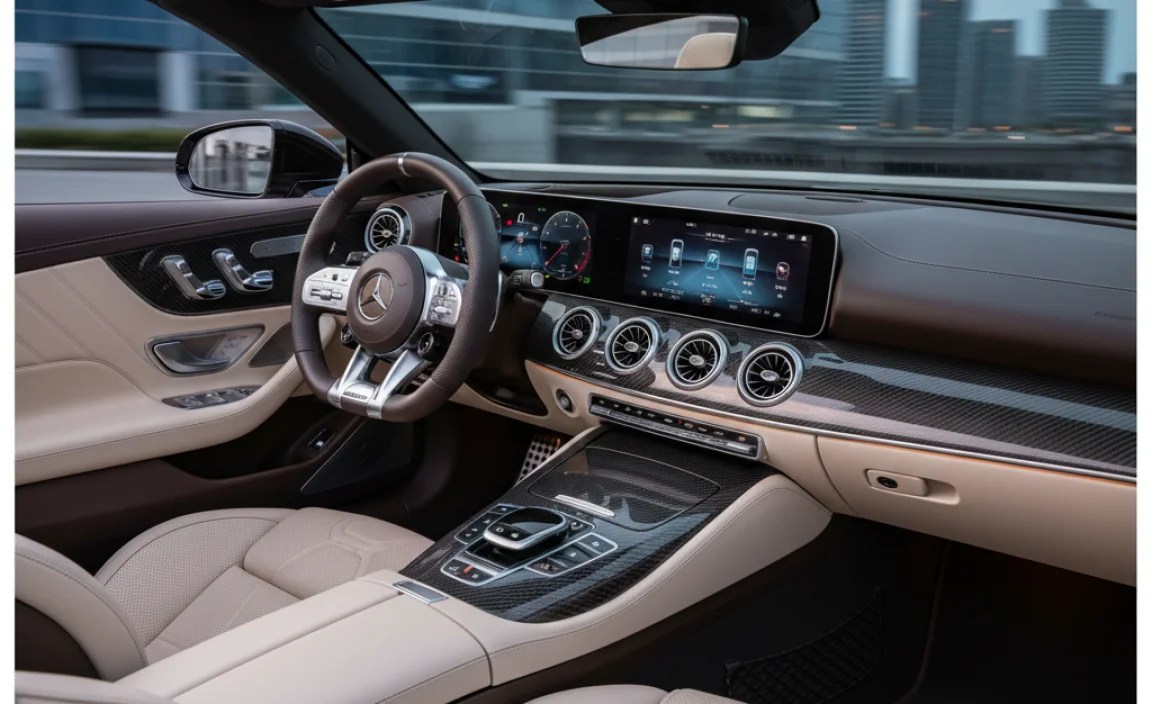
The interior design of the Mercedes SL Roadster is just as important as the exterior. The interior is designed to be luxurious and comfortable. It’s also designed to be functional and easy to use.
1. Dashboard
The dashboard is the focal point of the interior. It’s designed to be both stylish and functional. Modern SLs feature large infotainment screens. These screens provide access to navigation, entertainment, and vehicle settings.
2. Seats
The seats are designed to be comfortable and supportive. They’re typically made of high-quality leather. Modern SLs feature adjustable seats with heating and cooling functions. This ensures a comfortable driving experience, even on long trips.
3. Steering Wheel
The steering wheel is another important element of the interior. It’s designed to be comfortable to hold and easy to use. Modern SLs feature steering wheels with integrated controls. These controls allow the driver to access various functions without taking their hands off the wheel.
4. Materials
The materials used in the interior are of the highest quality. Leather, wood, and metal are used to create a luxurious and sophisticated environment. The materials are carefully chosen to be both durable and beautiful.
5. Technology
The SL Roadster is packed with technology. This includes advanced driver-assistance systems, such as adaptive cruise control and lane-keeping assist. It also includes features like Apple CarPlay and Android Auto. These technologies make the SL a pleasure to drive.
The Future of Mercedes SL Roadster Design

The future of the Mercedes SL Roadster design is likely to be influenced by several factors. These include:
- Electrification: Electric vehicles are becoming more popular. Future SLs may feature hybrid or fully electric powertrains. This will require new design solutions.
- Autonomous Driving: Autonomous driving technology is also evolving. Future SLs may feature more advanced autonomous driving features. This could change the way the interior is designed.
- Sustainability: Sustainability is becoming more important. Future SLs may use more sustainable materials. This could lead to new and innovative design solutions.
Despite these changes, the SL Roadster is likely to retain its core design principles. It will still be a sporty and elegant roadster. It will still offer an open-top driving experience. And it will still be packed with innovative technology.
Mercedes SL Roadster Design Through the Years: Key Specs
Here’s a table summarizing the key design and specification changes across different generations of the Mercedes SL Roadster:
| Generation | Years | Key Design Features | Engine Options | Notable Technologies |
|---|---|---|---|---|
| W198 (300 SL) | 1954-1957 | Gullwing doors, tubular frame | 3.0L Inline-6 | Fuel injection |
| W121 (190 SL) | 1955-1963 | Convertible roadster, elegant styling | 1.9L Inline-4 | Unitary body construction |
| W113 (Pagoda) | 1963-1971 | Distinctive concave hardtop (“Pagoda”) | 2.3L, 2.5L, 2.8L Inline-6 | Independent suspension |
| R107 | 1971-1989 | Long production run, comfortable cruiser | 3.5L, 3.8L, 4.2L, 4.5L, 5.0L, 5.6L V8 | ABS (Anti-lock Braking System) |
| R129 | 1989-2001 | Modern styling, automatic roll bar | 2.8L, 3.0L, 3.2L Inline-6; 5.0L, 6.0L V12 | Adaptive Damping System (ADS) |
| R230 | 2001-2012 | Retractable hardtop, aggressive front end | 3.5L V6; 5.0L, 5.5L V8; 5.5L, 6.0L V12 (AMG) | Active Body Control (ABC) |
| R231 | 2012-2020 | Lighter aluminum body, refined interior | 3.0L V6; 4.7L, 5.5L V8 (AMG) | Magic Sky Control |
| R232 | 2021-Present | Soft-top, 2+2 seating, AMG performance focus | 2.0L Inline-4 (Hybrid); 4.0L V8 (AMG) | Rear-axle steering |
External Resources
For more information on Mercedes-Benz design and history, check out these resources:
- Mercedes-Benz Official Website
- Mercedes-Benz Media
- MotorTrend
FAQ: Mercedes SL Roadster Design
1. What does “SL” stand for?
SL stands for “Sport Leicht,” which is German for “Sport Light.” This refers to the car’s focus on being lightweight and sporty.
2. What is the most iconic design feature of the SL Roadster?
The most iconic design feature varies by generation. For the original, it’s the gullwing doors. For the W113, it’s the “Pagoda” roof. More recently, it was the retractable hardtop.
3. How has the SL Roadster design changed over the years?
The SL Roadster design has evolved from a pure sports car to a more luxurious and comfortable roadster. However, it has always maintained its focus on sporty performance and elegant styling.
4. What is Active Body Control (ABC)?
Active Body Control (ABC) is a suspension system that uses hydraulic actuators to control body roll and pitch. This provides a more comfortable and stable ride, especially in corners.
5. What is Magic Sky Control?
Magic Sky Control is a panoramic roof that can be switched from transparent to opaque at the touch of a button. This allows you to control the amount of sunlight entering the cabin.
6. What is the significance of the soft top in the latest SL (R232)?
The return to a soft top in the R232 SL is a nod to the car’s heritage. It also saves weight and improves handling. The fabric roof contributes to a lower center of gravity.
7. What is the difference between AMG and standard SL models?
AMG models are high-performance versions of the SL Roadster. They feature more powerful engines, upgraded suspension, and distinctive styling cues. AMG models are designed for drivers who want the ultimate in performance and luxury.
Conclusion
The Mercedes SL Roadster design is a story of evolution. From the iconic gullwing doors of the original to the modern styling of the latest models, the SL has always been a design leader. By understanding the core design principles and how they’ve been interpreted over the years, you can appreciate the SL’s timeless appeal.
Whether you’re a long-time SL owner or a new enthusiast, I hope this guide has provided you with a deeper understanding of the Mercedes SL Roadster design. It’s a car that’s sure to turn heads for many years to come.
“`


