
Mercedes CO2 Rating By Model: Your Perfect Guide
Your Mercedes CO2 rating by model tells you about its environmental impact, linking to fuel efficiency and emissions. Understanding these figures helps you make informed choices for ownership costs, environmental responsibility, and potential tax implications, guiding you toward the most suitable Mercedes for your needs.
Driving a Mercedes-Benz is a statement of luxury and performance. But as environmental awareness grows, so does the importance of understanding a vehicle’s ecological footprint. For Mercedes-Benz, this often comes down to its CO2 emissions rating. These ratings are more than just numbers; they reflect a car’s efficiency and its impact on the planet, influencing everything from your driving experience to potential ownership costs.
Navigating these ratings can seem complex, especially with a diverse model lineup like Mercedes-Benz offers. You might be wondering how your current model stacks up, or which new model offers the best blend of luxury and eco-friendliness. This guide is designed to demystify Mercedes CO2 ratings by model, making it easy for you to understand and use this information. We’ll break down what these ratings mean, where to find them, and how they apply to different Mercedes-Benz vehicles, ensuring you feel confident and informed about your Mercedes-Benz’s environmental performance.
What Are CO2 Ratings and Why Do They Matter?

CO2, or carbon dioxide, is a greenhouse gas. When cars burn fuel, they release CO2 into the atmosphere. The CO2 rating of a vehicle is a measure of how much CO2 it emits per kilometer driven under standardized testing conditions. This figure is usually expressed in grams per kilometer (g/km).
Why should you care about your Mercedes’ CO2 rating? Several reasons make these figures significantly important for owners and potential buyers:
- Environmental Impact: Higher CO2 emissions contribute to climate change. Knowing your car’s rating allows you to make more environmentally conscious choices.
- Fuel Efficiency: Generally, cars with lower CO2 emissions are more fuel-efficient. This means fewer trips to the pump and more money saved over time.
- Taxation and Regulations: Many countries and regions use CO2 emissions to determine vehicle taxes, registration fees, and company car benefits. Lower emissions can lead to significant financial savings.
- Future Legislation: As environmental regulations become stricter, understanding CO2 ratings is crucial for staying ahead of potential future changes that might affect vehicle ownership.
- Resale Value: In some markets, vehicles with lower CO2 emissions may hold their value better due to their environmental appeal and lower running costs.
The European Union, for example, has ambitious CO2 reduction targets for new cars. For more detailed information on these regulations and their impact, you can refer to official sources like the European Environment Agency. Understanding these principles helps you appreciate why Mercedes-Benz, like all major manufacturers, invests heavily in reducing the CO2 output of its fleet.
Understanding the CO2 Rating System

CO2 ratings are determined through standardized testing procedures, most notably the Worldwide Harmonised Light Vehicles Test Procedure (WLTP). This system replaced the older New European Driving Cycle (NEDC) and aims to provide more realistic fuel consumption and emission figures by simulating driving conditions more closely, including different speeds, temperatures, and inclines.
Under WLTP, vehicles are tested in four phases: low, medium, high, and extra-high, representing different average speeds. The final CO2 figure is a combined average. It’s important to note that your real-world emissions might still vary based on your driving style, traffic conditions, and vehicle load.
The CO2 rating is a key component in determining a vehicle’s classification. For instance, in many European countries, cars are categorized into CO2 bands, each with different tax implications. A lower CO2 band typically means lower taxes and fees.
Finding Your Mercedes CO2 Rating By Model

Locating the CO2 rating for a specific Mercedes-Benz model is straightforward once you know where to look. These figures are usually readily available from official sources.
Official Mercedes-Benz Websites
The most reliable place to find CO2 information is on the official Mercedes-Benz website for your country. When exploring a specific model online, you’ll typically find a “Specifications” or “Technical Data” section. This section will list the CO2 emissions (g/km) for different engine variants and body styles within that model range.
For example, navigating to the Mercedes-Benz C-Class product page might present you with various engine options, each with its own CO2 rating. This allows for direct comparison between, say, a petrol engine and a diesel or hybrid variant of the same car.
Vehicle Registration Documents
If you own a Mercedes-Benz, the CO2 rating is also listed on your vehicle’s registration documents or V5C certificate (in the UK). This is the official document that proves your ownership and contains all the key technical details of your car, including its CO2 emissions.
Manufacturer Brochures and Price Lists
Downloadable brochures and online price lists from Mercedes-Benz are excellent sources of detailed specifications. These documents are designed to provide potential buyers with all the necessary information to make an informed decision. They usually include tables comparing different trims and engine options, clearly stating the CO2 g/km for each.
Third-Party Automotive Websites
Reputable automotive review sites and specification databases also offer CO2 data. While these can be useful for quick comparisons, it’s always best to cross-reference the information with official Mercedes-Benz sources to ensure accuracy, especially as data can sometimes be based on older testing cycles.
Mercedes CO2 Ratings By Model Categories

Mercedes-Benz offers a vast range of vehicles, from compact sedans to high-performance SUVs and electric models. Their CO2 ratings vary significantly across these categories, reflecting different engine technologies, sizes, and purposes.
Passenger Cars (Sedans and Wagons)
Models like the C-Class and E-Class come with a variety of engine options, including efficient petrol, diesel, and plug-in hybrid (PHEV) powertrains. The CO2 ratings here can span a wide range:
- Traditional Petrol/Diesel: CO2 emissions can range from approximately 120 g/km to over 200 g/km, depending on engine size and whether it’s a mild-hybrid system.
- Plug-in Hybrids (PHEVs): These offer significantly lower CO2 ratings when driven in electric mode, often quoted in the range of 20-50 g/km, thanks to their ability to run on electricity for a substantial distance before the combustion engine engages.
SUVs and Crossovers
SUVs, due to their size and often higher weight, tend to have slightly higher CO2 emissions than equivalent sedans. However, modern SUVs from Mercedes-Benz also feature advanced technologies to mitigate this:
- GLA, GLB, GLC: Standard petrol and diesel versions might range from 150 g/km to 220 g/km.
- GLE, GLS: Larger and more luxurious, these can range from 170 g/km to 250 g/km for non-hybrid variants.
- PHEV SUVs (e.g., GLC 300 e/de): These offer impressive CO2 figures, typically below 50 g/km, making them a popular choice for those seeking a balance of practicality and lower emissions.
Electric and Plug-in Hybrid Vehicles
This is where Mercedes-Benz really shines in reducing CO2 ratings. The all-electric EQ range, such as the EQC, EQE, and EQS, emits 0 g/km of CO2 when driven, making them the ultimate choice for zero tailpipe emissions.
- All-Electric (EQ Models): 0 g/km CO2 tailpipe emissions.
- Plug-in Hybrids (PHEVs): As mentioned, these can achieve very low CO2 ratings (e.g., 20-50 g/km) when the electric range is utilized. This significantly reduces their environmental impact and running costs for mixed driving patterns.
It’s important to remember that while EVs have zero tailpipe emissions, the overall environmental impact includes the emissions generated during electricity production. However, for many regions, the electricity grid is becoming greener, further enhancing the credentials of EVs.
AMG Performance Models
AMG models are engineered for ultimate driving performance. Consequently, their CO2 ratings are generally higher due to powerful engines and performance-oriented tuning. However, even AMG is embracing efficiency:
- V8 and V6 AMG: Expect CO2 ratings typically above 220 g/km, and sometimes exceeding 280 g/km for larger-displacement models. However, many newer AMG models now feature mild-hybrid technology (e.g., EQ Boost) which can marginally improve efficiency and lower CO2 figures compared to older, purely combustion-driven equivalents.
- AMG PHEVs (e.g., GT 63 S E Performance): These combine incredible power with advanced hybrid technology, aiming to balance extreme performance with more sustainable metrics. Their official CO2 ratings can still be substantial but are often lower than purely internal combustion equivalents of similar power.
Comparison Table Example: Select Models
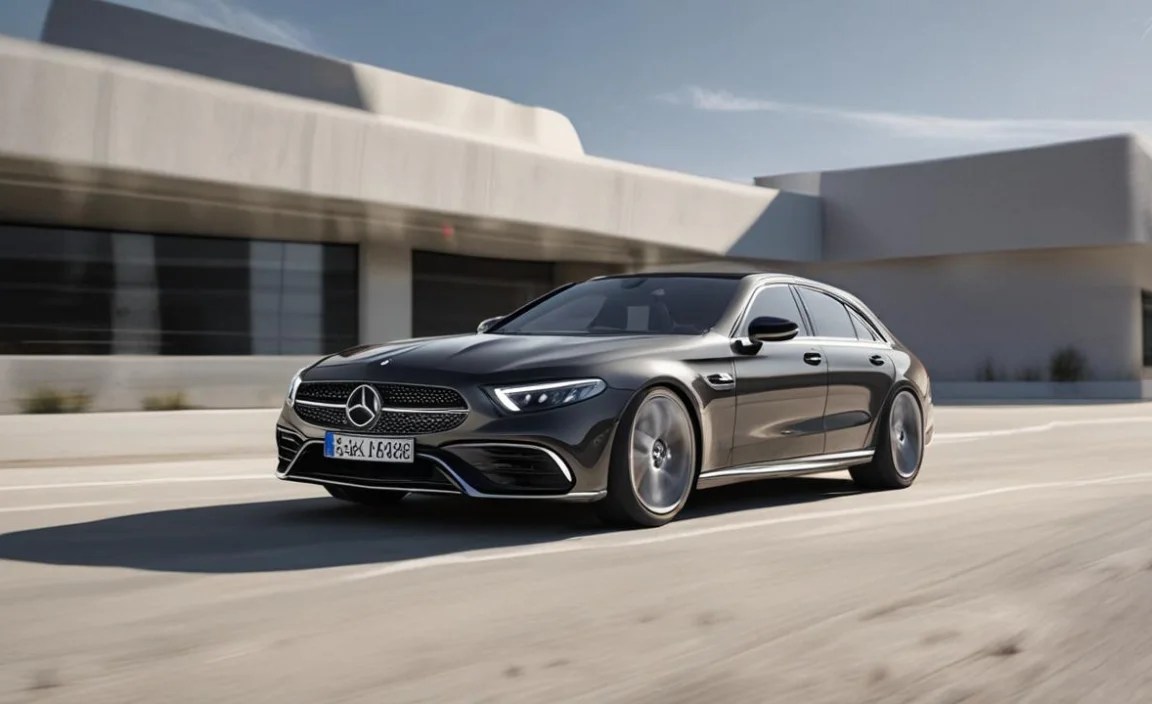
To illustrate the variation, here’s a simplified comparison of CO2 ratings for a few popular Mercedes-Benz models. Note that these are approximate figures based on typical configurations and the WLTP cycle, and can vary based on specific engine choices, transmissions, and optional equipment. Always refer to the official Mercedes-Benz configurator for precise data for your desired specification.
| Model | Engine Type | Approx. CO2 Emissions (g/km WLTP) | Notes |
|---|---|---|---|
| Mercedes-Benz C 200 Sedan | 1.5L Petrol Mild-Hybrid | 130 – 150 | Mild-hybrid assists for efficiency. |
| Mercedes-Benz C 300 e Sedan | 1.5L Petrol Plug-in Hybrid | 20 – 35 | Significant electric range for low emissions. |
| Mercedes-Benz GLC 220 d 4MATIC | 2.0L Diesel | 150 – 170 | Efficient diesel for longer journeys. |
| Mercedes-Benz GLC 300 e 4MATIC | 2.0L Petrol Plug-in Hybrid | 30 – 45 | SUV practicality with PHEV benefits. |
| Mercedes-Benz EQC 400 4MATIC | All-Electric | 0 | Zero tailpipe emissions. |
| Mercedes-Benz EQS 450+ Sedan | All-Electric | 0 | Flagship luxury EV with long range. |
| Mercedes-AMG C 63 S E Performance Sedan | 2.0L Petrol Plug-in Hybrid | 80 – 100 | High performance with hybrid efficiency gains. |
| Mercedes-AMG G 63 | 4.0L V8 Bi-Turbo Petrol | 280 – 320 | High-performance SUV, performance focus. |
Factors Influencing a Mercedes CO2 Rating
Several elements contribute to a Mercedes-Benz’s CO2 emissions. Understanding these can help you identify which configurations will offer lower or higher emissions.
Powertrain Type
This is the most significant factor. The choice between petrol, diesel, plug-in hybrid, and fully electric powertrains dictates the primary CO2 output.
- Electric Vehicles (EVs): Produce zero tailpipe emissions.
- Plug-In Hybrid Electric Vehicles (PHEVs): Offer very low CO2 emissions when driven on electric power. Their official rating depends heavily on their electric-only range and battery size.
- Mild-Hybrid (MHEV): Use a small electric motor-generator to assist the combustion engine, improving efficiency and slightly reducing CO2 compared to non-mild-hybrid equivalents.
- Diesel Engines: Generally more fuel-efficient for long distances than equivalent petrol engines, often leading to lower CO2 emissions per kilometer, though they produce other pollutants like NOx.
- Petrol Engines: Vary widely. Smaller, turbocharged engines with efficient technology can be quite economical, while larger, high-performance engines will naturally emit more CO2.
Engine Size and Efficiency
Larger engines typically consume more fuel and thus produce more CO2. However, modern engine technology plays a crucial role. A smaller, highly efficient engine can outperform a larger, older design in terms of emissions.
Vehicle Weight and Aerodynamics
Heavier vehicles require more energy to move, leading to higher fuel consumption and CO2 emissions. Aerodynamic design also plays a part; a sleeker shape reduces air resistance, improving efficiency.
For more on the importance of aerodynamics in vehicle design, consider resources from institutions like NASA, which study aerodynamic principles for aircraft but whose findings are equally applicable to optimizing a car’s shape.
Transmission Type
Automatic transmissions, especially modern dual-clutch or advanced torque converter types, are often optimized for efficiency. Manual transmissions, while offering more driver engagement, can sometimes be less efficient depending on the specific design.
Driving Style and Conditions
While official ratings are based on standardized tests, your actual CO2 emissions will depend on how and where you drive. Aggressive acceleration, high speeds, and frequent braking in urban traffic will increase fuel consumption and CO2 output compared to smooth, consistent driving on the open road.
Environmental Impact and Future Mercedes-Benz Strategy
Mercedes-Benz is committed to a sustainable future, aiming to make its entire fleet carbon-neutral. This strategy, known as “Ambition 2039,” outlines the company’s roadmap towards achieving this goal. Key to this is a significant expansion of its electric vehicle (EQ) portfolio and plug-in hybrid offerings.
The manufacturer is investing heavily in electrification technology, focusing on improving battery range, charging speed, and overall efficiency. By transitioning towards electric drive, Mercedes-Benz aims to significantly reduce CO2 emissions across its vehicle lifecycle, from production to end-of-life.
This shift means that future Mercedes-Benz models, particularly those designated “EQ,” will have zero tailpipe CO2 emissions. For models that retain internal combustion engines, the focus will be on further refinement and efficiency gains, including enhanced mild-hybrid systems and advanced fuel-saving technologies. The company also aims to produce its vehicles in a CO2-neutral manner.
For the latest information on Mercedes-Benz’s sustainability efforts and their future vehicle plans, it’s always beneficial to check their official corporate newsrooms and sustainability reports. You can often find detailed information on their corporate website, discussing their “Ambition 2039” goals and progress.
Managing Your Vehicle’s CO2 Footprint
As a Mercedes-Benz owner, there are practical steps you can take to minimize your vehicle’s CO2 footprint and potentially reduce your running costs:
Opt for Efficient Models and Options
When purchasing, consider models with lower CO2 ratings. Plug-in hybrids are excellent for those who can utilize their electric range for daily commutes, while all-electric EQ models offer zero-emission driving.
Drive Smart
- Smooth Acceleration and Braking: Avoid aggressive driving. Anticipate traffic to minimize unnecessary braking and acceleration.
- Maintain Steady Speeds: Constant speeds, especially on highways, are more fuel-efficient than stop-and-go traffic.
- Reduce Idling: Turn off the engine


